We’re reader-supported — some links are affiliate links. Learn more →

Skip to content

Independent software research. Some links may earn us a commission at no extra cost to you. Learn more →

ICode

Author: admin

  • What is MailerLite?

    What is MailerLite?

    Home / Email Marketing / Guides / What is MailerLite

    Knowledge · email marketing · updated October 9, 2026

    What is MailerLite?

    MailerLite is an email marketing service for sending campaigns, building automations and collecting subscribers. This guide explains what it does, how it is organised, and what it is not.

    Independent analysis. This page may contain affiliate links. If you sign up through a link on this page we may earn a reward at no extra cost to you, and it never changes what we recommend. We are an independent publisher and are not affiliated with, endorsed by, or an official partner of any tool mentioned. See our Affiliate Disclosure.

    TL;DR

    • MailerLite is an email marketing tool for campaigns and automations.
    • It is organised around subscribers, groups, campaigns and automations.
    • Signup forms and landing pages collect new subscribers.
    • It is aimed at small businesses and creators who want simple email tools.
    • It is not a full CRM and it is not a website builder.

    On this page: What MailerLite is · How it is organised · What it is good at · What it is not · Concept cheat sheet · Where this fits

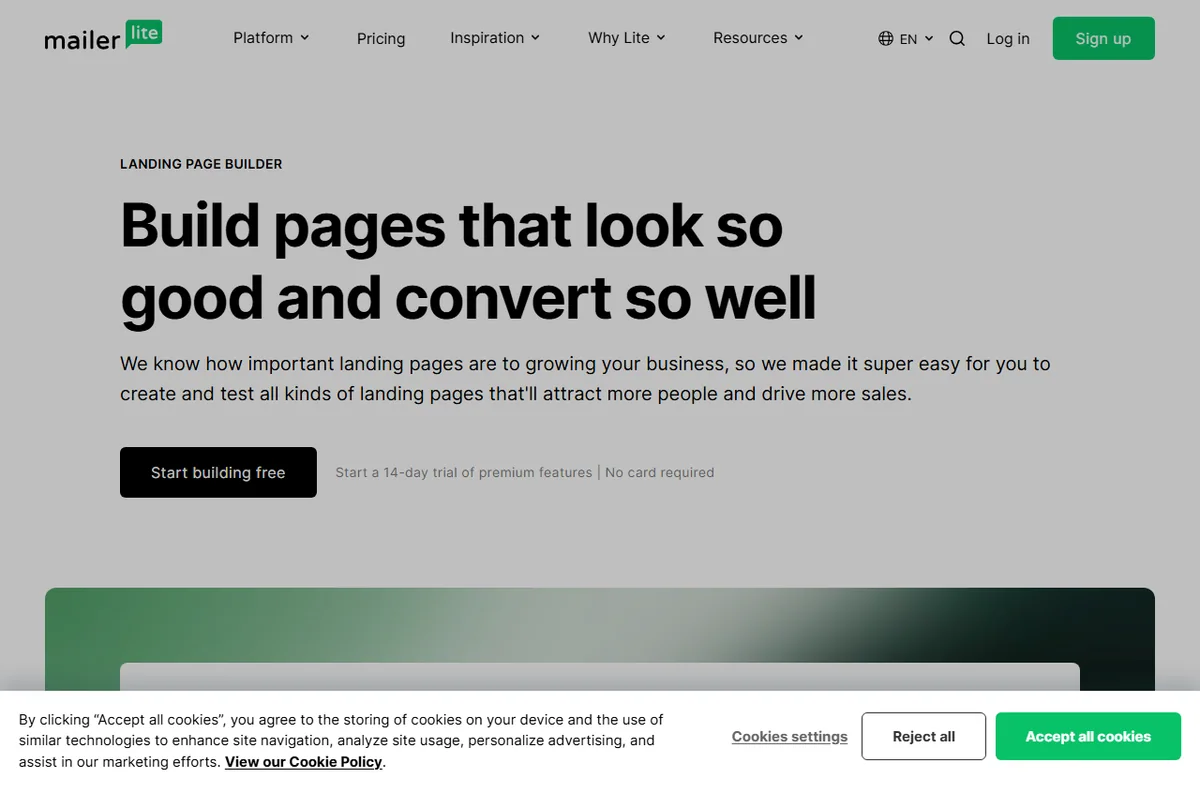
    Mailerlite home page
    Mailerlite home (image: mailerlite.com)

    What MailerLite is

    MailerLite is a service for sending email at scale. You keep a list of subscribers, send them campaigns, and set up automations that respond to what they do.

    The core job is the same as any email platform: get permission to contact someone, send them something worth reading, and watch how they respond. What differs is how the tool is organised and how much it asks of you.

    It is a hosted service, so you use it in a browser rather than installing software, and your subscriber list lives in your account.
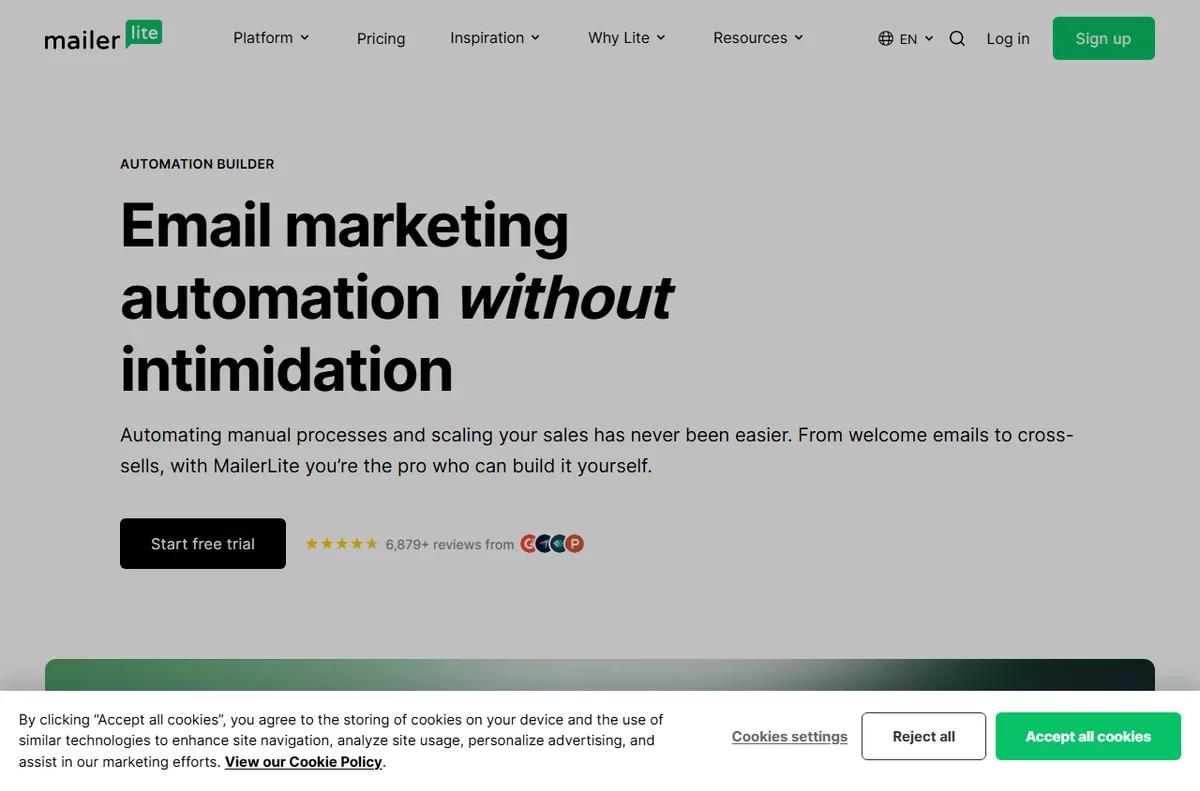
    Mailerlite automation page
    Mailerlite automation (image: mailerlite.com)

    How MailerLite is organised

    Subscribers are the people on your list. You can place them into groups so that a message goes to one segment rather than everyone.

    A campaign is a single email sent to a group. An automation is a sequence triggered by an event, such as a new subscriber joining or a link being clicked.

    Forms and landing pages are the entry points that add people to the list, and they connect back to the groups and automations you set up.
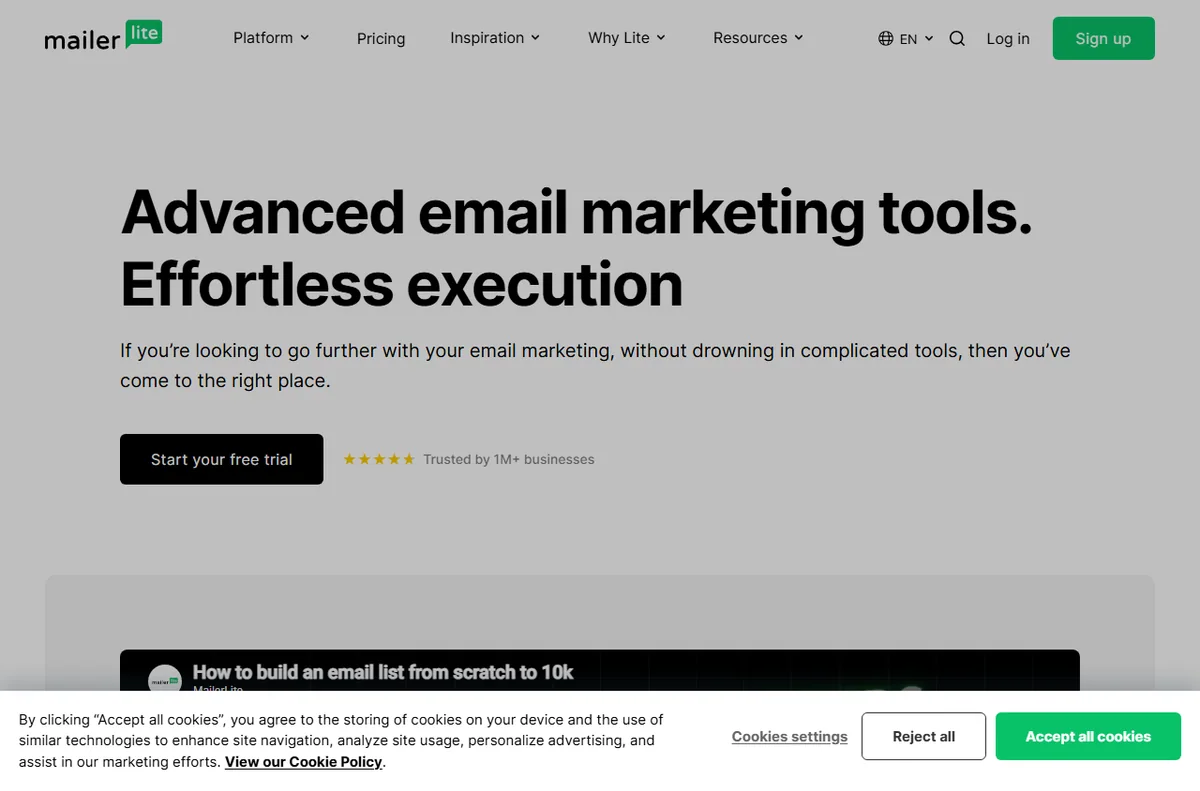
    Mailerlite features page
    Mailerlite features (image: mailerlite.com)

    What MailerLite is good at

    • Sending campaigns and simple newsletters without a designer.
    • Grouping subscribers so a message reaches the right people.
    • Automating a welcome sequence or a follow-up.
    • Collecting subscribers with signup forms and landing pages.
    • Tracking opens, clicks and unsubscribes in one place.
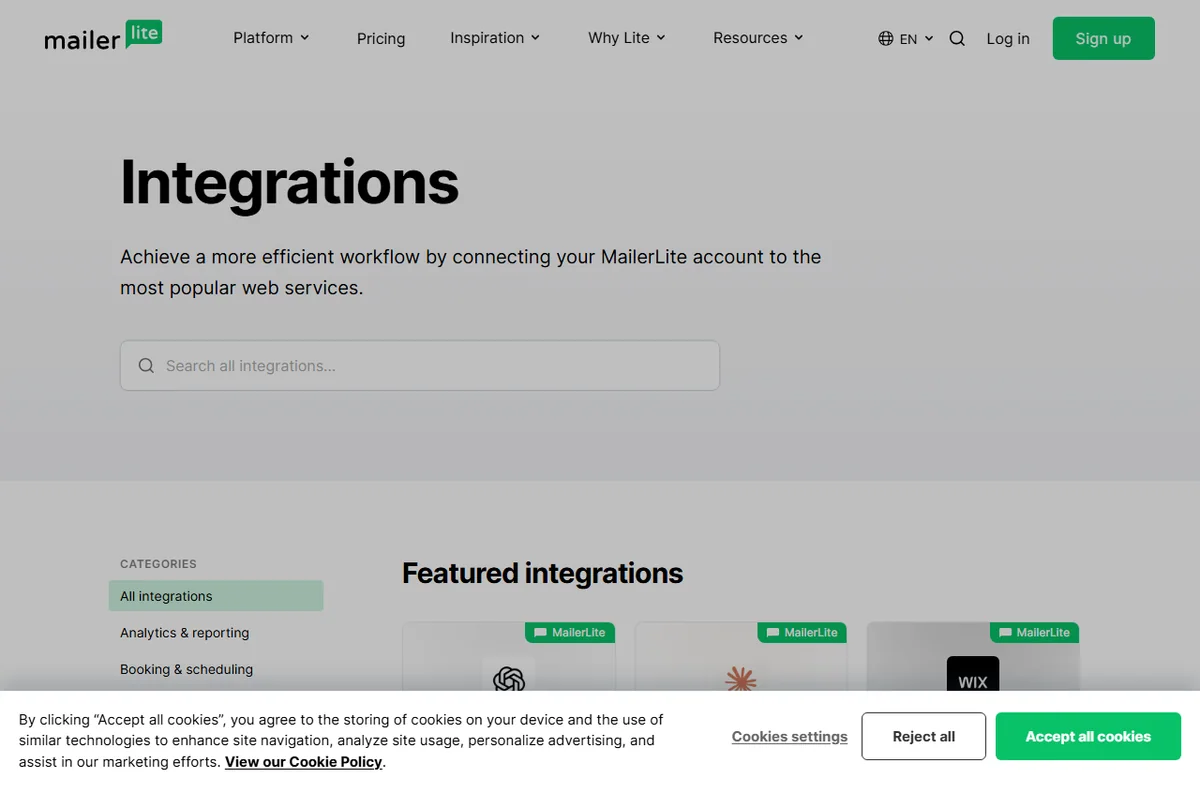
    Mailerlite integrations page
    Mailerlite integrations (image: mailerlite.com)

    What MailerLite is not

    • Not a full CRM: it tracks email behaviour more than the whole sales relationship.
    • Not free of charge beyond its free tier limits, so check the current pricing.
    • Not a website builder, even though it can host simple landing pages.
    • Not a guarantee of deliverability; that also depends on your list and your sending habits.

    Concept cheat sheet

    ConceptMeaningWhy it matters
    SubscriberA person on your listThe audience you send to
    GroupA segment of subscribersDecides who receives a message
    CampaignOne email sent onceThe core sending unit
    AutomationA sequence triggered by an eventHandles follow-up automatically
    FormA signup that adds a subscriberGrows the list
    Based on publicly documented behaviour, checked October 9, 2026.
    Mailerlite landing pages page
    Mailerlite landing pages (image: mailerlite.com)

    Where this fits

    Start with the email marketing hub. For the practical steps see how to set up MailerLite, and for everyday usage read how to use MailerLite for a small business.

    Mailerlite login page
    Mailerlite login (image: mailerlite.com)

    Frequently asked

    Is MailerLite only for email?

    Email is the centre of it, but it also offers simple landing pages and forms that collect subscribers. It is not a general website builder.

    Do I need design skills?

    No. You start from a template, add your content and send. Good copy and a clear layout matter more than visual polish.

    Is there a free tier?

    There is a free tier with limits, and paid plans above it. Limits change, so check the current pricing on MailerLite’s own site.

    Can I move my list elsewhere later?

    Most services let you export your subscribers. Check the export options in your account before you rely on it.

    Does it handle automation?

    Yes. You can trigger sequences on events such as a new subscriber or a click, and branch the flow based on what happens.

    Send email that gets opened

    Campaigns, automations and signup forms.

    Some links on this page may be referral links — we may earn a reward if you sign up, at no extra cost to you. We are an independent publisher. See our Affiliate Disclosure.


    Related reading

  • Common Elementor problems and how to fix them

    Common Elementor problems and how to fix them

    Home / Developer Tools / Guides / Common Elementor problems

    Problem · developer tools · updated October 9, 2026

    Common Elementor problems and how to fix them

    Most Elementor problems fall into a few areas: an editor that will not load, changes that do not show on the live site, layouts that break on mobile, widgets that go missing, or conflicts with other plugins. Here are the ones that come up most, and what to check first.

    Independent analysis. This page may contain affiliate links. If you sign up through a link on this page we may earn a reward at no extra cost to you, and it never changes what we recommend. We are an independent publisher and are not affiliated with, endorsed by, or an official partner of any tool mentioned. See our Affiliate Disclosure.

    Elementor homepage with the drag-and-drop website builder
    Elementor official homepage (image: elementor.com)

    TL;DR

    • An editor that will not load is usually a memory, cache or plugin issue.
    • Changes that do not appear are often a caching problem between the editor and the live page.
    • Layout that breaks on mobile usually traces back to per-device settings.
    • Missing widgets are about the plugin version or an add-on.
    • Check the exact step that failed before you rebuild anything.

    On this page: Why things go wrong · Editor will not load · Changes do not appear · Layout breaks on mobile · Widgets are missing · Conflicts and speed · Symptom to fix · Where this fits

    Why things go wrong

    Elementor sits on top of WordPress, so a problem can come from the editor, the theme, another plugin, the host or the browser. The useful first move is to work out which of those changed.

    Another habit that saves time: check whether the issue follows the page or follows the browser and account. That tells you whether to look at content or at your setup.

    Elementor website builder editor canvas
    Elementor website builder (image: elementor.com)

    The editor will not load

    A blank or endless-loading editor is usually about resources or a clash. The editor is heavier than the default one, and a tight memory limit or a plugin that hooks into it can stop it loading.

    • Raise the WordPress memory limit if your host allows it.
    • Deactivate other plugins briefly to see whether one is the cause.
    • Try a different browser or a private window to rule out extensions.
    • Check the browser console for errors and note the first one.

    Changes do not appear on the live site

    You edit a page, save, and the front end still shows the old version. Most of the time a cache is serving the earlier copy, either a plugin cache, the host cache or the browser.

    Clear those layers in order, then reload in a private window. If the change shows there but not in your normal window, the browser is the one holding the old file.

    Elementor Theme Builder for headers, footers and page templates
    Elementor Theme Builder (image: elementor.com)

    Layout breaks on mobile

    Elementor lets you set values per device. A size chosen on desktop does not always suit a phone, and a value that was never set can inherit an awkward default.

    • Switch to the mobile preview in the editor and check each setting.
    • Look for fixed widths and large padding that do not shrink.
    • Confirm the theme’s breakpoints and use the ones Elementor exposes.
    Elementor template library with ready-made blocks and pages
    Elementor template library (image: elementor.com)

    Widgets or templates are missing

    If a widget you expect is not in the panel, the plugin is probably out of date or a template kit has not been installed. Some widgets also belong to add-ons rather than the core plugin.

    Update the plugin and any add-ons, then check whether the widget belongs to a plan or kit you actually have.

    Conflicts and performance problems

    A slow or broken page is often the result of several builders, caches or optimisers pulling in different directions. Two plugins doing the same job is a common cause.

    Disable overlapping tools one at a time, and measure the page again after each change. Keep a note of what you turned off so you can restore it.

    Symptom to fix

    SymptomLikely causeFix
    Editor will not loadMemory limit or plugin clashRaise the limit and test plugins
    Changes do not appearA cache is serving the old pageClear plugin, host and browser caches
    Broken mobile layoutPer-device settings not setCheck each level in mobile preview
    Widget missingOutdated plugin or missing kitUpdate the plugin and add-ons
    Slow or unstable pageConflicting pluginsDisable overlapping tools one by one
    General guidance, checked October 9, 2026. Confirm specifics inside your own Elementor setup.
    Elementor pricing page with plan tiers and feature limits
    Elementor pricing and plans (image: elementor.com)

    Where this fits

    Start with the developer tools hub. For the basics read what Elementor is, and for the setup steps see how to set up Elementor.

    Frequently asked

    Is my content lost if the editor will not load?

    No. The content is stored by WordPress and Elementor. Once the editor loads again it should still be there; the failure is usually in loading, not in saving.

    Why does the preview look right but the live page does not?

    The editor can render slightly differently from the front end, and caching adds another layer. Check the live page in a private window after clearing caches.

    Should I disable all plugins to test?

    Do it briefly and one at a time, on a staging copy where possible, so you can tell which plugin is responsible without disturbing visitors.

    Does Elementor need a special theme?

    No, but a theme built around it will integrate more smoothly. If the layout looks off, the theme is a reasonable suspect.

    Elementor account sign-in screen
    Elementor account sign-in (image: elementor.com)

    Get the editor loading again

    Fix the common clashes and get back to building.

    Some links on this page may be referral links — we may earn a reward if you sign up, at no extra cost to you. We are an independent publisher. See our Affiliate Disclosure.

    Related reading

  • What is Elementor?

    What is Elementor?

    Home / Developer Tools / Guides / What is Elementor

    Knowledge · developer tools · updated October 9, 2026

    What is Elementor?

    Elementor is a visual page builder that plugs into WordPress and lets you lay out pages by dragging widgets onto a canvas. This guide explains what it does, how it is organised, and what it is not.

    Independent analysis. This page may contain affiliate links. If you sign up through a link on this page we may earn a reward at no extra cost to you, and it never changes what we recommend. We are an independent publisher and are not affiliated with, endorsed by, or an official partner of any tool mentioned. See our Affiliate Disclosure.

    TL;DR

    • Elementor is a drag-and-drop page builder for WordPress.
    • Pages are built from sections, columns and widgets on a canvas.
    • A free core plugin covers the basics; paid plans add widgets, templates and support.
    • A hosted cloud version exists for people who do not want to run WordPress themselves.
    • It is not a hosting company and it does not replace WordPress on its own.

    On this page: What Elementor is · How it is organised · What it is good at · What it is not · Concept cheat sheet · Where this fits

    Elementor home page
    Elementor home (image: elementor.com)

    What Elementor is

    Elementor is an editor that replaces the default WordPress block editor with a visual canvas. Instead of writing blocks in a list, you drag elements onto a page and see the result as you go.

    The idea is to let someone who does not write code build a professional-looking page. You choose a structure, drop in widgets such as headings, images, buttons and forms, then style them with controls rather than CSS.

    It sits on top of WordPress. The theme still controls some site-wide behaviour, but the page content is stored by Elementor and rendered as markup when a visitor loads the page.

    Elementor academy page
    Elementor academy (image: elementor.com)

    How Elementor is organised

    A page is built from three nested levels: sections, columns and widgets. A section spans the width of the page, columns divide it, and widgets are the actual content inside a column.

    Templates and blocks let you save a layout and reuse it. You can apply a page template to a whole page, or drop a saved block into a single section.

    Global styles and site settings hold colours and fonts so a change in one place updates everywhere, and the responsive controls let you adjust each level per device.

    Elementor blog page
    Elementor blog (image: elementor.com)

    What Elementor is good at

    • Building and editing pages without touching code.
    • Reusing saved templates and blocks across a site.
    • Adjusting layout separately for desktop, tablet and mobile.
    • Extending the editor with extra widgets from Elementor and third parties.
    • Working with most WordPress themes without a rebuild.
    Elementor hello theme page
    Elementor hello theme (image: elementor.com)

    What Elementor is not

    • Not a hosting service: you still need a host and WordPress for the self-hosted plugin.
    • Not entirely free: the core plugin is free, but advanced widgets and support sit behind paid plans, so check the current pricing.
    • Not a one-click replacement for a developer on complex custom work.
    • Not immune to plugin conflicts and performance trade-offs.

    Concept cheat sheet

    ConceptMeaningWhy it matters
    SectionA full-width containerSets the overall structure
    ColumnA slice inside a sectionDivides content side by side
    WidgetA single content elementThe heading, image or button
    TemplateA saved full-page layoutReused to start a page quickly
    Global styleSite-wide colour and font rulesKeeps pages consistent
    Based on publicly documented behaviour, checked October 9, 2026.
    Elementor library page
    Elementor library (image: elementor.com)

    Where this fits

    Start with the developer tools hub. For the practical steps see how to set up Elementor, and for everyday usage read how to use Elementor for a small business.

    Elementor login page
    Elementor login (image: elementor.com)

    Frequently asked

    Do I need to know code to use Elementor?

    No. The point of the editor is that you build with widgets and controls. Some custom styling still benefits from knowing CSS, but it is not required to start.

    Does Elementor work with any theme?

    It works with most themes, though some are built around it and integrate more tightly. A theme designed for the block editor may need small adjustments.

    Is there a free version?

    Yes. A free core plugin covers the basics, and paid plans add tools and support. Plans change, so check the current options on Elementor’s own site.

    Can I use Elementor without WordPress?

    There is a hosted cloud version for people who do not want to run WordPress. The plugin route requires a WordPress site.

    Will Elementor slow my site down?

    It can add weight, because it loads its own assets. How much depends on the page and the host, so test your own pages.

    Start building visually

    Drag-and-drop design for WordPress.

    Some links on this page may be referral links — we may earn a reward if you sign up, at no extra cost to you. We are an independent publisher. See our Affiliate Disclosure.
    Related reading

  • Common DreamHost problems and how to fix them

    Common DreamHost problems and how to fix them

    Home / Hosting / Guides / Common DreamHost problems

    Problem · hosting · updated October 9, 2026

    Common DreamHost problems and how to fix them

    Most DreamHost problems fall into a few areas: a domain that will not connect, email that stops working, a site that slows down, or a WordPress install that will not load. Here are the ones that come up most, and what to check first.

    Independent analysis. This page may contain affiliate links. If you sign up through a link on this page we may earn a reward at no extra cost to you, and it never changes what we recommend. We are an independent publisher and are not affiliated with, endorsed by, or an official partner of any tool mentioned. See our Affiliate Disclosure.

    TL;DR

    • Domain problems are usually DNS pointed at the wrong place.
    • Email issues often follow a DNS or spam-filter change.
    • Slow sites hit shared-hosting limits first.
    • WordPress errors are usually plugins or file permissions.
    • Check the exact layer that failed before you rebuild.

    On this page: Why things go wrong · Domain will not connect · Email problems · Site is slow · WordPress errors · Renewal and billing · Symptom to fix · Where this fits

    Why things go wrong

    A hosted site depends on a few layers: DNS, the host’s platform, the application and email. Most problems sit at one layer, and the panel usually tells you which one.

    The useful habit is to check whether the problem affects the whole account or a single site, because that narrows the cause quickly.

    Dreamhost home page
    Dreamhost home (image: dreamhost.com)

    The domain will not connect

    Domain problems are almost always DNS. The domain must point to DreamHost’s name servers, or have the right records, before the site appears on that address.

    Check the name servers match the ones in the panel, allow time for propagation, and confirm the domain has not expired. Testing with the temporary host address separates a DNS problem from a site problem.

    Dreamhost domains page
    Dreamhost domains (image: dreamhost.com)

    Email stops working

    Email trouble often follows a DNS change or a filter rule, so check what changed around the time the mail stopped.

    • Confirm the mail records still point to the mail service after any DNS edit.
    • Check the spam filter and quarantine before assuming mail is lost.
    • Verify the mailbox is under its storage quota.
    • Re-test with a fresh message rather than an old thread.

    The site is slow

    On shared hosting, slowness usually means the server is busy or the site has outgrown its plan. Heavy plugins, large images and traffic spikes all add up.

    Check resource usage in the panel, disable heavy plugins you do not need, and optimise images. If the plan is consistently the limit, move up to VPS.

    Dreamhost email page
    Dreamhost email (image: dreamhost.com)

    WordPress will not load

    A WordPress error is usually a plugin, a theme or file permissions. A blank page or a database error narrows this further.

    Disable plugins to isolate the cause, check the database connection details, and confirm file permissions. Restore a recent backup if a bad update is the trigger.

    Dreamhost features page
    Dreamhost features (image: dreamhost.com)

    Renewal and billing

    Pricing changes at renewal for many hosts, and an expired card can suspend a site without warning.

    Check the renewal price and date in the panel, keep payment details current, and note the date so a renewal is a decision rather than a surprise.

    Symptom to fix

    SymptomLikely causeFix
    Domain will not connectDNS not pointed at the hostSet the name servers and wait
    Email stops workingMail records or spam filterRestore records and check the filter
    Site is slowShared plan at its limitsOptimise and consider VPS
    WordPress will not loadPlugin, theme or permissionsIsolate and fix
    Site suspendedRenewal or payment issueUpdate the billing details
    General guidance, checked October 9, 2026. Confirm specifics inside your DreamHost account.
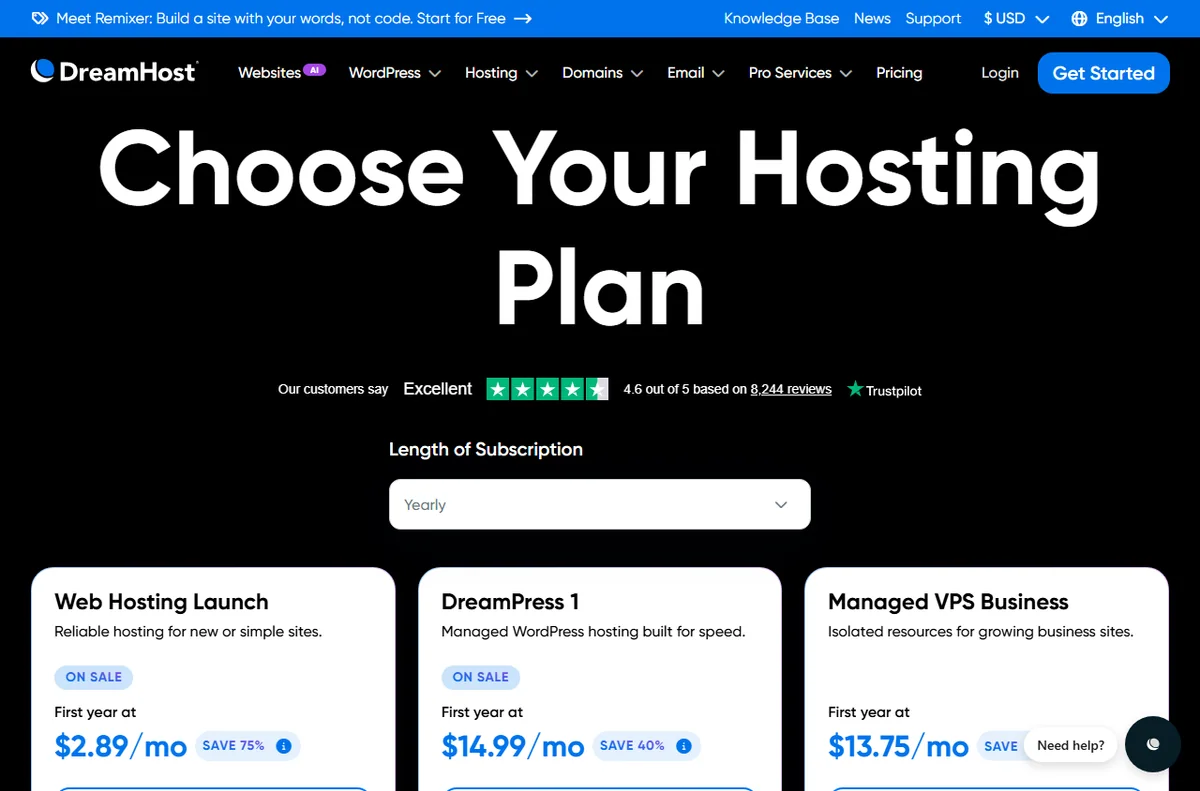
    Dreamhost hosting page
    Dreamhost hosting (image: dreamhost.com)

    Where this fits

    Start with the hosting hub. For the basics read what DreamHost is, and for the setup steps see how to set up DreamHost.

    Dreamhost login page
    Dreamhost login (image: dreamhost.com)

    Frequently asked

    Is my site gone if the domain will not connect?

    No. The site is still on the server; the domain simply is not pointing at it yet. Fixing DNS resolves it.

    Where did my email go after a DNS change?

    Check the mail records first. A DNS edit that moved the mail records is the most common cause.

    Should I upgrade to VPS when the site slows?

    If the plan is consistently the limit, yes. Optimise images and plugins first to be sure the plan is the bottleneck.

    Why did my price go up at renewal?

    Introductory rates often apply to the first term only. Check the renewal terms and current pricing before you commit.

    Keep your site running on DreamHost

    Shared, VPS and WordPress hosting from one account.

    Some links on this page may be referral links — we may earn a reward if you sign up, at no extra cost to you. We are an independent publisher. See our Affiliate Disclosure.

    Related reading

  • What is DreamHost?

    What is DreamHost?

    Home / Hosting / Guides / What is DreamHost

    Knowledge · hosting · updated October 9, 2026

    What is DreamHost?

    DreamHost is a web hosting company known for straightforward shared hosting alongside WordPress, VPS and dedicated plans. This guide explains what it does, how it is organised, and who it is built for.

    Independent analysis. This page may contain affiliate links. If you sign up through a link on this page we may earn a reward at no extra cost to you, and it never changes what we recommend. We are an independent publisher and are not affiliated with, endorsed by, or an official partner of any tool mentioned. See our Affiliate Disclosure.

    TL;DR

    • DreamHost offers shared, VPS, dedicated and WordPress hosting.
    • It is one of the older independent hosts, with a long track record.
    • You get its own control panel rather than cPanel.
    • Prices and terms change, so check the current pricing.
    • It is not a managed WordPress specialist, and not the cheapest at every tier.

    On this page: What DreamHost is · How it is organised · What it is good at · What it is not · Concept cheat sheet · Where this fits

    Dreamhost home page
    Dreamhost home (image: dreamhost.com)

    What DreamHost is

    DreamHost is a web host that has been running for decades and offers a range of plans. At the simpler end you get shared hosting where many sites share a server; at the higher end you get virtual and dedicated servers.

    The design goal is straightforward hosting with a clear panel, rather than a heavily managed WordPress platform. You get the tools to run a site and enough headroom to grow into more powerful plans.

    Because it covers several hosting types, it appeals to people who want one provider as a site moves from a small start to more traffic.

    Dreamhost domains page
    Dreamhost domains (image: dreamhost.com)

    How DreamHost is organised

    Hosting is organised by plan type. Shared hosting suits a few small sites, while VPS and dedicated plans give you more resources and control.

    Domains, email and databases are managed from the same custom panel, so the account is the unit you log into.

    WordPress can be installed in a click, and there are WordPress-specific plans if you would rather have the platform optimised for you.

    Dreamhost email page
    Dreamhost email (image: dreamhost.com)

    What DreamHost is good at

    • Starting cheaply on shared hosting and upgrading later.
    • Managing domains, email and databases in one place.
    • Choosing WordPress, VPS or dedicated plans under one account.
    • Getting predictable, no-nonsense hosting from an established provider.
    Dreamhost features page
    Dreamhost features (image: dreamhost.com)

    What DreamHost is not

    • Not a managed WordPress specialist in the style of a dedicated WordPress host.
    • Not built around cPanel, so migration habits may need adjusting.
    • Not always the cheapest once promotional periods end.
    • Not a fully hands-off platform; some tasks are still yours to run.

    Concept cheat sheet

    ConceptMeaningWhy it matters
    Shared hostingMany sites on one serverThe cheapest way to start
    VPSA virtual server you controlMore power and flexibility
    DedicatedA whole physical serverMaximum resources
    Control panelDreamHost’s own dashboardWhere you manage the account
    WordPress planHosting tuned for WordPressSimpler site management
    Based on publicly documented behaviour, checked October 9, 2026.
    Dreamhost hosting page
    Dreamhost hosting (image: dreamhost.com)

    Where this fits

    Start with the hosting hub and the independent DreamHost review. For the practical steps see how to set up DreamHost, and for everyday usage read how to use DreamHost for a small business. If you are still choosing, start from how to choose web hosting and best web hosting for small business.

    Dreamhost login page
    Dreamhost login (image: dreamhost.com)

    Frequently asked

    Is DreamHost good for beginners?

    Yes. Shared hosting and one-click WordPress installs make it an approachable starting point, and you can upgrade as the site grows.

    Does DreamHost use cPanel?

    No. It uses its own control panel, which works well but looks different from cPanel-based hosts.

    Can I host more than one site?

    Yes, depending on the plan. Shared plans usually allow several domains, so check the current plan details.

    Does DreamHost lock me into a long contract?

    Terms vary, and promotional pricing often applies to the first term. Check the renewal terms and current pricing before you buy.

    Is DreamHost managed WordPress hosting?

    It offers WordPress-optimised plans, but it is not a fully managed WordPress platform in the way a specialist host is.

    Host your site with DreamHost

    Shared, VPS and WordPress hosting from one account.

    Some links on this page may be referral links — we may earn a reward if you sign up, at no extra cost to you. We are an independent publisher. See our Affiliate Disclosure.

    Related guides

  • Common Kinsta problems and how to fix them

    Common Kinsta problems and how to fix them

    Home / Hosting / Guides / Common Kinsta problems

    Problem · hosting · updated October 9, 2026

    Common Kinsta problems and how to fix them

    Most Kinsta problems fall into a few areas: a site that will not load, a migration that stalls, caching that hides your changes, or DNS that has not caught up. Here are the ones that come up most, and what to check first.

    Independent analysis. This page may contain affiliate links. If you sign up through a link on this page we may earn a reward at no extra cost to you, and it never changes what we recommend. We are an independent publisher and are not affiliated with, endorsed by, or an official partner of any tool mentioned. See our Affiliate Disclosure.

    TL;DR

    • A site that will not load is often DNS or SSL, not WordPress.
    • Migrations stall on large files or restrictive plugins.
    • Caching and the CDN can hide changes you just made.
    • Email is separate from hosting, so plan for it in advance.
    • Check the exact layer that failed before you rebuild the site.

    On this page: Why things go wrong · Site will not load · Migration stalls · Changes do not show · Emails and DNS · Performance and limits · Symptom to fix · Where this fits

    Why things go wrong

    A managed WordPress site depends on a few layers: DNS, the host’s platform, WordPress itself and any CDN in front. Most problems sit at one layer, and testing which one fails is faster than changing everything.

    The useful habit is to separate “the server is fine but the site is slow” from “the site is unreachable”, because the two lead to very different fixes.

    Kinsta home page
    Kinsta home (image: kinsta.com)

    The site will not load

    An unreachable site is usually a DNS or SSL problem rather than WordPress. If the dashboard is healthy, the platform is running and the issue is how traffic reaches it.

    Confirm the domain’s DNS points to the host, that the SSL certificate is active rather than pending, and that you are testing the right domain. Propagation can take time after a change.

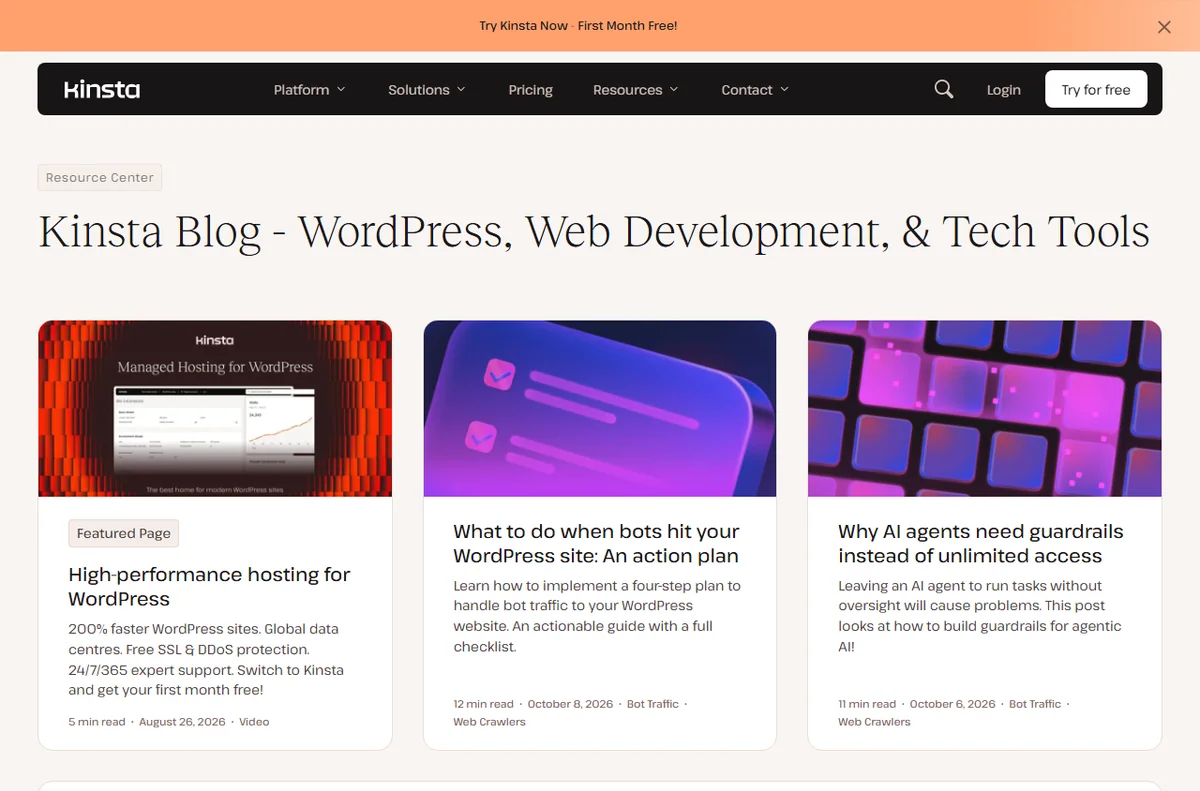
    Kinsta blog page
    Kinsta blog (image: kinsta.com)

    A migration stalls

    Migrations fail on size, timeouts or plugins that hard-code paths. The import can also leave a partial copy behind that blocks a second attempt.

    • Check the archive size against your plan’s limits before you start.
    • Disable caching and security plugins that block the migration tool.
    • Run the migration again after clearing a partial import.
    • Split very large sites into steps rather than one large transfer.

    Changes do not show

    Caching is the usual culprit. The platform caches pages and serves files through a CDN, so a change can be live while you still see the old version.

    Clear the site cache and the CDN cache, then check in a private window. If it appears there but not in your browser, the fix is your local cache, not the site.

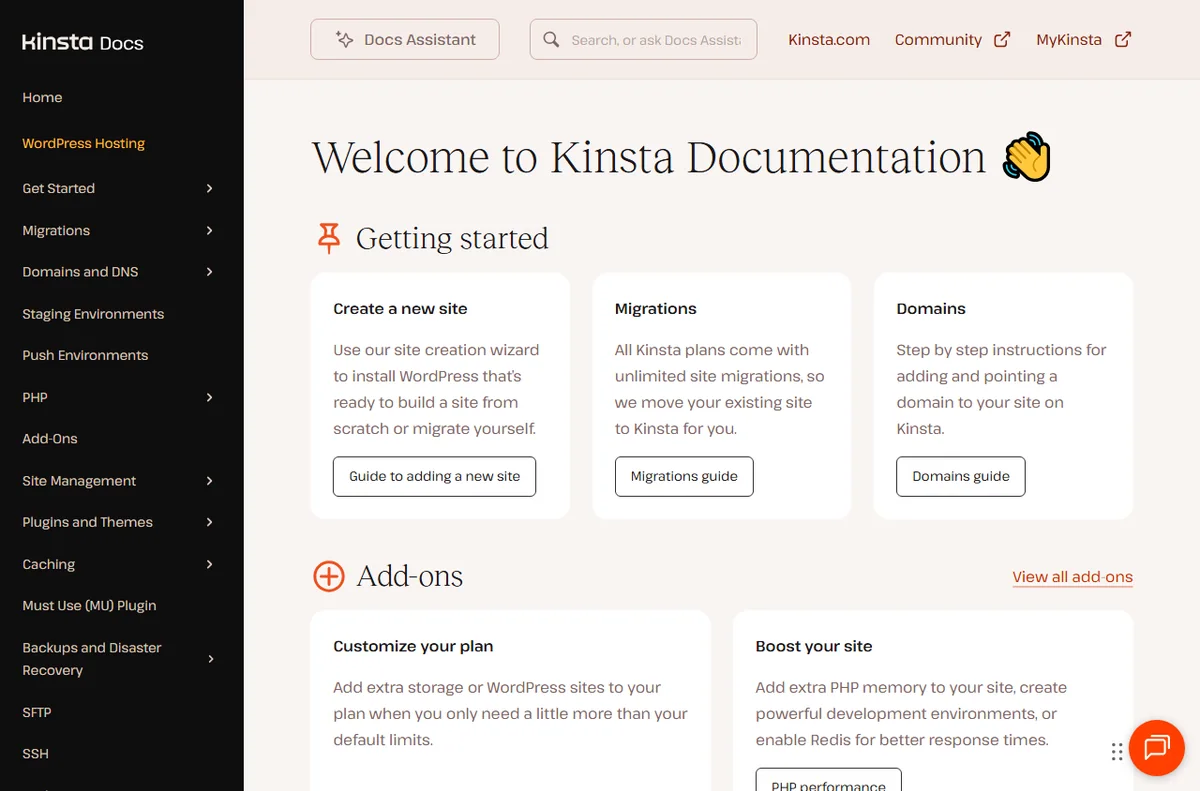
    Kinsta docs page
    Kinsta docs (image: kinsta.com)

    Emails and DNS

    Hosting and email are separate. Changing DNS for the site can break mail if the mail records are moved along with it.

    Check that the MX and authentication records are intact after any DNS change, and send a test message after you switch name servers.

    Kinsta features page
    Kinsta features (image: kinsta.com)

    Performance and plan limits

    Slowness and errors are often about the plan you are on rather than the code. Visits, storage and PHP workers are capped, and bursts can hit those caps.

    Review the dashboard metrics for the period, confirm your plan’s limits, and upgrade before a launch rather than during one. Check the current pricing first, since plans change.

    Symptom to fix

    SymptomLikely causeFix
    Site unreachableDNS or SSL not set upPoint DNS and activate SSL
    Migration failsSize, timeout or pluginsCheck limits and disable blockers
    Changes do not showPage or CDN cacheClear both caches
    Email stops after a moveDNS mail records changedRestore the records and test email
    Site slows at peaksPlan limits reachedReview metrics and upgrade
    General guidance, checked October 9, 2026. Confirm specifics inside your Kinsta account.
    Kinsta login page
    Kinsta login (image: kinsta.com)

    Where this fits

    Start with the hosting hub. For the basics read what Kinsta is, and for the setup steps see how to set up Kinsta.

    Kinsta pricing page
    Kinsta pricing (image: kinsta.com)

    Frequently asked

    Is my site lost if it will not load?

    No. If the dashboard is healthy, the site data is intact; the problem is usually DNS, SSL or caching in front of it.

    Can I migrate a large site myself?

    Often yes, but large sites stall on size and timeouts. Check the limits first and consider a guided migration for very large builds.

    Does Kinsta provide email?

    Managed WordPress hosts generally focus on hosting rather than mailbox hosting, so plan for email separately.

    Why does my change appear to some people and not others?

    Caching. Different layers clear at different times, so purge the site and CDN caches after publishing.

    Get the site loading again

    Fix DNS, cache and migration stops.

    Some links on this page may be referral links — we may earn a reward if you sign up, at no extra cost to you. We are an independent publisher. See our Affiliate Disclosure.

    Related reading

  • What is Kinsta?

    What is Kinsta?

    Home / Hosting / Guides / What is Kinsta

    Knowledge · hosting · updated October 9, 2026

    What is Kinsta?

    Kinsta is a managed WordPress hosting provider that runs your site on Google Cloud and handles the server work for you. This guide explains what it does, how it is organised, and who it is built for.

    Independent analysis. This page may contain affiliate links. If you sign up through a link on this page we may earn a reward at no extra cost to you, and it never changes what we recommend. We are an independent publisher and are not affiliated with, endorsed by, or an official partner of any tool mentioned. See our Affiliate Disclosure.

    TL;DR

    • Kinsta is managed WordPress hosting, not shared cPanel hosting.
    • It runs sites on cloud infrastructure in a region you choose.
    • You get a dashboard, staging, backups and a CDN rather than a raw server.
    • Plans are priced by visits, storage and sites, so check the current pricing.
    • It is not a general-purpose host for arbitrary apps you want to self-manage.

    On this page: What Kinsta is · How it is organised · What it is good at · What it is not · Concept cheat sheet · Where this fits

    Kinsta home page
    Kinsta home (image: kinsta.com)

    What Kinsta is

    Kinsta is a hosting company focused on WordPress. Instead of giving you a blank server to configure, it gives you a dashboard where you create a WordPress site, and it takes care of the operating system, caching and security underneath.

    The trade-off is deliberate: you get an environment tuned for WordPress, and in return you work within the way the platform is designed rather than installing whatever you like on the server.

    Because it is managed, your day-to-day job is content and configuration, not patching a server or tuning a stack yourself.

    Kinsta blog page
    Kinsta blog (image: kinsta.com)

    How Kinsta is organised

    Everything hangs off a site. A site is one WordPress install, and each site can have environments such as live and staging.

    Hosting plans set the limits you work within, including how many sites and how much storage and traffic you get. When you grow, you change the plan rather than the architecture.

    Supporting tools are built in: a content delivery network, backups, and a dashboard that shows visits, bandwidth and errors for each site.

    Kinsta docs page
    Kinsta docs (image: kinsta.com)

    What Kinsta is good at

    • Running WordPress sites without managing a server.
    • Using staging to test changes before they go live.
    • Getting caching, a CDN and backups without extra setup.
    • Scaling a site without migrating to a different kind of host yourself.
    Kinsta features page
    Kinsta features (image: kinsta.com)

    What Kinsta is not

    • Not shared hosting, and not the cheapest option per site.
    • Not a place to install arbitrary server software outside WordPress.
    • Not free of limits: plans cap visits, storage and the number of sites.
    • Not a fit if you want full control of the underlying server.

    Concept cheat sheet

    ConceptMeaningWhy it matters
    SiteOne WordPress installThe unit you host and manage
    EnvironmentA copy such as live or stagingLets you test changes safely
    PlanThe limits you are billed onSets sites, storage and visits
    CDNA network that serves your filesSpeeds up pages worldwide
    BackupA restorable copy of the siteYour safety net
    Based on publicly documented behaviour, checked October 9, 2026.
    Kinsta login page
    Kinsta login (image: kinsta.com)

    Where this fits

    Start with the hosting hub and the independent Kinsta review. For the practical steps see how to set up Kinsta, and for everyday usage read how to use Kinsta for a small business. If you are still choosing, compare with how to choose web hosting and Kinsta vs Hostinger.

    Kinsta pricing page
    Kinsta pricing (image: kinsta.com)

    Frequently asked

    Is Kinsta only for WordPress?

    Yes, it is WordPress-focused managed hosting. It is not aimed at arbitrary applications you want to run and maintain yourself.

    Do I need to manage the server?

    No. That is the point of managed hosting; the platform handles the operating system, caching and security for you.

    Does Kinsta include a CDN?

    It provides a content delivery network as part of the platform. Check the current features and pricing on Kinsta’s own page, since these change over time.

    Can I test changes before going live?

    Yes. Staging environments let you try updates and design changes on a copy before you push them to the live site.

    Is Kinsta good for a small business?

    It suits businesses that value managed performance and support. If you want the lowest possible cost, a shared host may fit better.

    Put your WordPress site on managed hosting

    A managed platform with staging, CDN and backups.

    Some links on this page may be referral links — we may earn a reward if you sign up, at no extra cost to you. We are an independent publisher. See our Affiliate Disclosure.

    Related reading

  • Common 1Password problems and how to fix them

    Common 1Password problems and how to fix them

    Home / Security & Privacy / Guides / Common 1Password problems

    Problem · security & privacy · updated October 9, 2026

    Common 1Password problems and how to fix them

    Most 1Password problems fall into a few areas: a vault that will not unlock, credentials that do not fill, items that do not sync, or sharing that goes wrong. Here are the ones that come up most, and what to check first.

    Independent analysis. This page may contain affiliate links. If you sign up through a link on this page we may earn a reward at no extra cost to you, and it never changes what we recommend. We are an independent publisher and are not affiliated with, endorsed by, or an official partner of any tool mentioned. See our Affiliate Disclosure.

    1Password homepage for password and secrets management
    1Password official homepage (image: 1password.com)

    TL;DR

    • An item that will not fill is usually a mismatch between the saved address and the page.
    • Sync problems are about the account, not the device.
    • Sharing goes wrong when the wrong vault or person is chosen.
    • Recovery depends on the emergency kit you saved.
    • Check the exact step that failed before you reset anything.

    On this page: Why things go wrong · Vault will not unlock · Items do not fill · Items do not sync · Sharing does not work · Account or recovery · Symptom to fix · Where this fits

    Why things go wrong

    A password manager depends on a few moving parts: your account, the devices that hold a copy of the vault, and the sites you are signing into. Most problems sit at one of those, and the app usually names the step that failed.

    The useful habit is to check whether the problem follows the account or only one device.

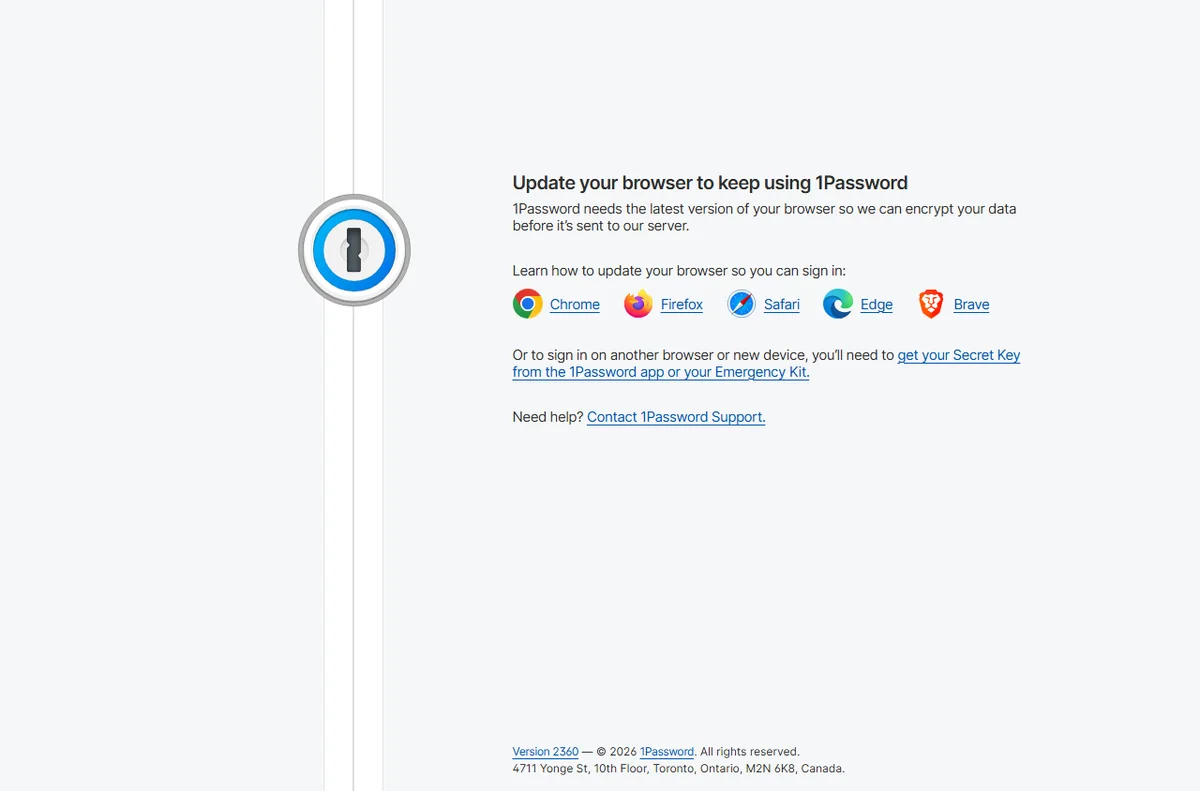
    1Password sign-in screen for unlocking your account
    1Password sign-in (image: 1password.com)

    A vault will not unlock

    An unlock failure is usually about the credential, not the data. A typo in the master password, a missing secret key, or a device that has been locked out after too many attempts are the common causes.

    Check that you are entering the credential for the right account, that the secret key matches, and that the keyboard or clipboard is not adding an invisible character. If the account uses a passkey or biometric unlock, fall back to the password method.

    Items do not fill

    Autofill fails when the saved website address does not match the page you are on, when the extension is not active, or when the field is inside a frame the app cannot see.

    • Confirm the address saved on the item matches the site exactly, including any subdomain.
    • Check the browser extension is installed and signed in.
    • Try copying the password from the app to rule out a fill problem.
    • Some sites block autofill on purpose; use their own flow where required.
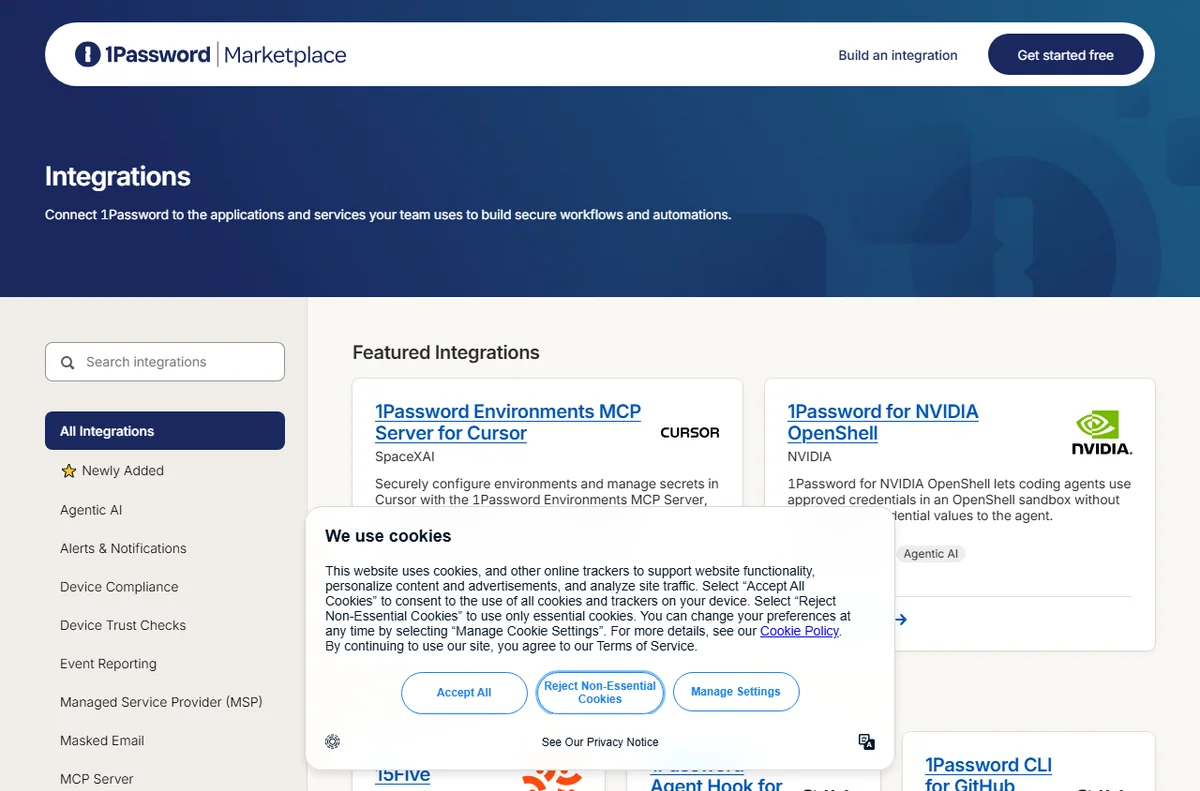
    1Password integrations page with supported apps
    1Password integrations (image: 1password.com)

    Items do not sync

    When an item is missing on one device, the cause is usually the account or the network rather than the item itself. Offline edits sit in a queue until the device connects again.

    Confirm every device is signed into the same account, that the device has been online, and that the vault is not marked as local only.

    Sharing does not work

    Sharing problems come from where an item lives and who was invited. You share a vault, not a single item, so the recipient must be in the vault that contains the item.

    Check that the item is in the shared vault rather than a personal one, that the invite was accepted, and that the guest has the right permission level. Move the item into the shared vault.

    1Password account creation screen
    1Password account creation (image: 1password.com)

    Account or recovery problems

    Recovery and billing issues sit with the company rather than the app. A forgotten secret key or a lapsed subscription can lock you out of features even when the vault still opens.

    Check the account status and billing page, confirm the emergency kit is stored safely, and contact support with your account details. Recovery without the emergency kit may not be possible by design.

    Symptom to fix

    SymptomLikely causeFix
    Vault will not unlockWrong password, secret key or lockoutRe-enter credentials and use a fallback
    Item will not fillAddress mismatch or extension inactiveMatch the address and check the extension
    Item missing on a deviceAccount or sync issueConfirm the account and go online
    Shared item not visibleItem is in a personal vaultMove it into the shared vault
    Locked out of accountRecovery or billing issueUse the emergency kit and contact support
    General guidance, checked October 9, 2026. Confirm specifics inside your 1Password account.
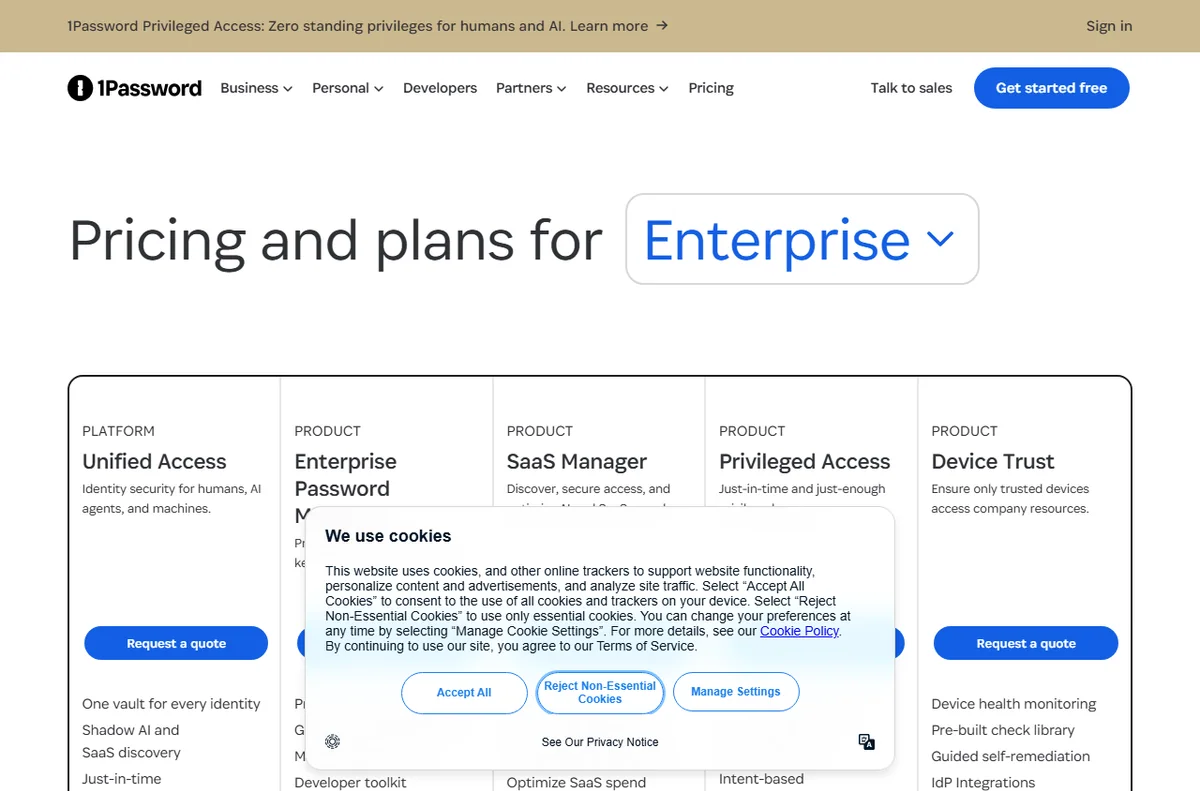
    1Password pricing page with individual and team plans
    1Password pricing and plans (image: 1password.com)

    Where this fits

    Start with the security and privacy hub. For the basics read what 1Password is, and for the setup steps see how to set up 1Password.

    Frequently asked

    Is my data lost if the vault will not unlock?

    No. The data is still stored; you need the correct credentials or the recovery path you set up to open it again.

    Why does autofill work on one browser but not another?

    The extension is usually installed and signed in on one browser only. Install and sign in on the browser you are using.

    Can support reset my master password?

    Not if the account is encrypted end to end. They can help with account and billing issues, but they cannot decrypt your vault.

    Do I need to reinstall to fix sync?

    Rarely. Check the account, the network and the vault type first.

    1Password for business page for teams
    1Password for business (image: 1password.com)

    Get back into your vault

    Unlock, fill and sync again.

    Some links on this page may be referral links — we may earn a reward if you sign up, at no extra cost to you. We are an independent publisher. See our Affiliate Disclosure.
    Related reading

  • What is 1Password?

    What is 1Password?

    Home / Security & Privacy / Guides / What is 1Password

    Knowledge · security & privacy · updated October 9, 2026

    What is 1Password?

    1Password is a password manager that stores your logins, passkeys and other secrets in encrypted vaults and fills them in for you. This guide explains what it does, how it is organised, and what it is not.

    Independent analysis. This page may contain affiliate links. If you sign up through a link on this page we may earn a reward at no extra cost to you, and it never changes what we recommend. We are an independent publisher and are not affiliated with, endorsed by, or an official partner of any tool mentioned. See our Affiliate Disclosure.

    TL;DR

    • 1Password stores logins, passkeys and secure notes in encrypted vaults.
    • It is organised around vaults, items and the account that holds them.
    • It is aimed at individuals, families and teams who want one secure place for credentials.
    • Apps exist for browsers and phones, and they sync through your account.
    • It is not a free tool, and it is not a VPN or antivirus.

    On this page: What 1Password is · How it is organised · What it is good at · What it is not · Concept cheat sheet · Where this fits

    1password home page
    1password home (image: 1password.com)

    What 1Password is

    1Password is a subscription password manager. It keeps your credentials in an encrypted vault protected by a single master password, and it fills them into websites and apps so you do not reuse weak passwords.

    The premise is simple: remember one strong credential, and let the app remember the rest. Because the vault is encrypted end to end, the company that runs the service cannot read what is inside it.

    It is a product you install rather than a service that lives only on one website, which is why the browser extension and the phone app matter as much as the web vault.

    1password business page
    1password business (image: 1password.com)

    How 1Password is organised

    Everything lives in a vault. A vault is a container for items, and you can keep a personal vault separate from a shared one for work.

    An item is one entry: a login, a credit card, a secure note or a document. Items hold fields, and 1Password can generate, save and fill those fields for you.

    Accounts and teams sit above vaults. A family or business account holds several people, and access is granted by sharing a vault rather than an individual item.

    1password downloads page
    1password downloads (image: 1password.com)

    What 1Password is good at

    • Keeping unique, strong passwords without memorising them.
    • Sharing a login, card or note with family or teammates securely.
    • Storing passkeys and one-time codes alongside your passwords.
    • Working across browsers, phones and desktops from one account.
    1password features page
    1password features (image: 1password.com)

    What 1Password is not

    • Not free of charge: it is a paid subscription, so check the current pricing before you commit.
    • Not a VPN, an antivirus or an identity-theft monitoring service.
    • Not a substitute for good habits, like keeping an emergency kit somewhere safe.
    • Not recoverable if you lose the master password and the recovery material you saved.

    Concept cheat sheet

    ConceptMeaningWhy it matters
    VaultA container for related itemsDecides what is shared and with whom
    ItemOne saved entry such as a loginThe unit you fill and edit
    Master passwordThe key to your accountThe one secret you must remember
    Secret keyA second part of your sign-inCombined with the password to unlock
    PasskeyA passwordless sign-in credentialStored and filled like a login
    Based on publicly documented behaviour, checked October 9, 2026.
    1password integrations page
    1password integrations (image: 1password.com)

    Where this fits

    Start with the security and privacy hub and the best password managers for small business. For the practical steps see how to set up 1Password, and for everyday usage read how to use 1Password for a small business.

    1password login page
    1password login (image: 1password.com)

    Frequently asked

    Is 1Password only for businesses?

    No. It is used by individuals and families as well as teams; the plan you pick decides how many people and vaults you get.

    Do I need to install anything?

    You can use the web vault on its own, but most people install the browser extension and the phone app so it can autofill for them.

    What happens if I forget my master password?

    Recovery depends on the settings you chose. Plan for it by storing an emergency kit somewhere safe, because the data cannot be decrypted without it.

    Does 1Password work offline?

    The apps keep encrypted copies locally, so you can still read and fill saved items when you have no connection.

    Is there a free plan?

    1Password is a paid product with a trial rather than a permanent free tier. Plans change, so check the current options on 1Password’s own site.

    Keep your logins in one secure place

    Vaults, passkeys and sharing from one account.

    Some links on this page may be referral links — we may earn a reward if you sign up, at no extra cost to you. We are an independent publisher. See our Affiliate Disclosure.
    Related reading

  • Common PayPal problems and how to fix them

    Common PayPal problems and how to fix them

    Home / Payments / Guides / Common PayPal problems

    Problem · payments · updated October 9, 2026

    Common PayPal problems and how to fix them

    Most PayPal problems are about a payment that is pending, an account that is limited, money that has not arrived, disputes, or verification and login issues. Here are the ones that come up most, and what to check first.

    Independent analysis. This page may contain affiliate links. If you sign up through a link on this page we may earn a reward at no extra cost to you, and it never changes what we recommend. We are an independent publisher and are not affiliated with, endorsed by, or an official partner of any tool mentioned. See our Affiliate Disclosure.

    PayPal homepage for sending and accepting payments
    PayPal official homepage (image: paypal.com)

    TL;DR

    • A pending payment is usually a hold, not a loss.
    • Account limitations are almost always about verification.
    • Missing money is often a mistyped email or an unclaimed payment.
    • Disputes follow a set process with deadlines you should not miss.
    • Check your account status before assuming anything is broken.

    On this page: Why things go wrong · Payment is pending · Account is limited · Money has not arrived · Refunds and disputes · Verification and login · Symptom to fix · Where this fits

    Why things go wrong

    PayPal sits between two parties, so most problems are about status rather than failure: a payment that is pending, an account under review, or money that has been sent but not yet claimed.

    The useful habit is to open the transaction or account status first, because the reason is nearly always stated there, and reacting before reading it usually makes things slower rather than faster.

    PayPal accept payments page for businesses
    PayPal accept payments (image: paypal.com)

    A payment is pending or on hold

    A pending payment is usually a hold, not a loss. Holds happen for new accounts, unusual activity, or when the buyer’s funding source takes time to clear.

    Check the transaction details for the stated reason and any action requested. Completing verification or providing tracking often releases a hold sooner.

    PayPal security and account protection page
    PayPal security (image: paypal.com)

    Your account has been limited

    A limitation is almost always about verification or a routine security check. PayPal commonly asks for identification, proof of address or details about your business.

    • Open the Resolution Centre to see the exact request.
    • Provide the documents asked for, clearly and completely.
    • Avoid opening a second account, which usually slows things down.
    • Respond within the deadline given to avoid further restriction.

    Money has not arrived

    If money has not arrived, the usual causes are a mistyped email address, an unclaimed payment, or a withdrawal that is still processing.

    Check the transaction status: an unclaimed payment can be cancelled and re-sent to the correct address, while a withdrawal simply needs time to clear.

    PayPal disputes and chargeback resolution page
    PayPal disputes (image: paypal.com)

    Refunds and disputes

    Disputes follow a set process with clear stages and deadlines. A buyer can open a dispute, which may escalate to a claim if it is not resolved between the two parties.

    Respond within the stated deadlines, keep evidence such as delivery confirmation, and use the resolution centre rather than email so the case record stays complete.

    Verification and login problems

    Verification and login problems usually come down to identity or access. A code may go to an old phone number, or a document may be rejected because a detail does not match.

    Update your contact details first, then re-submit the requested documents. If you cannot get in at all, use the account recovery route rather than creating a new account.

    Symptom to fix

    SymptomLikely causeFix
    Payment pendingHold or clearing fundsCheck the reason and complete any action
    Account limitedVerification or security checkRespond in the Resolution Centre
    Money not receivedWrong email or unclaimedCancel unclaimed and resend correctly
    Open disputeBuyer raised a caseRespond within the deadline with evidence
    Cannot log inOld contact detailsUpdate details and recover the account
    General guidance, checked October 9, 2026. Confirm specifics inside your PayPal account.
    PayPal business page for merchants
    PayPal for business (image: paypal.com)

    Where this fits

    Start with the payments hub. For the basics read what PayPal is, and for the practical steps see how to set up PayPal.

    Frequently asked

    Is a pending payment lost?

    No. Pending means the money is being processed or held, not gone. Check the transaction for the reason and any action you need to take.

    How long does a limitation last?

    It lasts until the requested verification is completed and reviewed. Responding promptly and completely is the fastest route.

    Can I cancel a payment I sent by mistake?

    If it is unclaimed you can usually cancel it. If it has been claimed, you will need to ask the recipient for a refund or open a dispute.

    What are the dispute deadlines?

    Deadlines apply at each stage, and missing one can close your case. Always act within the time stated in the resolution centre.

    PayPal account types comparison page
    PayPal account types (image: paypal.com)

    Get your payments moving again

    Clear the hold and get paid.

    Some links on this page may be referral links — we may earn a reward if you sign up, at no extra cost to you. We are an independent publisher. See our Affiliate Disclosure.

    Related reading