Home / Payments
Payments & money transfer · updated October 5, 2026
Payments & money transfer — what actually costs you money
Quick answer. In short: the best payment and money transfer services for a small business balance price, ease of use and support. For most teams Wise is a solid starting point, but a second option often fits specific workflows better. Compare two or three options below before you commit.
Getting paid is two different problems wearing one label: accepting money from customers, and moving money across borders. This hub explains the fees, the exchange-rate margin, the safety checks — and where a transfer service like Wise fits in. For a shortlist of providers by use case, see our best money transfer services.
On this page: Two different problems · How costs work · Safety & compliance · Related guides · How we evaluate

Affiliate disclosure: some ICode pages link to money-transfer and payment providers and may earn a commission if you sign up through those links — at no extra cost to you. It never changes what we publish or how we rank options. This hub is editorial: it contains no vendor promotions. See our Affiliate Disclosure.
Two different problems wearing one label
“Payments” covers accepting money and moving money, and the right tool depends entirely on which one you mean. A card processor answers the first; a transfer or multi-currency account answers the second. Buy for the problem you have.
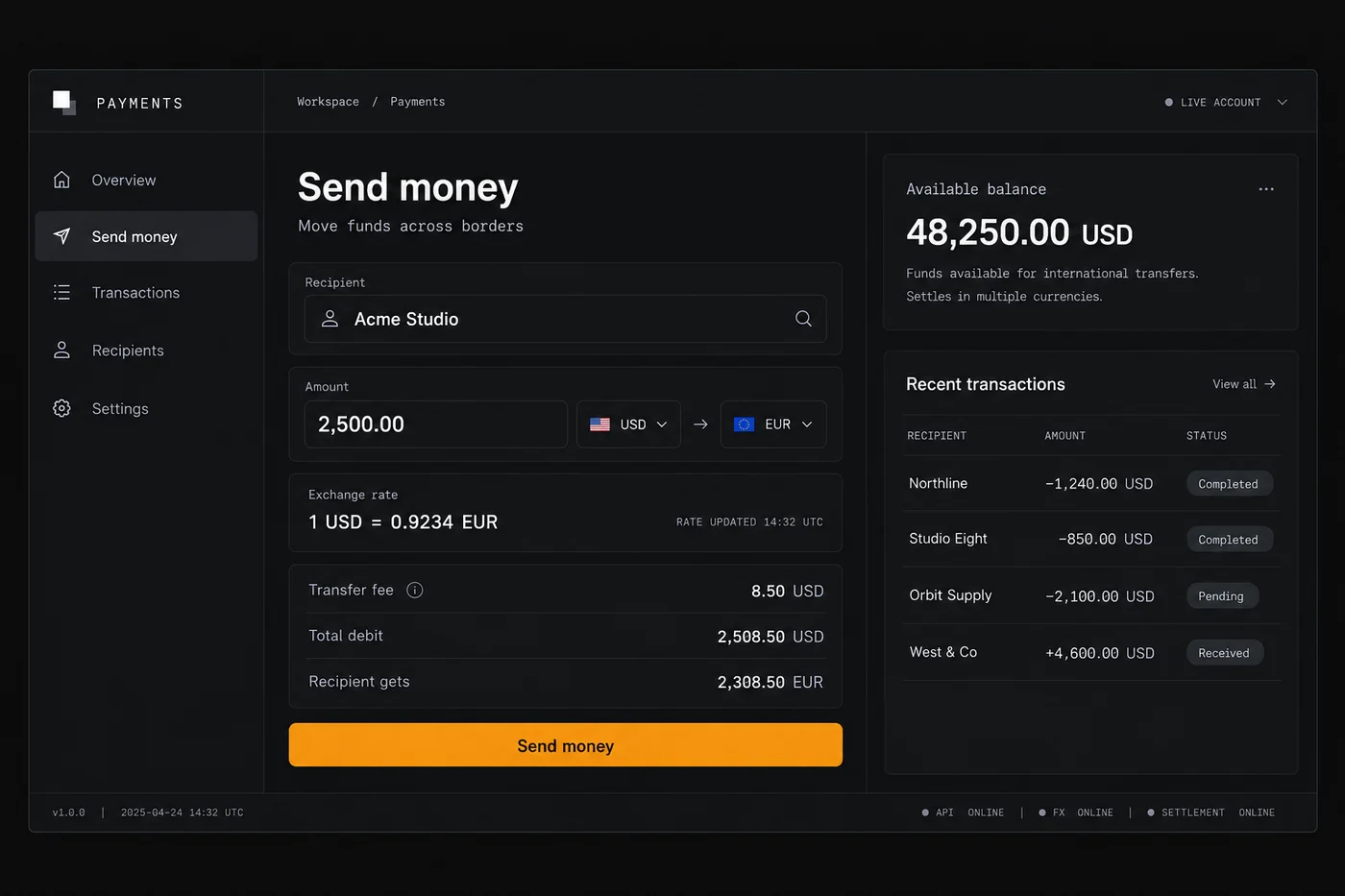
Accepting money from customers
Card and wallet processing for a checkout, subscription or invoice. The decision is about supported methods, processing fees, payout timing and chargeback handling. See the ecommerce tools hub for how this layer sits in a store.
Moving money across borders
Sending or receiving money in a different currency: paying an overseas supplier, a freelancer invoicing a foreign client, or a business with staff in more than one country. Here the exchange rate — not the headline transfer fee — usually decides the real cost.
Wise is one of the better-known services for the second problem, and we cover it in depth: read our review of Wise for how it works and who it suits.
How the cost is really built
A low “fee” can still be expensive if the exchange rate is marked up, and a cheap transfer can be slow or limited in amount. Separate the four line items below and the comparison becomes much clearer.
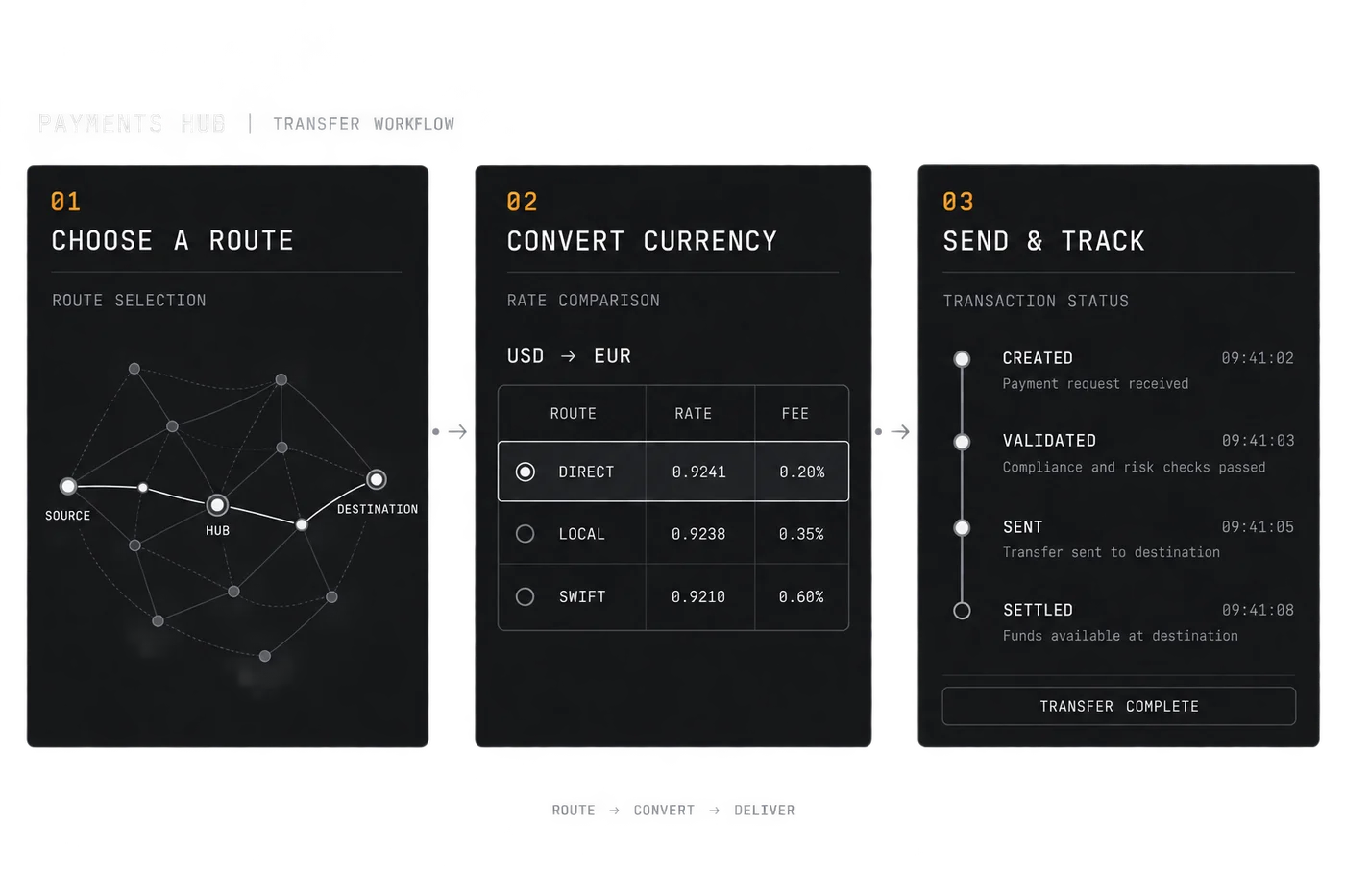
- Transfer or processing fee. The visible charge per transaction or per transfer. Easy to compare, and rarely the whole story.
- Exchange-rate margin. The gap between the rate you are given and the mid-market rate. Often the largest hidden cost on cross-border payments.
- Payout and receiving fees. Charges when the money lands, or when you withdraw to a bank account. These vary by country and method.
- Subscription or account fees. Monthly costs for business accounts or multi-currency features, whether or not you transact.
- Timing and limits. Not a cash cost, but a real one: money arriving late or a transfer cap can disrupt a supplier relationship.
Fees, rates and limits change frequently and differ by country. Model one real payment you make, then confirm the current numbers on the provider’s own page rather than relying on any comparison — ours included.
Safety, regulation and the checks that matter
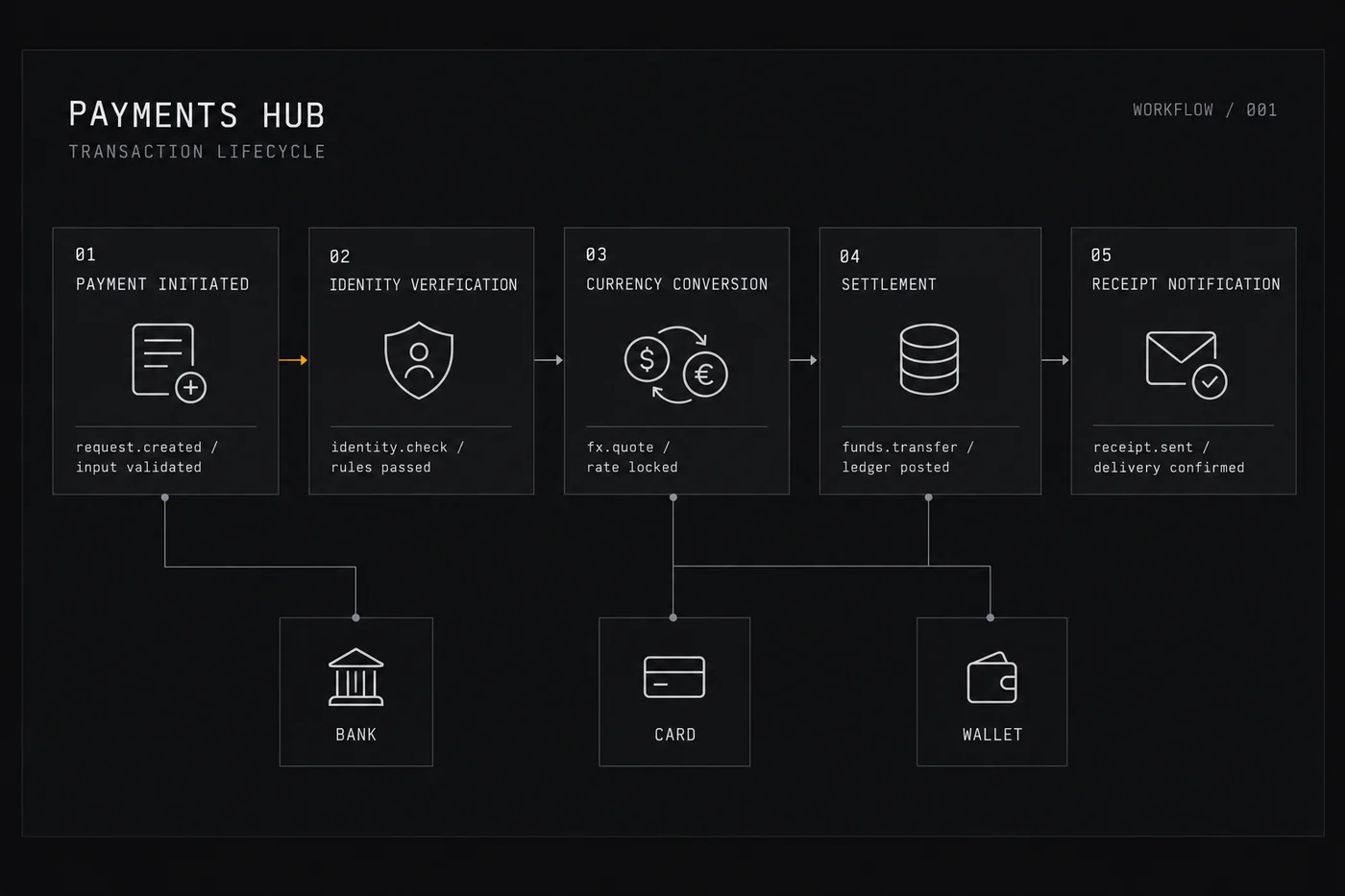
Money services are regulated, and the rules differ by country. Before you move business money through any provider, confirm the following for your own jurisdiction.

- Is it authorised or registered? Check which regulator supervises the provider in your country and what that licence covers.
- How are customer funds held? Look for how balances are safeguarded, and whether your money is protected if the provider fails.
- What verification is required? Identity and, for businesses, company documents. Expect this; it is a compliance requirement, not a red flag.
- What is the support and dispute path? Know how to raise a problem and how long a resolution should take.
- What happens to your data? Read the privacy and data-processing terms before uploading customer or company information.
None of this is vendor-specific advice. The same checklist applies whether you choose a bank, a transfer service or a payment processor; it is simply how to reduce risk.
Match the tool to the job you actually have
Most small businesses need one of the four scenarios below. Read the one that matches you; ignore the rest.
You sell online
You need a card processor at checkout that supports the methods your customers use, with sane payout timing. Compare on total cost at your average order value, not the marketing headline rate.
You invoice clients
The job is getting paid on time with a clean record. Local bank transfer or card links usually cover domestic clients; cross-border invoices are where a transfer service starts to make sense.
You pay suppliers or staff abroad
Volume and regularity decide the tool. Occasional payments rarely justify a new account; recurring ones usually pay back a service with a tighter exchange rate. See our Wise review for one option in this category.
You receive money from abroad
Freelancers and small exporters should compare what arrives after conversion, not the amount sent. Ask what rate was applied and what the receiving fee was, then check if a multi-currency account would keep more of it.
If the money problem is really an operations problem, connect it to the rest of your stack through the business software hub and the automation hub.
How we cover payments and transfers

Money products change their pricing often and it varies by country, so we explain the structure and the questions to ask rather than quoting rates that may already be out of date. Any number we cannot verify is marked to be checked on the provider’s own page.
We do not accept payment for placement and a commission never changes an assessment. This hub is educational and is not financial advice — for tax or regulatory questions, consult a qualified professional. See our editorial approach and the reviews hub for how individual products are assessed.
Frequently asked
How do I choose a payment or money-transfer service?
Compare the total cost of a real transaction – conversion rate, transfer fee and any fixed charge – for the amounts and currencies you actually send.
What is the cheapest way to send money abroad?
It depends on amount and speed: some services win on exchange rate, others on fixed fees, so calculate the all-in cost for your typical transfer.
Are payment gateways the same as money transfer?
No – gateways let you accept card payments from customers, while money-transfer services move funds between accounts; most small businesses eventually need both.
How does ICode evaluate payment services?
We compare the same factors for each – exchange-rate margin, fees, speed, limits and safety.
Start with what one real payment costs you
Fee structures only make sense against your own numbers. Our guides explain what to compare and where the hidden costs sit.
Related software categories on ICODE: see our Security & privacy hub.

More guides
People also ask
What are the best payment and money transfer services?
In short: the best payment and money transfer services for a small business balance price, ease of use and support. For most teams Wise is a solid starting point, but a second option often fits specific workflows better. Compare two or three options below before you commit.
What are the best payment and money transfer services for small business?
The best payment and money transfer services for a small business are usually the ones with predictable pricing and a clear free or low-cost entry point. For most teams Wise is a good starting point; compare two or three options before you commit.
How do I choose payment and money transfer services?
Start from your workflow and budget, not the feature list. List your must-have jobs, test the top two tools on a free plan, and check how pricing scales as you grow. Our hub pages break each option down by use case.
Are there free options?
Several payment and money transfer services offer a free tier or a trial. Free plans usually cap usage or seats, so use them to validate fit, then upgrade when a limit starts to cost you time.