Home / Guides / Funnel builders
Funnel Builders & Checkout Tools
Quick answer. In short: the best funnel builders for a small business balance price, ease of use and support. For most teams Systeme.io is a solid starting point, but a second option often fits specific workflows better. Compare two or three options below before you commit.
Checkout, upsells and page builders for launching an offer — compared on fees, flexibility and how fast you can ship.
Disclosure: ICode is an independent publisher. Where a page contains affiliate links we may earn a commission at no extra cost to you. See our Affiliate Disclosure.
Which path fits you?
Funnel builders differ most on fees, upsells and how much of your stack they replace. Find your situation below.
“I am launching my first funnel”
Start with our systeme.io review — one account covering pages, checkout, email and a starter course.
“I need serious funnel logic”
Complex branching and high-volume funnels point to a heavier builder. Our planned ClickFunnels review covers where the extra cost is justified.
“I am weighing two options”
Our planned systeme.io vs ClickFunnels comparison lines up price model, fees and funnel depth side by side.
“I want a shortlist first”
Our planned best funnel builders round-up ranks options by use case rather than price alone.
What we cover in this section
Checkout & fees
Transaction fees versus flat pricing, and what each costs at scale.
Upsells & order bumps
How native vs third-party upsells affect conversion.
Page flexibility
Design freedom versus speed to launch.
What “funnel builders” actually covers
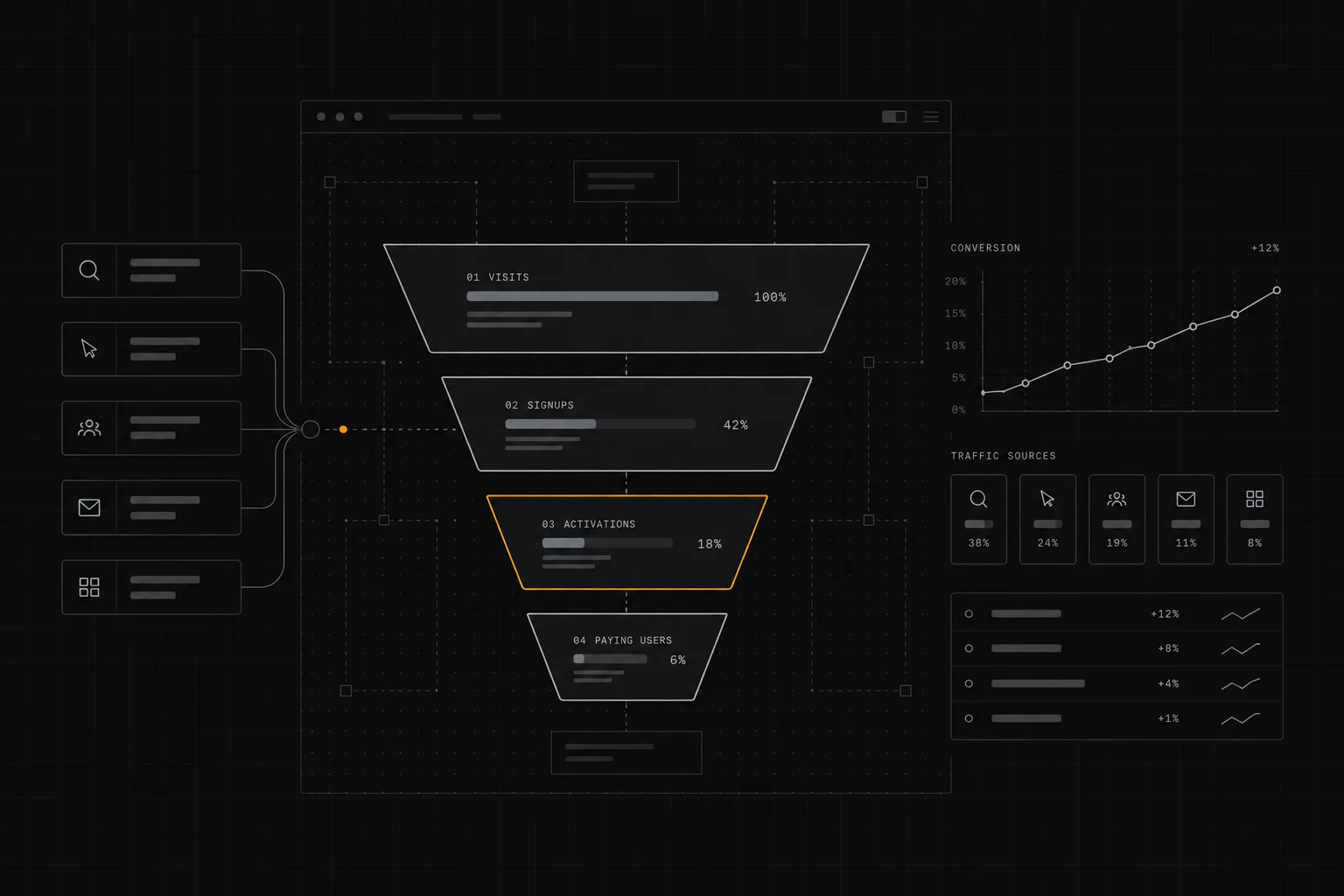
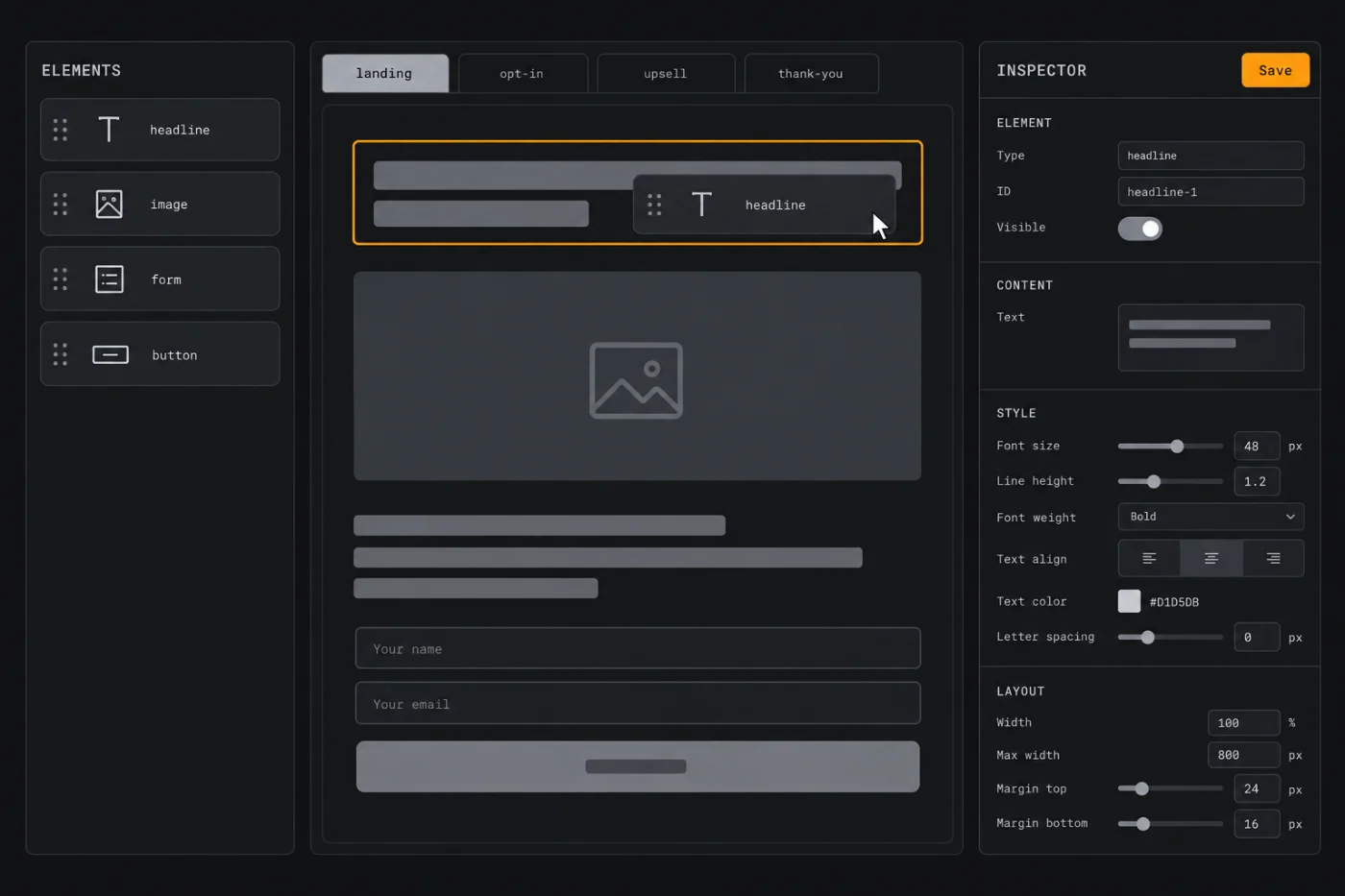
A funnel builder is a page builder with a checkout attached. You get landing pages designed to move a visitor toward one action, then order bumps, upsells and a cart — usually with email and sometimes courses bundled in. The important variable is not how pretty the builder is, it is how you are charged when a sale happens.
Two pricing philosophies dominate. Flat-fee tools charge a monthly subscription and let you keep the full sale, which rewards volume. Transaction-fee tools charge little or nothing monthly but take a percentage of each order, which is cheap at the start and expensive once you sell a lot. All-in-one tools then bundle email and courses, replacing several subscriptions but concentrating your business in one place.
How to choose, in order of impact
- How you are charged per sale — model your expected monthly volume against a flat fee and a percentage before anything else.
- Upsells and order bumps — the reason funnels beat plain landing pages; check how flexible they are and what they cost.
- Page-building flexibility — templates get you live fast, but customisation is where a funnel starts to match your offer.
- How much stack it replaces — bundled email and courses can save money, or force you into tools you would not otherwise pick.
- Ownership — your domain, your data, and how hard it is to move a funnel elsewhere.
Common mistakes
- Ignoring transaction fees until they quietly exceed a flat-fee plan.
- Buying a funnel builder to fix an email problem it only half solves.
- Launching on a subdomain you do not own, then facing a painful migration.
- Building a twelve-step funnel before proving that people buy the first step.
Buying criteria
- Transaction fees — per-sale cost versus subscription.
- Payment options — cards, wallets and local methods.
- Upsells — built-in or bolt-on.
- Templates — starting points that convert.
- Migrations — moving funnels without breaking links.
How we weigh funnel builders
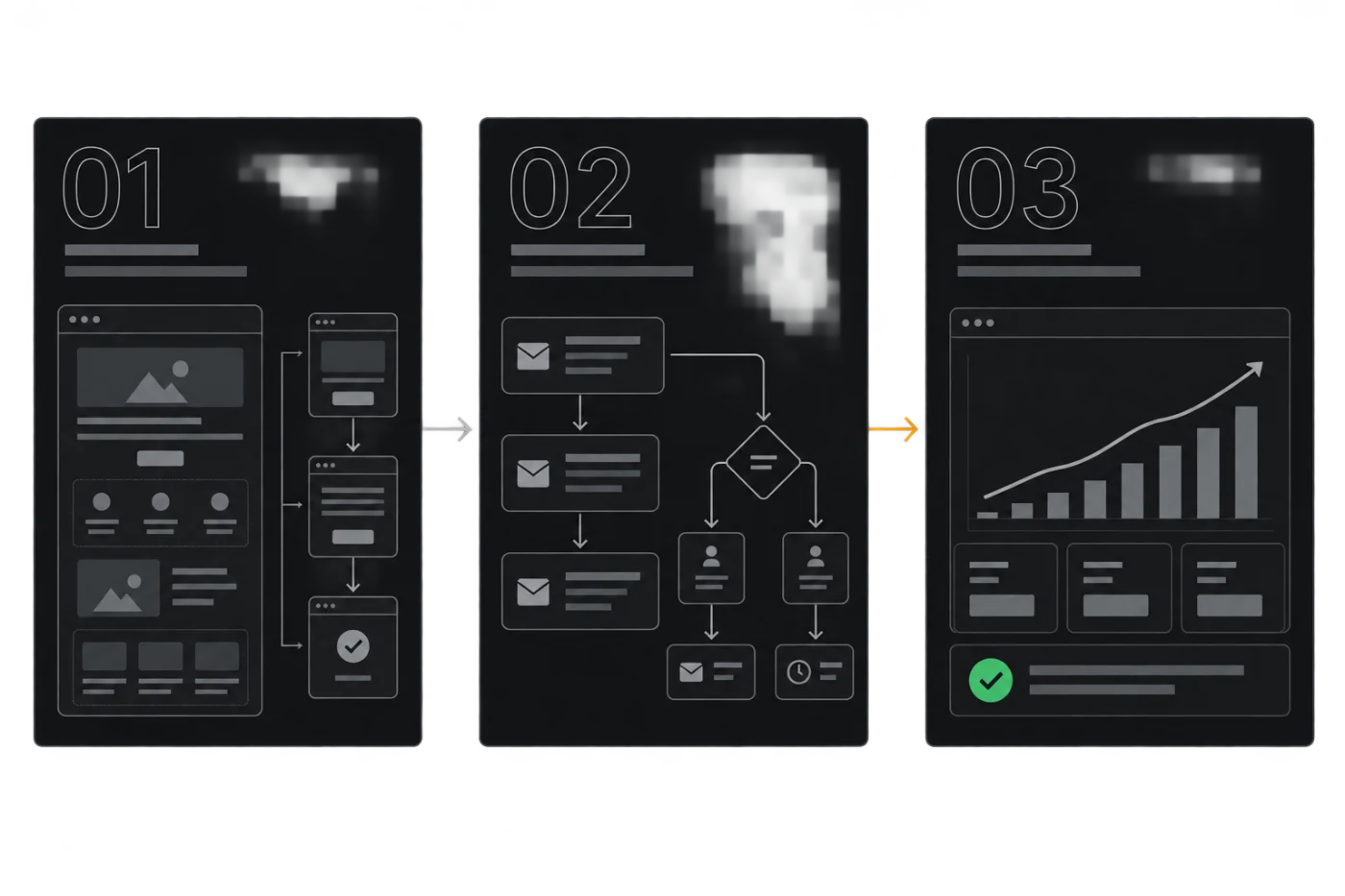
Money in and money out is the axis that matters most here, so fees and upsells carry the heaviest weights. This is our own editorial framework, not a vendor score.
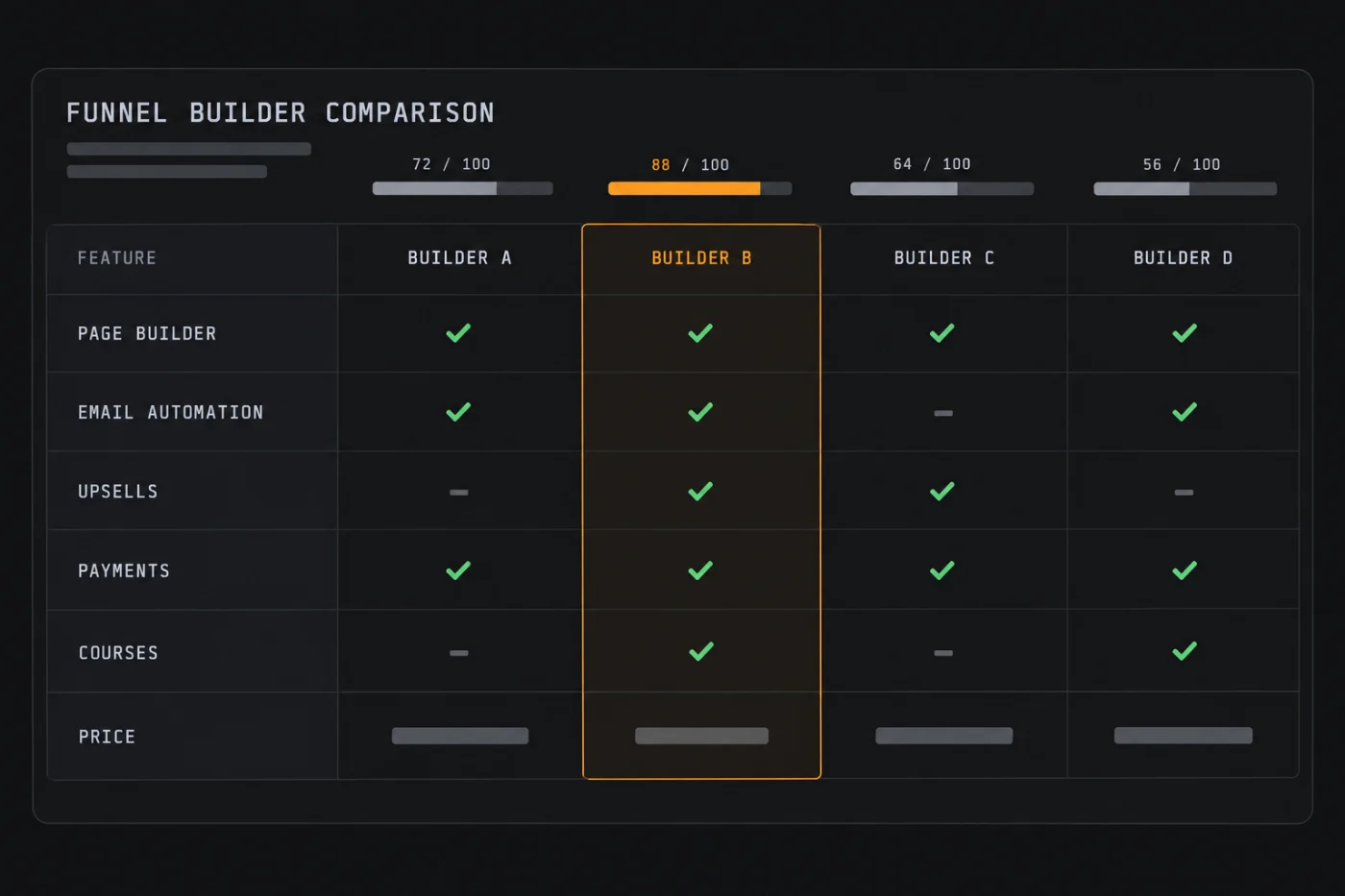
| Criterion | Weight | What we look at | Why it matters |
|---|---|---|---|
| Checkout & transaction fees | 25% | Percentage per order vs flat monthly fee; payment methods; currency support | Fees scale with success, subscriptions do not |
| Upsells & order bumps | 20% | One-click upsells, order bumps, A/B testing, how easily they are customised | The main lever that raises average order value |
| Builder flexibility | 20% | Templates, custom layouts, mobile behaviour, load speed of published pages | A pretty builder that sells slowly is still slow |
| All-in-one scope | 15% | Bundled email, courses, memberships and whether they are good enough to use | Can replace subscriptions — or become dead weight |
| Pricing model | 10% | Plan tiers, contact or page limits, what forces an upgrade | Predicts the bill before your traffic grows |
| Ownership & portability | 10% | Custom domain, export of pages and contacts, migration support | Your leverage if you ever want to leave |
How to use the weighting
Score each builder 1 to 5 per row and total. Below a few thousand dollars of monthly sales a percentage fee is often cheaper. Above it, a flat fee usually wins, and the crossing point is worth working out with your own numbers before you sign up.
Frequently asked
What is a funnel builder?
A funnel builder is software for creating landing pages, opt-ins, upsells and checkout flows without code, usually with templates, payments and analytics built in.
How do funnel builders charge?
Most charge a monthly subscription and some add a transaction fee per sale, so the true cost depends on your order volume as well as the plan price.
Are funnel builders worth it for a small business?
They pay off if you sell a course, service or digital product and want to test offers quickly without a developer; a plain website builder is cheaper if you only need brochure pages.
How does ICode compare funnel platforms?
We use one criteria set for all of them – template quality, checkout and fee structure, upsell capability, payment options and speed to publish.
Featured reviews, comparisons & guides
The deeper pages in this section, split by what you are trying to decide.
Reviews
- systeme.io review — funnels, email and courses in one account.
- ClickFunnels review — the specialist funnel option.
Comparisons & best-of
- systeme.io vs ClickFunnels — low-cost all-in-one against funnel depth.
- Best funnel builders — shortlist by offer type and volume.
Related
- Course platforms — if your funnel sells a course.
- Email marketing software — if you would rather split the stack.
Not sure which tool fits?
Start with the comparison that matches your workflow — no signup required.

Related software categories on ICODE: see our Social & creative and Analytics hubs.
More guides
People also ask
What are the best funnel builders?
In short: the best funnel builders for a small business balance price, ease of use and support. For most teams Systeme.io is a solid starting point, but a second option often fits specific workflows better. Compare two or three options below before you commit.
What are the best funnel builders for small business?
The best funnel builders for a small business are usually the ones with predictable pricing and a clear free or low-cost entry point. For most teams Systeme.io is a good starting point; compare two or three options before you commit.
How do I choose funnel builders?
Start from your workflow and budget, not the feature list. List your must-have jobs, test the top two tools on a free plan, and check how pricing scales as you grow. Our hub pages break each option down by use case.
Are there free options?
Several funnel builders offer a free tier or a trial. Free plans usually cap usage or seats, so use them to validate fit, then upgrade when a limit starts to cost you time.