Independent analysis. This page may contain affiliate links.
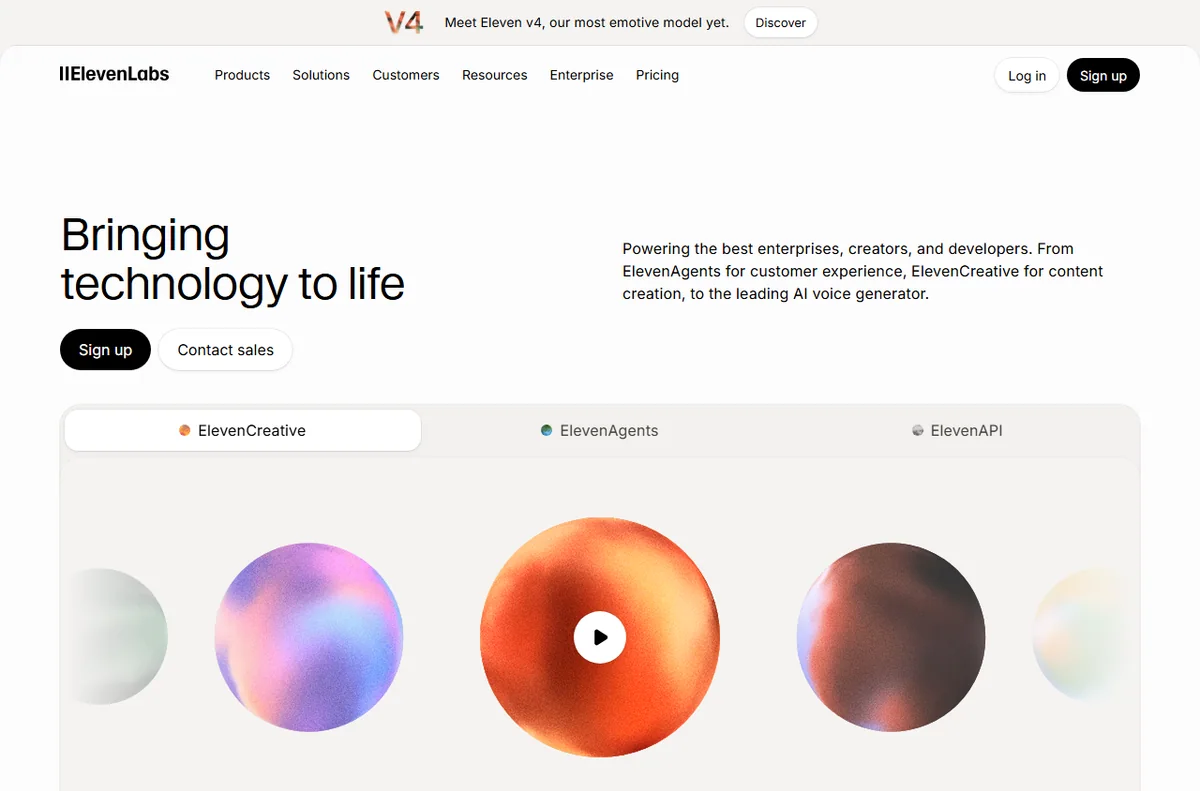
ElevenLabs and Zapier do different jobs, so most comparisons mislead. ElevenLabs generates speech from text: narration, dubbing, cloned voices, audio for video. Zapier moves data between apps: when something happens in one tool, it triggers an action in another. You would pick ElevenLabs to produce audio and Zapier to automate the workflow around it. Only one of those is a voice decision.
What each tool actually is
ElevenLabs is a voice platform. Its core output is an audio file or a live audio stream generated from text, with controls for voice, pacing, and language. Its value is the sound and the speed of production.
Zapier is an integration layer. It watches for triggers in thousands of apps and runs actions elsewhere: a new form submission creates a CRM record, a new file gets copied, a message gets posted. Its value is removing manual copy-paste between systems that were never designed to talk.
Where the confusion comes from
Both tools appear in the same stack conversation because both get described as automation. A creator hears that one tool can turn a blog post into a podcast episode and assumes the other can too. That is a category error, and it leads to buying the wrong subscription.
The test is simple. If your desired output is sound, you need a voice tool. If your desired output is a record moving from one system to another, you need an automation tool. Neither replaces the other, and neither is a cheaper version of the other.
Using them together, which is the real answer
The useful pattern is a chain. A new article lands in your CMS, an automation tool notices it and sends the text to the voice platform, the returned audio is saved to storage, and a final step publishes it to your podcast host and posts a link. Each tool does what it is good at.
You can build the same chain with code instead of an automation tool, and at volume that is usually cheaper and more reliable. The automation tool wins when non-technical people must maintain the workflow without a deploy.
How to choose if you only have budget for one
Ask what is currently costing you hours. If you are recording and re-recording narration, the voice platform removes that work. If you are copying data between a form, a spreadsheet, and a CRM daily, the automation tool removes that work.
Do not buy a voice tool hoping it will integrate your stack, and do not buy an automation tool hoping it will generate audio. Both disappointments are common, and both are avoidable with one honest look at the task you want to disappear.
A cheaper path some teams miss
If your workflow is a single predictable chain, a short script on a schedule can replace an automation subscription. It is less visible to non-technical teammates, but it costs nothing per task and breaks loudly instead of silently.
The trade-off is maintenance. Automation tools absorb API changes for you; your own script does not. Choose based on who will own the workflow in six months, not on which option looks clever today.
What to do next
- Write down the output you need: audio file, or data moved.
- Count the hours that output currently costs you.
- Check whether the tool produces that output natively.
- Only then compare plans, on the unit you will actually consume.
The bottom line
This is not a versus. ElevenLabs makes sound; Zapier moves data. Decide which output you are missing, buy that, and connect them later if the workflow earns it.
If you are choosing between them for a content operation, the voice tool usually produces a visible asset faster, while the automation tool pays back in hours saved quietly.
Try ElevenLabs – the most natural AI voice I have tested for narration and dubbing.
This link does not change the price.
For the full breakdown of features, limits and alternatives, read our ElevenLabs review.
Frequently asked questions
Can Zapier trigger ElevenLabs?
Yes, through the available integration or a webhook, which is the usual way people connect the two.
Is ElevenLabs an automation platform?
No. It generates voice. It has an API, but it does not orchestrate workflows across other apps.
Which should I learn first?
Learn the one that removes your current bottleneck. If you have no audio, start with voice. If you have audio but manual handoffs, start with automation.
\n
Leave a Reply