What Make includes for free, where the limits land, and the moment it makes sense to upgrade.
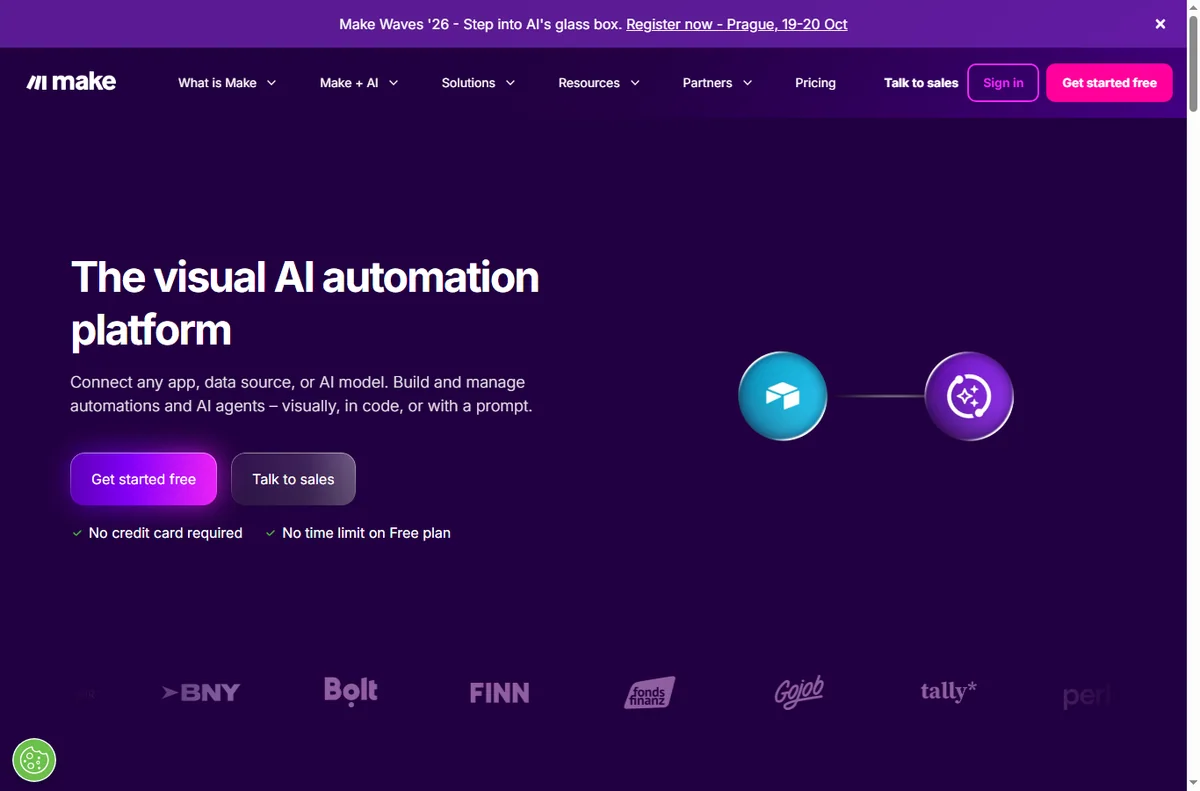
Make official site (image: make.com)
Independent analysis. This page may contain affiliate links. Some links here are referral links; if you sign up through one we may earn a reward at no extra cost to you, and it never changes what we recommend. See our Affiliate Disclosure.
TL;DR
Make has a free or free-to-start plan: yes.
The free tier is enough to evaluate the tool and run a small project.
Paid plans lift volume, seats and advanced features.
Check the current limits on the official site — they change.
What the free plan includes
Visual, no-code automation for multi-step workflows.
Core features of Make at small scale
A capped amount of usage, seats or storage
Where the free limits are
Usage or volume ceilings
Missing advanced features
Branding or export restrictions
When to upgrade
Upgrade when a limit blocks real work rather than testing: your list, tasks or storage outgrow the cap, or you need a feature reserved for paid tiers. If you are still experimenting, stay free.
Free alternatives to compare
If the free tier is too tight, look at other automation tools — several offer more generous free plans. Our Automation roundup compares them.
Ready to try Make? Check current plans and pricing on the official site. Visit Make →(affiliate link)
Frequently asked questions
Is the Make free plan really free?
Yes — there is no charge for the free tier, though it comes with usage limits and fewer features than paid plans.
What are the limits of the free plan?
The free tier caps usage, seats or features. Check the official pricing page, since limits change over time.
Should I upgrade from free?
Only when a limit blocks work you actually need to do. Until then, the free tier is a fair way to evaluate Make.
GetResponse free plan explained: what you actually get
What GetResponse includes for free, where the limits land, and the moment it makes sense to upgrade.
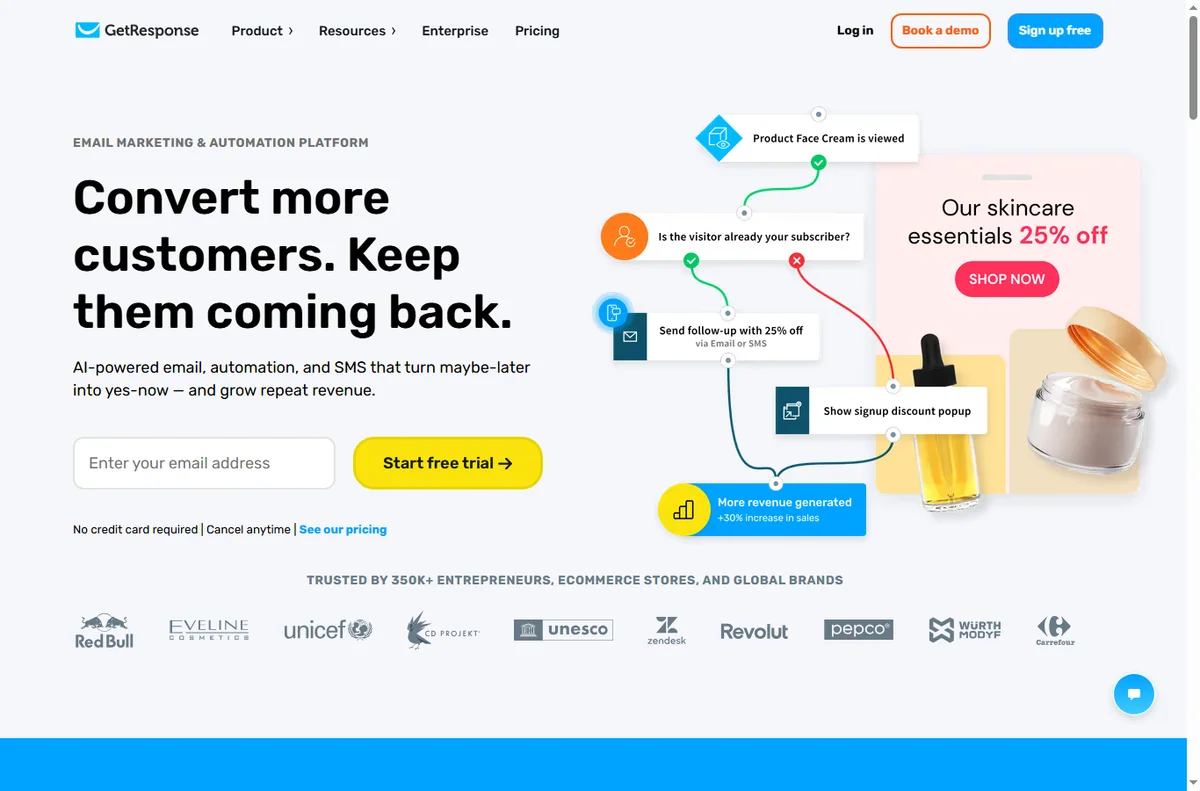
GetResponse official site (image: getresponse.com)
Independent analysis. This page may contain affiliate links. Some links here are referral links; if you sign up through one we may earn a reward at no extra cost to you, and it never changes what we recommend. See our Affiliate Disclosure.
TL;DR
GetResponse has a free or free-to-start plan: yes.
The free tier is enough to evaluate the tool and run a small project.
Paid plans lift volume, seats and advanced features.
Check the current limits on the official site — they change.
Email marketing with funnels, webinars and landing pages.
Core features of GetResponse at small scale
A capped amount of usage, seats or storage
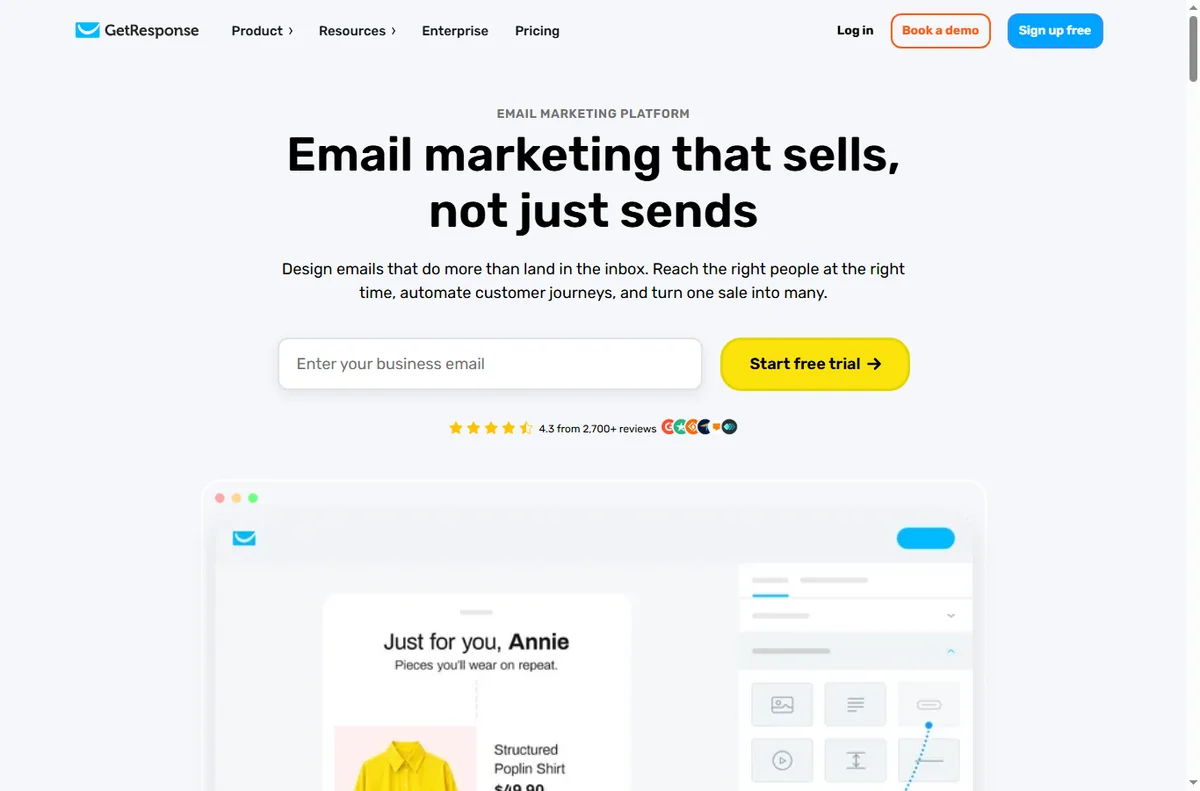
GetResponse pricing (image: getresponse.com)
Where the free limits are
Usage or volume ceilings
Missing advanced features
Branding or export restrictions
When to upgrade
Upgrade when a limit blocks real work rather than testing: your list, tasks or storage outgrow the cap, or you need a feature reserved for paid tiers. If you are still experimenting, stay free.
If the free tier is too tight, look at other email marketing tools — several offer more generous free plans. Our Email Marketing roundup compares them.
Ready to try GetResponse? Check current plans and pricing on the official site. Visit GetResponse →(affiliate link)
GetResponse automation (image: getresponse.com)
Frequently asked questions
Is the GetResponse free plan really free?
Yes — there is no charge for the free tier, though it comes with usage limits and fewer features than paid plans.
What are the limits of the free plan?
The free tier caps usage, seats or features. Check the official pricing page, since limits change over time.
Should I upgrade from free?
Only when a limit blocks work you actually need to do. Until then, the free tier is a fair way to evaluate GetResponse.
MailerLite free plan explained: what you actually get
What MailerLite includes for free, where the limits land, and the moment it makes sense to upgrade.
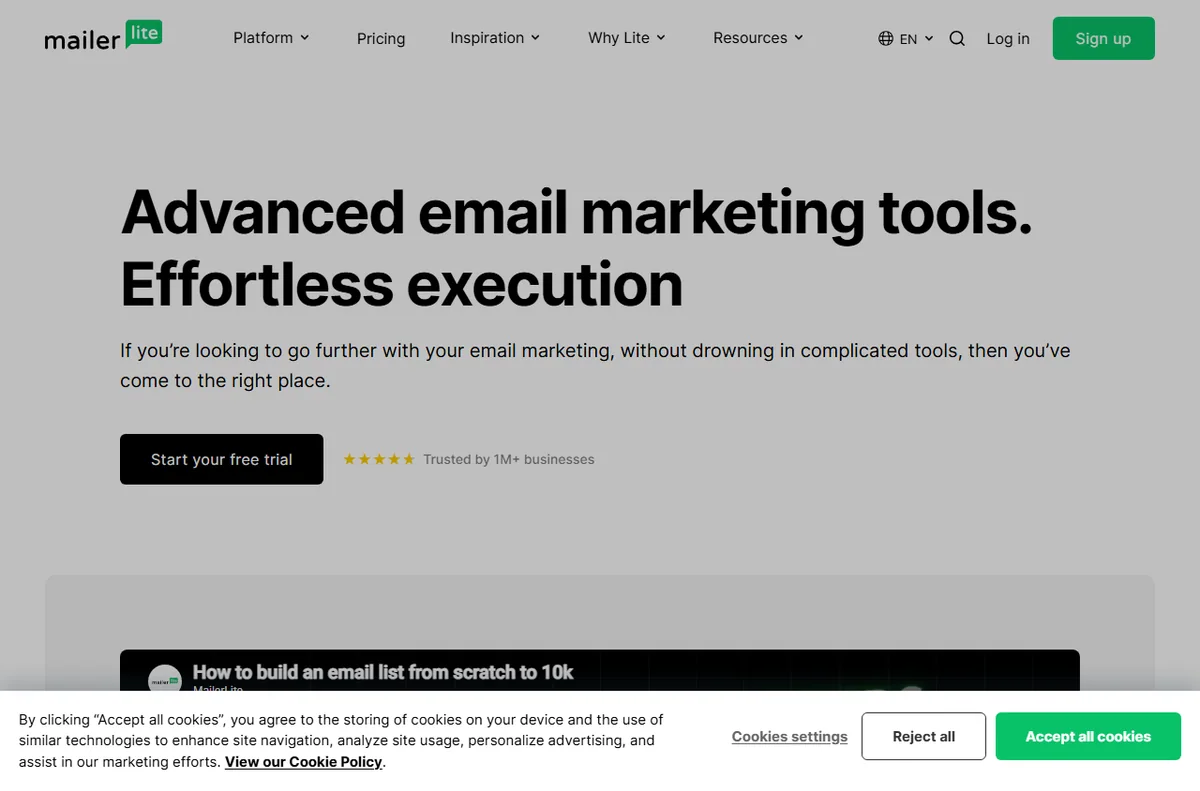
MailerLite official site (image: mailerlite.com)
Independent analysis. This page may contain affiliate links. Some links here are referral links; if you sign up through one we may earn a reward at no extra cost to you, and it never changes what we recommend. See our Affiliate Disclosure.
TL;DR
MailerLite has a free or free-to-start plan: yes.
The free tier is enough to evaluate the tool and run a small project.
Paid plans lift volume, seats and advanced features.
Check the current limits on the official site — they change.
MailerLite features (image: mailerlite.com)
What the free plan includes
Beginner-friendly email marketing with a generous free plan.
Core features of MailerLite at small scale
A capped amount of usage, seats or storage
MailerLite pricing (image: mailerlite.com)
Where the free limits are
Usage or volume ceilings
Missing advanced features
Branding or export restrictions
When to upgrade
Upgrade when a limit blocks real work rather than testing: your list, tasks or storage outgrow the cap, or you need a feature reserved for paid tiers. If you are still experimenting, stay free.
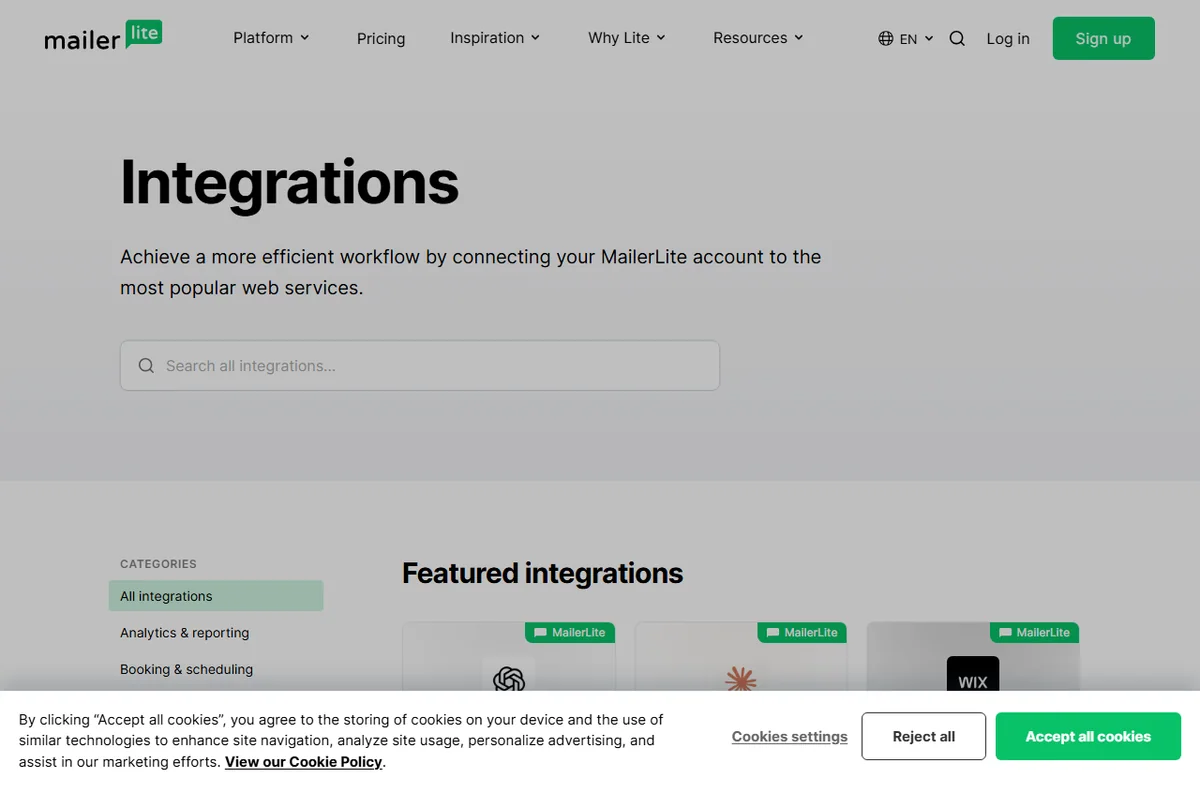
MailerLite integrations (image: mailerlite.com)
Free alternatives to compare
If the free tier is too tight, look at other email marketing tools — several offer more generous free plans. Our Email Marketing roundup compares them.
Ready to try MailerLite? Check current plans and pricing on the official site. Visit MailerLite →(affiliate link)
MailerLite templates (image: mailerlite.com)
Frequently asked questions
Is the MailerLite free plan really free?
Yes — there is no charge for the free tier, though it comes with usage limits and fewer features than paid plans.
What are the limits of the free plan?
The free tier caps usage, seats or features. Check the official pricing page, since limits change over time.
Should I upgrade from free?
Only when a limit blocks work you actually need to do. Until then, the free tier is a fair way to evaluate MailerLite.
What Zapier includes for free, where the limits land, and the moment it makes sense to upgrade.
Zapier official site (image: zapier.com)
Independent analysis. This page may contain affiliate links. Some links here are referral links; if you sign up through one we may earn a reward at no extra cost to you, and it never changes what we recommend. See our Affiliate Disclosure.
TL;DR
Zapier has a free or free-to-start plan: yes.
The free tier is enough to evaluate the tool and run a small project.
Paid plans lift volume, seats and advanced features.
Check the current limits on the official site — they change.
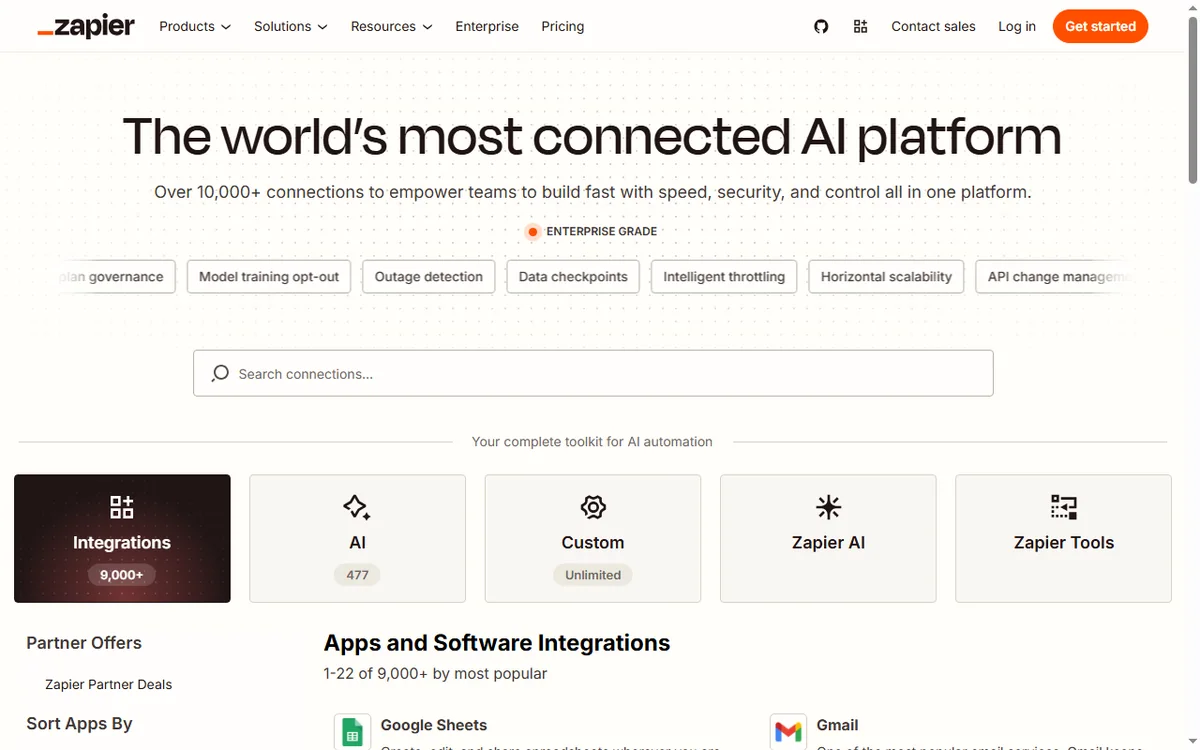
Zapier apps (image: zapier.com)
What the free plan includes
The widest app-to-app integration library for simple automations.
Core features of Zapier at small scale
A capped amount of usage, seats or storage
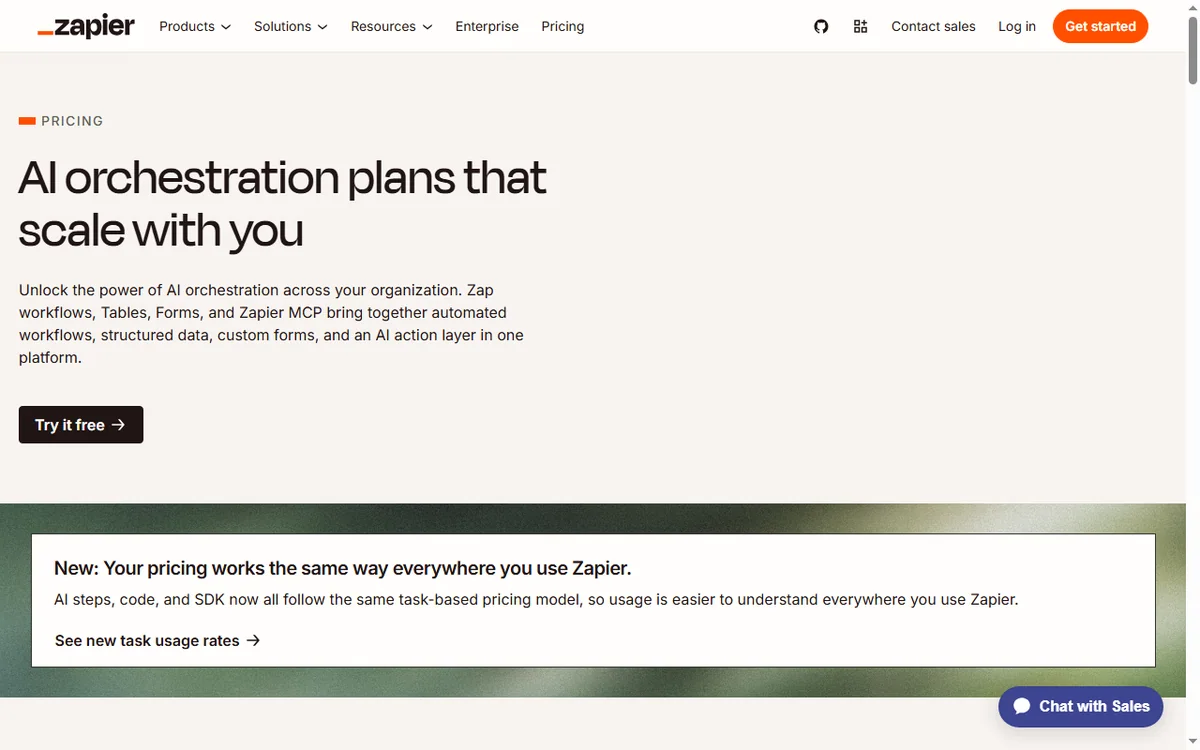
Zapier pricing (image: zapier.com)
Where the free limits are
Usage or volume ceilings
Missing advanced features
Branding or export restrictions
When to upgrade
Upgrade when a limit blocks real work rather than testing: your list, tasks or storage outgrow the cap, or you need a feature reserved for paid tiers. If you are still experimenting, stay free.
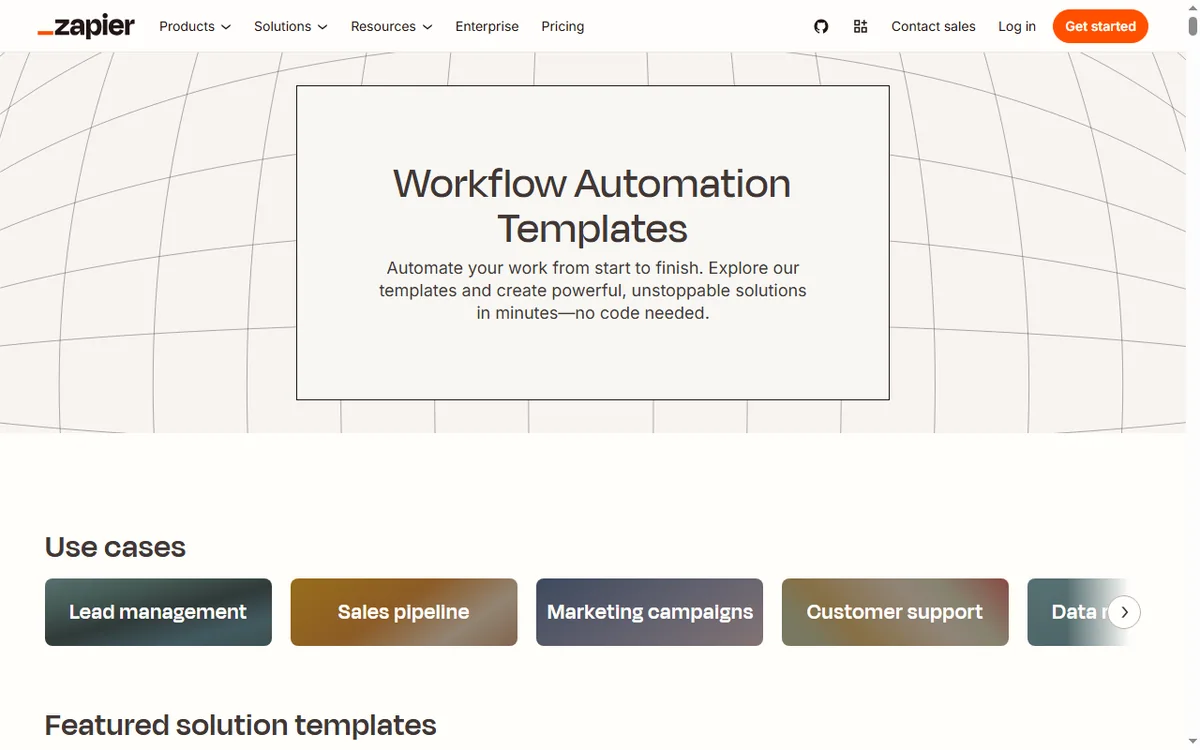
Zapier templates (image: zapier.com)
Free alternatives to compare
If the free tier is too tight, look at other automation tools — several offer more generous free plans. Our Automation roundup compares them.
Ready to try Zapier? Check current plans and pricing on the official site. Visit Zapier →(affiliate link)
Zapier sign-up (image: zapier.com)
Frequently asked questions
Is the Zapier free plan really free?
Yes — there is no charge for the free tier, though it comes with usage limits and fewer features than paid plans.
What are the limits of the free plan?
The free tier caps usage, seats or features. Check the official pricing page, since limits change over time.
Should I upgrade from free?
Only when a limit blocks work you actually need to do. Until then, the free tier is a fair way to evaluate Zapier.
Knowledge · funnel builders · updated October 9, 2026
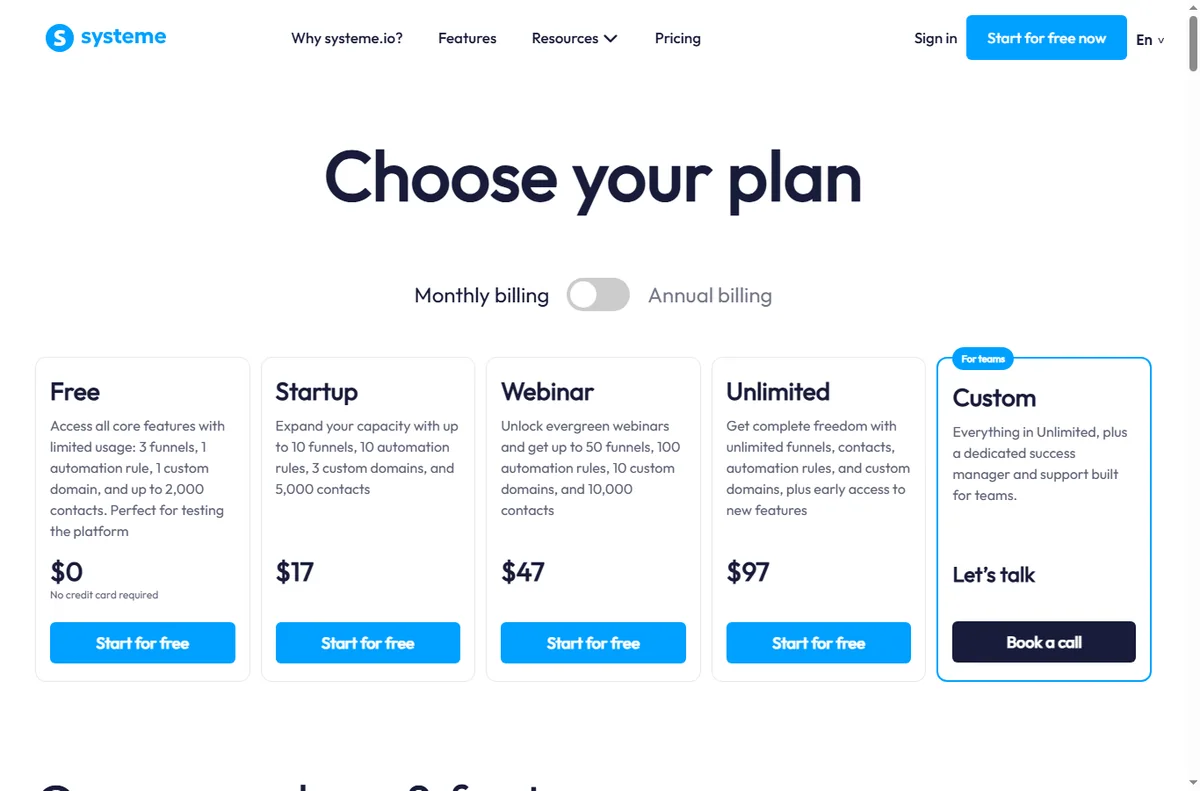
Systeme.io free plan explained: what you get and the limits
Systeme.io is unusual in offering a genuinely usable free plan. Here is what a free account lets you do, where the limits bite, and when it is worth upgrading.
Independent analysis. This page may contain affiliate links. If you sign up through a link on this page we may earn a reward at no extra cost to you, and it never changes what we recommend. We are an independent publisher and are not affiliated with, endorsed by, or an official partner of any tool mentioned. See our Affiliate Disclosure.
TL;DR
The free plan lets you build funnels, collect leads and sell, without a credit card.
The main limits are on contacts, emails and premium features rather than on whether you can launch.
It is enough to validate an offer and learn the platform before you pay.
Upgrade when your list or your traffic outgrows the ceilings, not before.
Confirm the current limits and pricing on the official site — they change.
Most funnel builders ask for a card before you can build anything. Systeme.io takes the opposite approach: its free plan lets you create funnels, capture leads and run a basic business without paying up front.
That makes it a useful way to learn the workflow and test an idea before you commit. The free plan is real, but it is a starting tier, not a finished business — the limits are deliberate and worth understanding. The plan is a genuine starting tier, not a disguised trial, so it is worth knowing exactly where the ceiling sits before you build.
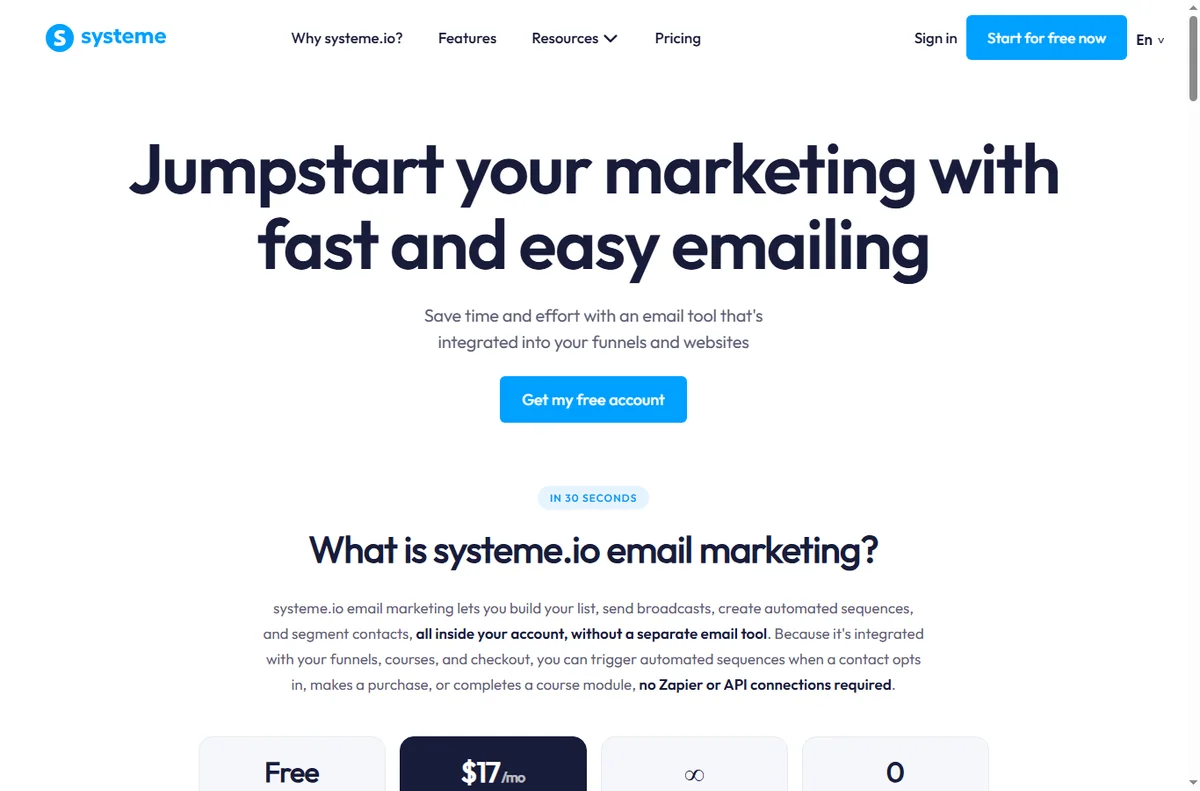
Systeme email marketing (image: systeme.io)
How the free plan works
You sign up, pick a funnel template and publish. The builder gives you landing pages, opt-in forms, an email list and basic automation in the same account as your course content.
Because everything lives in one place, there is no integration tax: no connectors to buy, no passwords to juggle. The catch is that the free tier caps how much you can send and how many contacts you can hold. In practice that means a beginner can run a real, if small, funnel and email campaign without a card on file.
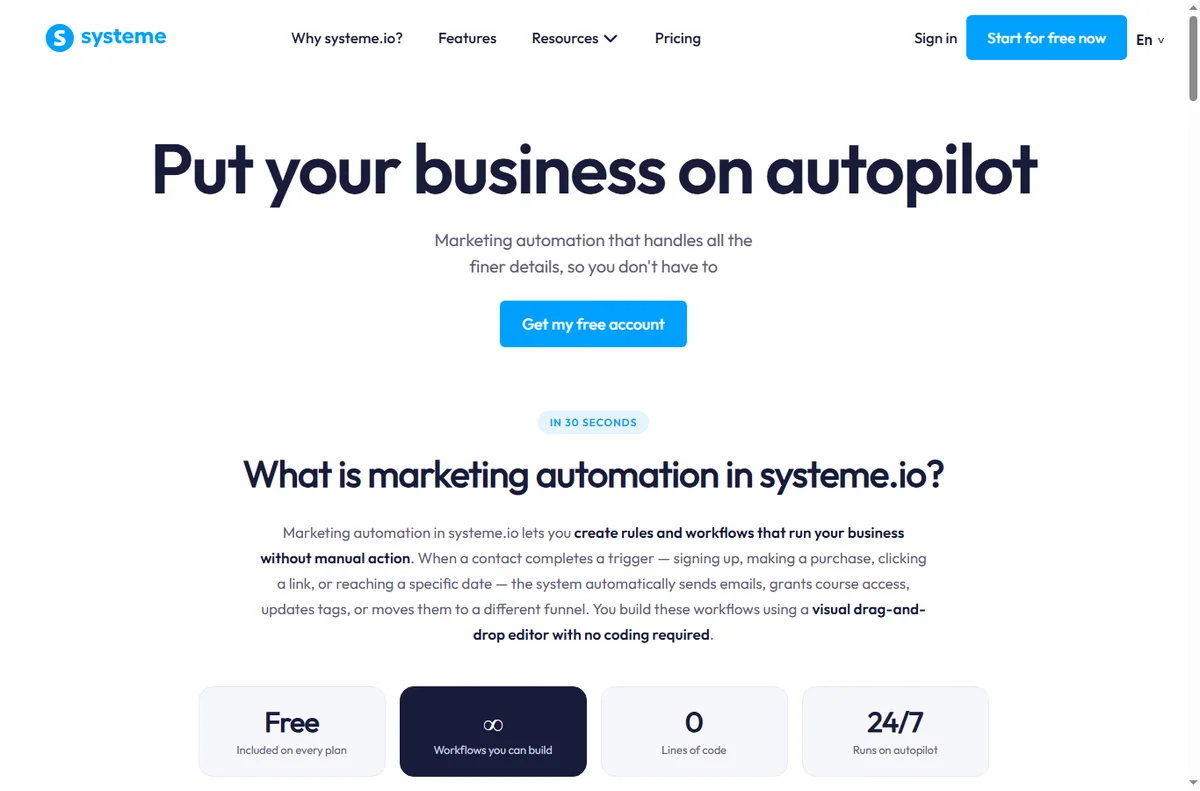
Systeme marketing automation (image: systeme.io)
What you get for free
Build and publish funnels and landing pages.
Collect leads and hold them in a built-in contact list.
Send emails to your list up to the plan limits.
Sell a product or course without a separate storefront.
Learn the whole platform before paying anything.
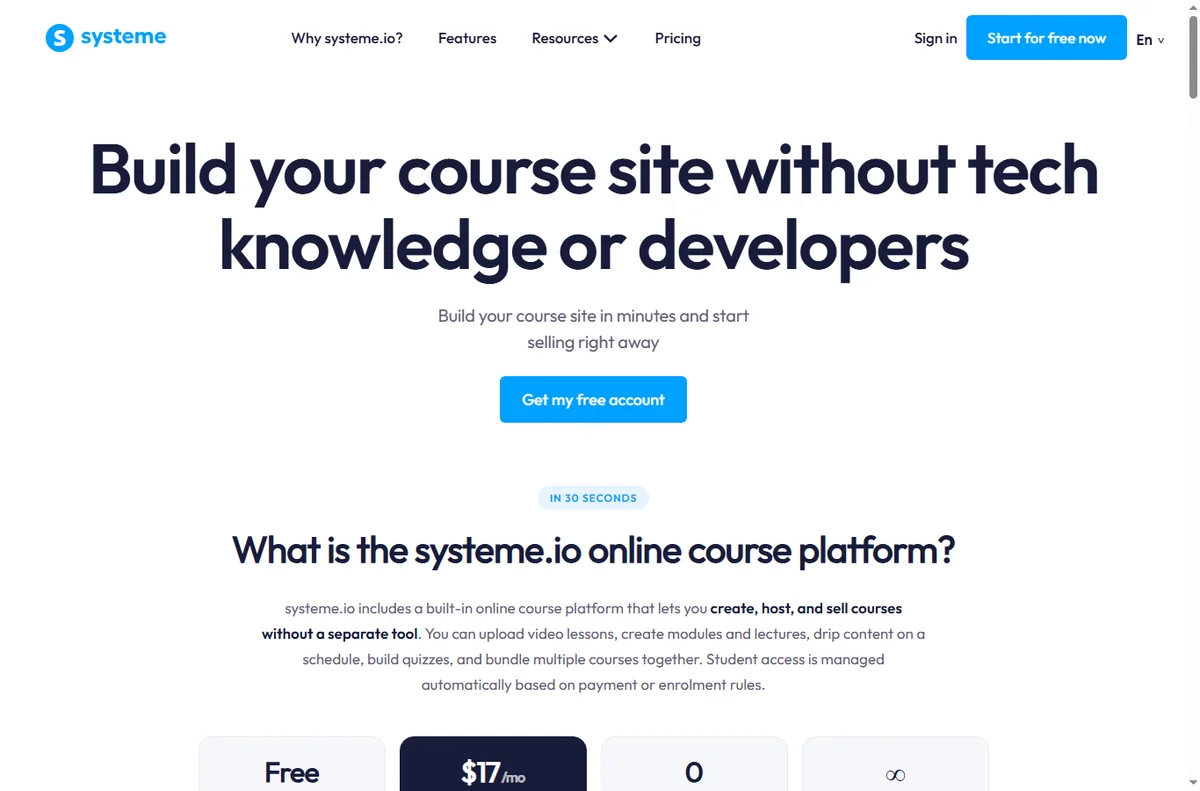
Systeme online courses (image: systeme.io)
Where the free plan stops
Contact and email limits that a growing list will hit.
Some premium features and higher capacity are paid-only.
Advanced automation and scale features sit on higher tiers.
Support and branding expectations differ from paid plans.
You will outgrow it once you market seriously — that is by design.
Key terms, plainly
Concept
Meaning
Why it matters
Free plan
A no-card starting tier with core funnel, email and course features.
Lets you validate an offer before you pay.
Contact limit
The number of leads your list can hold on the free tier.
The first ceiling a growing business hits.
Email limit
How many emails you can send within the plan.
Decides whether you can run real campaigns.
Upsell
Selling on the thank-you or checkout step.
Where growth-minded sellers earn more per lead.
Upgrade trigger
The moment the free limits slow you down.
Tells you when paying is genuinely worth it.
Plain-language terms only. Confirm exact limits on the official pricing page.
Systeme pricing (image: systeme.io)
Where this fits
The free plan fits anyone testing whether funnels and email marketing work for them, and anyone who wants to learn the platform without risk. If you are validating a course, a lead magnet or a first offer, it is enough to get real feedback. Once leads convert consistently and the limits start to slow you down, that is your signal to upgrade rather than a sign something is wrong. For the paid tiers and what they add, see the Systeme.io pricing guide, and for the bigger picture read our Systeme.io review.
Systeme register (image: systeme.io)
Frequently asked
Is the Systeme.io free plan really free?
Yes — you can build and launch without paying, and no card is required to start. The trade-off is limits on contacts, emails and premium features. Check the current limits on the official site.
What are the main limits?
The free plan caps your contacts and email sending, and reserves some advanced features for paid tiers. For most beginners those limits are generous enough to validate an offer.
When should I upgrade?
Upgrade when the limits actually slow you down — when your list outgrows the contact cap or you need premium automation. Upgrading before then just spends money you do not need to spend yet.
Can I sell courses on the free plan?
You can start selling with the free account, within its limits. Heavy course or membership businesses will want a paid tier for capacity and features.
Start free, upgrade only when you grow
No card needed to build your first funnel. Check the current limits on the official site.
Some links on this page may be referral links — we may earn a reward if you sign up, at no extra cost to you. We are an independent publisher. See our Affiliate Disclosure.
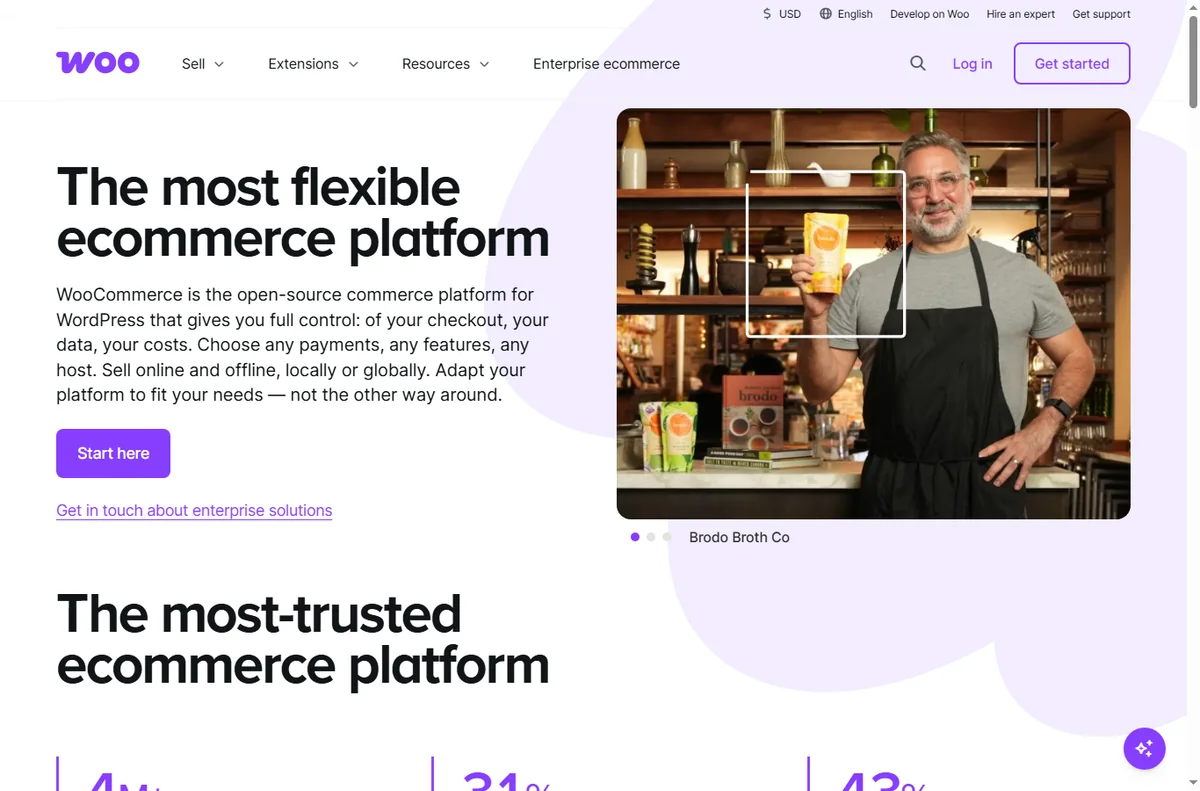
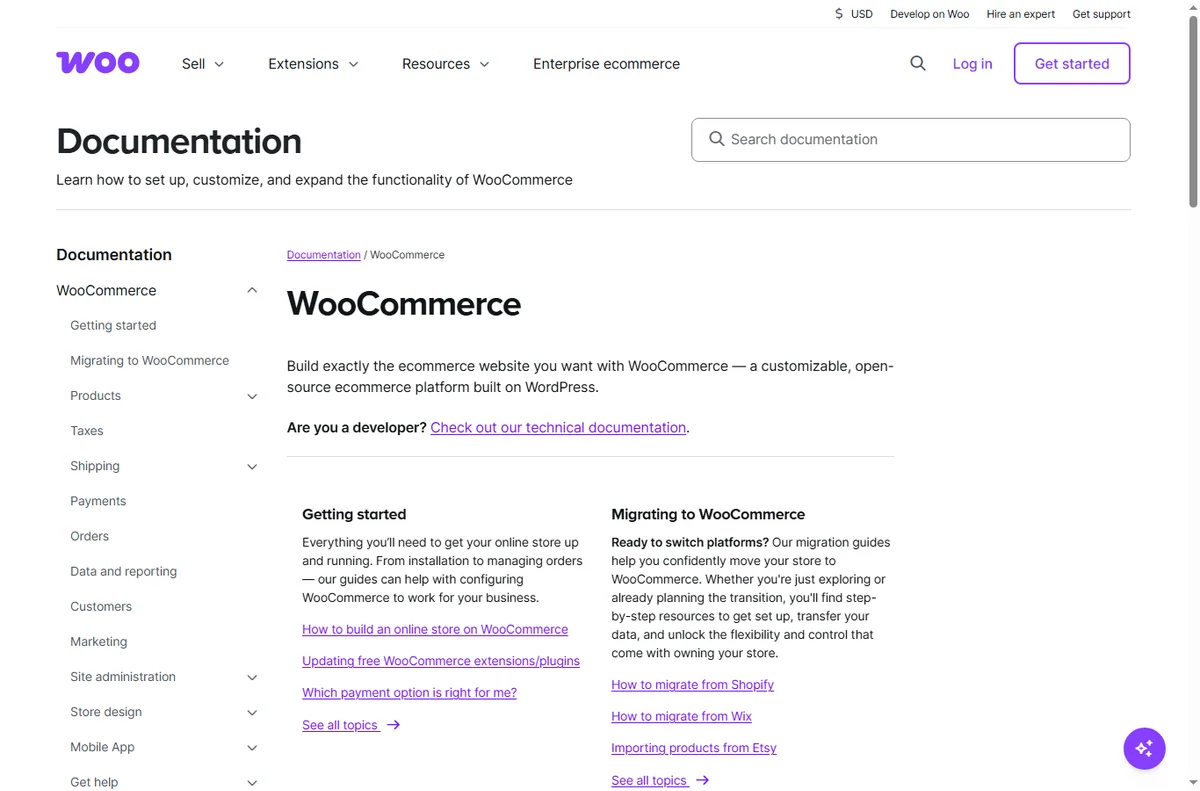
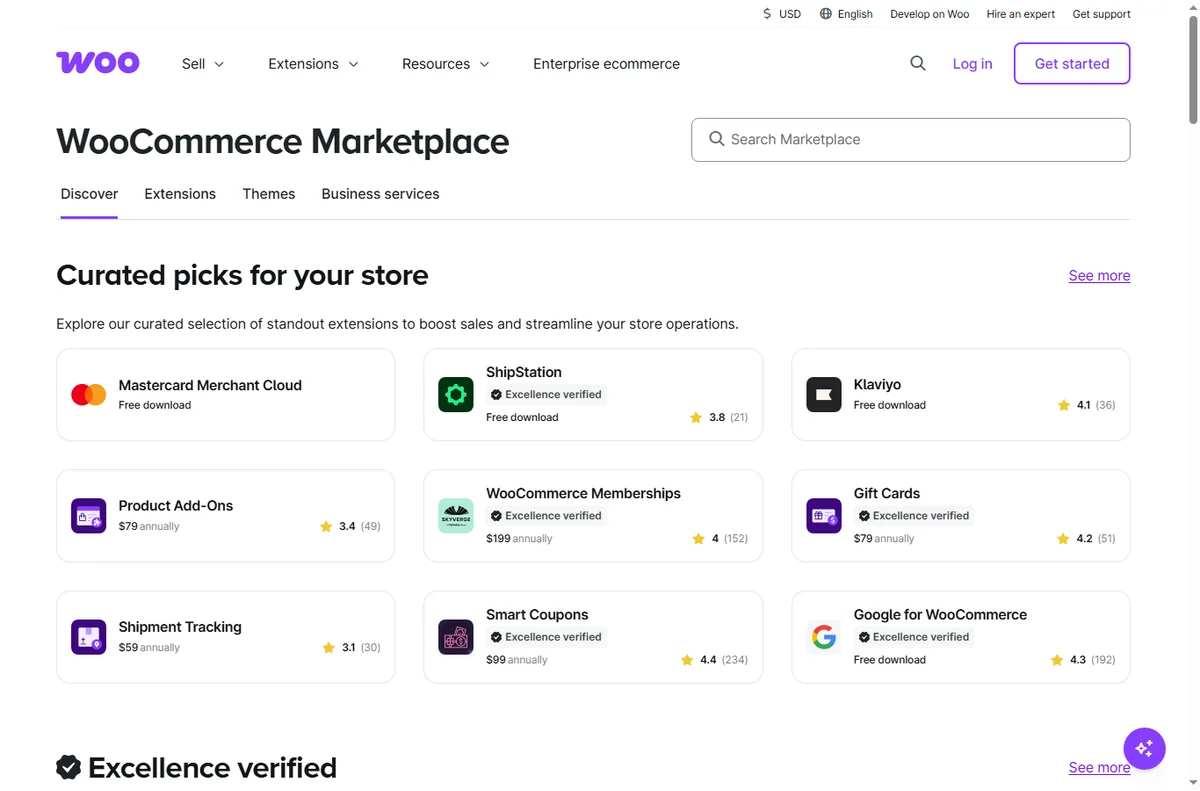
WooCommerce is a free, open-source e-commerce plugin that turns a WordPress site into an online store you own and control. This guide explains what it does, how it is organised, and what it is not.
Independent analysis. This page may contain affiliate links. If you sign up through a link on this page we may earn a reward at no extra cost to you, and it never changes what we recommend. We are an independent publisher and are not affiliated with, endorsed by, or an official partner of any tool mentioned. See our Affiliate Disclosure.
TL;DR
WooCommerce is an open-source e-commerce plugin for WordPress.
It turns an existing WordPress site into a store.
You own the store and the data; hosting and extensions are the real costs.
Features, extension terms and prices change, so check the current pricing before you commit.
It is not a hosted all-in-one platform: you still run hosting and updates.
Some links on this page may be referral links — we may earn a reward if you sign up, at no extra cost to you. We are an independent publisher. See our Affiliate Disclosure.
Knowledge · course platforms · updated October 9, 2026
What is LearnWorlds?
LearnWorlds is an online course platform that lets you build, sell and run courses from a single account. This guide explains what it does, how its courses, site builder and memberships fit together, and what it is not.
Independent analysis. This page may contain affiliate links. If you sign up through a link on this page we may earn a reward at no extra cost to you, and it never changes what we recommend. We are an independent publisher and are not affiliated with, endorsed by, or an official partner of any tool mentioned. See our Affiliate Disclosure.
TL;DR
LearnWorlds is a hosted platform for creating and selling online courses.
It combines a course builder, a site builder and a checkout in one account.
You rent the platform rather than install software on your own server.
Plans and fees change, so check the current pricing before you commit.
It is not a general website builder, and not the cheapest option for a single small course.
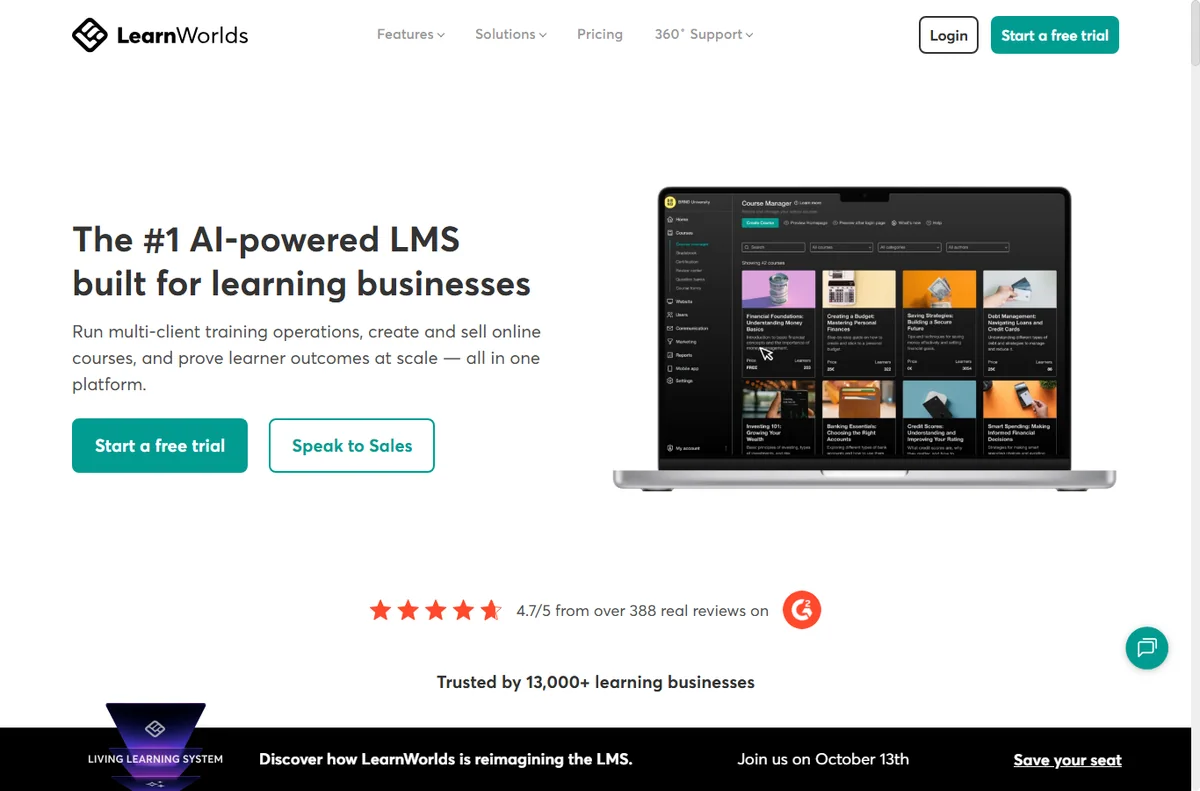
LearnWorlds is a hosted platform, not a plugin. You sign up, build your school inside it, and it looks after the servers, the updates and the payment handling for you.
Its job is to take a course from an outline to something people can buy and work through. That means lesson pages, video hosting, quizzes and a checkout in one place.
Around the lessons it adds the parts a course business needs: a small website, student accounts, drip schedules and a way to take payment.
Because it is hosted, you trade some control for convenience. You do not manage hosting or updates, but you also work within the features the platform offers.
A useful way to think about it: it is the school, the shop and the classroom combined, rather than one piece you bolt onto another.
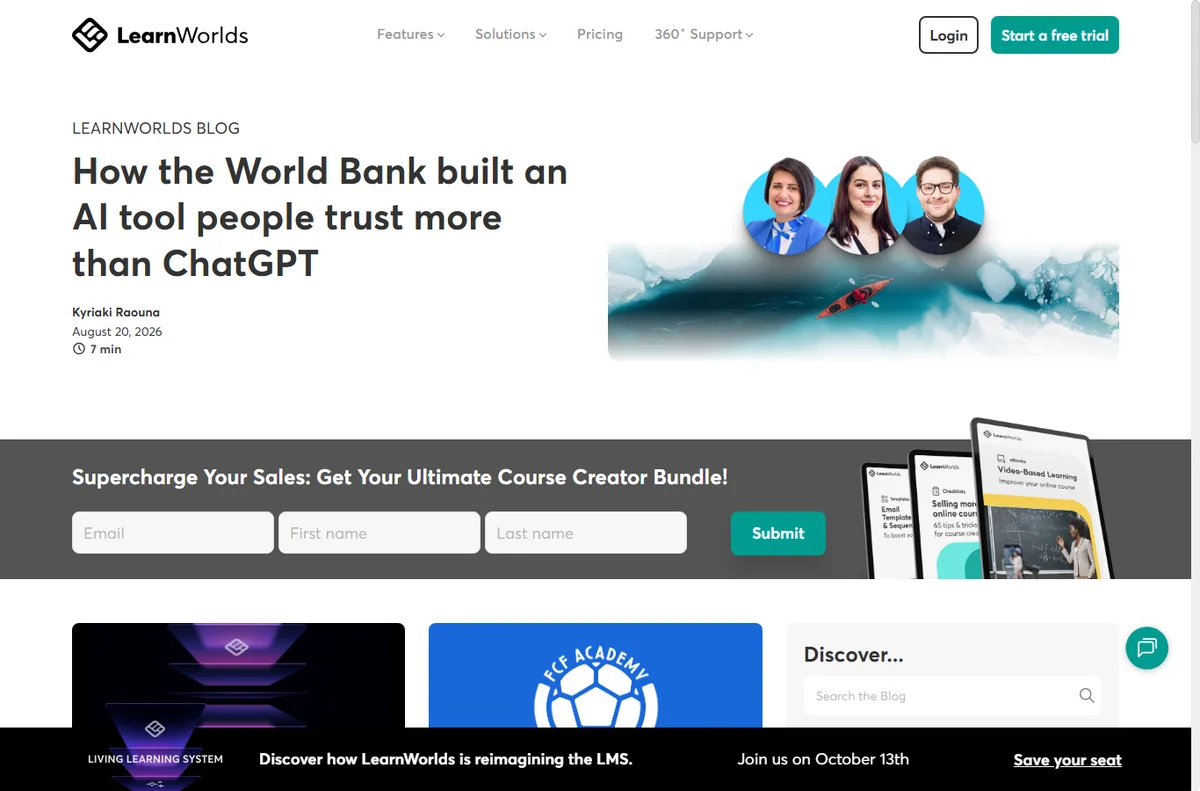
Learnworlds blog (image: learnworlds.com)
How LearnWorlds is organised
Everything sits inside one school. You organise content into courses, courses into lessons, and lessons into sections, with multimedia, quizzes and assignments inside each.
A built-in site builder puts pages around the courses, so a homepage, a sales page and a blog all live in the same account rather than on a separate site.
Memberships and access rules decide who sees what. You can drip lessons over time, bundle courses, or sell a subscription instead of a one-off purchase.
The checkout and payments are handled in the same place, which means student accounts, receipts and access follow the sale automatically.
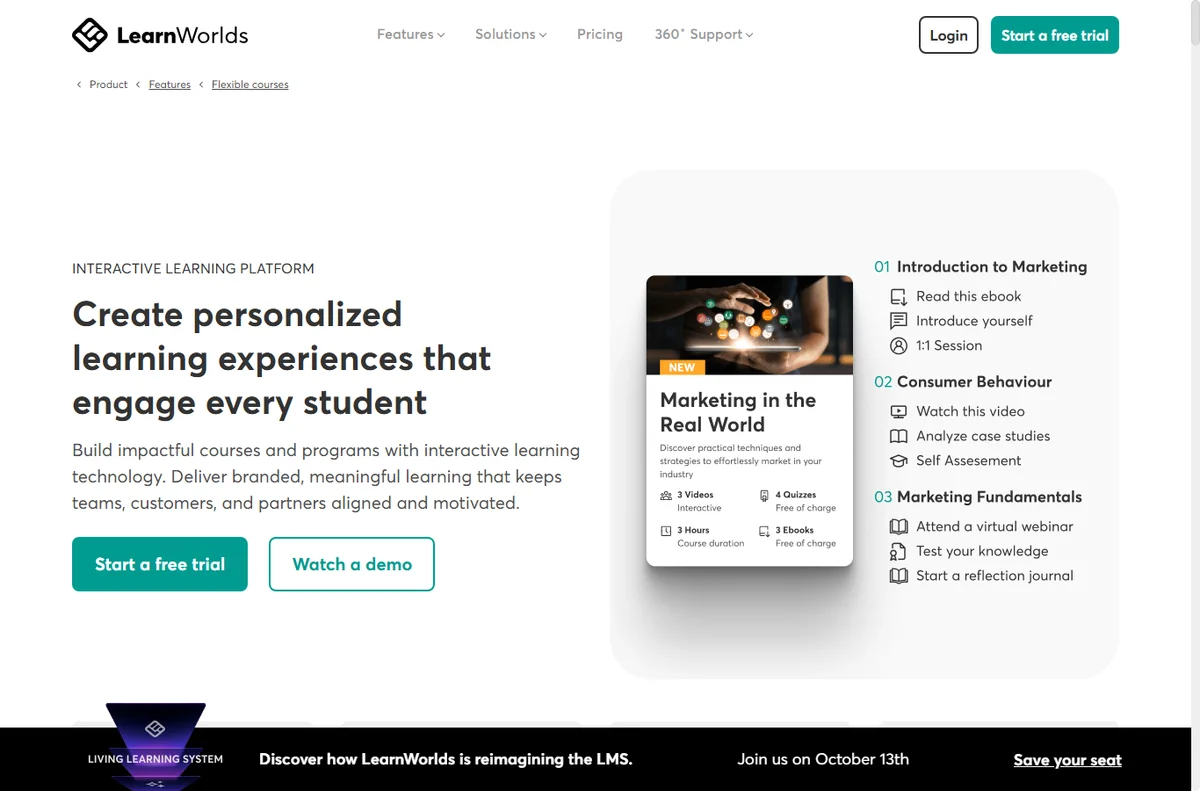
Learnworlds features (image: learnworlds.com)
What LearnWorlds is good at
Taking a course from idea to sale without stitching tools together.
Hosting video and lessons without managing your own server.
Dripping content and bundling courses with simple rules.
Running a small website and a checkout in one account.
Handling student accounts and access automatically after purchase.
Learnworlds integrations (image: learnworlds.com)
What LearnWorlds is not
Not a general-purpose website builder for any kind of site.
Not a one-off purchase; it is a subscription, so check the current pricing.
Not the best fit if you need deep custom code control.
Not a marketplace that brings you an audience; students still have to find you.
Concept cheat sheet
Concept
Meaning
Why it matters
Course
A collection of lessons sold as one product
It is the unit you build and sell
Section
A group of lessons inside a course
It gives long courses some shape
Drip
Releasing lessons on a schedule
It paces students through the material
Membership
A rule for who can see what
It controls access without manual work
Checkout
Where payment is taken
It links a sale to an account automatically
The small vocabulary that makes a course platform make sense.
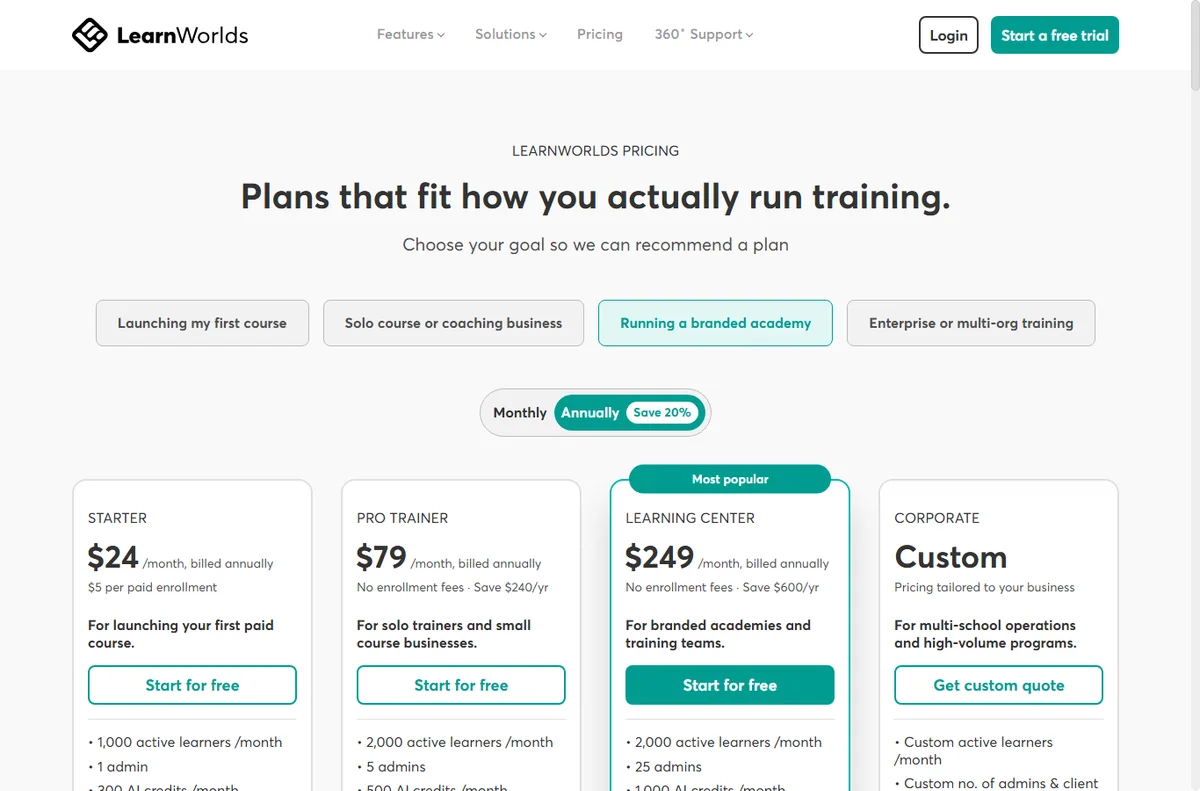
Learnworlds pricing (image: learnworlds.com)
Where this fits
LearnWorlds sits in the Course Platforms section, next to the roundups of the best course platforms and the best online learning platforms. The LearnWorlds review compares it with alternatives, the setup guide and day-to-day guide cover the practical side, and the pricing guide helps you charge for what you build.
Learnworlds x about (image: learnworlds.com)
Frequently asked
Do I need my own website?
No. The platform includes a small site builder, so your pages can live inside your account.
Can I sell bundles or subscriptions?
Yes. Memberships and bundles let you sell more than one course, or ongoing access.
Do I need to host video myself?
No. Video hosting is part of the platform, so you do not manage a separate media server.
Can I use my own domain?
Yes. You can connect a custom domain to your school.
Is it a one-off payment?
No. It is a subscription, and plans change, so check the current pricing.
Build your course with LearnWorlds
Set up your school, add your lessons and start selling without managing servers.
Some links on this page may be referral links — we may earn a reward if you sign up, at no extra cost to you. We are an independent publisher. See our Affiliate Disclosure.
Wincher is a web-based rank tracking tool that follows where your pages sit in search results over time. This guide explains what it does, how its projects and keyword views fit together, and what it is not.
Independent analysis. This page may contain affiliate links. If you sign up through a link on this page we may earn a reward at no extra cost to you, and it never changes what we recommend. We are an independent publisher and are not affiliated with, endorsed by, or an official partner of any tool mentioned. See our Affiliate Disclosure.
TL;DR
Wincher is a rank tracking tool that runs in the browser.
It follows the position of your keywords day by day.
It adds competitors and reports on top of plain position tracking.
Limits and pricing change, so check the current pricing before you commit.
It is not a keyword research tool or a full SEO suite on its own.
Wincher is a subscription tool rather than a plugin. You connect it to a website, add the keywords you care about, and it checks search results on a schedule to record where you rank.
Its focus is narrow on purpose. Instead of trying to be a research tool, a crawler and a rank tracker at once, it does tracking well and keeps the interface simple.
The data answers a specific question: are we moving up or down for the terms that matter, and where do we stand next to the sites we compete with.
Because it is cloud-based, there is nothing to install on your site, and you can read the results from any browser.
Think of it as a scoreboard. It records the score; improving the score is still down to your content, your links and your pages.
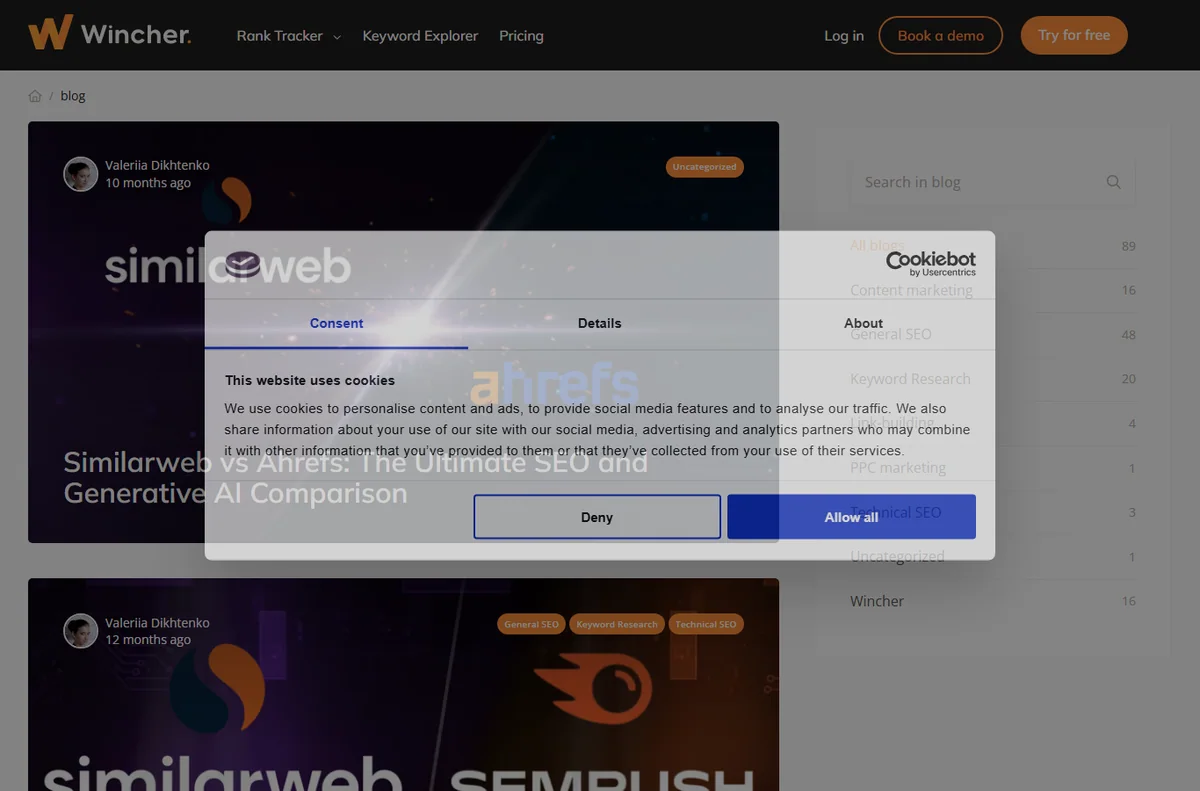
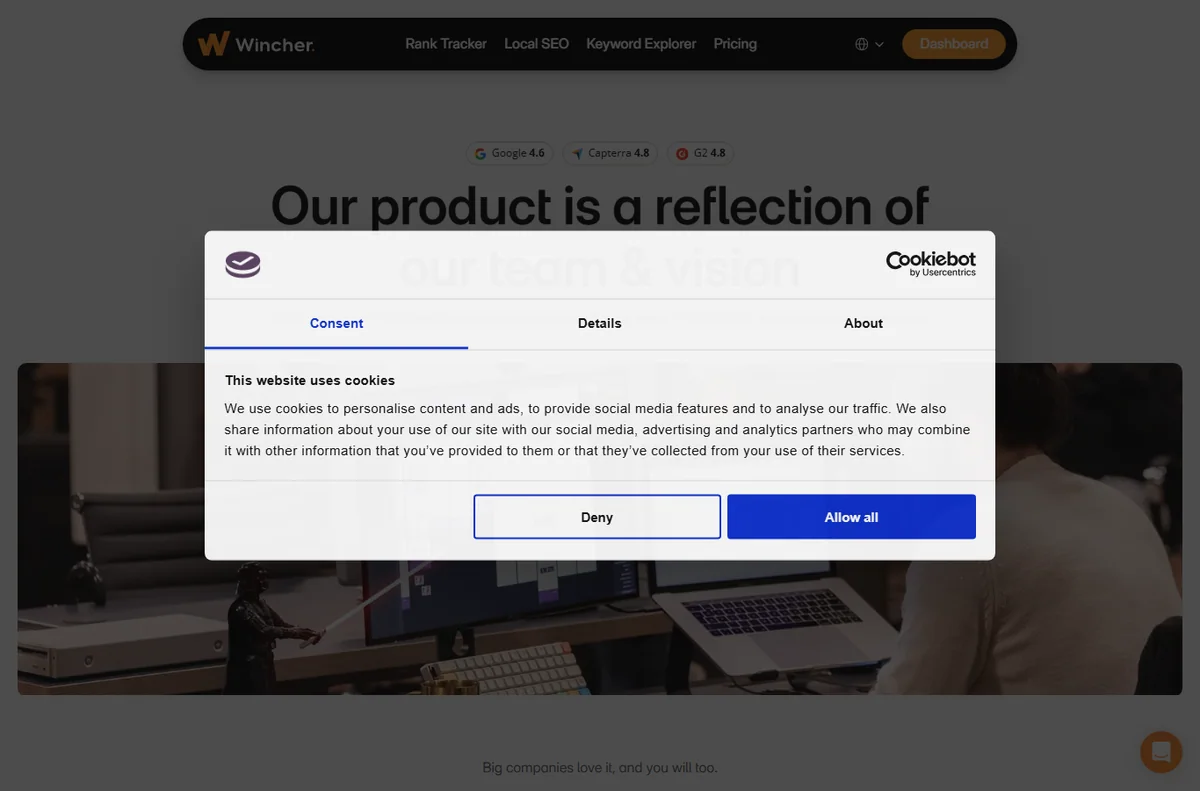
Wincher blog (image: wincher.com)
How Wincher is organised
Everything hangs off a project. You add a domain, a search engine and a location, then the keywords you want to follow.
Each keyword becomes a row with its current position, its best position and a small chart of how it has moved. Grouping keywords keeps large lists manageable.
Competitors are added as other domains, so the same keyword row can show where you sit relative to them rather than in isolation.
Reports pull the movement into a summary you can read at a glance, which is useful when you do not want to scan every row.
Wincher pricing (image: wincher.com)
What Wincher is good at
Watching positions change day by day.
Comparing your ranking with named competitors.
Keeping keyword groups tidy as a list grows.
Reading a simple report instead of raw data.
Working from any browser with no plugin to maintain.
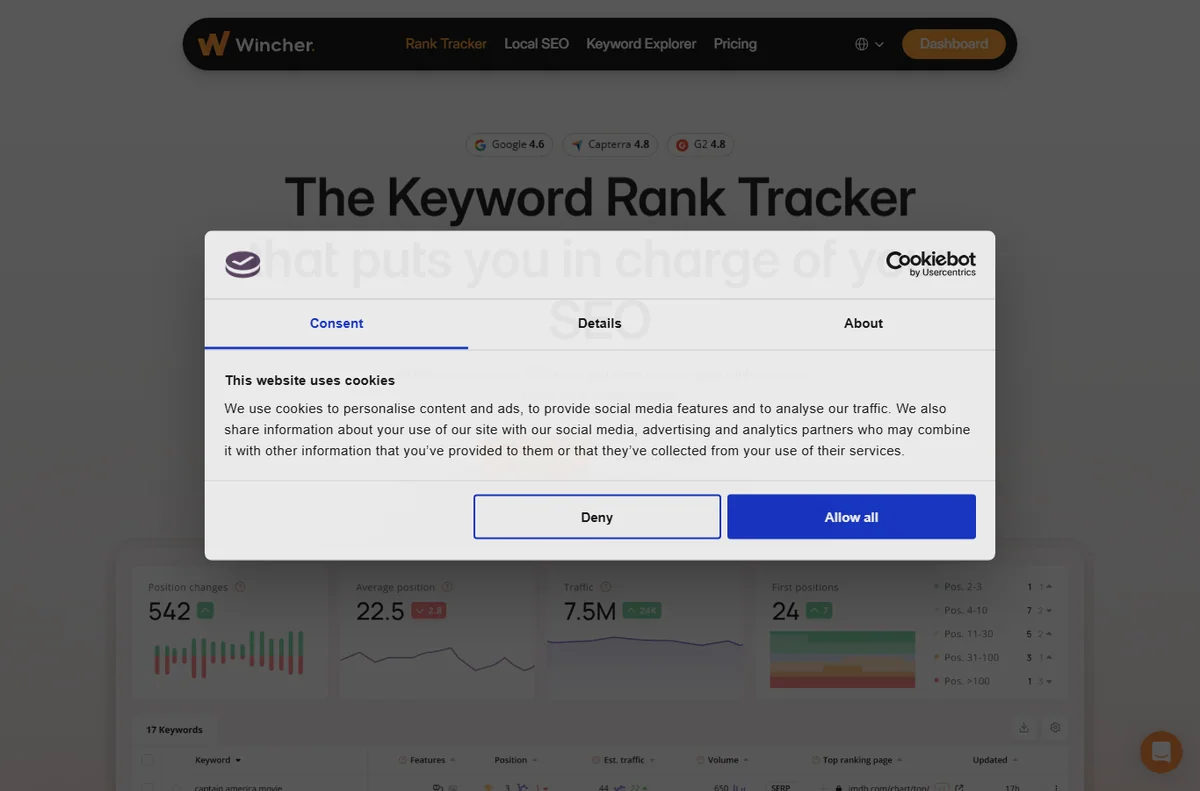
Wincher rank tracker (image: wincher.com)
What Wincher is not
Not a keyword research tool; it needs keywords to track.
Not an on-page or technical audit suite.
Not a content writer or a link builder.
Not free, so check the current pricing before you commit.
Concept cheat sheet
Concept
Meaning
Why it matters
Rank
The position a page holds for a keyword
It is the score you are trying to move
Keyword group
A set of keywords treated together
It keeps large lists readable
Competitor
Another domain you compare against
It turns a number into context
Position history
The record of past rankings
It shows whether the work is paying off
Report
A summary of movement
It saves reading every row yourself
The short list of ideas you need to read a rank tracking dashboard.
Wincher y about (image: wincher.com)
Where this fits
Wincher belongs with the other SEO Tools guides. For the bigger picture, read what SEO tools are for and the roundup for a small business; the Wincher review weighs it against alternatives, and the setup guide and day-to-day guide cover the practical side.
Icode editorial illustration (image: icode.io.vn)
Frequently asked
Is Wincher a keyword research tool?
No. It tracks keywords you already have, so you still need a research tool to find new ones.
Does it work for any site?
It reads public search results, so it can track any site you have the URL for, though you get the most value tracking your own.
How often does it update?
It checks on a schedule, and the frequency depends on your plan, so check the current pricing for current limits.
Can I compare with competitors?
Yes. You can add rival domains and see the same keywords side by side.
Track your rankings with Wincher
Add your keywords, watch the movement and see where you stand against competitors.
Some links on this page may be referral links — we may earn a reward if you sign up, at no extra cost to you. We are an independent publisher. See our Affiliate Disclosure.
Rank Math is an SEO plugin for WordPress that adds search controls, schema and analytics to the pages you already publish. This guide explains what it does, how its modules fit together, and what it is not.
Independent analysis. This page may contain affiliate links. If you sign up through a link on this page we may earn a reward at no extra cost to you, and it never changes what we recommend. We are an independent publisher and are not affiliated with, endorsed by, or an official partner of any tool mentioned. See our Affiliate Disclosure.
TL;DR
Rank Math is a WordPress SEO plugin, not a hosted platform.
It bundles on-page SEO, schema, redirects, sitemaps and analytics in one dashboard.
It runs inside WordPress, so it does not host or design your site for you.
Features and pricing change, so check the current pricing before you commit.
It is not a keyword research tool on its own, and not a guarantee of rankings.
Rank Math is a plugin rather than a platform. You install it inside WordPress and it adds SEO controls to the pages, posts and products you already publish.
The core job is the material search engines read first: titles, meta descriptions, headings, links, canonical tags and structured data. Instead of editing theme templates, you set these in a panel that sits next to each page while you write.
Around that core it bundles tools that are often separate add-ons, such as redirections, XML sitemaps and a schema builder. Keeping them together means a single workflow instead of five plugins with five dashboards.
Because it lives inside WordPress, its reach ends at the site it is installed on. It does not host the site, speed it up or choose the design; those remain the job of your host and your theme.
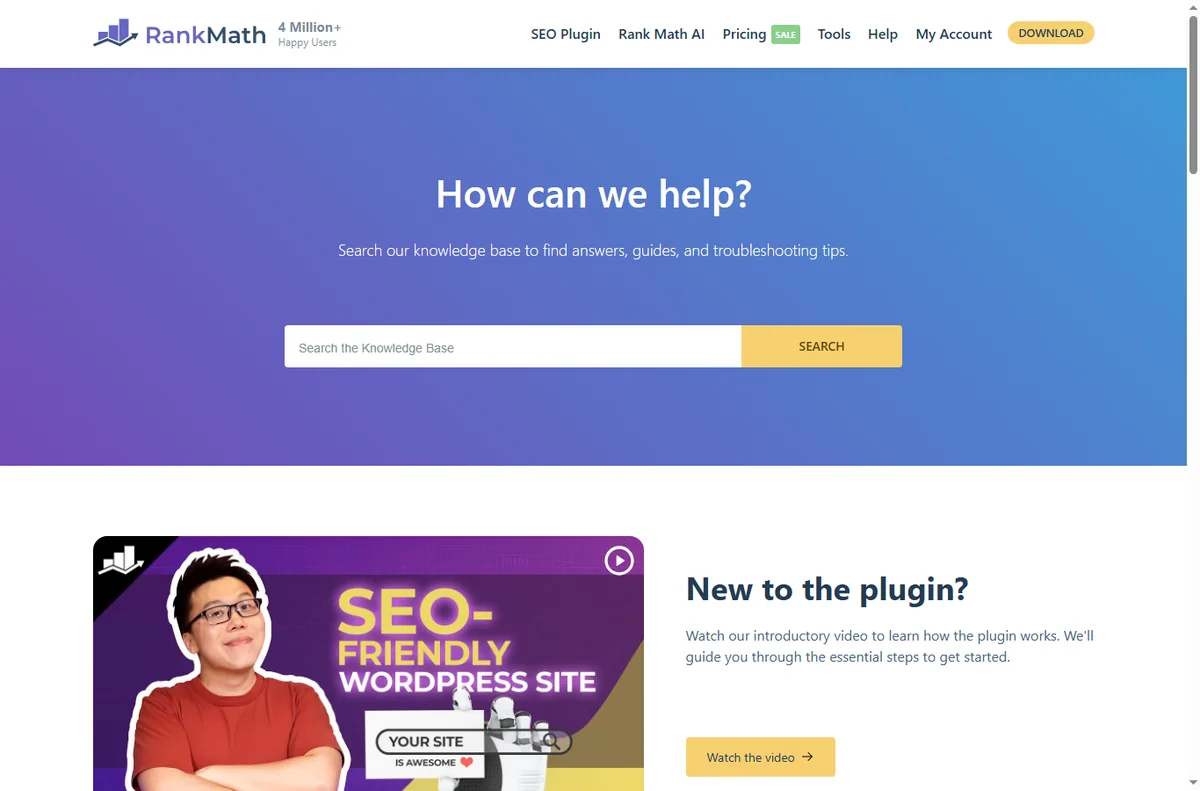
Rank math blog (image: rank.com)
How Rank Math is organised
Everything is grouped into named modules, and you switch on the ones you want. Turning off modules you do not use keeps the dashboard to the essentials and reduces the chance of two features fighting each other.
Each page or post gets an editor panel where you set the SEO title, the meta description, a focus keyword and the social preview. The plugin scores the page and suggests fixes, but the decision about what to publish stays with you.
Site-wide settings cover sitemaps, schema types, redirects and third-party integrations. A setup wizard walks through the first pass, so the defaults are sensible before you start tuning individual pages.
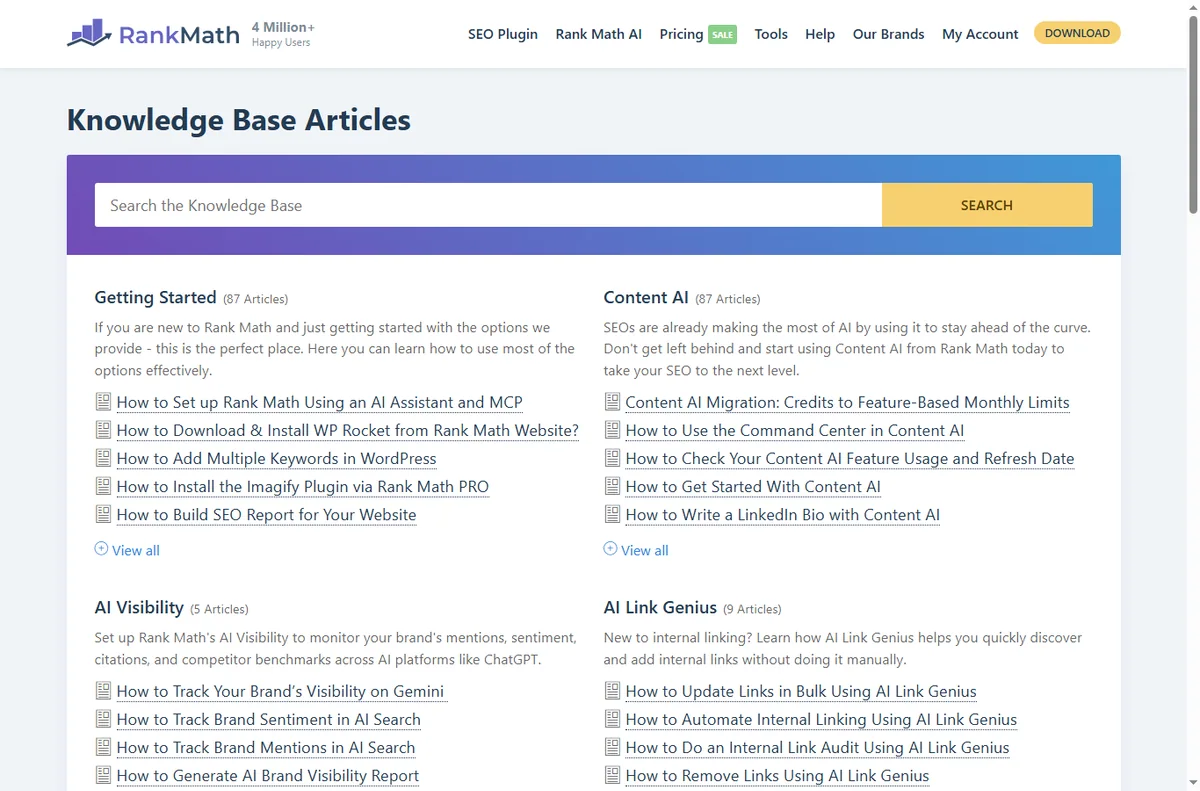
Rank math kb (image: rank.com)
What Rank Math is good at
Getting the on-page basics right without touching theme code.
Adding schema and social tags to a page without a developer.
Managing redirects and an XML sitemap from the same dashboard.
Reviewing titles, descriptions and canonical tags in one place.
Scoring pages against a focus keyword as you write.
Rank math pricing (image: rank.com)
What Rank Math is not
Not a full keyword research suite, so you still need a research tool.
Not a substitute for genuinely useful, well-structured content.
Not a guarantee of rankings, and not a reason to ignore page speed.
Not free at every level, so check the current pricing before you commit.
Concept cheat sheet
Concept
Meaning
Why it matters
SEO title
The headline search results display
It decides clicks before anyone reads the page
Meta description
The summary shown under the title
It sets expectations and improves click-through
Focus keyword
The term a page is scored against
It keeps one page aimed at one clear topic
Schema
Structured data that describes the page
It helps search engines read the content correctly
Canonical tag
The preferred URL for a piece of content
It stops duplicate versions competing with each other
The handful of terms that come up again and again when you work with Rank Math.
Rank math y about (image: rank.com)
Where this fits
Rank Math sits in the SEO Tools part of the site, alongside the wider guides to on-page SEO and the best SEO tools for a small business. If you are comparing it with alternatives, the Rank Math review walks through the trade-offs, and the setup guide and the day-to-day guide take you from installing it to using it on live pages.
Rank math y support (image: rank.com)
Frequently asked
Is Rank Math free?
It offers a free version and paid tiers. Feature limits and plan names change over time, so check the current pricing before you commit.
Does it replace my theme?
No. It works alongside your theme and adds an SEO layer on top; it does not change how your site looks.
Can I use it with another SEO plugin?
You can install two, but running them together usually produces duplicate titles and schema, so it is safer to pick one.
Do I need to know code?
No. Almost everything is set through the WordPress editor and the plugin settings screens.
Get Rank Math working for your site
Install the plugin, run the setup wizard and let it handle the technical side while you focus on content.
Some links on this page may be referral links — we may earn a reward if you sign up, at no extra cost to you. We are an independent publisher. See our Affiliate Disclosure.
Knowledge · payments & finance · updated October 9, 2026
What is FreshBooks?
FreshBooks is accounting and invoicing software for small businesses and freelancers that handles invoices, expenses, time tracking and reports. This guide explains what it does, how it is organised, and what it is not.
Independent analysis. This page may contain affiliate links. If you sign up through a link on this page we may earn a reward at no extra cost to you, and it never changes what we recommend. We are an independent publisher and are not affiliated with, endorsed by, or an official partner of any tool mentioned. See our Affiliate Disclosure.
TL;DR
FreshBooks is invoicing and accounting software for small businesses.
It covers invoices, estimates, expenses and time tracking.
It is designed for non-accountants rather than finance teams.
Plans, terms and prices change, so check the current pricing before you commit.
It is not a full enterprise accounting suite and not an inventory system.
Some links on this page may be referral links — we may earn a reward if you sign up, at no extra cost to you. We are an independent publisher. See our Affiliate Disclosure.