We’re reader-supported — some links are affiliate links. Learn more →

Skip to content

Independent software research. Some links may earn us a commission at no extra cost to you. Learn more →

ICode

Tag: small-business

  • Systeme.io vs Leadpages: which is better in 2026?

    Systeme.io vs Leadpages: which is better in 2026?

    Home / Funnel Builders / Guides / Systeme.io vs Leadpages

    Comparison · Funnel Builders · updated 2026

    Systeme.io vs Leadpages: which is better in 2026?

    Choosing between Systeme.io and Leadpages? Here is a side-by-side look at pricing, strengths and fit, so you can pick the right one in a few minutes.

    Systeme.io screenshot
    Systeme.io official site (image: systeme.io)

    Independent analysis. This page may contain affiliate links. Some links here are referral links; if you sign up through one we may earn a reward at no extra cost to you, and it never changes what we recommend. See our Affiliate Disclosure.

    TL;DR

    • Systeme.io is a better fit for beginners building a first funnel on a budget.
    • Leadpages is a better fit for lead generation and simple landing pages.
    • Pick Systeme.io when free-to-start all-in-one matters most to you.
    • Pick Leadpages when landing-page speed matters most to you.

    At a glance

    FeatureSysteme.ioLeadpages
    Starting priceFree; paid plans from about $27/moFrom about $37/mo
    Free planYesNo
    Best forbeginners building a first funnel on a budgetlead generation and simple landing pages
    Standout strengthfree-to-start all-in-onelanding-page speed
    Main trade-offSimpler than premium rivalsWeaker for full funnels
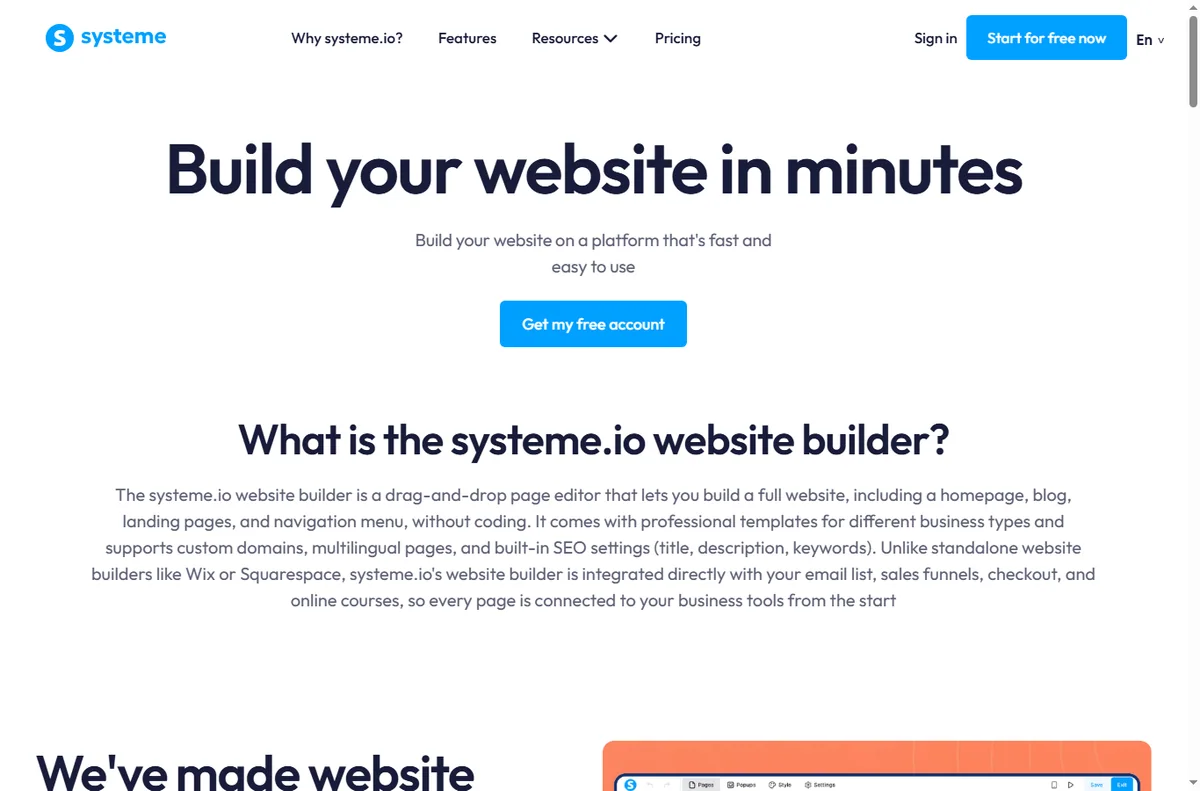
    Systeme.io website builder dashboard
    Systeme.io website builder (image: systeme.io)

    Systeme.io in brief

    Affordable all-in-one funnel and course builder.

    • Pros: A free plan to start; Funnels, email and courses together; Simple flat pricing
    • Cons: Simpler than premium rivals; Design options are limited; Automation is basic
    • Review: Systeme.io review
    Leadpages homepage
    Leadpages homepage (image: leadpages.com)

    Leadpages in brief

    Fast landing pages and lead capture.

    • Pros: Quick, tested page templates; A strong conversion focus; Easy A/B testing
    • Cons: Weaker for full funnels; Add-ons cost more; Fewer ecommerce options
    • Review: Leadpages review

    Where each one falls short

    Systeme.io

    • Simpler than premium rivals
    • Design options are limited
    • Automation is basic

    Leadpages

    • Weaker for full funnels
    • Add-ons cost more
    • Fewer ecommerce options
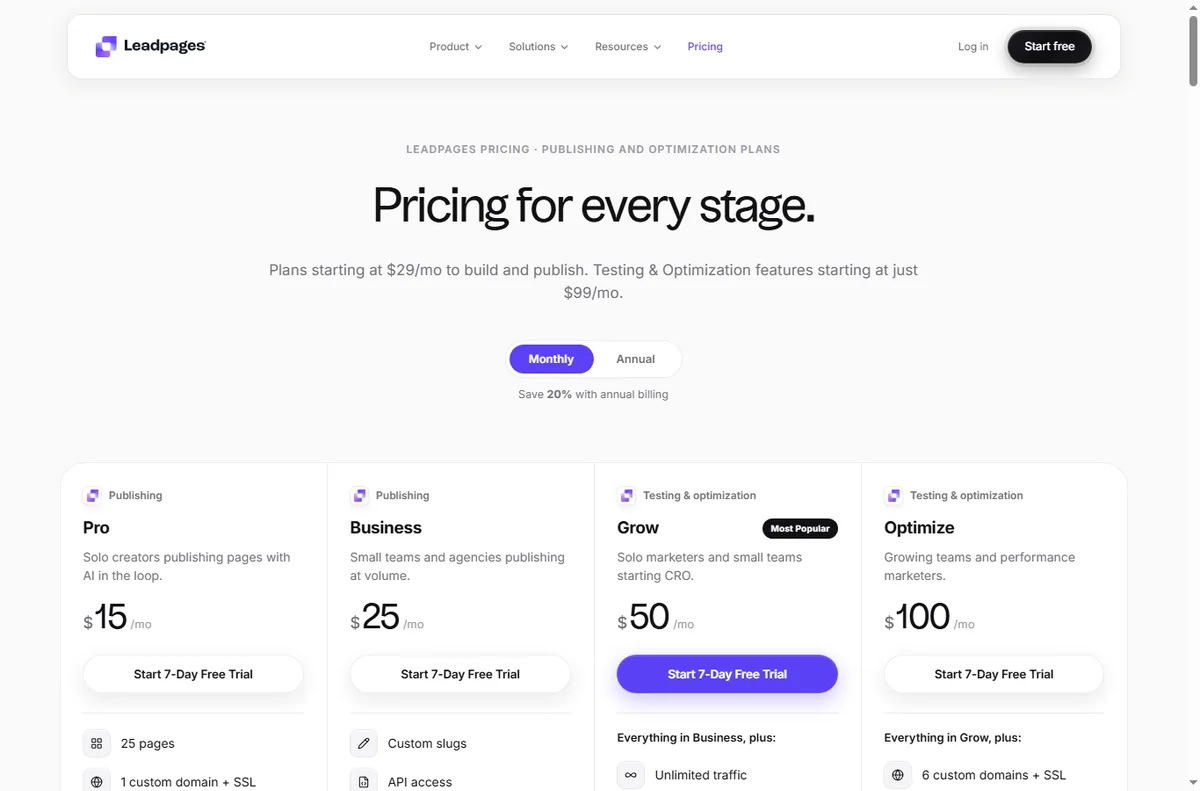
    Leadpages pricing plans
    Leadpages pricing (image: leadpages.com)

    Which should you choose?

    Choose Systeme.io if you are beginners building a first funnel on a budget, or you value free-to-start all-in-one.

    Choose Leadpages if you are lead generation and simple landing pages, or you value landing-page speed.

    You can also use both together: Systeme.io and Leadpages connect through native integrations, so many teams run one for free-to-start all-in-one and the other for landing-page speed. Start with the one that matches your budget and workflow, and add the second when a clear gap appears.

    Compare on the official sites before you buy. Systeme.io →  |  Leadpages → (affiliate links)
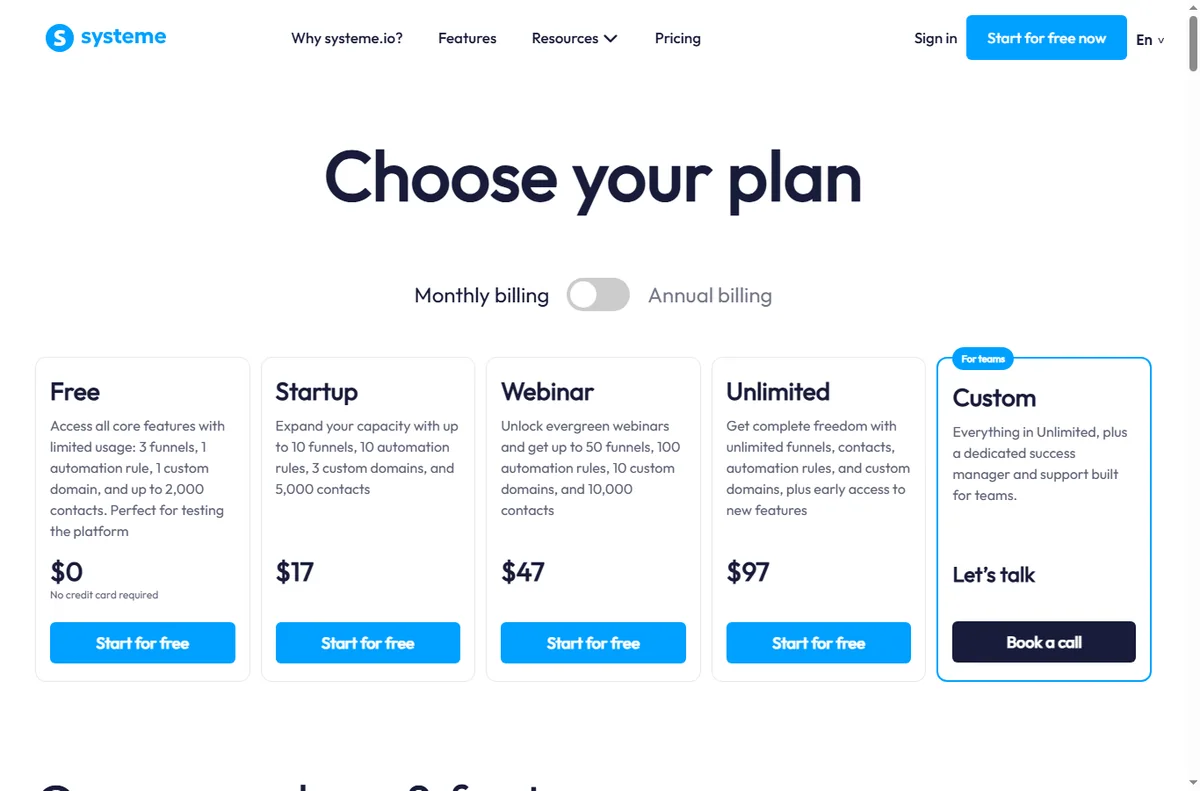
    Systeme.io pricing plans
    Systeme.io pricing (image: systeme.io)

    Frequently asked questions

    Is Systeme.io better than Leadpages?

    There is no universal winner. Systeme.io leads on free-to-start all-in-one, while Leadpages leads on landing-page speed. Match the tool to your budget and workflow.

    Is Leadpages cheaper than Systeme.io?

    On published pricing, Systeme.io starts at free; paid plans from about $27/mo and Leadpages starts at from about $37/mo. Always check current pricing and renewal rates.

    Can I use Systeme.io and Leadpages together?

    Yes. Both offer integrations and APIs, so you can run them side by side and send data between them.

    Related reading

    Try Systeme.io for free – build funnels and courses without limits. Start free

  • ClickFunnels vs Kartra: which is better in 2026?

    ClickFunnels vs Kartra: which is better in 2026?

    Home / Funnel Builders / Guides / ClickFunnels vs Kartra

    Comparison · Funnel Builders · updated 2026

    ClickFunnels vs Kartra: which is better in 2026?

    Choosing between ClickFunnels and Kartra? Here is a side-by-side look at pricing, strengths and fit, so you can pick the right one in a few minutes.

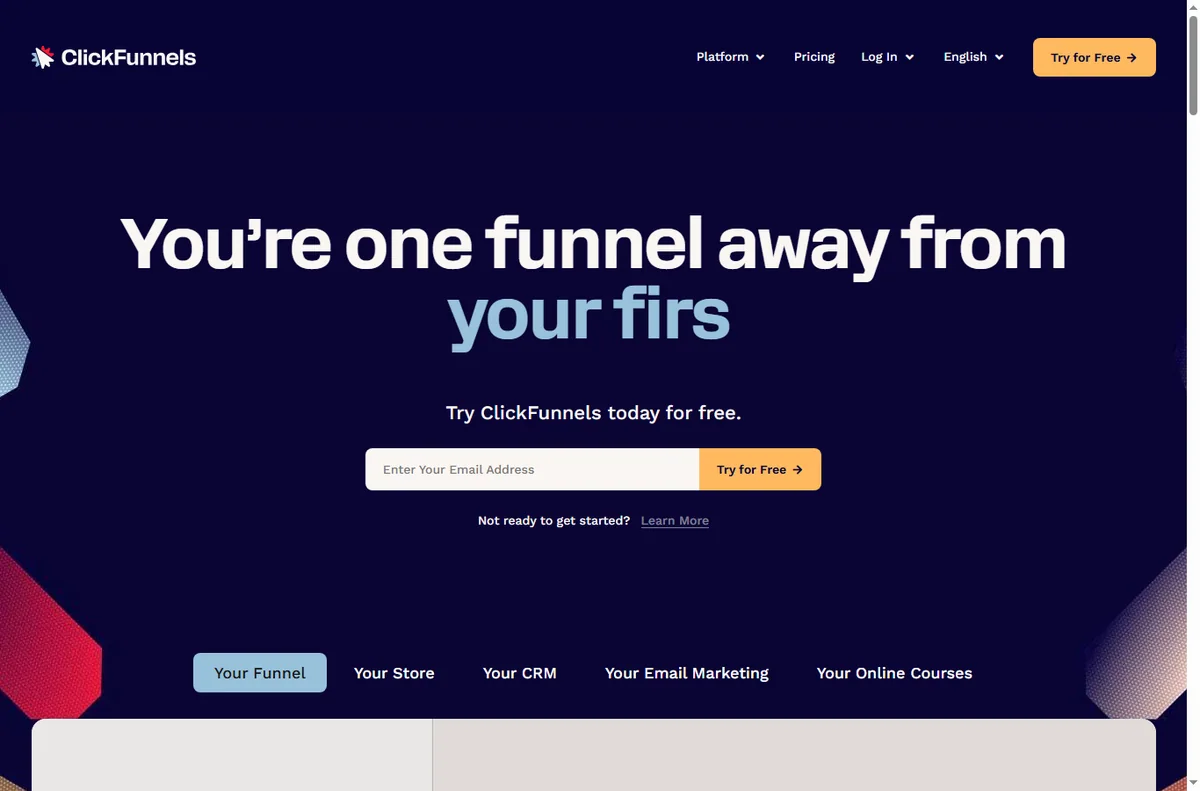
    ClickFunnels screenshot
    ClickFunnels official site (image: clickfunnels.com)

    Independent analysis. This page may contain affiliate links. Some links here are referral links; if you sign up through one we may earn a reward at no extra cost to you, and it never changes what we recommend. See our Affiliate Disclosure.

    TL;DR

    • ClickFunnels is a better fit for businesses selling offers with funnels.
    • Kartra is a better fit for marketers replacing several separate tools.
    • Pick ClickFunnels when funnel maturity matters most to you.
    • Pick Kartra when all-in-one breadth matters most to you.

    At a glance

    FeatureClickFunnelsKartra
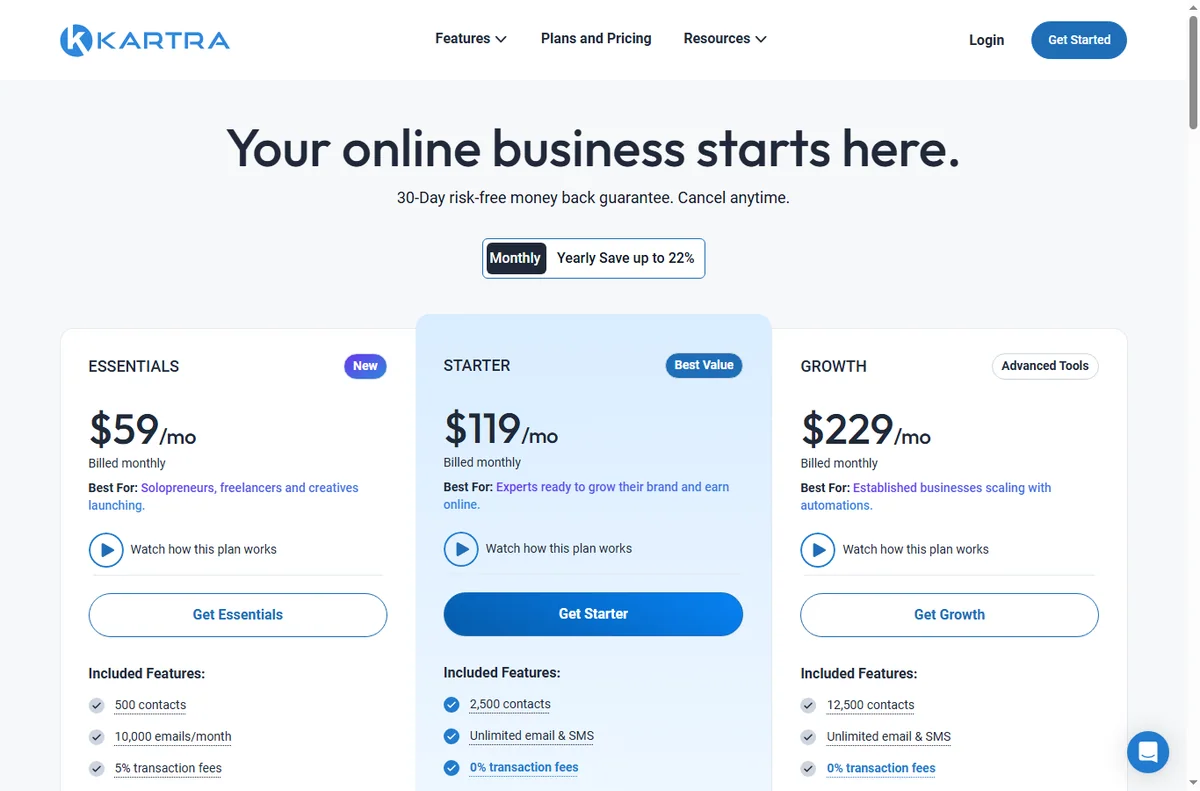
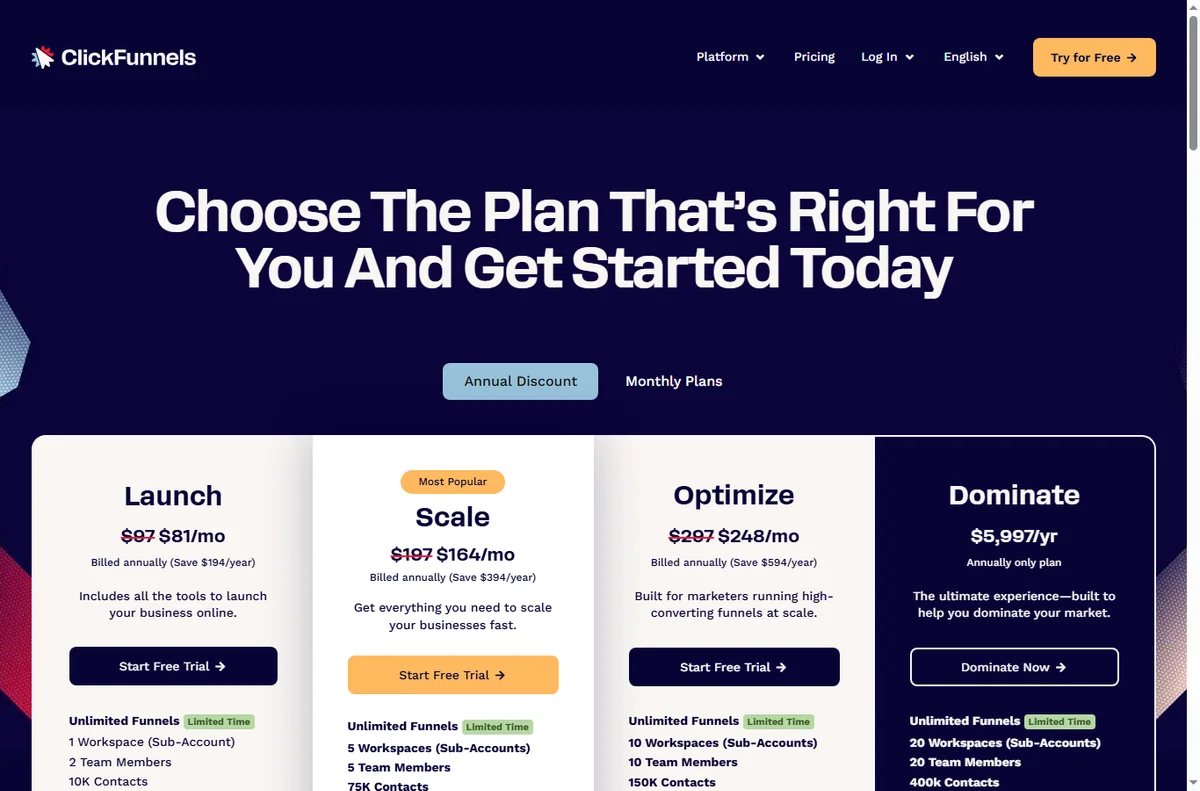
    Starting priceFrom about $97/moFrom about $99/mo
    Free planNoNo
    Best forbusinesses selling offers with funnelsmarketers replacing several separate tools
    Standout strengthfunnel maturityall-in-one breadth
    Main trade-offExpensive at scalePrice rises with contacts
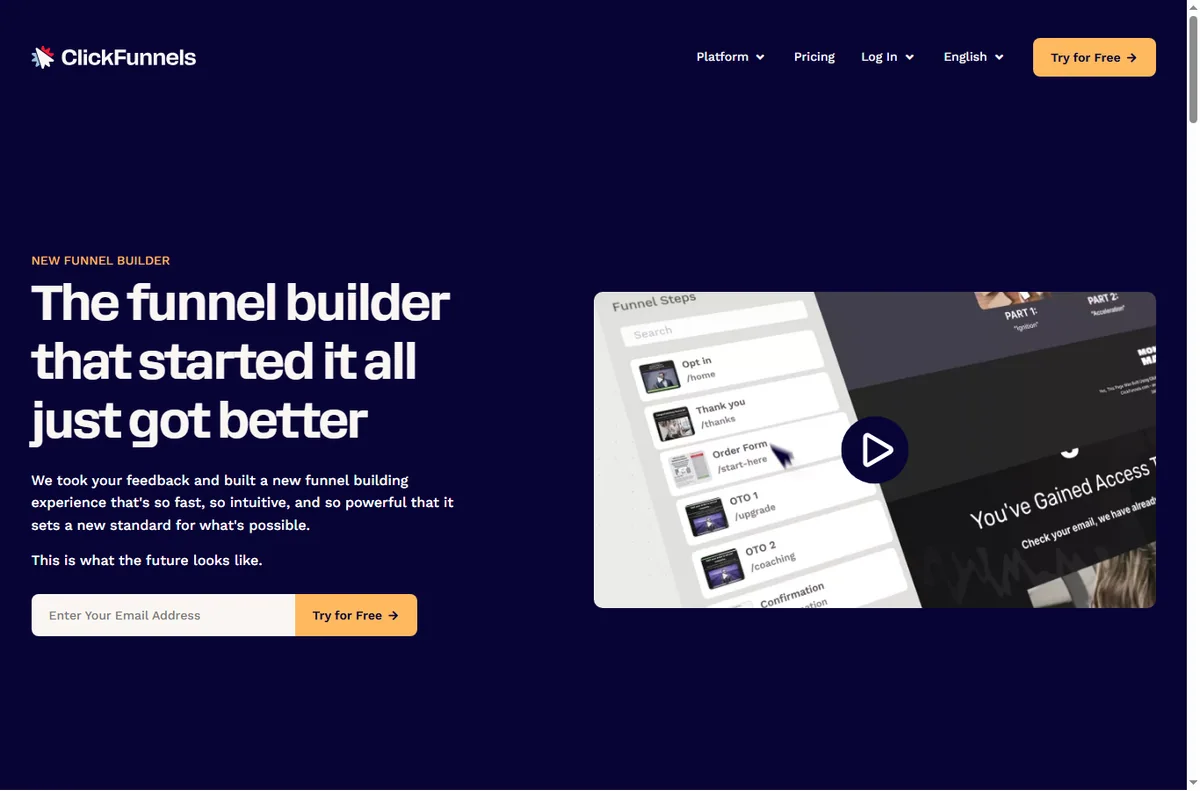
    ClickFunnels funnel builder
    ClickFunnels funnel builder (image: clickfunnels.com)

    ClickFunnels in brief

    The original all-in-one sales funnel builder.

    • Pros: Mature funnel and checkout tools; A big template library; A strong community
    • Cons: Expensive at scale; The builder has a learning curve; Extra tools cost more
    • Review: ClickFunnels review
    Kartra all-in-one marketing platform homepage
    Kartra homepage (image: kartra.com)

    Kartra in brief

    All-in-one marketing with funnels, pages and memberships.

    • Pros: Funnels plus email and memberships; A modern page builder; Built-in video hosting
    • Cons: Price rises with contacts; Some features feel shallow; Steeper setup
    • Review: Kartra review

    Where each one falls short

    ClickFunnels

    • Expensive at scale
    • The builder has a learning curve
    • Extra tools cost more

    Kartra

    • Price rises with contacts
    • Some features feel shallow
    • Steeper setup
    Kartra pricing plans
    Kartra pricing (image: kartra.com)

    Which should you choose?

    Choose ClickFunnels if you are businesses selling offers with funnels, or you value funnel maturity.

    Choose Kartra if you are marketers replacing several separate tools, or you value all-in-one breadth.

    You can also use both together: ClickFunnels and Kartra connect through native integrations, so many teams run one for funnel maturity and the other for all-in-one breadth. Start with the one that matches your budget and workflow, and add the second when a clear gap appears.

    Compare on the official sites before you buy. ClickFunnels →  |  Kartra → (affiliate links)

    ClickFunnels pricing plans
    ClickFunnels pricing (image: clickfunnels.com)

    Frequently asked questions

    Is ClickFunnels better than Kartra?

    There is no universal winner. ClickFunnels leads on funnel maturity, while Kartra leads on all-in-one breadth. Match the tool to your budget and workflow.

    Is Kartra cheaper than ClickFunnels?

    On published pricing, ClickFunnels starts at from about $97/mo and Kartra starts at from about $99/mo. Always check current pricing and renewal rates.

    Can I use ClickFunnels and Kartra together?

    Yes. Both offer integrations and APIs, so you can run them side by side and send data between them.

    Related reading

  • Hostinger vs GreenGeeks: which is better in 2026?

    Hostinger vs GreenGeeks: which is better in 2026?

    Home / Web Hosting / Guides / Hostinger vs GreenGeeks

    Comparison · Web Hosting · updated 2026

    Hostinger vs GreenGeeks: which is better in 2026?

    Choosing between Hostinger and GreenGeeks? Here is a side-by-side look at pricing, strengths and fit, so you can pick the right one in a few minutes.

    Hostinger screenshot
    Hostinger official site (image: hostinger.com)

    Independent analysis. This page may contain affiliate links. Some links here are referral links; if you sign up through one we may earn a reward at no extra cost to you, and it never changes what we recommend. See our Affiliate Disclosure.

    TL;DR

    • Hostinger is a better fit for first websites and small budgets.
    • GreenGeeks is a better fit for eco-minded beginners.
    • Pick Hostinger when price for beginners matters most to you.
    • Pick GreenGeeks when green hosting matters most to you.

    At a glance

    FeatureHostingerGreenGeeks
    Starting priceFrom about $2.99/moFrom about $2.95/mo
    Free planNoNo
    Best forfirst websites and small budgetseco-minded beginners
    Standout strengthprice for beginnersgreen hosting
    Main trade-offRenewal pricing is higherRenewal rates are higher
    Hostinger domain registration
    Hostinger domains (image: hostinger.com)

    Hostinger in brief

    Low-cost shared and managed WordPress hosting.

    • Pros: Very low intro prices; Managed WordPress and free SSL; Good performance for the price
    • Cons: Renewal pricing is higher; Support can be chat-only; Upsells at checkout
    • Review: Hostinger review
    GreenGeeks homepage
    GreenGeeks homepage (image: greengeeks.com)

    GreenGeeks in brief

    Green-powered shared and WordPress hosting.

    • Pros: Eco-friendly data centres; Good beginner onboarding; Free domain and SSL
    • Cons: Renewal rates are higher; Performance is mid-tier; Phone support varies by plan
    • Review: GreenGeeks review

    Where each one falls short

    Hostinger

    • Renewal pricing is higher
    • Support can be chat-only
    • Upsells at checkout

    GreenGeeks

    • Renewal rates are higher
    • Performance is mid-tier
    • Phone support varies by plan
    GreenGeeks pricing plans
    GreenGeeks pricing (image: greengeeks.com)

    Which should you choose?

    Choose Hostinger if you are first websites and small budgets, or you value price for beginners.

    Choose GreenGeeks if you are eco-minded beginners, or you value green hosting.

    You can also use both together: Hostinger and GreenGeeks connect through native integrations, so many teams run one for price for beginners and the other for green hosting. Start with the one that matches your budget and workflow, and add the second when a clear gap appears.

    Compare on the official sites before you buy. Hostinger →  |  GreenGeeks → (affiliate links)

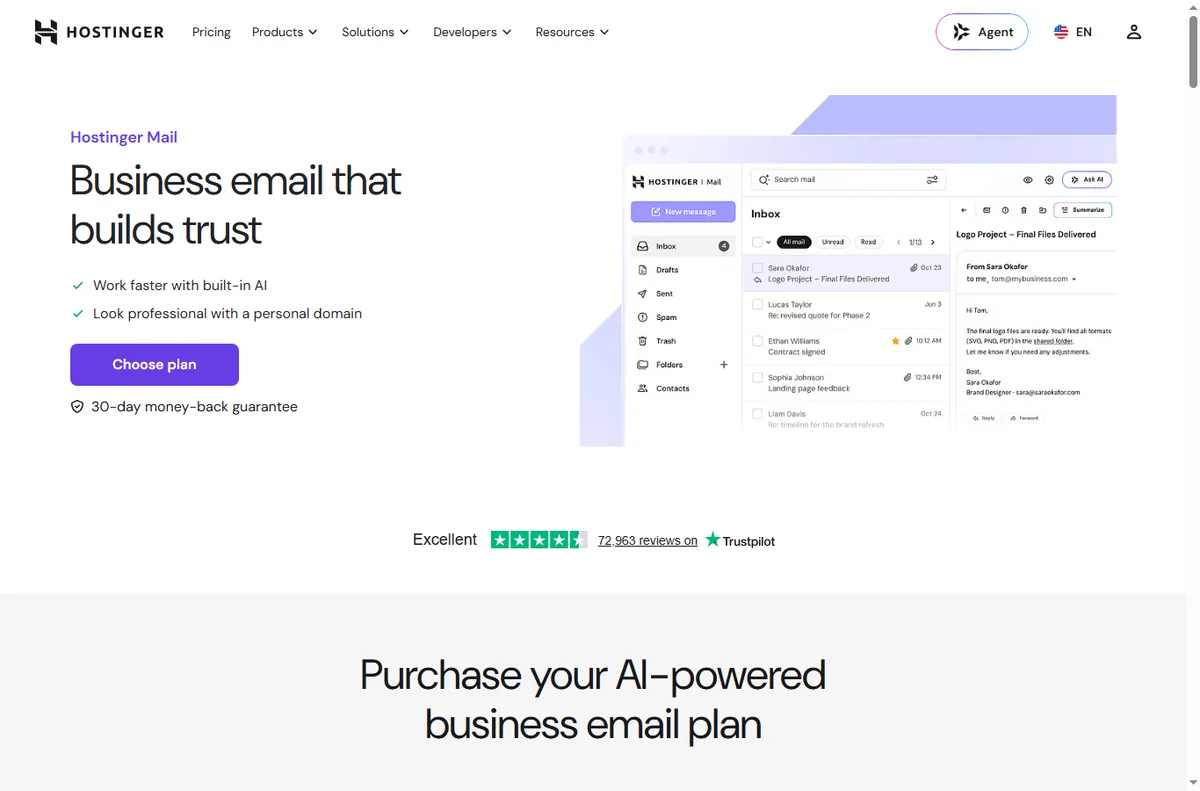
    Hostinger business email
    Hostinger business email (image: hostinger.com)

    Frequently asked questions

    Is Hostinger better than GreenGeeks?

    There is no universal winner. Hostinger leads on price for beginners, while GreenGeeks leads on green hosting. Match the tool to your budget and workflow.

    Is GreenGeeks cheaper than Hostinger?

    On published pricing, Hostinger starts at from about $2.99/mo and GreenGeeks starts at from about $2.95/mo. Always check current pricing and renewal rates.

    Can I use Hostinger and GreenGeeks together?

    Yes. Both offer integrations and APIs, so you can run them side by side and send data between them.

    Related reading

  • FastComet vs GreenGeeks: which is better in 2026?

    FastComet vs GreenGeeks: which is better in 2026?

    Home / Web Hosting / Guides / FastComet vs GreenGeeks

    Comparison · Web Hosting · updated 2026

    FastComet vs GreenGeeks: which is better in 2026?

    Choosing between FastComet and GreenGeeks? Here is a side-by-side look at pricing, strengths and fit, so you can pick the right one in a few minutes.

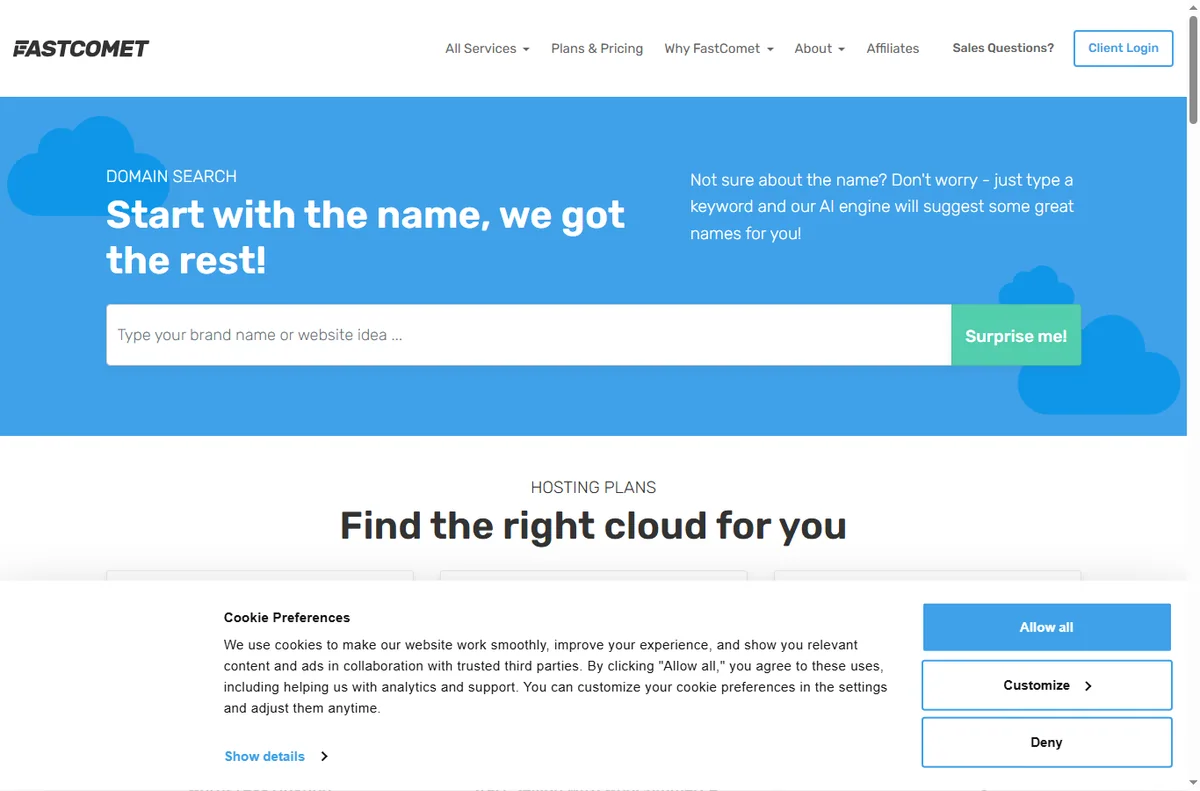
    FastComet screenshot
    FastComet official site (image: fastcomet.com)

    Independent analysis. This page may contain affiliate links. Some links here are referral links; if you sign up through one we may earn a reward at no extra cost to you, and it never changes what we recommend. See our Affiliate Disclosure.

    TL;DR

    • FastComet is a better fit for global audiences that want speed.
    • GreenGeeks is a better fit for eco-minded beginners.
    • Pick FastComet when global data centres matters most to you.
    • Pick GreenGeeks when green hosting matters most to you.

    At a glance

    FeatureFastCometGreenGeeks
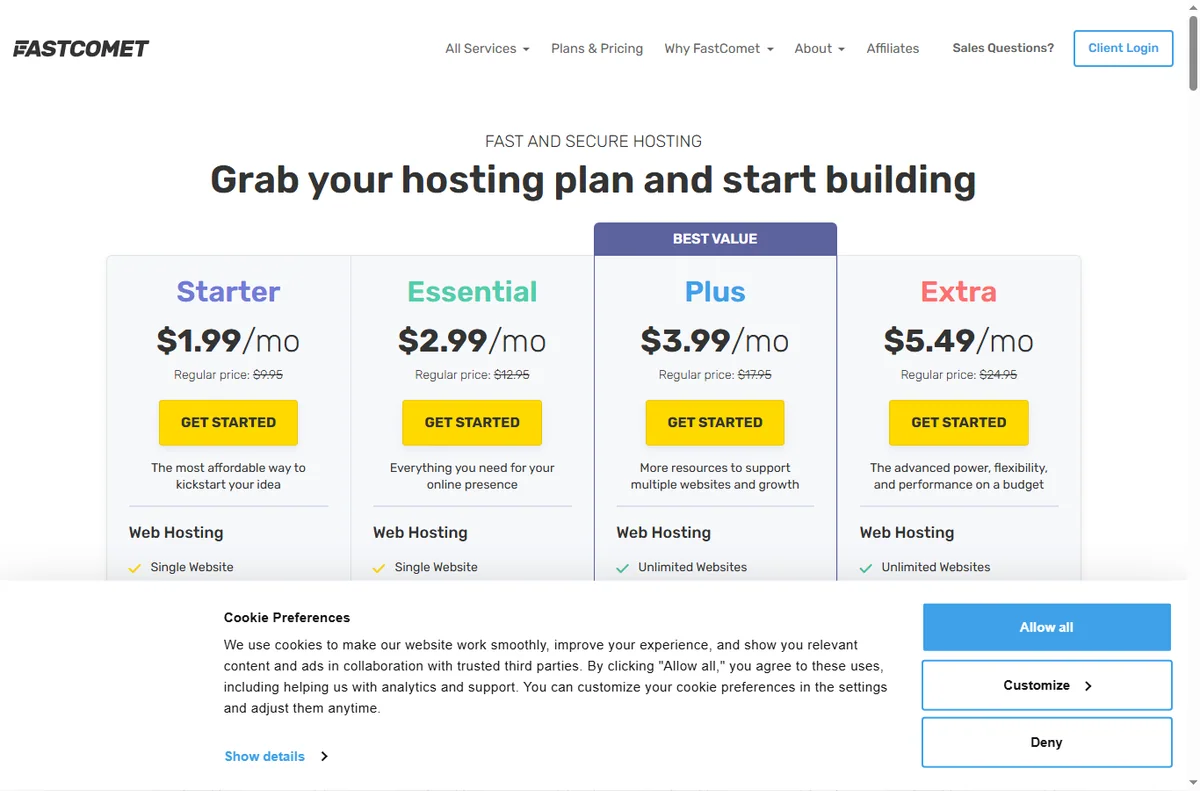
    Starting priceFrom about $2.49/moFrom about $2.95/mo
    Free planNoNo
    Best forglobal audiences that want speedeco-minded beginners
    Standout strengthglobal data centresgreen hosting
    Main trade-offBig gap between intro and renewal priceRenewal rates are higher
    FastComet WordPress hosting
    FastComet WordPress hosting (image: fastcomet.com)

    FastComet in brief

    Managed shared hosting with global data centres.

    • Pros: Many global data-centre choices; Free migration; Good caching stack
    • Cons: Big gap between intro and renewal price; The interface is busy; Support tiers vary
    • Review: FastComet review
    GreenGeeks homepage
    GreenGeeks homepage (image: greengeeks.com)

    GreenGeeks in brief

    Green-powered shared and WordPress hosting.

    • Pros: Eco-friendly data centres; Good beginner onboarding; Free domain and SSL
    • Cons: Renewal rates are higher; Performance is mid-tier; Phone support varies by plan
    • Review: GreenGeeks review

    Where each one falls short

    FastComet

    • Big gap between intro and renewal price
    • The interface is busy
    • Support tiers vary

    GreenGeeks

    • Renewal rates are higher
    • Performance is mid-tier
    • Phone support varies by plan
    GreenGeeks pricing plans
    GreenGeeks pricing (image: greengeeks.com)

    Which should you choose?

    Choose FastComet if you are global audiences that want speed, or you value global data centres.

    Choose GreenGeeks if you are eco-minded beginners, or you value green hosting.

    You can also use both together: FastComet and GreenGeeks connect through native integrations, so many teams run one for global data centres and the other for green hosting. Start with the one that matches your budget and workflow, and add the second when a clear gap appears.

    Compare on the official sites before you buy. FastComet →  |  GreenGeeks → (affiliate links)

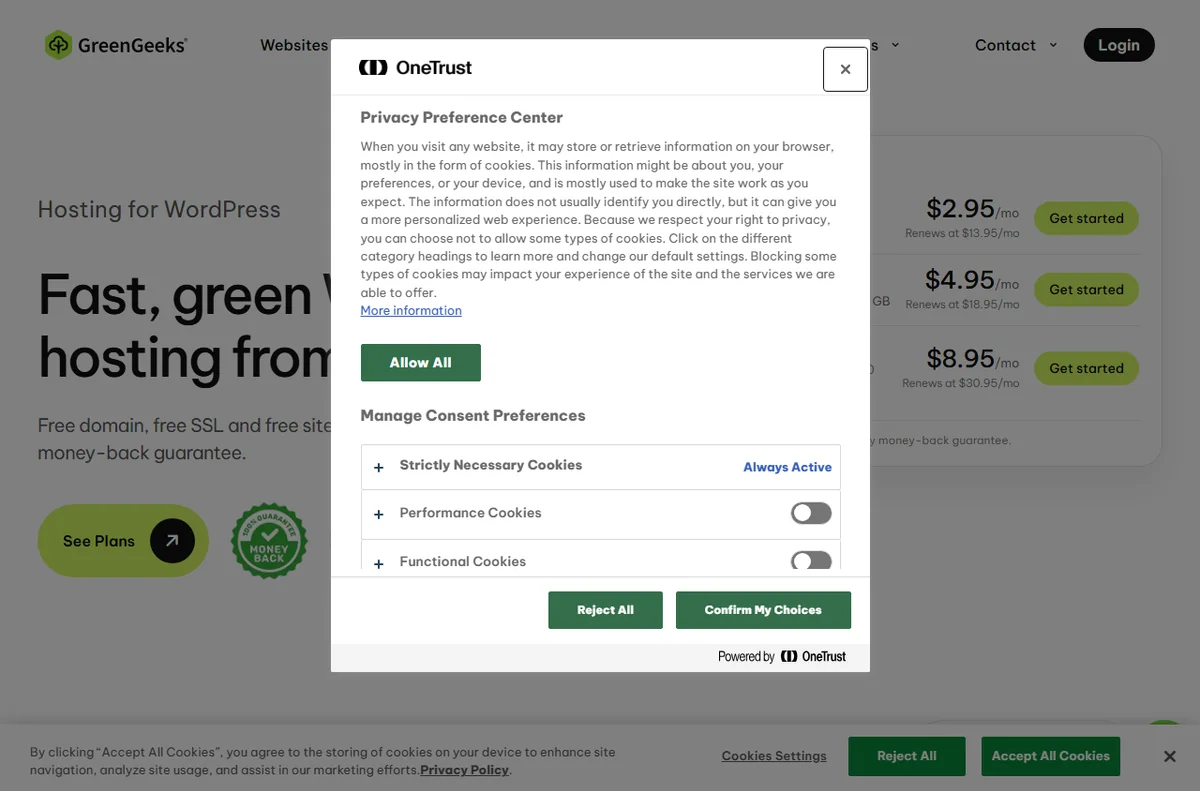
    GreenGeeks WordPress hosting
    GreenGeeks WordPress hosting (image: greengeeks.com)

    Frequently asked questions

    Is FastComet better than GreenGeeks?

    There is no universal winner. FastComet leads on global data centres, while GreenGeeks leads on green hosting. Match the tool to your budget and workflow.

    Is GreenGeeks cheaper than FastComet?

    On published pricing, FastComet starts at from about $2.49/mo and GreenGeeks starts at from about $2.95/mo. Always check current pricing and renewal rates.

    Can I use FastComet and GreenGeeks together?

    Yes. Both offer integrations and APIs, so you can run them side by side and send data between them.

    Related reading

  • GreenGeeks vs HostPapa: which is better in 2026?

    GreenGeeks vs HostPapa: which is better in 2026?

    Home / Web Hosting / Guides / GreenGeeks vs HostPapa

    Comparison · Web Hosting · updated 2026

    GreenGeeks vs HostPapa: which is better in 2026?

    Choosing between GreenGeeks and HostPapa? Here is a side-by-side look at pricing, strengths and fit, so you can pick the right one in a few minutes.

    GreenGeeks screenshot
    GreenGeeks official site (image: greengeeks.com)

    Independent analysis. This page may contain affiliate links. Some links here are referral links; if you sign up through one we may earn a reward at no extra cost to you, and it never changes what we recommend. See our Affiliate Disclosure.

    TL;DR

    • GreenGeeks is a better fit for eco-minded beginners.
    • HostPapa is a better fit for small businesses that need hosting plus email.
    • Pick GreenGeeks when green hosting matters most to you.
    • Pick HostPapa when small-business bundles matters most to you.

    At a glance

    FeatureGreenGeeksHostPapa
    Starting priceFrom about $2.95/moFrom about $2.95/mo
    Free planNoNo
    Best foreco-minded beginnerssmall businesses that need hosting plus email
    Standout strengthgreen hostingsmall-business bundles
    Main trade-offRenewal rates are higherRenewal pricing is steep
    GreenGeeks pricing plans
    GreenGeeks pricing (image: greengeeks.com)

    GreenGeeks in brief

    Green-powered shared and WordPress hosting.

    • Pros: Eco-friendly data centres; Good beginner onboarding; Free domain and SSL
    • Cons: Renewal rates are higher; Performance is mid-tier; Phone support varies by plan
    • Review: GreenGeeks review
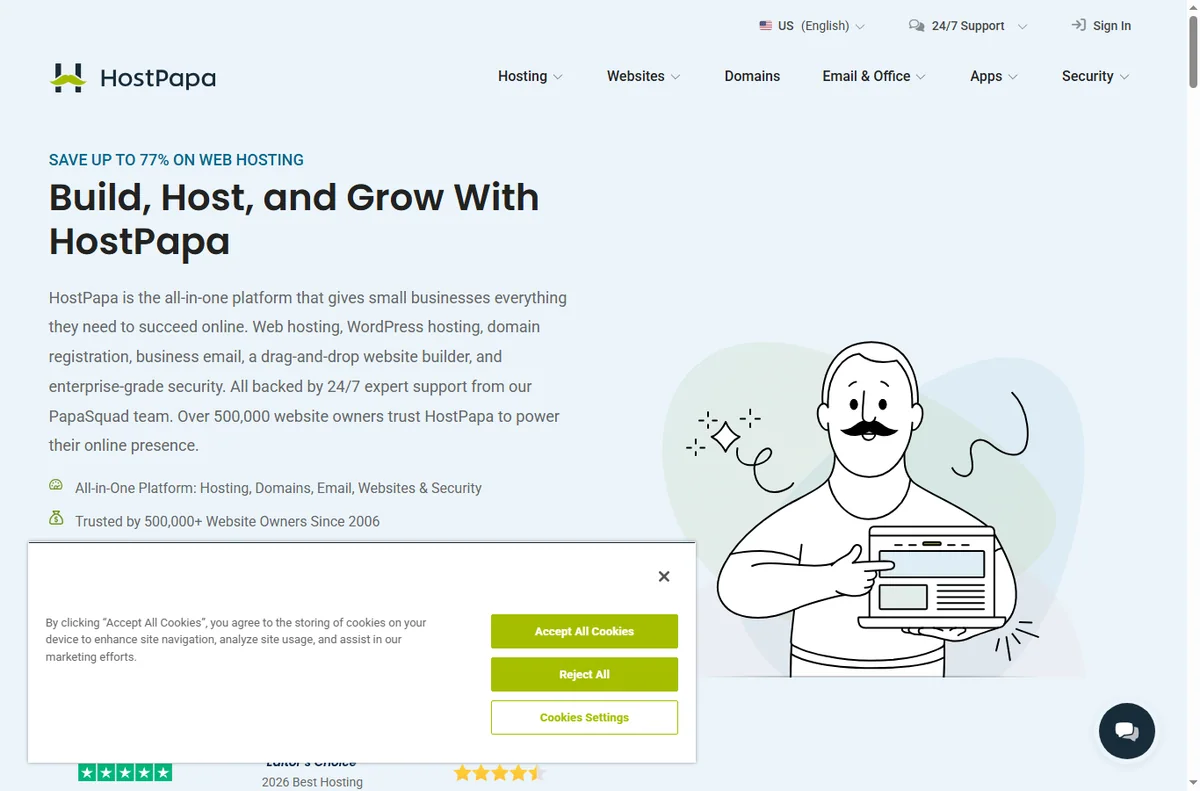
    HostPapa homepage
    HostPapa homepage (image: hostpapa.com)

    HostPapa in brief

    Shared hosting with a strong small-business onboarding.

    • Pros: Free migration and domain; Good small-business focus; Bundled email
    • Cons: Renewal pricing is steep; Upsells on checkout; Performance is entry-level
    • Review: HostPapa review

    Where each one falls short

    GreenGeeks

    • Renewal rates are higher
    • Performance is mid-tier
    • Phone support varies by plan

    HostPapa

    • Renewal pricing is steep
    • Upsells on checkout
    • Performance is entry-level
    GreenGeeks shared hosting plans
    GreenGeeks shared hosting (image: greengeeks.com)

    Which should you choose?

    Choose GreenGeeks if you are eco-minded beginners, or you value green hosting.

    Choose HostPapa if you are small businesses that need hosting plus email, or you value small-business bundles.

    You can also use both together: GreenGeeks and HostPapa connect through native integrations, so many teams run one for green hosting and the other for small-business bundles. Start with the one that matches your budget and workflow, and add the second when a clear gap appears.

    Compare on the official sites before you buy. GreenGeeks →  |  HostPapa → (affiliate links)

    GreenGeeks customer support
    GreenGeeks support (image: greengeeks.com)

    Frequently asked questions

    Is GreenGeeks better than HostPapa?

    There is no universal winner. GreenGeeks leads on green hosting, while HostPapa leads on small-business bundles. Match the tool to your budget and workflow.

    Is HostPapa cheaper than GreenGeeks?

    On published pricing, GreenGeeks starts at from about $2.95/mo and HostPapa starts at from about $2.95/mo. Always check current pricing and renewal rates.

    Can I use GreenGeeks and HostPapa together?

    Yes. Both offer integrations and APIs, so you can run them side by side and send data between them.

    Related reading

  • Kinsta vs ScalaHosting: which is better in 2026?

    Kinsta vs ScalaHosting: which is better in 2026?

    Home / Web Hosting / Guides / Kinsta vs ScalaHosting

    Comparison · Web Hosting · updated 2026

    Kinsta vs ScalaHosting: which is better in 2026?

    Choosing between Kinsta and ScalaHosting? Here is a side-by-side look at pricing, strengths and fit, so you can pick the right one in a few minutes.

    Kinsta screenshot
    Kinsta official site (image: kinsta.com)

    Independent analysis. This page may contain affiliate links. Some links here are referral links; if you sign up through one we may earn a reward at no extra cost to you, and it never changes what we recommend. See our Affiliate Disclosure.

    TL;DR

    • Kinsta is a better fit for business sites that need speed and support.
    • ScalaHosting is a better fit for sites outgrowing cheap shared hosting.
    • Pick Kinsta when managed performance matters most to you.
    • Pick ScalaHosting when dedicated resources matters most to you.

    At a glance

    FeatureKinstaScalaHosting
    Starting priceFrom about $35/moFrom about $3.95/mo
    Free planNoNo
    Best forbusiness sites that need speed and supportsites outgrowing cheap shared hosting
    Standout strengthmanaged performancededicated resources
    Main trade-offNo email hostingPricier than budget hosts
    Kinsta pricing plans
    Kinsta pricing (image: kinsta.com)

    Kinsta in brief

    Premium managed WordPress hosting on Google Cloud.

    • Pros: Excellent speed and uptime; Staging and developer tools; Strong support
    • Cons: No email hosting; Higher price point; Site limits per plan
    • Review: Kinsta review
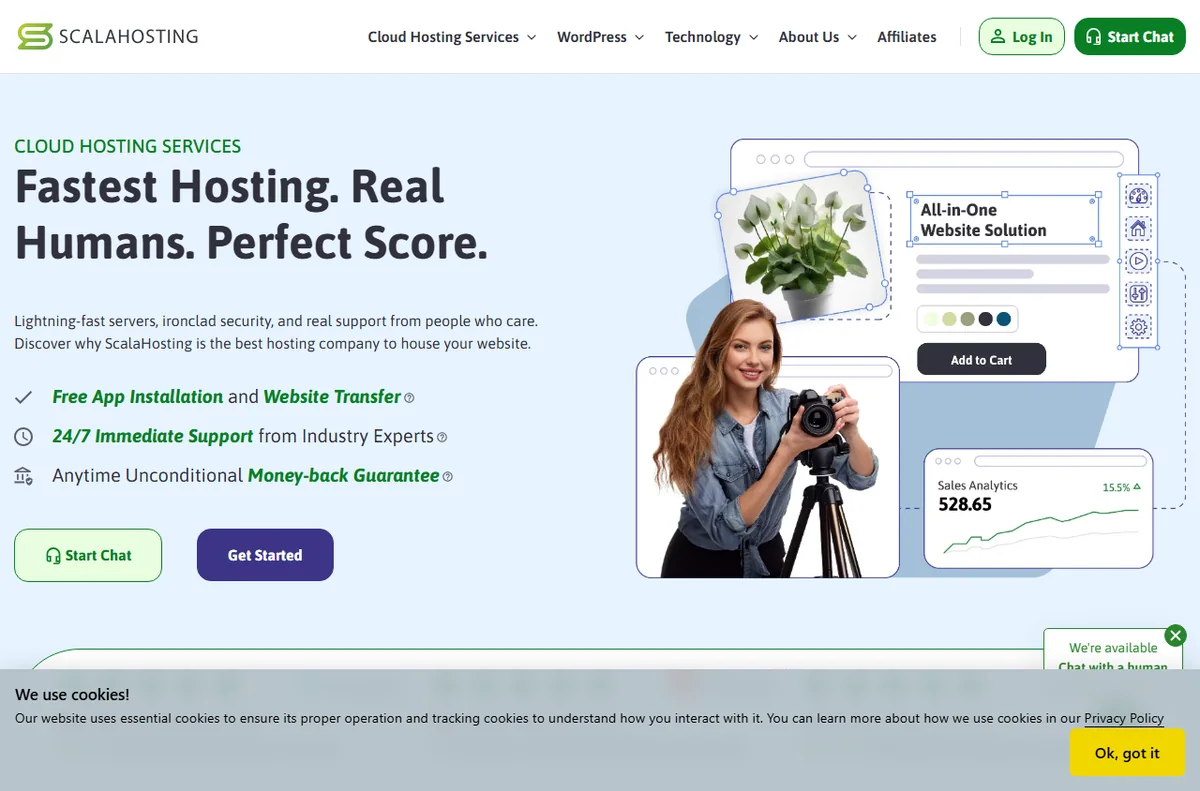
    ScalaHosting homepage
    ScalaHosting homepage (image: scalahosting.com)

    ScalaHosting in brief

    Managed hosting with dedicated resources.

    • Pros: Dedicated RAM and CPU on managed plans; Strong WordPress stack; 24/7 support
    • Cons: Pricier than budget hosts; A smaller brand; Limited data-centre choice
    • Review: ScalaHosting review

    Where each one falls short

    Kinsta

    • No email hosting
    • Higher price point
    • Site limits per plan

    ScalaHosting

    • Pricier than budget hosts
    • A smaller brand
    • Limited data-centre choice
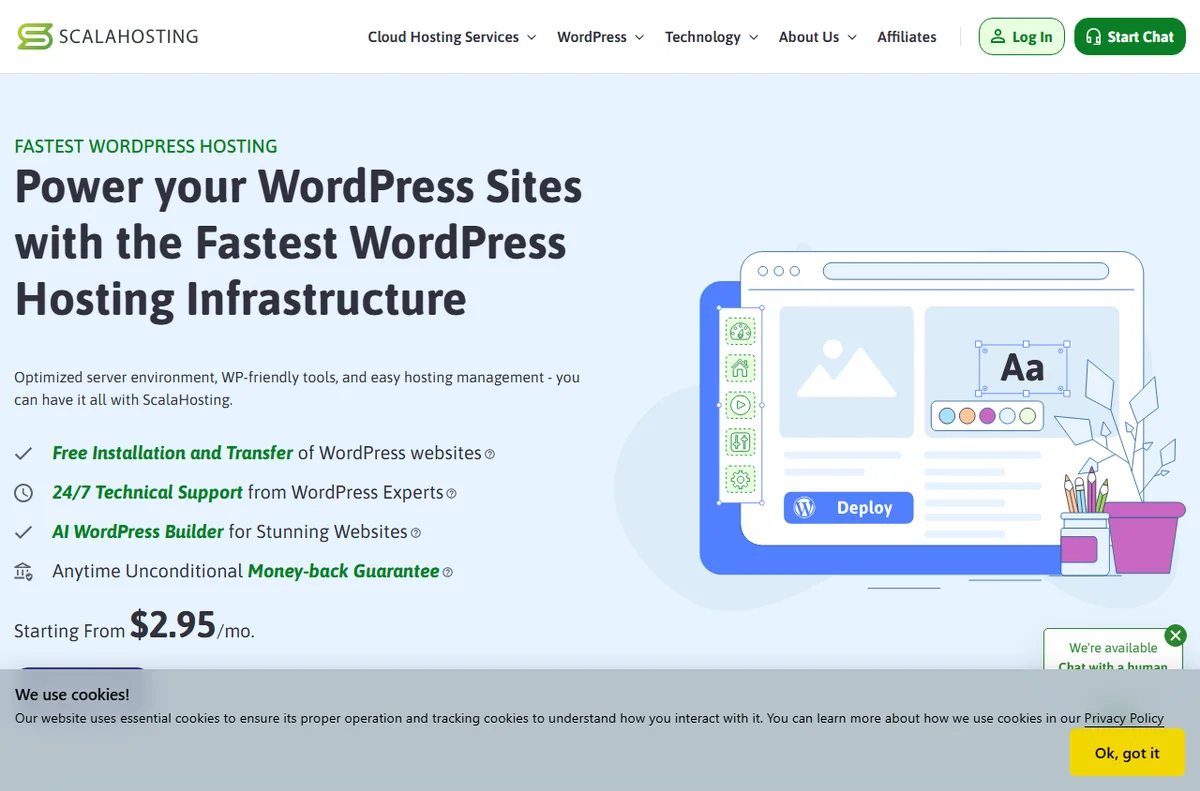
    ScalaHosting WordPress hosting
    ScalaHosting WordPress hosting (image: scalahosting.com)

    Which should you choose?

    Choose Kinsta if you are business sites that need speed and support, or you value managed performance.

    Choose ScalaHosting if you are sites outgrowing cheap shared hosting, or you value dedicated resources.

    You can also use both together: Kinsta and ScalaHosting connect through native integrations, so many teams run one for managed performance and the other for dedicated resources. Start with the one that matches your budget and workflow, and add the second when a clear gap appears.

    Compare on the official sites before you buy. Kinsta →  |  ScalaHosting → (affiliate links)

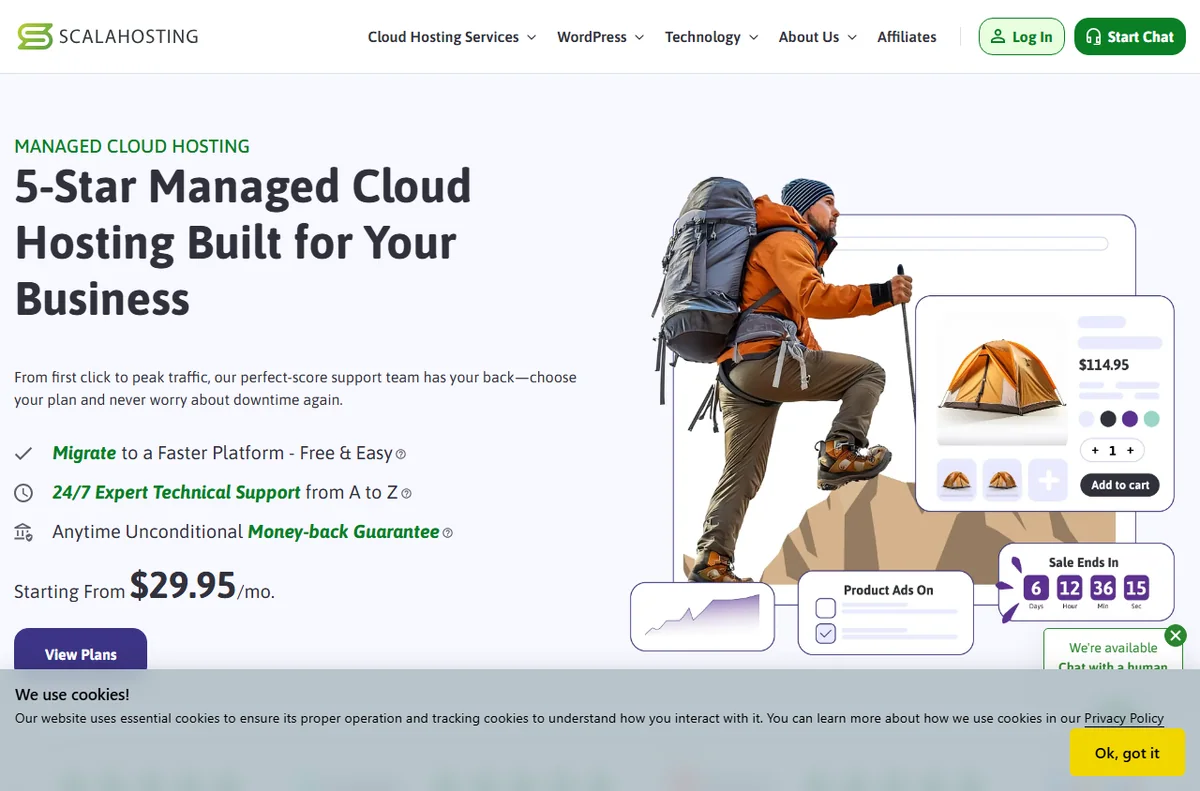
    ScalaHosting managed cloud hosting
    ScalaHosting managed cloud (image: scalahosting.com)

    Frequently asked questions

    Is Kinsta better than ScalaHosting?

    There is no universal winner. Kinsta leads on managed performance, while ScalaHosting leads on dedicated resources. Match the tool to your budget and workflow.

    Is ScalaHosting cheaper than Kinsta?

    On published pricing, Kinsta starts at from about $35/mo and ScalaHosting starts at from about $3.95/mo. Always check current pricing and renewal rates.

    Can I use Kinsta and ScalaHosting together?

    Yes. Both offer integrations and APIs, so you can run them side by side and send data between them.

    Related reading

  • Hostinger vs DreamHost: which is better in 2026?

    Hostinger vs DreamHost: which is better in 2026?

    Home / Web Hosting / Guides / Hostinger vs DreamHost

    Comparison · Web Hosting · updated 2026

    Hostinger vs DreamHost: which is better in 2026?

    Choosing between Hostinger and DreamHost? Here is a side-by-side look at pricing, strengths and fit, so you can pick the right one in a few minutes.

    Hostinger screenshot
    Hostinger official site (image: hostinger.com)

    Independent analysis. This page may contain affiliate links. Some links here are referral links; if you sign up through one we may earn a reward at no extra cost to you, and it never changes what we recommend. See our Affiliate Disclosure.

    TL;DR

    • Hostinger is a better fit for first websites and small budgets.
    • DreamHost is a better fit for beginners who want simple, honest hosting.
    • Pick Hostinger when price for beginners matters most to you.
    • Pick DreamHost when money-back confidence matters most to you.

    At a glance

    FeatureHostingerDreamHost
    Starting priceFrom about $2.99/moFrom about $2.59/mo
    Free planNoNo
    Best forfirst websites and small budgetsbeginners who want simple, honest hosting
    Standout strengthprice for beginnersmoney-back confidence
    Main trade-offRenewal pricing is higherRenewal prices rise
    Hostinger WordPress hosting plans
    Hostinger WordPress hosting (image: hostinger.com)

    Hostinger in brief

    Low-cost shared and managed WordPress hosting.

    • Pros: Very low intro prices; Managed WordPress and free SSL; Good performance for the price
    • Cons: Renewal pricing is higher; Support can be chat-only; Upsells at checkout
    • Review: Hostinger review
    DreamHost homepage for web hosting
    DreamHost homepage (image: dreamhost.com)

    DreamHost in brief

    Independent host with straightforward shared and managed plans.

    • Pros: No-oversell shared hosting; Long money-back window; Transparent pricing
    • Cons: Renewal prices rise; The control panel is dated; Upsells add up
    • Review: DreamHost review

    Where each one falls short

    Hostinger

    • Renewal pricing is higher
    • Support can be chat-only
    • Upsells at checkout

    DreamHost

    • Renewal prices rise
    • The control panel is dated
    • Upsells add up
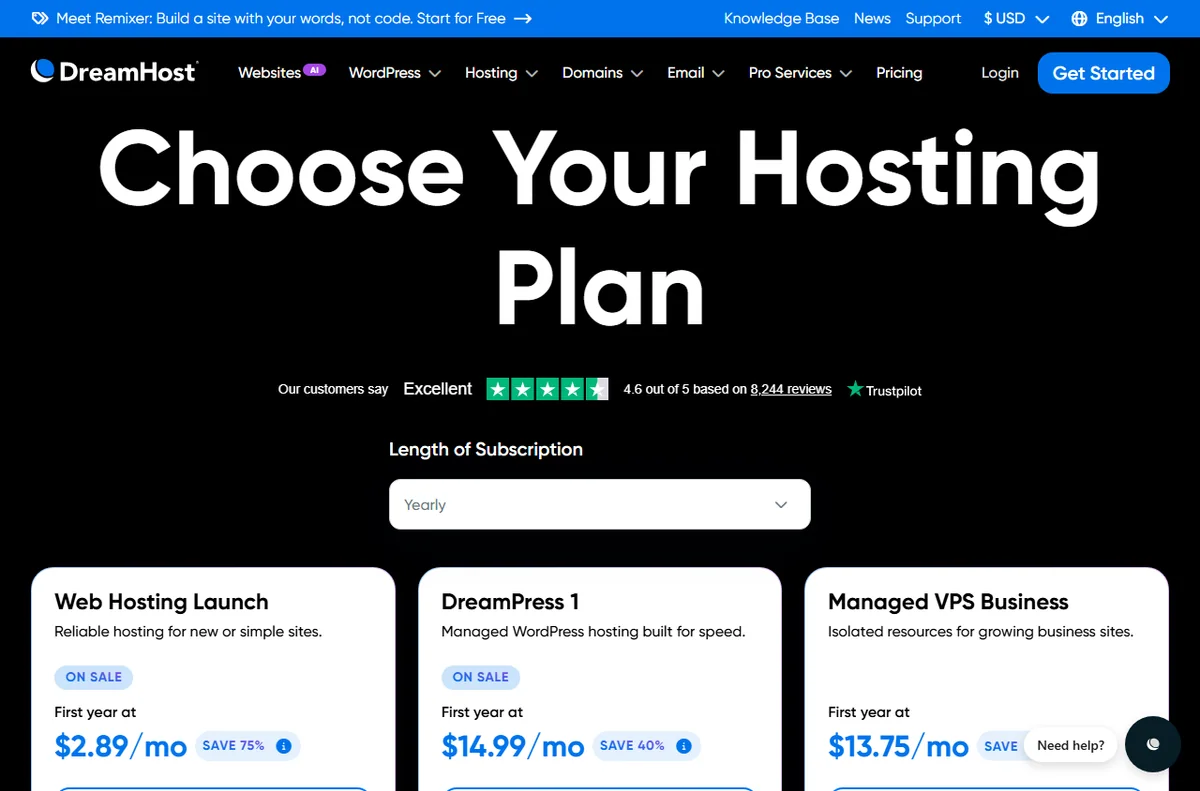
    DreamHost hosting plans
    DreamHost hosting (image: dreamhost.com)

    Which should you choose?

    Choose Hostinger if you are first websites and small budgets, or you value price for beginners.

    Choose DreamHost if you are beginners who want simple, honest hosting, or you value money-back confidence.

    You can also use both together: Hostinger and DreamHost connect through native integrations, so many teams run one for price for beginners and the other for money-back confidence. Start with the one that matches your budget and workflow, and add the second when a clear gap appears.

    Compare on the official sites before you buy. Hostinger →  |  DreamHost → (affiliate links)

    DreamHost WordPress hosting
    DreamHost WordPress hosting (image: dreamhost.com)

    Frequently asked questions

    Is Hostinger better than DreamHost?

    There is no universal winner. Hostinger leads on price for beginners, while DreamHost leads on money-back confidence. Match the tool to your budget and workflow.

    Is DreamHost cheaper than Hostinger?

    On published pricing, Hostinger starts at from about $2.99/mo and DreamHost starts at from about $2.59/mo. Always check current pricing and renewal rates.

    Can I use Hostinger and DreamHost together?

    Yes. Both offer integrations and APIs, so you can run them side by side and send data between them.

    Related reading

  • Hostinger vs Kinsta: which is better in 2026?

    Hostinger vs Kinsta: which is better in 2026?

    Home / Web Hosting / Guides / Hostinger vs Kinsta

    Comparison · Web Hosting · updated 2026

    Hostinger vs Kinsta: which is better in 2026?

    Choosing between Hostinger and Kinsta? Here is a side-by-side look at pricing, strengths and fit, so you can pick the right one in a few minutes.

    Hostinger screenshot
    Hostinger official site (image: hostinger.com)

    Independent analysis. This page may contain affiliate links. Some links here are referral links; if you sign up through one we may earn a reward at no extra cost to you, and it never changes what we recommend. See our Affiliate Disclosure.

    TL;DR

    • Hostinger is a better fit for first websites and small budgets.
    • Kinsta is a better fit for business sites that need speed and support.
    • Pick Hostinger when price for beginners matters most to you.
    • Pick Kinsta when managed performance matters most to you.

    At a glance

    FeatureHostingerKinsta
    Starting priceFrom about $2.99/moFrom about $35/mo
    Free planNoNo
    Best forfirst websites and small budgetsbusiness sites that need speed and support
    Standout strengthprice for beginnersmanaged performance
    Main trade-offRenewal pricing is higherNo email hosting
    Hostinger pricing plans
    Hostinger pricing (image: hostinger.com)

    Hostinger in brief

    Low-cost shared and managed WordPress hosting.

    • Pros: Very low intro prices; Managed WordPress and free SSL; Good performance for the price
    • Cons: Renewal pricing is higher; Support can be chat-only; Upsells at checkout
    • Review: Hostinger review
    Kinsta managed WordPress hosting homepage
    Kinsta homepage (image: kinsta.com)

    Kinsta in brief

    Premium managed WordPress hosting on Google Cloud.

    • Pros: Excellent speed and uptime; Staging and developer tools; Strong support
    • Cons: No email hosting; Higher price point; Site limits per plan
    • Review: Kinsta review

    Where each one falls short

    Hostinger

    • Renewal pricing is higher
    • Support can be chat-only
    • Upsells at checkout

    Kinsta

    • No email hosting
    • Higher price point
    • Site limits per plan
    Kinsta pricing plans
    Kinsta pricing (image: kinsta.com)

    Which should you choose?

    Choose Hostinger if you are first websites and small budgets, or you value price for beginners.

    Choose Kinsta if you are business sites that need speed and support, or you value managed performance.

    You can also use both together: Hostinger and Kinsta connect through native integrations, so many teams run one for price for beginners and the other for managed performance. Start with the one that matches your budget and workflow, and add the second when a clear gap appears.

    Compare on the official sites before you buy. Hostinger →  |  Kinsta → (affiliate links)

    Kinsta platform features
    Kinsta features (image: kinsta.com)

    Frequently asked questions

    Is Hostinger better than Kinsta?

    There is no universal winner. Hostinger leads on price for beginners, while Kinsta leads on managed performance. Match the tool to your budget and workflow.

    Is Kinsta cheaper than Hostinger?

    On published pricing, Hostinger starts at from about $2.99/mo and Kinsta starts at from about $35/mo. Always check current pricing and renewal rates.

    Can I use Hostinger and Kinsta together?

    Yes. Both offer integrations and APIs, so you can run them side by side and send data between them.

    Related reading

  • EmailOctopus vs Moosend: which is better in 2026?

    EmailOctopus vs Moosend: which is better in 2026?

    Home / Email Marketing / Guides / EmailOctopus vs Moosend

    Comparison · Email Marketing · updated 2026

    EmailOctopus vs Moosend: which is better in 2026?

    Choosing between EmailOctopus and Moosend? Here is a side-by-side look at pricing, strengths and fit, so you can pick the right one in a few minutes.

    EmailOctopus screenshot
    EmailOctopus official site (image: emailoctopus.com)

    Independent analysis. This page may contain affiliate links. Some links here are referral links; if you sign up through one we may earn a reward at no extra cost to you, and it never changes what we recommend. See our Affiliate Disclosure.

    TL;DR

    • EmailOctopus is a better fit for budget senders with simple needs.
    • Moosend is a better fit for small businesses that want low-cost sending.
    • Pick EmailOctopus when cheapest at scale matters most to you.
    • Pick Moosend when low cost per email matters most to you.

    At a glance

    FeatureEmailOctopusMoosend
    Starting priceFree plan; paid plans from about $9/moPaid plans from about $9/mo (trial only)
    Free planYesNo
    Best forbudget senders with simple needssmall businesses that want low-cost sending
    Standout strengthcheapest at scalelow cost per email
    Main trade-offBasic automationSmaller template library
    EmailOctopus features overview
    EmailOctopus features (image: emailoctopus.com)

    EmailOctopus in brief

    Low-cost email marketing powered by Amazon SES.

    • Pros: Very competitive pricing; Simple, clean interface; Good deliverability via SES
    • Cons: Basic automation; Fewer integrations; Limited reporting
    • Review: EmailOctopus review
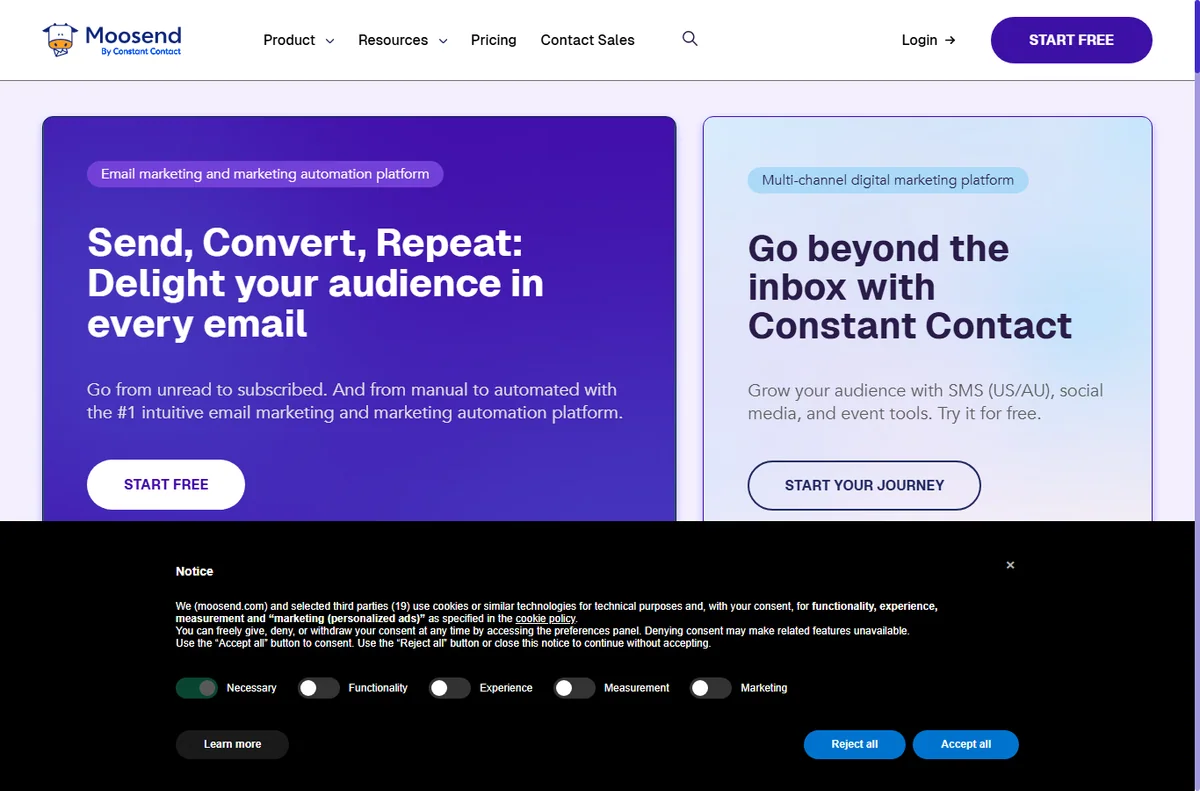
    Moosend email marketing homepage
    Moosend homepage (image: moosend.com)

    Moosend in brief

    Affordable email marketing with automation and landing pages.

    • Pros: Low entry pricing; Unlimited emails on paid plans; Automation and landing pages included
    • Cons: Smaller template library; Support can be slow; Fewer advanced features
    • Review: Moosend review

    Where each one falls short

    EmailOctopus

    • Basic automation
    • Fewer integrations
    • Limited reporting

    Moosend

    • Smaller template library
    • Support can be slow
    • Fewer advanced features
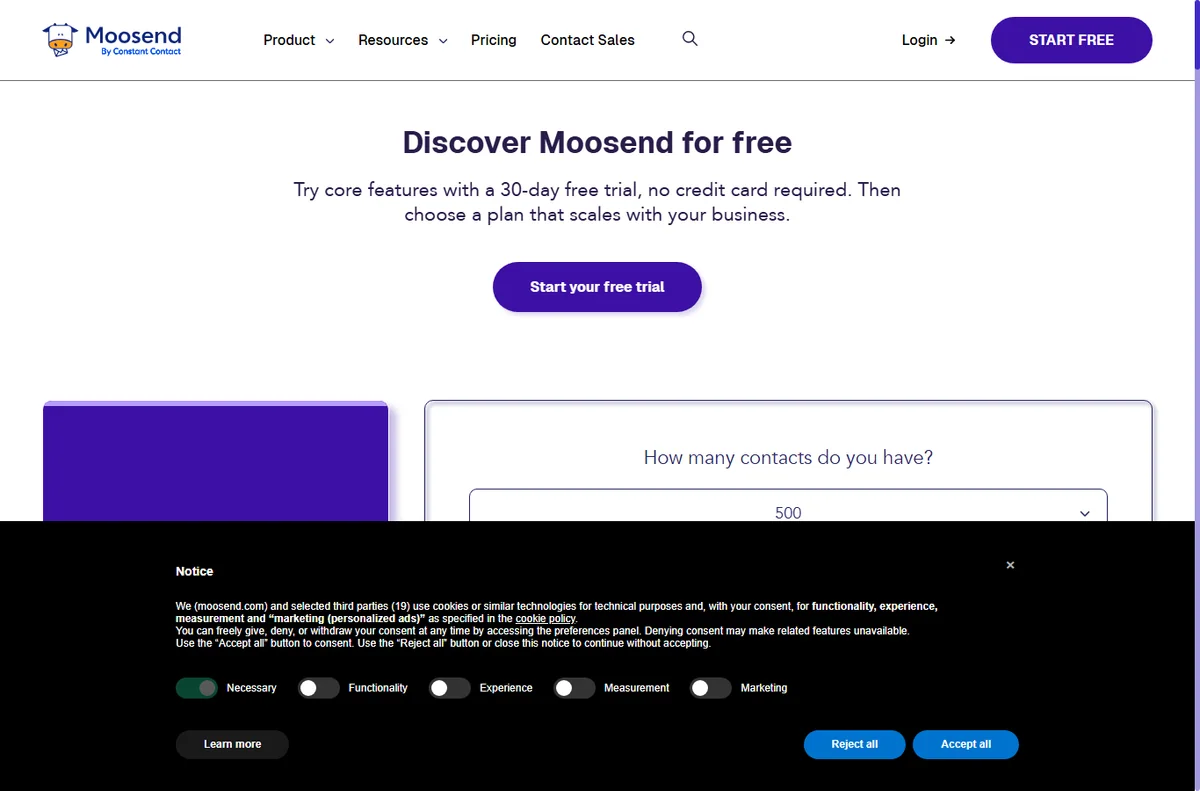
    Moosend pricing plans
    Moosend pricing (image: moosend.com)

    Which should you choose?

    Choose EmailOctopus if you are budget senders with simple needs, or you value cheapest at scale.

    Choose Moosend if you are small businesses that want low-cost sending, or you value low cost per email.

    You can also use both together: EmailOctopus and Moosend connect through native integrations, so many teams run one for cheapest at scale and the other for low cost per email. Start with the one that matches your budget and workflow, and add the second when a clear gap appears.

    Compare on the official sites before you buy. EmailOctopus →  |  Moosend → (affiliate links)

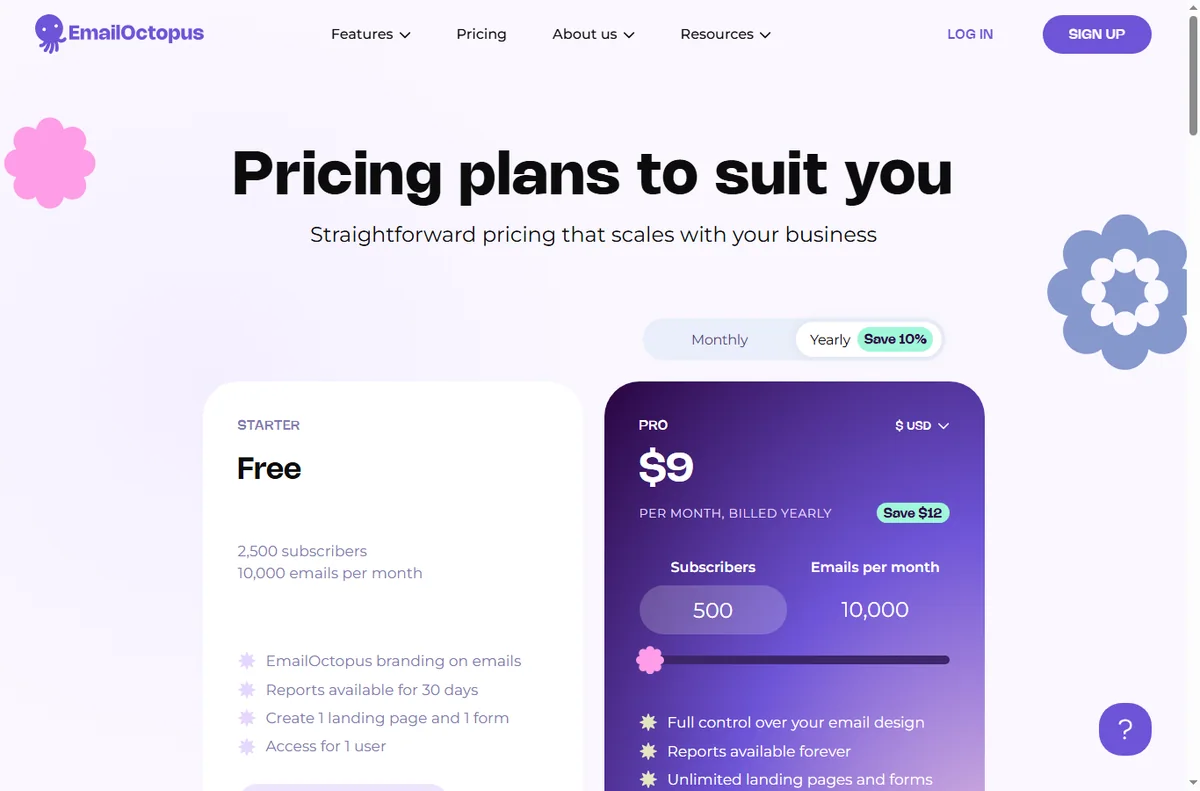
    EmailOctopus pricing plans
    EmailOctopus pricing (image: emailoctopus.com)

    Frequently asked questions

    Is EmailOctopus better than Moosend?

    There is no universal winner. EmailOctopus leads on cheapest at scale, while Moosend leads on low cost per email. Match the tool to your budget and workflow.

    Is Moosend cheaper than EmailOctopus?

    On published pricing, EmailOctopus starts at free plan; paid plans from about $9/mo and Moosend starts at paid plans from about $9/mo (trial only). Always check current pricing and renewal rates.

    Can I use EmailOctopus and Moosend together?

    Yes. Both offer integrations and APIs, so you can run them side by side and send data between them.

    Related reading

    Try Moosend free – email marketing & automation. Start free

    Try EmailOctopus free – email marketing that is simple and affordable. Start free

  • Moosend vs MailerLite: which is better in 2026?

    Moosend vs MailerLite: which is better in 2026?

    Home / Email Marketing / Guides / Moosend vs MailerLite

    Comparison · Email Marketing · updated 2026

    Moosend vs MailerLite: which is better in 2026?

    Choosing between Moosend and MailerLite? Here is a side-by-side look at pricing, strengths and fit, so you can pick the right one in a few minutes.

    Moosend screenshot
    Moosend official site (image: moosend.com)

    Independent analysis. This page may contain affiliate links. Some links here are referral links; if you sign up through one we may earn a reward at no extra cost to you, and it never changes what we recommend. See our Affiliate Disclosure.

    TL;DR

    • Moosend is a better fit for small businesses that want low-cost sending.
    • MailerLite is a better fit for beginners and small lists on a budget.
    • Pick Moosend when low cost per email matters most to you.
    • Pick MailerLite when free-plan value matters most to you.

    At a glance

    FeatureMoosendMailerLite
    Starting pricePaid plans from about $9/mo (trial only)Free; paid plans from about $10/mo
    Free planNoYes
    Best forsmall businesses that want low-cost sendingbeginners and small lists on a budget
    Standout strengthlow cost per emailfree-plan value
    Main trade-offSmaller template libraryAutomation is less advanced than rivals
    Moosend features overview
    Moosend features (image: moosend.com)

    Moosend in brief

    Affordable email marketing with automation and landing pages.

    • Pros: Low entry pricing; Unlimited emails on paid plans; Automation and landing pages included
    • Cons: Smaller template library; Support can be slow; Fewer advanced features
    • Review: Moosend review
    MailerLite home page
    MailerLite (image: mailerlite.com)

    MailerLite in brief

    Beginner-friendly email marketing with a generous free plan.

    • Pros: Free plan for up to 1,000 subscribers; Clean drag-and-drop builder; Easy automation builder
    • Cons: Automation is less advanced than rivals; Fewer integrations; Deliverability add-ons cost more
    • Review: MailerLite review

    Where each one falls short

    Moosend

    • Smaller template library
    • Support can be slow
    • Fewer advanced features

    MailerLite

    • Automation is less advanced than rivals
    • Fewer integrations
    • Deliverability add-ons cost more
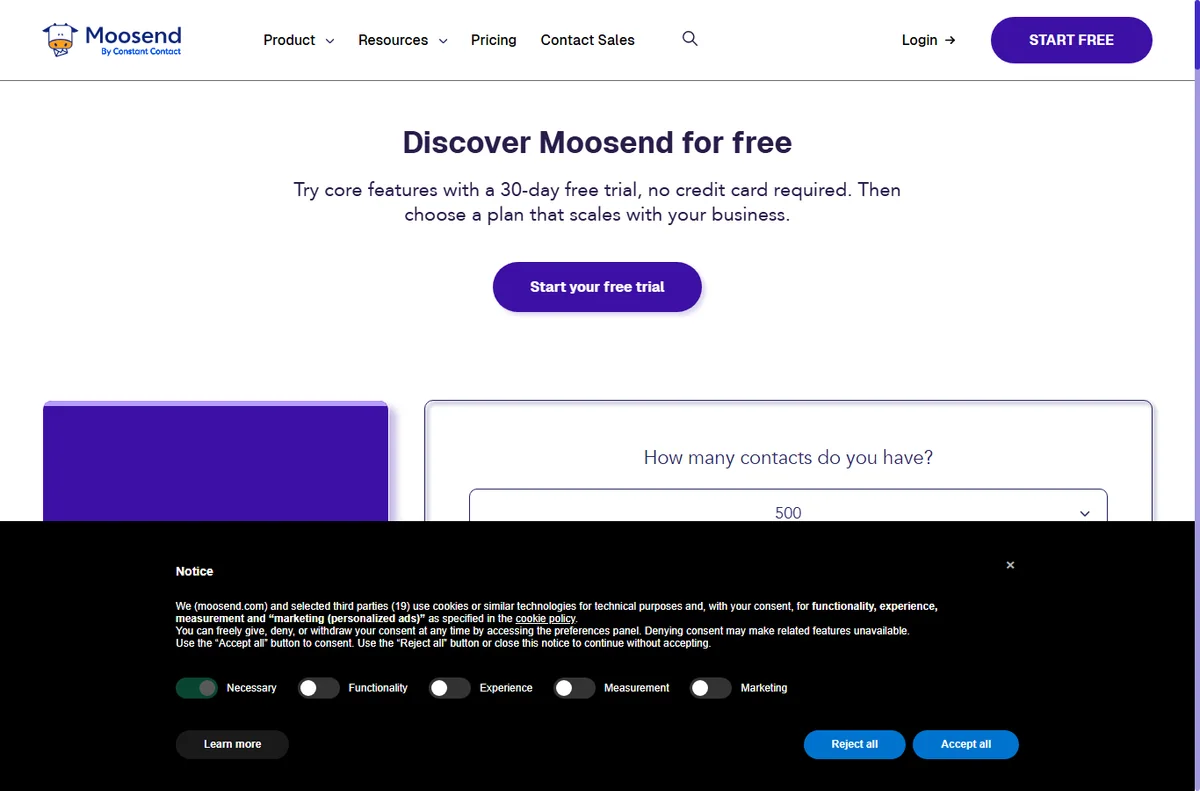
    Moosend pricing plans
    Moosend pricing (image: moosend.com)

    Which should you choose?

    Choose Moosend if you are small businesses that want low-cost sending, or you value low cost per email.

    Choose MailerLite if you are beginners and small lists on a budget, or you value free-plan value.

    You can also use both together: Moosend and MailerLite connect through native integrations, so many teams run one for low cost per email and the other for free-plan value. Start with the one that matches your budget and workflow, and add the second when a clear gap appears.

    Compare on the official sites before you buy. Moosend →  |  MailerLite → (affiliate links)

    Frequently asked questions

    Is Moosend better than MailerLite?

    There is no universal winner. Moosend leads on low cost per email, while MailerLite leads on free-plan value. Match the tool to your budget and workflow.

    Is MailerLite cheaper than Moosend?

    On published pricing, Moosend starts at paid plans from about $9/mo (trial only) and MailerLite starts at free; paid plans from about $10/mo. Always check current pricing and renewal rates.

    Can I use Moosend and MailerLite together?

    Yes. Both offer integrations and APIs, so you can run them side by side and send data between them.

    Related reading

    Try Moosend free – email marketing & automation. Start free

    Try EmailOctopus free – email marketing that is simple and affordable. Start free