We’re reader-supported — some links are affiliate links. Learn more →

Skip to content

Independent software research. Some links may earn us a commission at no extra cost to you. Learn more →

ICode

Category: Email Marketing

  • How to set up Moosend (step-by-step)

    How to set up Moosend (step-by-step)

    Home / Email Marketing / Guides / How to set up Moosend (step-by-step)

    Tutorial · email marketing · updated October 9, 2026

    How to set up Moosend (step-by-step)

    Moosend is an email marketing platform for campaigns and automation. Setting it up means creating an account, verifying the domain you send from, building a consent-based list, and sending one test campaign before you email everyone. This guide walks through the order that keeps your first sends out of the spam folder.

    Independent analysis. This page may contain affiliate links. If you sign up through a link on this page we may earn a reward at no extra cost to you, and it never changes what we recommend. We are an independent publisher and are not affiliated with, endorsed by, or an official partner of any tool mentioned. See our Affiliate Disclosure.

    TL;DR

    • Create the account with an email address you monitor.
    • Verify your sending domain before your first real campaign.
    • Import or build a small, consent-based list.
    • Build one welcome automation, not ten.
    • Send a test campaign and check the result before you go wide.

    On this page: Create account · Verify sending domain · Build your list · First automation · Send a test · Sanity checks

    Moosend home page
    Moosend home (image: moosend.com)

    Step 1 — Create your account

    Start by creating an account with an email address you actually check. This is the login you will use for campaigns, automation and billing, so a business address beats a personal one.

    Confirm the verification email before going further. An unverified account cannot send reliably, and support tickets are harder to resolve when the address is one you rarely open.
    Moosend blog page
    Moosend blog (image: moosend.com)

    Step 2 — Verify your sending domain

    Add the domain you will send from and follow the DNS steps Moosend gives you. Verification proves you control the domain and is the single most important thing for inbox placement.

    If you are unsure which domain to use, a subdomain dedicated to email keeps your main site’s reputation separate. Check the current instructions in your account, as providers occasionally change the exact records required.
    Moosend emailmarketing page
    Moosend emailmarketing (image: moosend.com)

    Step 3 — Build your first list

    Create a list for your main audience and import contacts you have permission to email. Clean lists perform better and protect your sender reputation more than large ones do.

    Set up at least one sign-up form so new subscribers arrive through consent rather than manual uploads. A single clear form usually beats three competing pop-ups.

    Step 4 — Set up one automation

    Build a simple welcome sequence: a thank-you email, then one or two useful follow-ups. Automation earns its keep when it answers a new subscriber’s obvious first questions.

    Resist building a dozen flows on day one. One working automation you understand beats a web of half-finished ones you are afraid to touch.

    Moosend features page
    Moosend features (image: moosend.com)

    Step 5 — Send a test campaign

    Create your first campaign and send it to yourself and a colleague before the full list. Check the subject line, the links and how it renders on a phone.

    Open the preview across the major clients your audience uses. Small layout problems that look fine on a desktop often break on mobile, where most email is now read.

    Final checks before you rely on it

    • Confirm your sending domain shows as verified.
    • Send a test to two or three different inboxes and check placement.
    • Make sure every link in the campaign points where you expect.
    • Note your plan’s contact and send limits so you do not hit a wall mid-campaign.
    Moosend integrations page
    Moosend integrations (image: moosend.com)

    Where this fits

    See the independent Moosend review and the email marketing hub. For a shortlist, see best email marketing software, then follow how to build an email list and the deliverability guide.
    Moosend pricing page
    Moosend pricing (image: moosend.com)

    Frequently asked

    Do I need to verify a domain to send?

    For any serious sending, yes. Unverified domains are far more likely to land in spam. Check the current requirements in your account, as the exact DNS records can change.

    How big should my first list be?

    Start with the contacts you have permission to email, however small. Relevance and consent matter more than size for early results.

    Is Moosend good for beginners?

    It is approachable for a first email tool, with templates and automation that do not require a developer. Expect a short learning curve on your first automation.

    Do I need a paid plan to start?

    There are limits on the free tier, and plans change over time. Check the current pricing and send limits before you commit to a workflow.

    Start sending with Moosend

    Account, sending domain and your first campaign.

    Some links on this page may be referral links — we may earn a reward if you sign up, at no extra cost to you. We are an independent publisher. See our Affiliate Disclosure.
  • How to Use MailerLite for a Small Business

    How to Use MailerLite for a Small Business

    Home / Email Marketing / Guides / How to use MailerLite

    Use case · email marketing · updated October 8, 2026

    How to use MailerLite for a small business

    MailerLite is a tool; the value comes from how a small business uses it. This post covers the practical patterns that tend to earn their keep: welcome series, a sustainable newsletter, simple segmentation, a few automations and honest reporting.

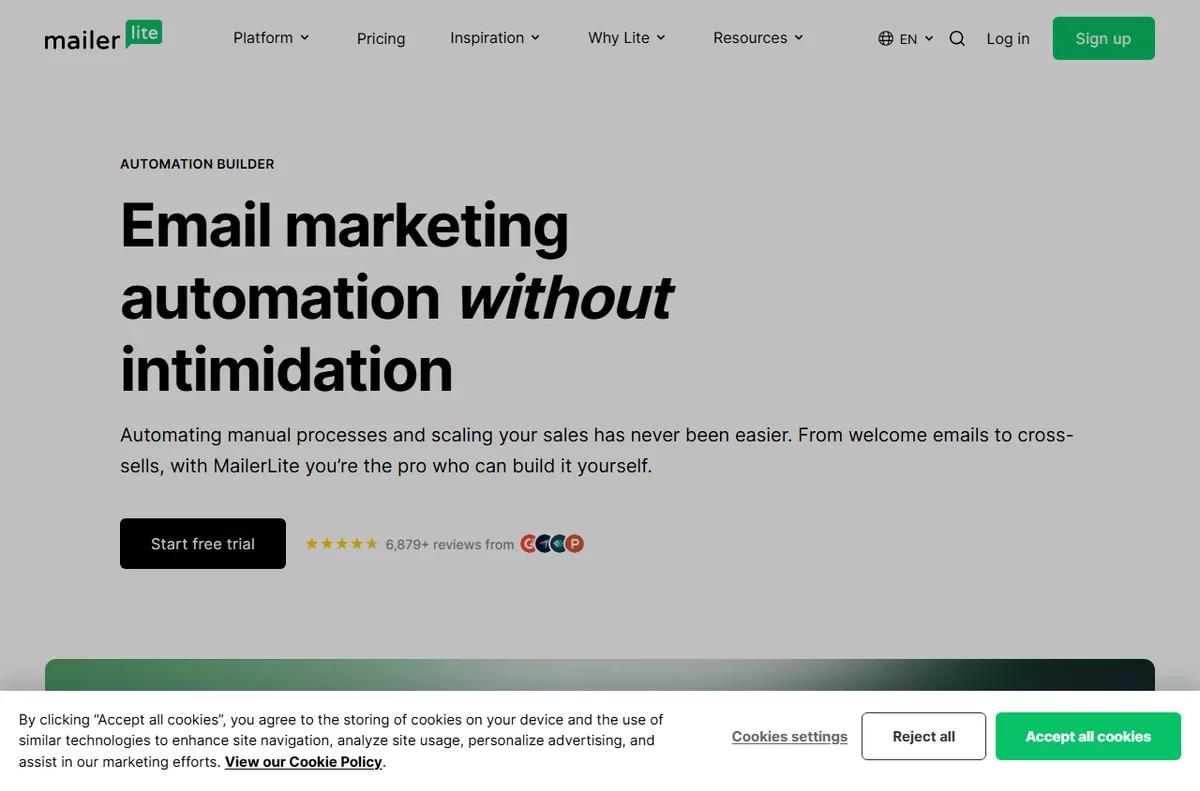
    MailerLite email marketing homepage
    MailerLite official homepage (image: mailerlite.com)

    Independent analysis. This page may contain affiliate links. Some links here are referral links; if you sign up through one we may earn a reward at no extra cost to you, and it never changes what we recommend. We are an independent publisher and are not affiliated with, endorsed by, or an official partner of any tool mentioned. See our Affiliate Disclosure.

    TL;DR

    • A welcome series does more work than most one-off campaigns.
    • A predictable newsletter rhythm beats sporadic bursts.
    • Segment by behaviour, not by guesswork.
    • Automate the handful of messages you send every time.
    • Keep consent and list hygiene in view as the list grows.

    On this page: What this covers · Where MailerLite earns its place · A welcome series that does a job · A newsletter rhythm you can keep · Segmentation without overcomplicating · What to automate first · Reading the numbers that matter · Consent and list hygiene · Where this fits in your wider stack

    What this covers

    Once the account is set up, the question shifts from configuration to habit. This post is about the patterns a small business can sustain: a few automations that always run, a newsletter cadence you can keep, and segmentation you will actually act on.

    It avoids theory. Each section maps to something you can build in an afternoon and improve over time.

    Where MailerLite earns its place

    For a small team, email is often the most reliable channel you own. These are the jobs worth setting up first.

    • Welcome new subscribers automatically.
    • Send a regular newsletter to stay in touch.
    • Segment by interest or purchase behaviour.
    • Follow up after a purchase or a key action.
    • Report on what actually gets opened and clicked.
    MailerLite automation builder for welcome series
    MailerLite automation (image: mailerlite.com)

    A welcome series that does a job

    The first messages after sign-up get the most attention you will ever have. A short series that sets expectations, delivers the promised value and points to one clear next step usually outperforms a single generic hello.

    MailerLite newsletter templates
    MailerLite templates (image: mailerlite.com)

    A newsletter rhythm you can keep

    Pick a cadence you can sustain and protect it. A monthly issue that always ships beats a burst of weekly sends that fades after a month, both for your audience and for your own workload.

    MailerLite email marketing features for segmentation
    MailerLite features (image: mailerlite.com)

    Segmentation without overcomplicating

    Start with a few meaningful groups: customers, subscribers, and one based on a clear action such as a recent purchase. More segments than you can act on adds work without changing what you send.

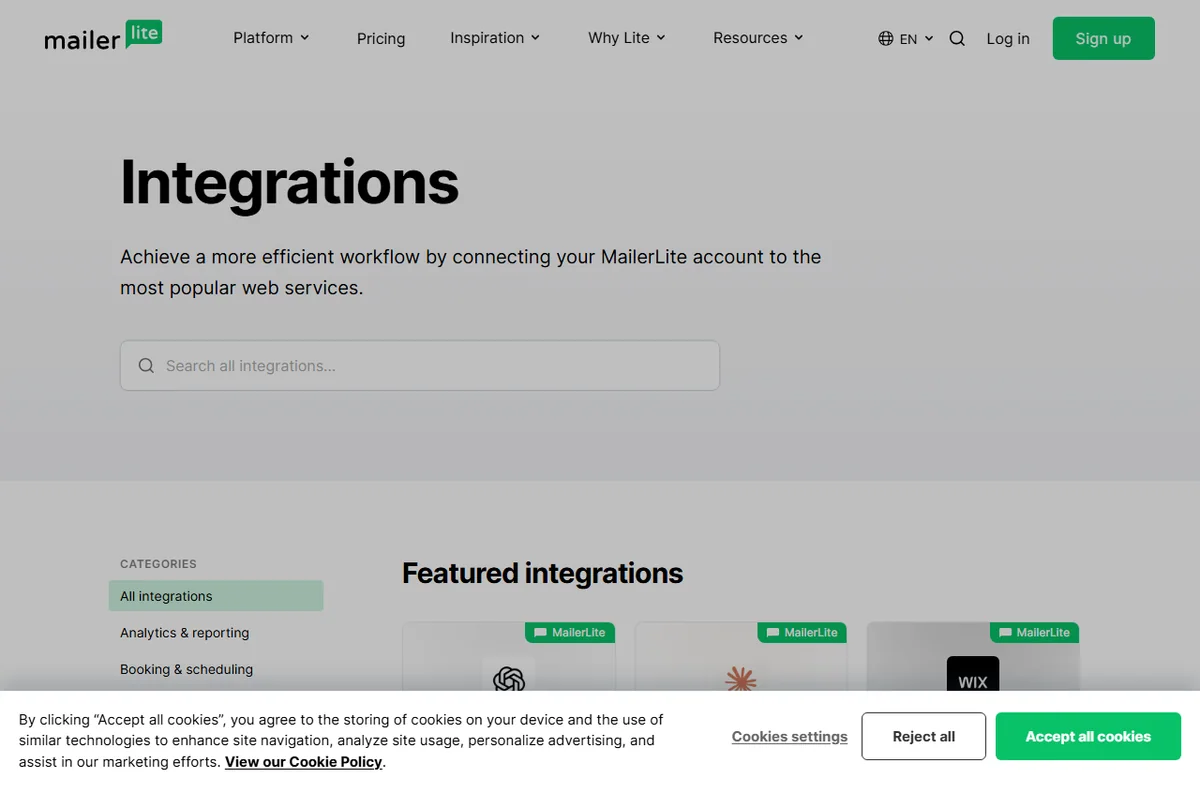
    MailerLite integrations to trigger automations
    MailerLite integrations (image: mailerlite.com)

    What to automate first

    Automate the messages you would otherwise send by hand every time.

    Automation Priority Why
    Welcome sequenceHighEvery new subscriber sees it
    Post-purchase follow-upHighTied to repeat business
    Re-engagement for inactive readersMediumProtects list quality over time
    Birthday or milestone messageLowNice to have, rarely urgent
    Complex branching journeysLaterWorth the effort only at larger scale
    Based on publicly documented behaviour, checked October 8, 2026.
    MailerLite dashboard sign-in where campaign statistics are accessed
    MailerLite dashboard sign-in (image: mailerlite.com)

    Reading the numbers that matter

    Open and click rates are directional, not definitive, and privacy features affect how they are measured. Watch trends over time and use the results to decide what to send next rather than chasing a single number in isolation.

    MailerLite sign-up forms with consent
    MailerLite sign-up forms (image: mailerlite.com)

    Consent and list hygiene

    Only email people who agreed to hear from you, make unsubscribing easy, and remove addresses that consistently bounce. A smaller engaged list is worth more than a large indifferent one, and it protects your deliverability.

    Where this fits in your wider stack

    If you are still choosing a tool, read the independent MailerLite review and start from the email marketing hub. Weighing options? See best email marketing software, browse best email newsletter tools, and if you are starting out, read best email marketing for beginners.

    Frequently asked

    How should a small business use MailerLite?

    Start with a welcome sequence and a newsletter you can keep up, then add segmentation and automations as you learn what your audience responds to.

    How often should I email my list?

    Choose a cadence you can sustain; consistency matters more than raw frequency.

    Should I segment my list?

    Yes, but keep it simple. A few groups tied to clear behaviour are easier to act on than many fine-grained ones.

    What metrics should I track?

    Watch open and click trends over time, plus unsubscribes and bounces, rather than optimising one number in isolation.

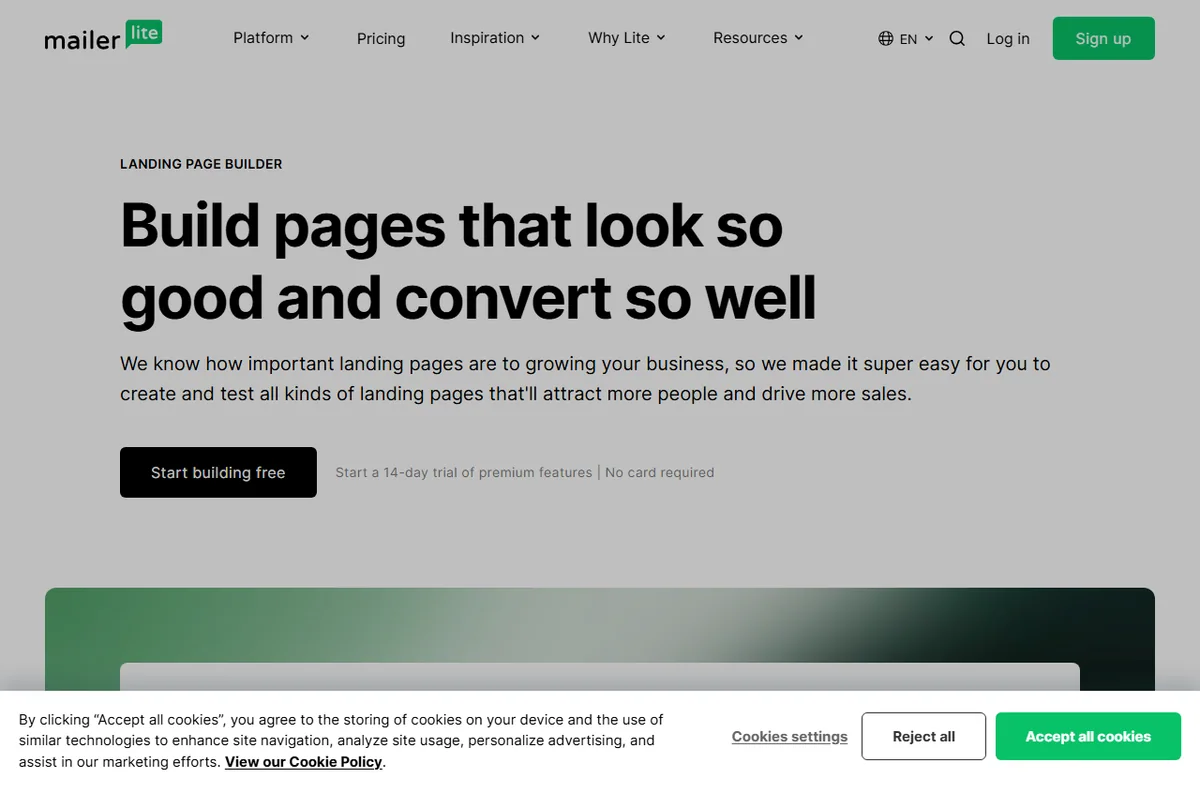
    MailerLite landing page builder
    MailerLite landing pages (image: mailerlite.com)

    Get more from MailerLite

    Start with a welcome series and one newsletter you can keep.

    Referral link — we may earn a reward if you sign up, at no extra cost to you. We are an independent publisher. See our Affiliate Disclosure.
  • How to Set Up MailerLite: Email Marketing, Step by Step

    How to Set Up MailerLite: Email Marketing, Step by Step

    Home / Email Marketing / Guides / How to set up MailerLite

    Tutorial · email marketing · updated October 8, 2026

    How to set up MailerLite: a practical walkthrough

    MailerLite is an email marketing tool for building lists and sending campaigns. A clean setup matters because domain verification, list structure and automation are far easier to do once than to retrofit later.

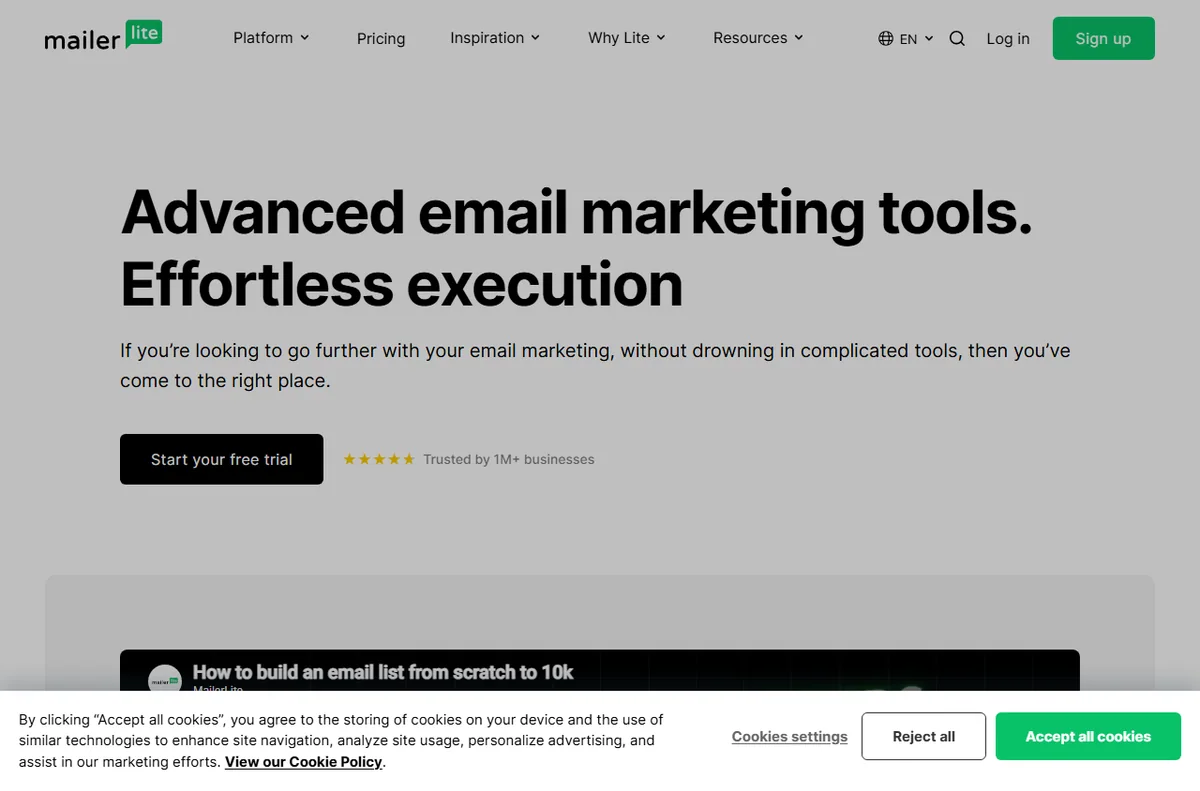
    MailerLite email marketing homepage
    MailerLite official homepage (image: mailerlite.com)

    Independent analysis. This page may contain affiliate links. Some links here are referral links; if you sign up through one we may earn a reward at no extra cost to you, and it never changes what we recommend. We are an independent publisher and are not affiliated with, endorsed by, or an official partner of any tool mentioned. See our Affiliate Disclosure.

    TL;DR

    • Create the account and complete the sender profile first.
    • Verify your sending domain before you send anything.
    • Structure your list into groups from the start.
    • Embed a sign-up form where your audience already is.
    • Add one welcome automation before scaling your sends.

    On this page: What this covers · Before you start · Step 1 — Create your account · Step 2 — Verify your sending domain · Step 3 — Build your first list · Step 4 — Add a sign-up form · Step 5 — Send your first campaign · Step 6 — Add a welcome automation · Choosing what to set up first · Where this fits in your wider stack

    What this covers

    This guide assumes you are starting fresh with an email list or moving from a spreadsheet. It covers the order of operations that avoids rework: account, sender profile, domain verification, groups, form, first campaign and a welcome automation.

    Nothing here depends on a specific plan. Where a feature is tied to a tier, the guide says to check the official pricing page rather than quoting numbers that change.

    Before you start

    • A domain you can add DNS records to.
    • A real business name and address for the sender profile.
    • A short description of who you email and why.
    • Access to your website or the tool that hosts your forms.
    • A clear view of what counts as consent for your list.
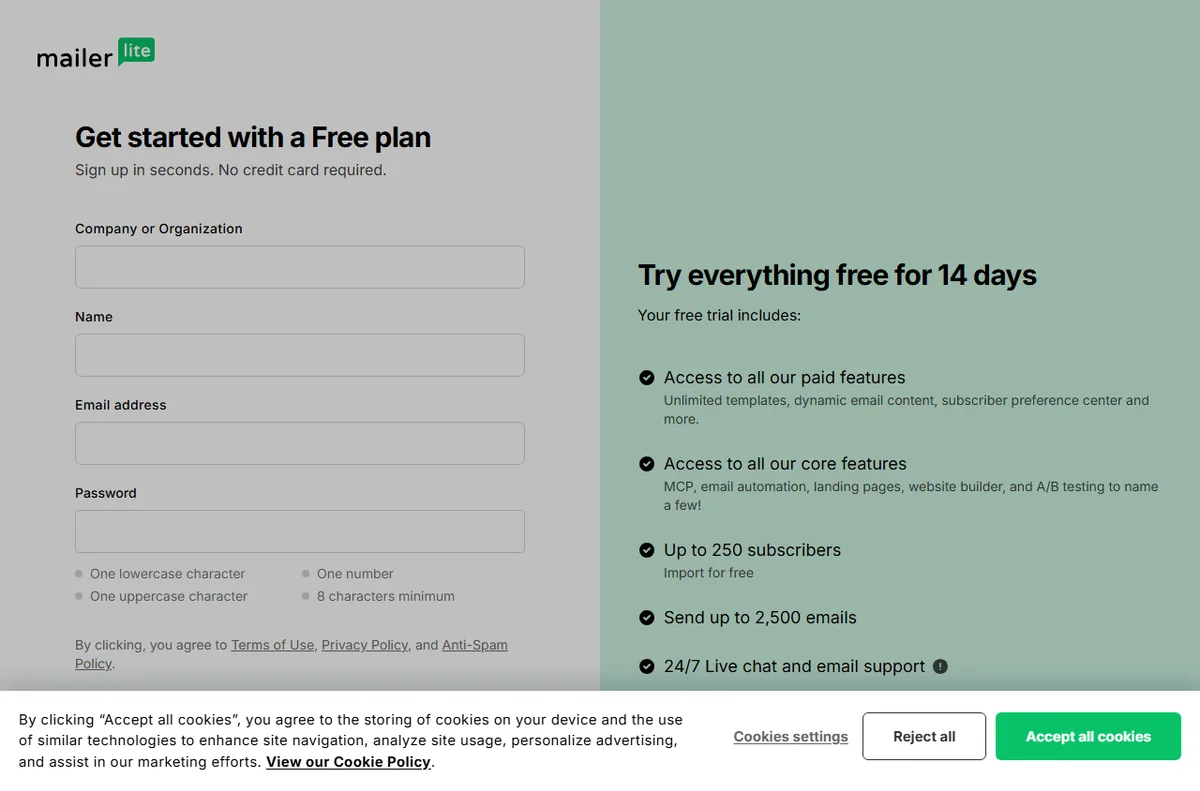
    MailerLite sign-up page for creating a free account
    MailerLite sign-up (image: mailerlite.com)

    Step 1 — Create your account

    1. Sign up from the official site and confirm your email address.
    2. Complete the sender profile with a real name and postal address.
    3. Set your timezone so scheduling behaves as expected.
    4. Review the account settings before you import anyone.
    MailerLite email marketing features page
    MailerLite features (image: mailerlite.com)

    Step 2 — Verify your sending domain

    Domain verification proves you control the domain you send from, which helps deliverability and protects your sender reputation. Add the DNS records the platform provides, then wait for verification to pass. Providers differ, so follow the exact records shown inside your own account.

    MailerLite sign-up forms for building a list
    MailerLite sign-up forms (image: mailerlite.com)

    Step 3 — Build your first list

    Create a group for the subscribers you intend to email. Keep the names meaningful: a group for newsletter readers and one for customers is easier to reason about than a single undifferentiated list you cannot segment later.

    MailerLite landing page builder for opt-in pages
    MailerLite landing pages (image: mailerlite.com)

    Step 4 — Add a sign-up form

    1. Create a form and choose only the fields you truly need.
    2. Set which group new subscribers join.
    3. Embed the form on your site or share the hosted link.
    4. Submit a test entry and confirm it lands in the right group.
    MailerLite newsletter and landing page templates
    MailerLite templates (image: mailerlite.com)

    Step 5 — Send your first campaign

    Draft a campaign, choose the group to send to, and preview on desktop and mobile. Send a test to yourself before the real send, and read the spam and deliverability checks the tool provides rather than skipping them.

    MailerLite automation builder for welcome emails
    MailerLite automation (image: mailerlite.com)

    Step 6 — Add a welcome automation

    A welcome automation sends a sequence when someone joins a group. Start with a single welcome message and a clear next step rather than a long sequence you will not maintain. You can add steps once you see what people respond to.

    MailerLite pricing plans
    MailerLite pricing (image: mailerlite.com)

    Choosing what to set up first

    A sensible order removes the most common causes of rework.

    Task Do it when Note
    Sender profileDay oneBlocks most sends until it is complete
    Domain verificationBefore the first campaignImproves deliverability and trust
    Group structureBefore importing contactsHard to reorganise later
    Sign-up formOnce groups existPoints new subscribers to the right group
    Welcome automationAfter the first campaignEasier to write with real feedback
    Based on publicly documented behaviour, checked October 8, 2026.

    Where this fits in your wider stack

    If you are still comparing tools, read the independent MailerLite review and start from the email marketing hub. Weighing options? See best email marketing software, browse best email newsletter tools, and if you are new to this, read best email marketing for beginners.

    Frequently asked

    How long does MailerLite setup take?

    Account creation and the sender profile are quick; domain verification depends on how fast your DNS changes propagate.

    Do I need to verify a domain?

    It is strongly recommended before sending campaigns, because it improves deliverability and protects your sender reputation.

    Can I import an existing list?

    Yes, but only contacts who gave you permission, and check the platform requirements for imports first.

    Is there a free plan?

    Plans and limits change over time, so check the official pricing page for what is currently offered.

    MailerLite integrations with other tools
    MailerLite integrations (image: mailerlite.com)

    Set up MailerLite the right way

    Verify your domain and structure your list before the first send.

    Referral link — we may earn a reward if you sign up, at no extra cost to you. We are an independent publisher. See our Affiliate Disclosure.

  • How to Use ActiveCampaign for a Small Business: Six Automations That Pay Off

    How to Use ActiveCampaign for a Small Business: Six Automations That Pay Off

    Home / Email marketing / Guides / How to use ActiveCampaign for a small business

    Use case · email marketing · updated October 8, 2026

    How to use ActiveCampaign for a small business

    ActiveCampaign earns its keep when automation does work a small team cannot do by hand: welcoming new leads, following up, and re-engaging people who went quiet. These six automations are the ones worth building first.

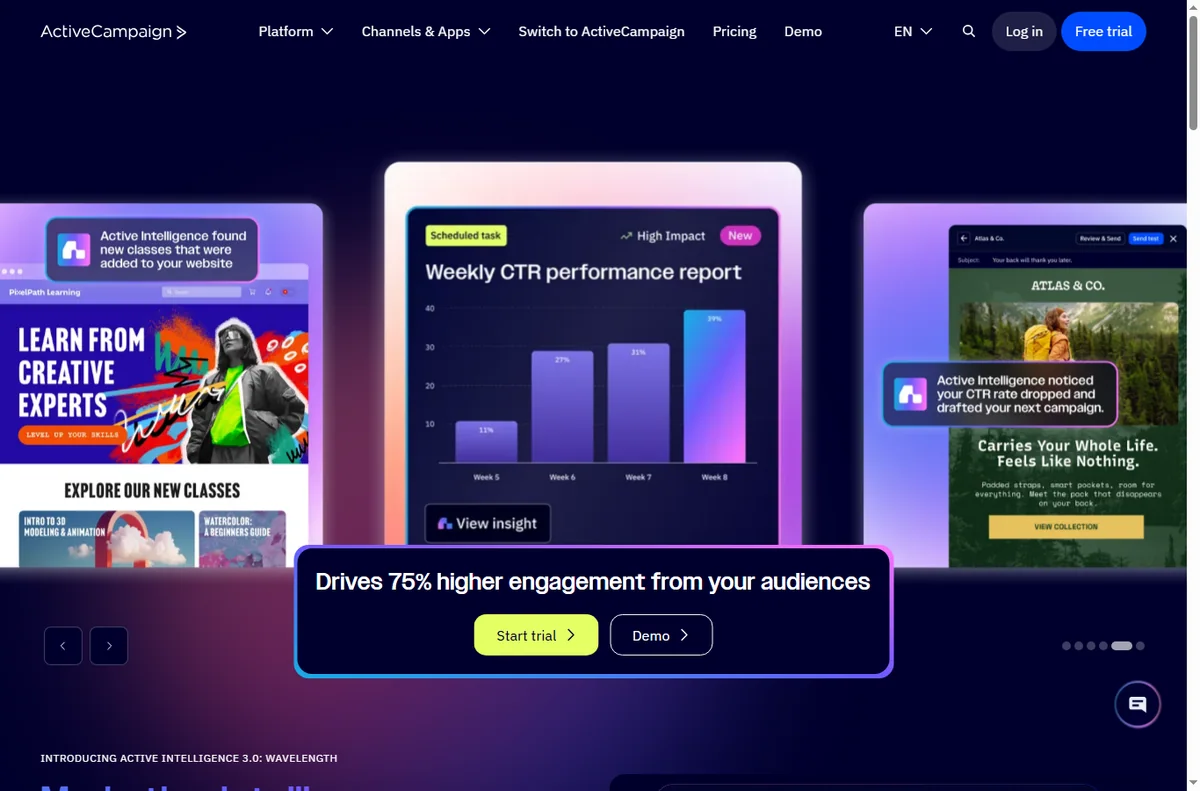
    ActiveCampaign homepage for marketing automation
    ActiveCampaign official homepage (image: activecampaign.com)

    Independent analysis. This page may contain affiliate links. Some links here are referral links; if you sign up through one we may earn a reward at no extra cost to you, and it never changes what we recommend. We are an independent publisher and are not affiliated with, endorsed by, or an official partner of any tool mentioned. See our Affiliate Disclosure.

    TL;DR

    • Start with the automation that touches revenue most directly.
    • A welcome sequence is usually automation number one.
    • Segmentation makes every later automation more relevant.
    • Re-engagement campaigns recover contacts you would otherwise lose.
    • Keep automations simple enough that you can debug them.

    On this page: Where automation pays off · Six automations · Which one first · Keeping the list healthy · Where this fits

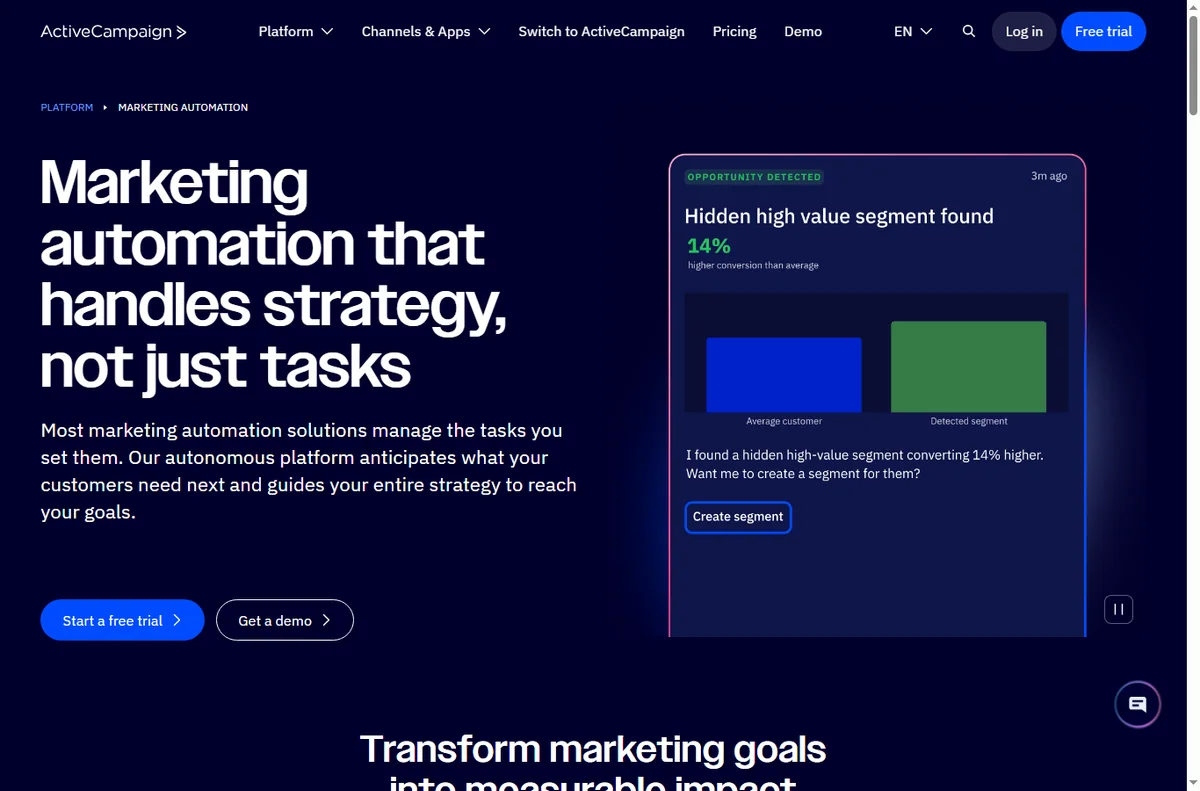
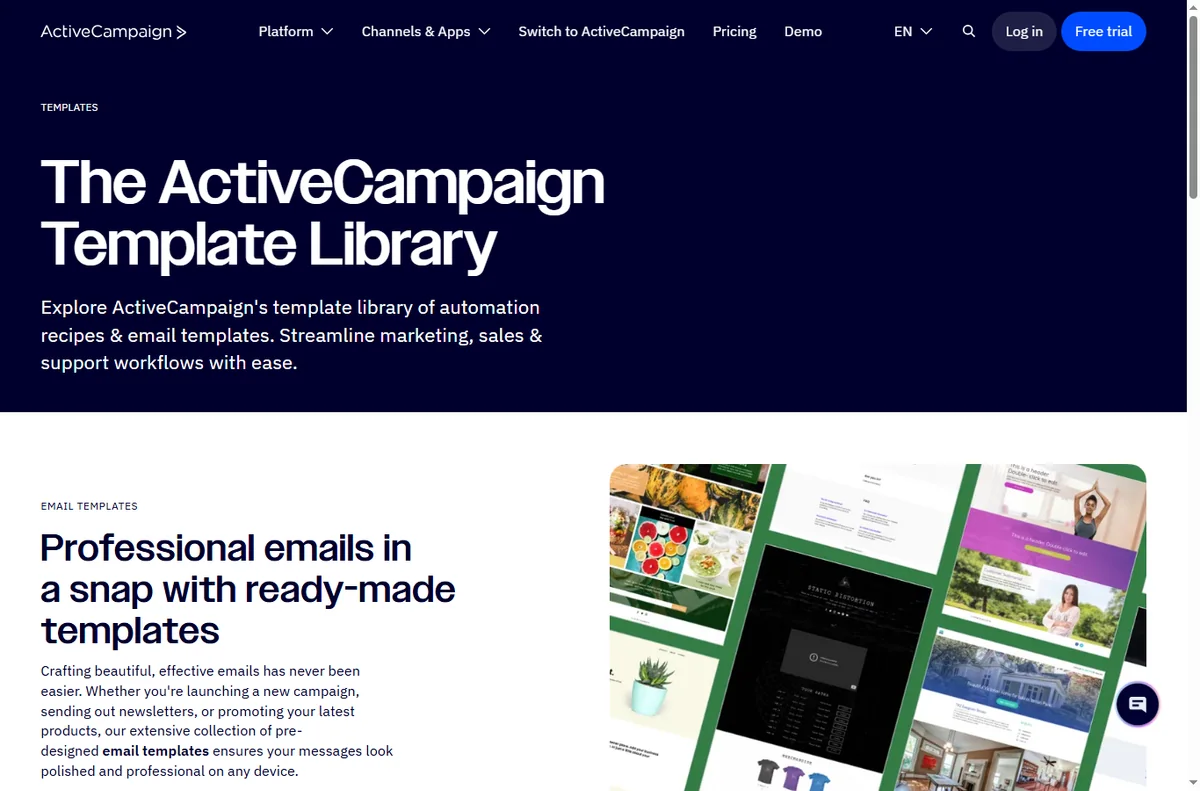
    ActiveCampaign marketing automation features
    ActiveCampaign marketing automation (image: activecampaign.com)

    Where automation pays off

    Automation pays off when a follow-up should happen every time an event occurs, and doing it by hand is unrealistic. A small team cannot personally welcome every lead or chase every quiet contact.

    The rule of thumb: if a follow-up should happen consistently after a trigger, it is a candidate for automation.

    ActiveCampaign automation template library
    ActiveCampaign automation templates (image: activecampaign.com)

    Six automations worth building

    1. A welcome sequence that introduces your business after a signup.
    2. A lead-nurture series that educates before it sells.
    3. A win-back sequence for contacts who stopped opening.
    4. A post-purchase follow-up with onboarding or a review request.
    5. A re-engagement flow for people who abandoned a form or cart.
    6. A segmentation flow that tags contacts by what they click.
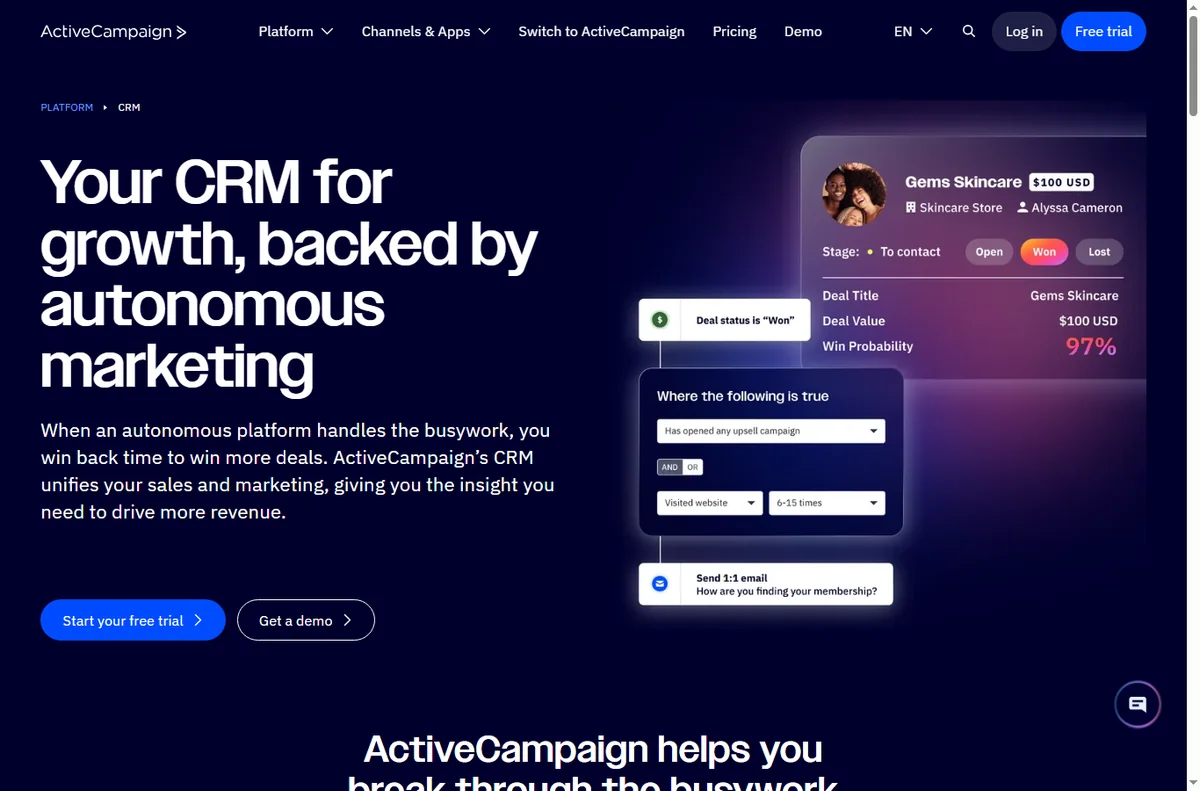
    ActiveCampaign CRM and contact view
    ActiveCampaign CRM (image: activecampaign.com)

    Which automation to build first

    Build the welcome sequence first. It touches every new lead, it is straightforward to test, and it sets the tone for everything else. Once contacts are tagged reliably, later automations become far more relevant.

    Build one, watch it for a week, then add the next. Automating several at once makes failures hard to trace.

    ActiveCampaign lead form builder
    ActiveCampaign forms (image: activecampaign.com)

    Keeping the list healthy

    • Send to engaged contacts more often than to everyone.
    • Remove or suppress people who never open, so deliverability stays strong.
    • Let contacts manage preferences rather than only unsubscribe.
    • Watch for sudden drops in opens; they usually signal a deliverability issue.
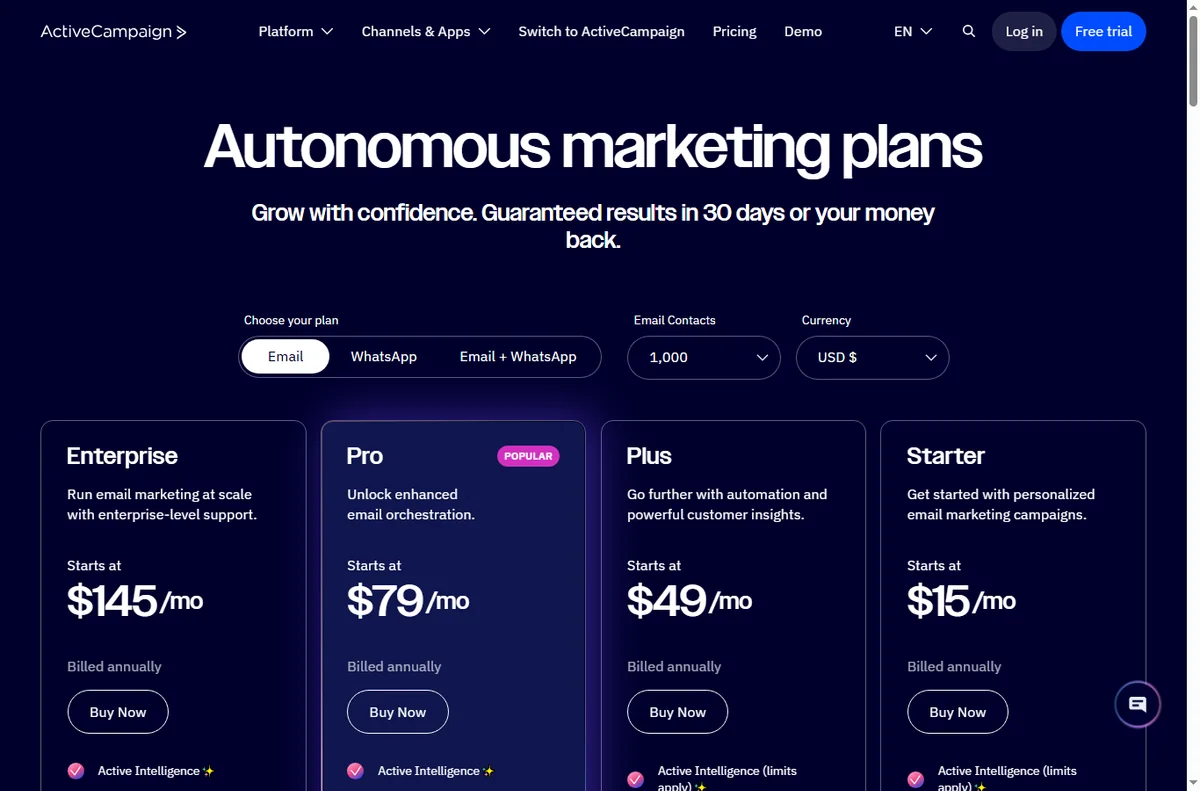
    ActiveCampaign pricing page with plan tiers
    ActiveCampaign pricing (image: activecampaign.com)

    Where this fits in your wider stack

    Start with the email marketing hub and the independent ActiveCampaign review. For cost, see the ActiveCampaign pricing guide; compare platforms in GetResponse vs ActiveCampaign, and go deeper with the email marketing automation guide.

    Frequently asked

    What should I automate first?

    A welcome sequence. It touches every new lead, is easy to test, and improves as your segmentation improves.

    How many automations should I run at once?

    Start with one, prove it for a week, then add the next so failures stay easy to trace.

    How do I keep deliverability healthy?

    Send to engaged contacts, suppress people who never open, and offer preference management instead of only unsubscribe.

    Do I need advanced features on day one?

    No. The core automations deliver most of the value; add advanced features only when a real workflow needs them.

    Let automation do the follow-up

    If a follow-up should happen every time, it should not depend on memory.

    Referral link — we may earn a reward if you sign up, at no extra cost to you. We are an independent publisher. See our Affiliate Disclosure.
  • How to Set Up ActiveCampaign: Contacts, Forms and Your First Automation

    How to Set Up ActiveCampaign: Contacts, Forms and Your First Automation

    Home / Email marketing / Guides / How to set up ActiveCampaign

    Tutorial · email marketing · updated October 8, 2026

    How to set up ActiveCampaign: from contacts to your first automation

    ActiveCampaign is an email and automation platform, and setting it up is really about getting one automation to run correctly. This walkthrough takes you from a blank account to a working welcome sequence.

    ActiveCampaign homepage for marketing automation
    ActiveCampaign official homepage (image: activecampaign.com)

    Independent analysis. This page may contain affiliate links. Some links here are referral links; if you sign up through one we may earn a reward at no extra cost to you, and it never changes what we recommend. We are an independent publisher and are not affiliated with, endorsed by, or an official partner of any tool mentioned. See our Affiliate Disclosure.

    TL;DR

    • Setup is three milestones: import contacts, add a way to capture them, and build one automation.
    • Import with consent; how you collected the contacts matters.
    • A simple form is enough to prove the flow end to end.
    • Test the automation with a real contact before switching it on.
    • Upgrade only when your list or features outgrow the current plan.

    On this page: What setup means · Before you start · Create your account · Import contacts · Build a form · Create your first automation · Test it · When to upgrade · Common mistakes · Where this fits

    What setting up ActiveCampaign actually means

    ActiveCampaign connects contacts, a way to capture them and automations that act on them. Setting it up is about getting one automation to run correctly rather than exploring every feature.

    Three milestones cover most of it: import your contacts, add a capture form, and build one automation. Advanced flows and integrations come later.

    Before you start

    • An email address you can confirm right away.
    • A contact list you are allowed to email, with consent on record.
    • One clear job for the first automation, such as a welcome sequence.
    • A tagged way to organise contacts from day one.
    ActiveCampaign sign-up screen to create a new account
    ActiveCampaign sign-up (image: activecampaign.com)

    Step 1 — Create your account

    Sign up and confirm your email. Take a moment to set your sending domain and default sender details before importing anything, because it affects deliverability from the first send.

    ActiveCampaign contacts and CRM view for importing contacts
    ActiveCampaign CRM and contacts (image: activecampaign.com)

    Step 2 — Import contacts with consent

    Import your list, but only contacts who agreed to hear from you. Tag them at import so you can segment later without guesswork.

    Consent is not just a rule: it is what keeps your deliverability healthy. Importing a purchased list damages your reputation for everyone.

    ActiveCampaign lead form builder page
    ActiveCampaign forms (image: activecampaign.com)

    Step 3 — Build a simple form

    Create a form connected to the right list and tag. Test it yourself: submit the form and confirm the contact appears with the expected tag. That proves capture works before you build anything on top.

    ActiveCampaign marketing automation feature page
    ActiveCampaign marketing automation (image: activecampaign.com)

    Step 4 — Create your first automation

    1. Start from a “form submitted” trigger rather than a template, so you learn the parts.
    2. Add a condition or tag check if you want to route different contacts differently.
    3. Add the first action: send a welcome email.
    4. Add a short wait, then a follow-up, so the sequence is not a wall of emails on day one.

    Step 5 — Test before you trust it

    Submit the form with a real address and follow the contact through the automation. The first failure is almost always a tag that did not apply, or a condition that never matched.

    ActiveCampaign pricing page with plan tiers
    ActiveCampaign pricing (image: activecampaign.com)

    Step 6 — Know when to upgrade

    Upgrade when your contact count or the features you actually use outgrow the current plan, not before. We do not quote prices: tiers change, so confirm current figures on the vendor’s pricing page.

    Common setup mistakes

    Mistake Why it hurts Fix
    Importing without consentDamages deliverabilityOnly import opted-in contacts
    No tags at importSegmentation becomes guessworkTag contacts as you import
    Automation with no waitContacts get a wall of emailAdd waits between steps
    Testing with a fake addressYou cannot follow the real flowTest with a real inbox
    Turning on before testingFirst real contact gets an errorRun the flow once first
    Based on publicly documented behaviour, checked October 8, 2026.
    ActiveCampaign integrations directory connecting other apps
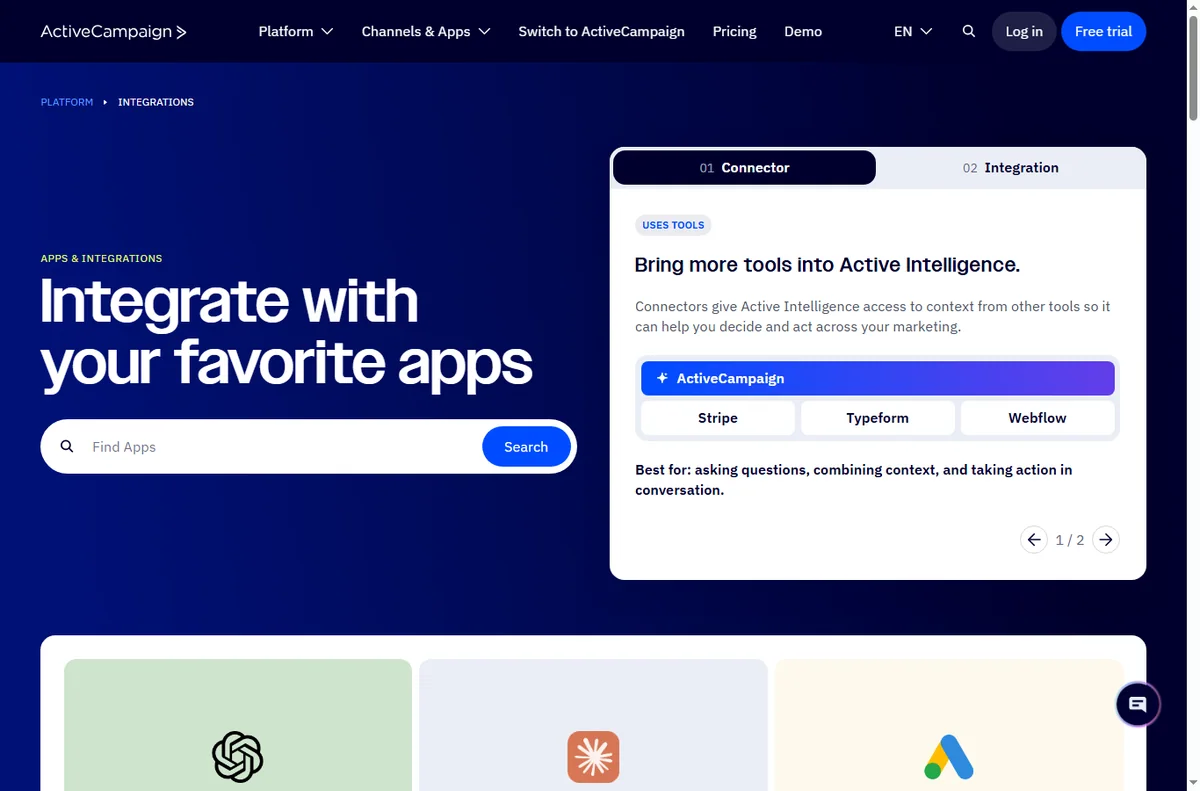
    ActiveCampaign integrations (image: activecampaign.com)

    Where this fits in your wider stack

    Start with the email marketing hub and the independent ActiveCampaign review. For cost, see the ActiveCampaign pricing guide; if you are comparing, read GetResponse vs ActiveCampaign and HubSpot vs ActiveCampaign.

    Frequently asked

    How long does setup take?

    The account, an import and one simple automation take a couple of hours for a first-timer. Complex flows take longer because they add concepts, not because setup is slow.

    Do I need to authenticate a domain?

    Yes. Authenticating your sending domain improves deliverability, so do it before your first real send.

    Can I import my existing list?

    You can, but only contacts who opted in. Importing a list without consent harms deliverability for everyone.

    What should my first automation be?

    A simple welcome sequence triggered by a form submission. It is the clearest way to learn triggers, tags and waits.

    Build one automation, then judge the platform

    Get capture and a welcome sequence working before anything else.

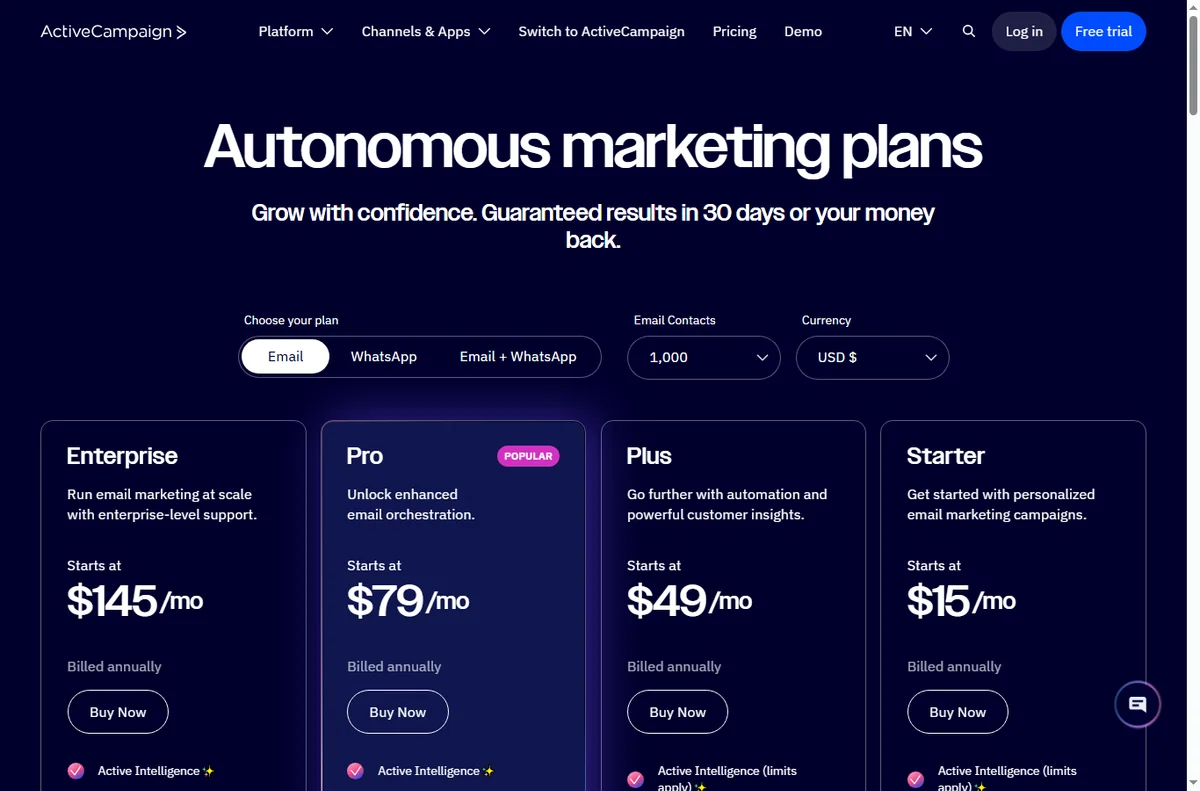
    Referral link — we may earn a reward if you sign up, at no extra cost to you. We are an independent publisher. See our Affiliate Disclosure.
  • Common GetResponse Problems and How to Fix Them

    Common GetResponse Problems and How to Fix Them

    Home / Email marketing / Guides / Common GetResponse problems

    Problem · email marketing · updated October 8, 2026

    Common GetResponse problems and how to fix them

    Most email problems look like a platform issue but come from domain setup, list hygiene or a misconfigured automation. These are the ones that come up most, and the practical fix for each.

    GetResponse homepage for email marketing and automation
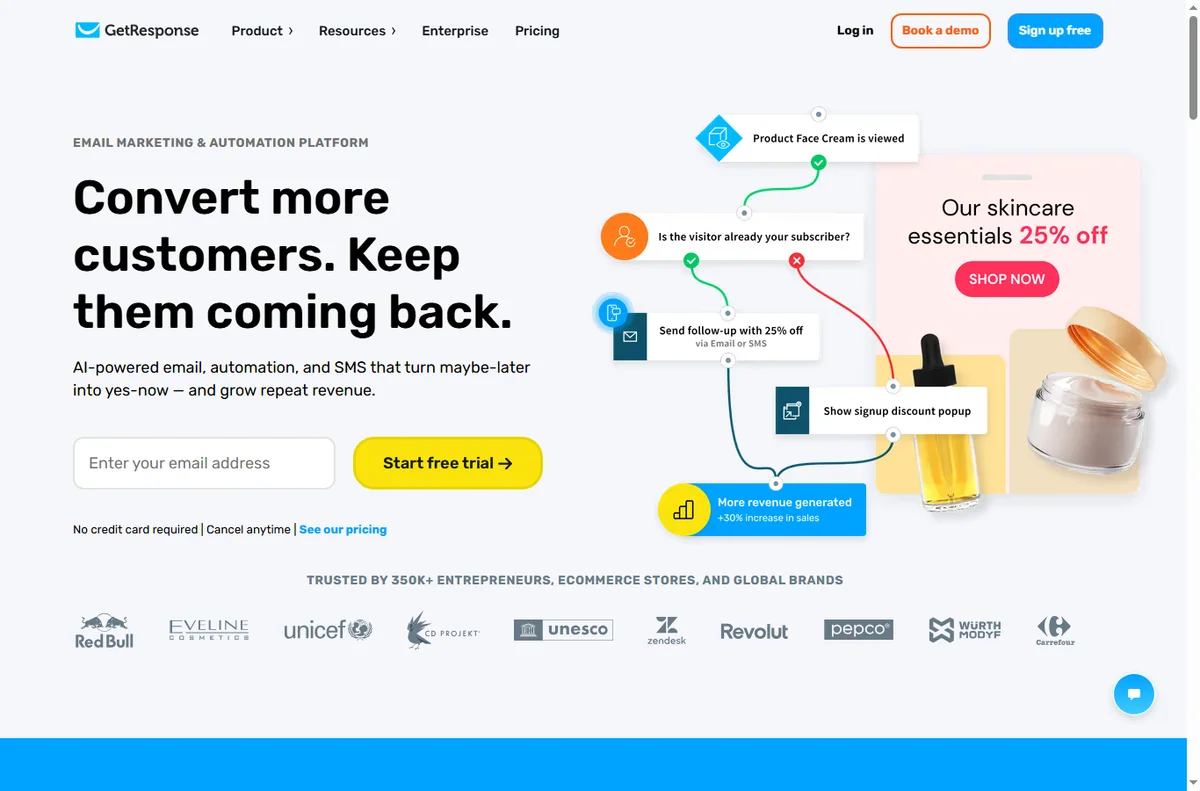
    GetResponse official homepage (image: getresponse.com)

    Independent analysis. This page may contain affiliate links. Some links here are referral links; if you sign up through one we may earn a reward at no extra cost to you, and it never changes what we recommend. We are an independent publisher and are not affiliated with, endorsed by, or an official partner of any tool mentioned. See our Affiliate Disclosure.

    TL;DR

    • Emails in spam usually mean missing domain authentication, not bad copy.
    • Low open rates often come from a cold or unsegmented list.
    • Automations that do not trigger usually have a condition that never matches.
    • Forms that do not connect are usually a missing confirmation or a wrong list.
    • Clean your list regularly, or deliverability drops for everyone.

    On this page: Why email problems happen · Emails go to spam · Low open rates · Automation not triggering · Forms not adding contacts · Symptom to fix · Where this fits

    Why email problems happen

    Email is a shared reputation system. Your domain, your list quality and your sending pattern all affect whether a message reaches the inbox, so a problem is often structural rather than a fault in one campaign.

    Work in order: authenticate the domain, clean the list, then check the automation. Most issues resolve in the first two steps.

    GetResponse email marketing tools used to improve deliverability
    GetResponse email marketing (image: getresponse.com)

    Emails go to spam

    • Authenticate your sending domain (add the verification records the platform provides).
    • Send from a domain you own rather than a generic address.
    • Warm up a new domain gradually instead of blasting day one.
    • Remove broken links and over-promotional subject lines.

    Low open rates

    Open rates depend on list quality and relevance more than on subject lines alone. Segment your list so the right people get the right message, and remove contacts who have not engaged in months.

    Test subject lines, but treat deliverability as the first suspect if opens drop suddenly across every campaign.

    GetResponse marketing automation workflow builder
    GetResponse marketing automation (image: getresponse.com)

    Automation not triggering

    An automation fires on a condition: a tag, a form submission or a purchase. If it never runs, the condition is not matching. Check the trigger event, the condition, and whether the contact is actually on the right list.

    GetResponse form builder feature page
    GetResponse form builder (image: getresponse.com)

    Forms not adding contacts

    Confirm the form is connected to the correct list and that double opt-in (if enabled) is being completed. A confirmation email that lands in spam is a common reason a contact never appears.

    Symptom to fix

    Symptom Likely cause Fix
    Emails in spamMissing domain authenticationAdd and verify sending records
    Opens collapse suddenlyDeliverability issueCheck authentication and list hygiene
    Automation never startsCondition does not matchVerify trigger, condition and list
    Form adds no contactsWrong list or opt-in incompleteReconnect the form and confirm opt-in
    High unsubscribesOver-frequent or irrelevant sendsSegment and slow the cadence
    Based on publicly documented behaviour, checked October 8, 2026.
    GetResponse pricing page with plan tiers
    GetResponse pricing (image: getresponse.com)

    Where this fits in your wider stack

    For background, read what is GetResponse, then the independent GetResponse review. For cost, see the GetResponse pricing guide; improve inbox placement with the email deliverability guide, the best email marketing software roundup, and the email marketing hub.

    Getresponse landing pages page
    Getresponse landing pages (image: getresponse.com)

    Frequently asked

    Why are my GetResponse emails going to spam?

    Most often a missing domain authentication record or a cold sending domain. Authenticate the domain and warm it up gradually.

    Why did my open rates drop suddenly?

    A sudden drop across every campaign usually points to deliverability rather than copy. Check authentication and clean unengaged contacts.

    Why is my automation not running?

    The condition that should trigger it is not matching. Check the trigger event, the condition and whether the contact is on the right list.

    How often should I clean my list?

    Regularly: sending to contacts who never engage harms deliverability for the ones who do.

    Fix deliverability before you blame the copy

    Authenticate the domain and clean the list first.

    Referral link — we may earn a reward if you sign up, at no extra cost to you. We are an independent publisher. See our Affiliate Disclosure.

  • What Is GetResponse? Email, Automation and Funnels Explained

    What Is GetResponse? Email, Automation and Funnels Explained

    Home / Email marketing / Guides / What is GetResponse

    Knowledge · email marketing · updated October 8, 2026

    What is GetResponse?

    GetResponse started as an email marketing tool and grew into a platform that also handles automation, landing pages and webinars. This guide explains what it actually covers and where it fits for a small team.

    GetResponse homepage for email marketing and automation
    GetResponse official homepage (image: getresponse.com)

    Independent analysis. This page may contain affiliate links. Some links here are referral links; if you sign up through one we may earn a reward at no extra cost to you, and it never changes what we recommend. We are an independent publisher and are not affiliated with, endorsed by, or an official partner of any tool mentioned. See our Affiliate Disclosure.

    TL;DR

    • GetResponse is an email marketing platform with automation and funnel extras.
    • Its core value is still email: lists, forms, sequences and broadcasts.
    • Built-in automation moves beyond simple autoresponders.
    • Extra features (pages, webinars) reduce the number of tools you need.
    • Confirm current plan limits on the vendor’s pricing page.

    On this page: What GetResponse is · What it covers · When it is the right fit · Things to consider · Core building blocks · Where this fits

    GetResponse email marketing feature page
    GetResponse email marketing (image: getresponse.com)

    What GetResponse is

    GetResponse is an email marketing platform. You build a list, send broadcasts and set up automated sequences, then use the extras — landing pages, forms and marketing automation — to grow and convert that list.

    It sits in the middle ground between a simple newsletter tool and a heavyweight marketing suite, which is why small teams often land on it.

    GetResponse landing page builder feature page
    GetResponse landing pages (image: getresponse.com)

    What it covers

    • Email campaigns: newsletters, broadcasts and autoresponders.
    • Automation: multi-step sequences triggered by behaviour.
    • Signup forms and landing pages to grow the list.
    • Segmentation using tags and behaviour.
    • Extras such as webinar and funnel features on higher tiers.
    Getresponse form builder page
    Getresponse form builder (image: getresponse.com)

    When it is the right fit

    It fits when email is central to your business and you want automation without assembling three tools. If you send regularly and want sequences, segmentation and forms in one place, the bundled extras remove integration work.

    Things to consider

    • Pricing scales with list size, so model your growth before committing.
    • The most advanced extras sit on higher tiers.
    • If you only send occasional newsletters, a simpler tool may be cheaper.
    • Deliverability depends on your own sending habits and domain setup as much as the platform.
    GetResponse marketing automation feature page
    GetResponse marketing automation (image: getresponse.com)

    Core building blocks

    Block What it does Typical use
    ListsWhere contacts liveSegmented audiences
    Forms and pagesCapture new contactsLead magnets
    AutorespondersScheduled sequencesWelcome and nurture
    AutomationBehaviour-triggered flowsRoute and follow up
    SegmentationTags and conditionsRelevant messaging
    Based on publicly documented behaviour, checked October 8, 2026.
    GetResponse pricing page with plan tiers
    GetResponse pricing (image: getresponse.com)

    Where this fits in your wider stack

    Start with the email marketing hub and the independent GetResponse review. For cost, see the GetResponse pricing guide; compare platforms in GetResponse vs ActiveCampaign and the best email marketing software roundup.

    Frequently asked

    Is GetResponse just email?

    No. Email is the core, but it also includes automation, forms, landing pages and some higher-tier extras such as webinars.

    Who is it best for?

    Small businesses where email drives sales and automation matters, and that prefer one tool over several.

    Does pricing scale with my list?

    Yes, plans generally scale with list size, so model your growth before you commit. Check current tiers on the vendor’s pricing page.

    Do I need the highest tier?

    Only if you need the extras it unlocks. Many teams get everything they use from a mid tier.

    Grow a list you actually use

    If email drives revenue, automation and segmentation earn their keep.

    Referral link — we may earn a reward if you sign up, at no extra cost to you. We are an independent publisher. See our Affiliate Disclosure.

  • How to Use GetResponse for a Small Business: Email That Sells

    How to Use GetResponse for a Small Business: Email That Sells

    Home / Email Marketing / Guides / How to use GetResponse for a small business

    Use case · email marketing · updated October 7, 2026

    How to use GetResponse for a small business: email that actually sells

    For a small business, email is the rare channel you own outright — no algorithm decides who sees it. GetResponse gives you the mechanics; the value comes from a few well-run campaigns.

    GetResponse homepage for email marketing and automation
    GetResponse official homepage (image: getresponse.com)

    Independent analysis. This page may contain affiliate links. Some links here are referral links; if you sign up through one we may earn a reward at no extra cost to you, and it never changes what we recommend. We are an independent publisher and are not affiliated with, endorsed by, or an official partner of any tool mentioned. See our Affiliate Disclosure.

    TL;DR

    • Own your audience: an email list is not rented reach.
    • Build a welcome series before you build anything else.
    • Segmentation beats volume — send less, more relevantly.
    • A simple win-back campaign often pays for the tool alone.
    • Measure clicks and revenue per email, not open rates alone.

    On this page: Welcome series · Segmentation · Newsletter · Win-back · Local business · Measure · Where this fits

    GetResponse email marketing features page
    GetResponse email marketing (image: getresponse.com)

    Start with the welcome series

    The first few emails after someone joins do the heaviest lifting. Send an immediate delivery of whatever you promised, then one or two emails that prove you are worth reading, then make a clear offer.

    GetResponse signup form builder used to segment contacts
    GetResponse form builder (image: getresponse.com)

    Segment so you can send less

    • Group by what people bought or clicked, not just when they joined.
    • Send offers only to people whose behaviour suggests interest.
    • Suppress unengaged contacts from regular campaigns to protect deliverability.

    Run a newsletter people open

    A consistent newsletter keeps you present between offers. Keep it short, make one point, and link to one next step. Consistency matters more than length.

    GetResponse marketing automation features page
    GetResponse marketing automation (image: getresponse.com)

    Win back lapsed customers

    A short win-back sequence — a reminder, a reason to return, and a clear final email — often recovers a meaningful slice of lapsed buyers and tends to pay for the tool on its own.

    GetResponse landing page builder page
    GetResponse landing pages (image: getresponse.com)

    If you are a local business

    Email works locally too: reminders, seasonal offers and appointment follow-ups. Keep the tone personal and the offer specific to your area and regulars.

    Measure revenue, not vanity

    • Clicks and revenue per email.
    • Revenue per subscriber over time.
    • Which segment responds, and which never does.
    • Deliverability: is your sender reputation stable?
    GetResponse pricing page with plan tiers
    GetResponse pricing (image: getresponse.com)

    Where this fits

    See the independent GetResponse review and the GetResponse pricing guide. For platform choice, see the email marketing hub and the best email marketing software shortlist. Local tactics are covered in email marketing for local business, and list structure in the email segmentation guide.

    Frequently asked

    How often should a small business email?

    Consistency matters more than frequency. A weekly or fortnightly newsletter plus triggered emails is a sustainable rhythm for most small teams.

    Is email marketing still worth it?

    Yes, because you own the list. Unlike social reach, no platform sits between you and your subscribers — provided you keep consent and deliverability healthy.

    What is a win-back campaign?

    A short sequence aimed at customers who have not bought or opened in a while. It usually has a reminder, a reason to return and a final email.

    How do I improve deliverability?

    Send only to consented contacts, suppress the unengaged, authenticate your domain, and avoid spammy subject lines. Consistency and honesty protect your sender reputation.

    Do I need advanced automation?

    Not to start. A welcome series and a simple newsletter outperform an elaborate flowchart nobody maintains. Add complexity only when a real need appears.

    Send less, but make it count

    Welcome series first, then build outward.

    Referral link — we may earn a reward if you sign up, at no extra cost to you. We are an independent publisher. See our Affiliate Disclosure.
  • How to Set Up GetResponse: List, Forms and Your First Automation

    How to Set Up GetResponse: List, Forms and Your First Automation

    Home / Email Marketing / Guides / How to set up GetResponse

    Tutorial · email marketing · updated October 7, 2026

    How to set up GetResponse: from empty account to your first automation

    GetResponse is more than a send button: it is a contact database, a form builder and an automation engine. Setting it up well means getting the list clean and the first automation correct.

    GetResponse homepage for email marketing and automation
    GetResponse official homepage (image: getresponse.com)

    Independent analysis. This page may contain affiliate links. Some links here are referral links; if you sign up through one we may earn a reward at no extra cost to you, and it never changes what we recommend. We are an independent publisher and are not affiliated with, endorsed by, or an official partner of any tool mentioned. See our Affiliate Disclosure.

    TL;DR

    • Create the account, then set your sender identity before you send anything.
    • Import contacts only with a clear consent basis.
    • Build one signup form and connect it to one list.
    • Start with a single autoresponder, not a complex flowchart.
    • Verify deliverability with a real test before a campaign.

    On this page: What setup involves · Create account + sender identity · Import contacts · Build a signup form · First automation · Check deliverability · Where this fits

    What setting up GetResponse really involves

    Setup is four jobs: identify yourself as a sender, get contacts in with consent, connect a form so new contacts arrive automatically, and launch one automation that proves the system works.

    Do them in that order. Most new-account problems trace back to skipping the sender identity or importing contacts with no consent basis.

    GetResponse sign-up screen for a new account
    GetResponse sign-up (image: getresponse.com)

    Step 1 — Create the account and set your sender identity

    Sign up and confirm your email. Before anything else, set your sender name, from-address and reply-to. Use a real, monitored address on your own domain — deliverability depends on it.

    Step 2 — Import contacts with consent

    Only import people who agreed to hear from you. Purchased or scraped lists damage deliverability and usually break the provider’s terms. If consent is unclear, send a re-permission email rather than importing.

    GetResponse signup form builder page
    GetResponse form builder (image: getresponse.com)

    Step 3 — Build one signup form

    Create a single signup form with as few fields as you need, connect it to one list, and embed it on your site. One clear form beats five half-used ones.

    GetResponse marketing automation features page
    GetResponse marketing automation (image: getresponse.com)

    Step 4 — Launch your first automation

    1. Create a welcome automation triggered when someone joins the list.
    2. Add the delivery email for whatever you promised.
    3. Add one value email and one offer email.
    4. Turn it on and subscribe yourself to test the whole sequence.
    GetResponse email marketing features page
    GetResponse email marketing (image: getresponse.com)

    Step 5 — Check deliverability

    Before a big campaign, send a real test to yourself and to a free mailbox provider. Ask recipients to check the spam folder. Authentication basics like SPF and DKIM should be in place on your sending domain.

    GetResponse pricing page with plan tiers
    GetResponse pricing (image: getresponse.com)

    Where this fits

    See the independent GetResponse review and the GetResponse pricing guide. For platform choice, start at the email marketing hub and the best email marketing software shortlist. Deliverability basics are covered in the email deliverability guide.

    Frequently asked

    Can I import my old contacts?

    Only those who gave consent to receive email from you. Importing purchased or scraped lists risks deliverability and breaches provider terms; when in doubt, re-permission first.

    What is an autoresponder?

    An automated email (or sequence) triggered by an event such as joining a list. It sends without manual effort, which is why it is the first automation most accounts should build.

    Do I need to set up SPF and DKIM?

    They materially improve deliverability. Follow your provider’s authentication guidance on your sending domain before running campaigns.

    How many emails should my welcome sequence have?

    Start with three: deliver what you promised, add value, and make one clear offer. Add more only if you can keep the quality high.

    How do I test before sending?

    Subscribe using a real address, walk the sequence, and send a campaign test to a free mailbox provider to check inbox placement.

    Set the list straight, then automate

    One form, one list, one welcome sequence.

    Referral link — we may earn a reward if you sign up, at no extra cost to you. We are an independent publisher. See our Affiliate Disclosure.