We’re reader-supported — some links are affiliate links. Learn more →

Skip to content

Independent software research. Some links may earn us a commission at no extra cost to you. Learn more →

ICode

Category: Email Marketing

  • Common EmailOctopus problems and how to fix them

    Common EmailOctopus problems and how to fix them

    Home / Email Marketing / Guides / Common EmailOctopus problems

    Problem · email marketing · updated October 9, 2026

    Common EmailOctopus problems and how to fix them

    Most EmailOctopus problems fall into a few areas: campaigns that land in spam, subscribers who never receive them, automations that do not fire, forms that do not capture, or a sending connection that needs checking. Here are the ones that come up most, and what to check first.

    Independent analysis. This page may contain affiliate links. If you sign up through a link on this page we may earn a reward at no extra cost to you, and it never changes what we recommend. We are an independent publisher and are not affiliated with, endorsed by, or an official partner of any tool mentioned. See our Affiliate Disclosure.

    TL;DR

    • Campaigns in spam are usually about authentication records and list hygiene.
    • Missing emails are often bounces, a wrong segment or a suppressed address.
    • An automation that will not fire usually has a trigger or filter that never matches.
    • A form that captures nothing is usually a broken embed or a wrong list.
    • A sending connection needs its own verification, so check it early.

    On this page: Why things go wrong · Campaigns in spam · Subscribers missing · Automation not firing · Forms not capturing · Sending connection failing · Symptom to fix · Where this fits

    Why things go wrong

    Email depends on a chain: a verified sending domain, clean lists, and an automation or form that passes the contact through. A fault in any link shows up as mail that does not arrive.

    The quickest way to locate it is to follow one contact end to end: were they added, did the trigger fire, and what does their activity show?

    Because sending can run through Amazon SES, there is an extra link in the chain: the connection between your account and your own sending credentials has to stay valid.

    For anything that touches sending, change one thing at a time and watch the next campaign, because several fixes at once make it hard to see which one helped.

    Emailoctopus home page
    Emailoctopus home (image: emailoctopus.com)

    Campaigns in spam

    Spam placement is usually about authentication, so mail sent from a domain without SPF, DKIM and DMARC looks unfamiliar to the receiving provider.

    Confirm those records for your sending domain, and check whether the list contains addresses that never engaged, which drags reputation down.
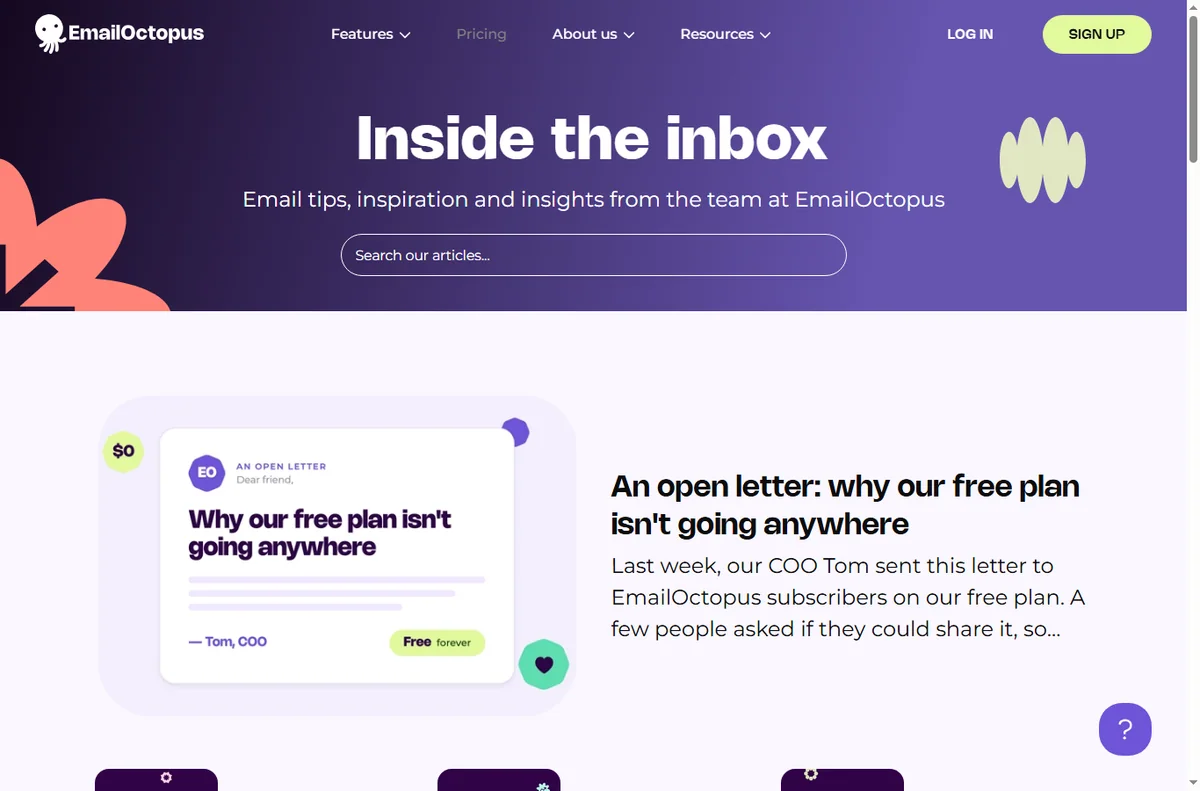
    Emailoctopus blog page
    Emailoctopus blog (image: emailoctopus.com)

    Subscribers missing

    A subscriber who never received the email was probably bounced, suppressed, or filtered out by the segment you sent to.

    Check the contact activity, the segment rules, and the suppression list before you resend anything.

    Automation not firing

    An automation only runs when its trigger matches, so a join condition or a filter that is never true leaves the journey idle.

    Read the workflow from the start, confirm the trigger event, and test with a contact you control.

    Emailoctopus features page
    Emailoctopus features (image: emailoctopus.com)

    Forms not capturing

    A form that collects nothing is usually embedded incorrectly or pointed at the wrong list, so submissions have nowhere to land.

    Re-check the embed code, confirm the form is connected to a list, and submit a test yourself.
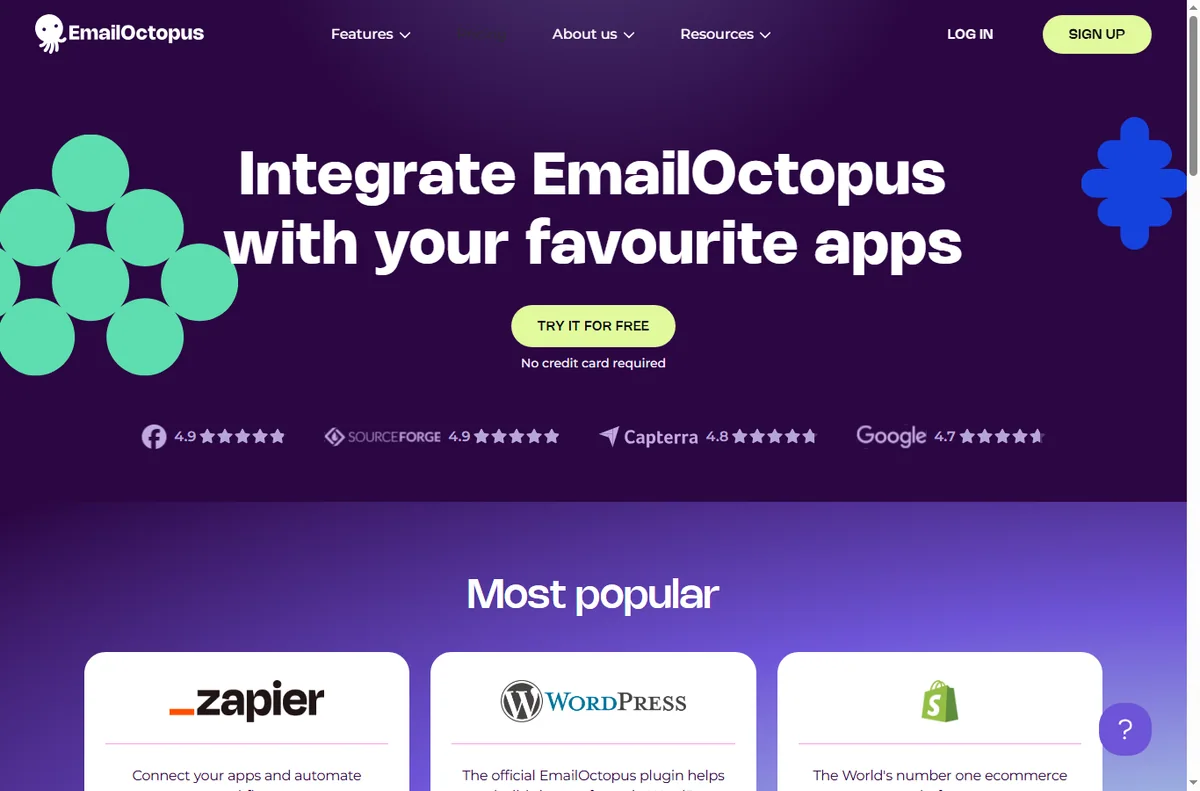
    Emailoctopus integrations page
    Emailoctopus integrations (image: emailoctopus.com)

    Sending connection failing

    When a campaign will not send, the sending connection is the first thing to rule out, because an expired key or an unverified identity stops delivery.

    Reconnect the sending service, confirm the domain is verified, and send yourself a test before a full campaign.

    Symptom to fix

    SymptomLikely causeFix
    Campaigns in spamMissing authentication recordsAdd SPF, DKIM and DMARC
    Subscribers missingBounce, suppression or segmentCheck activity and segment rules
    Automation not firingTrigger or filter never matchesFix the trigger, run a test
    Forms not capturingBad embed or wrong listRe-embed and connect the list
    Sending connection failingExpired key or unverified domainReconnect and verify
    General guidance, checked October 9, 2026. Confirm specifics inside your own EmailOctopus setup.
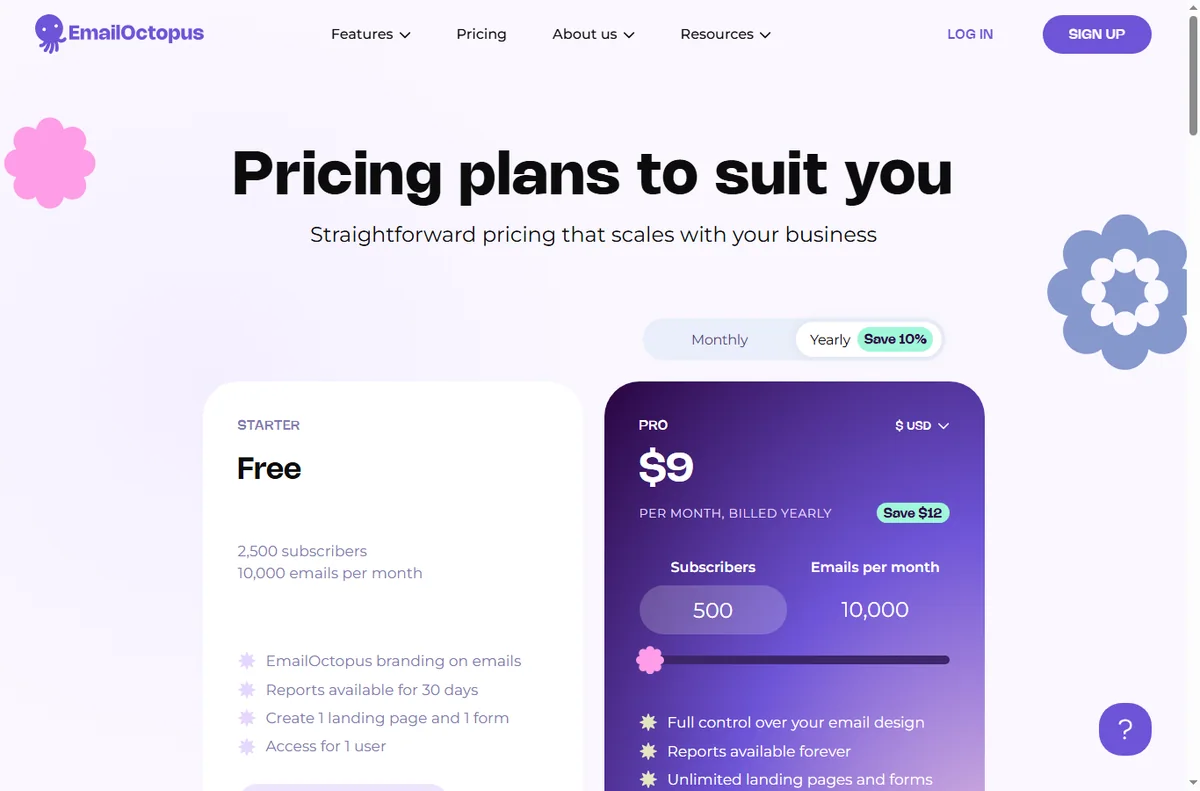
    Emailoctopus pricing page
    Emailoctopus pricing (image: emailoctopus.com)

    Where this fits

    Start with the email marketing hub. For the basics read what EmailOctopus is, and for the setup steps see how to set up EmailOctopus.

    Icode editorial illustration
    Icode editorial illustration (image: icode.io.vn)

    Frequently asked

    Can I fix these myself?

    Most of them. Records, forms and automations are in your control. Deliverability issues can need a support ticket.

    Why do emails bounce?

    An address that is closed, full or misspelled will bounce. Repeated bounces are suppressed so they stop harming your reputation.

    Why did only some people get the email?

    The segment decided that. Check its rules, and remember that suppressed addresses are excluded on purpose.

    How do I test an automation?

    Add a contact you control and walk through the trigger yourself. The activity view shows each step as it runs.

    Get your campaigns delivered

    Fix the common snags and keep sending.

    Some links on this page may be referral links — we may earn a reward if you sign up, at no extra cost to you. We are an independent publisher. See our Affiliate Disclosure.
    Related reading

  • Common Moosend problems and how to fix them

    Common Moosend problems and how to fix them

    Home / Email Marketing / Guides / Common Moosend problems

    Problem · email marketing · updated October 9, 2026

    Common Moosend problems and how to fix them

    Most Moosend problems fall into a few areas: campaigns that land in spam, subscribers who never receive them, automations that do not fire, forms that do not capture, or an account that needs verifying. Here are the ones that come up most, and what to check first.

    Independent analysis. This page may contain affiliate links. If you sign up through a link on this page we may earn a reward at no extra cost to you, and it never changes what we recommend. We are an independent publisher and are not affiliated with, endorsed by, or an official partner of any tool mentioned. See our Affiliate Disclosure.

    TL;DR

    • Campaigns in spam are usually about authentication records and list hygiene.
    • Missing emails are often bounces, a wrong segment or a suppressed address.
    • An automation that will not fire usually has a trigger or filter that never matches.
    • A form that captures nothing is usually a broken embed or a wrong list.
    • Check the exact step that failed before you change the whole setup.

    On this page: Why things go wrong · Campaigns in spam · Subscribers missing · Automation not firing · Forms not capturing · Account not verified · Symptom to fix · Where this fits

    Why things go wrong

    Email depends on a chain: a verified sending domain, clean lists, and an automation or form that passes the contact through. A fault in any link shows up as mail that does not arrive.

    The quickest way to locate it is to follow one contact end to end: were they added, did the trigger fire, and what does their activity show?

    Deliverability in particular sits outside your account: the receiving mailbox decides what to do with the message, and your job is to make that decision easy.

    For anything that touches sending, change one thing at a time and watch the next campaign, because several fixes at once make it hard to see which one helped.

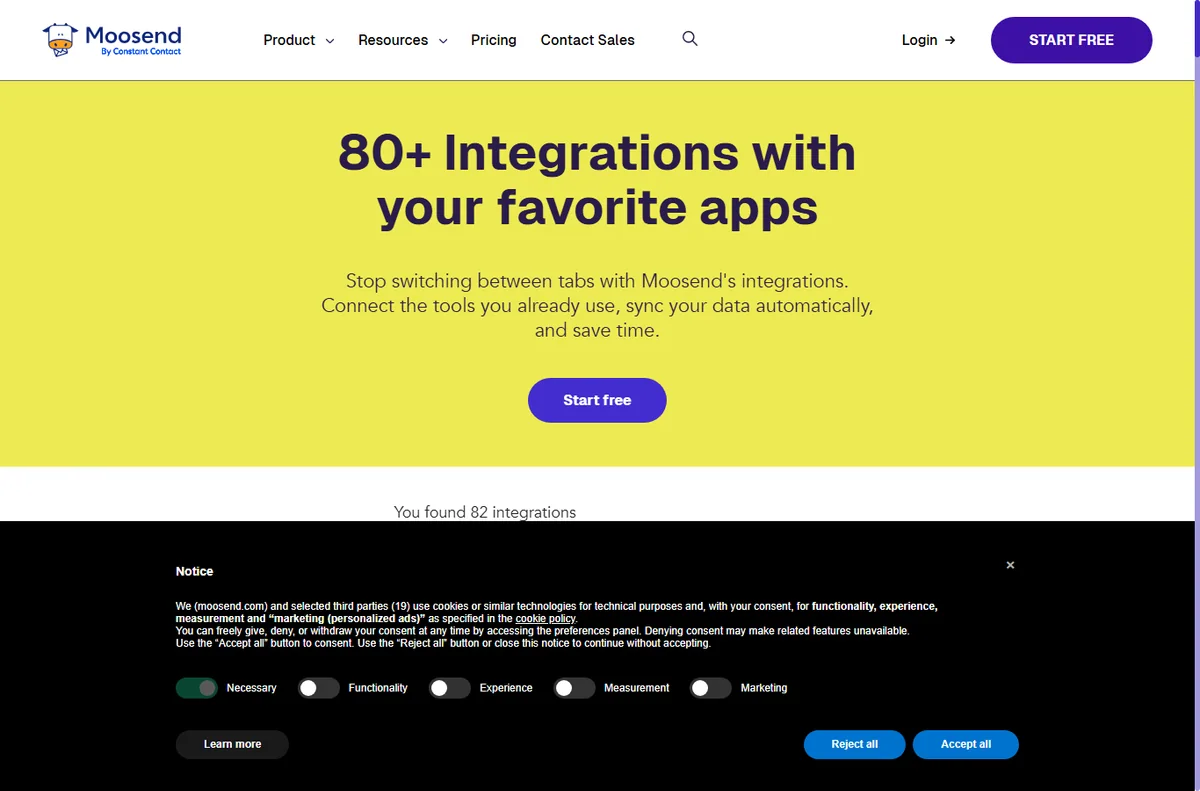
    Moosend home page
    Moosend home (image: moosend.com)

    Campaigns in spam

    Spam placement is usually about authentication, so mail sent from a domain without SPF, DKIM and DMARC looks unfamiliar to the receiving provider.

    Confirm those records for your sending domain, and check whether the list contains addresses that never engaged, which drags reputation down.

    Moosend blog page
    Moosend blog (image: moosend.com)

    Subscribers missing

    A subscriber who never received the email was probably bounced, suppressed, or filtered out by the segment you sent to.

    Check the contact’s activity, the segment rules, and the suppression list before you resend anything.

    Automation not firing

    An automation only runs when its trigger matches, so a join condition or a filter that is never true leaves the journey idle.

    Read the workflow from the start, confirm the trigger event, and test with a contact you control.

    Moosend emailmarketing page
    Moosend emailmarketing (image: moosend.com)

    Forms not capturing

    A form that collects nothing is usually embedded incorrectly or pointed at the wrong list, so submissions have nowhere to land.

    Re-check the embed code, confirm the form is connected to a list, and submit a test yourself.

    Moosend features page
    Moosend features (image: moosend.com)

    Account not verified

    Sending is often held back until the account and sending domain are verified, which is a safety step rather than an error.

    Look for the verification email, complete the domain records, and allow a little time for the status to update.

    Symptom to fix

    SymptomLikely causeFix
    Campaigns in spamMissing authentication recordsAdd SPF, DKIM and DMARC
    Subscribers missingBounce, suppression or segmentCheck activity and segment rules
    Automation not firingTrigger or filter never matchesFix the trigger, run a test
    Forms not capturingBad embed or wrong listRe-embed and connect the list
    Account not verifiedPending verificationConfirm domain and email
    General guidance, checked October 9, 2026. Confirm specifics inside your own Moosend setup.
    Moosend integrations page
    Moosend integrations (image: moosend.com)

    Where this fits

    Start with the email marketing hub. For the basics read what Moosend is, and for the setup steps see how to set up Moosend.

    Moosend pricing page
    Moosend pricing (image: moosend.com)

    Frequently asked

    Can I fix these myself?

    Most of them. Records, forms and automations are in your control. Deliverability issues can need a support ticket.

    Why do emails bounce?

    An address that is closed, full or misspelled will bounce. Repeated bounces are suppressed so they stop harming your reputation.

    Why did only some people get the email?

    The segment decided that. Check its rules, and remember that suppressed addresses are excluded on purpose.

    How do I test an automation?

    Add a contact you control and walk through the trigger yourself. The activity view shows each step as it runs.

    Get your campaigns delivered

    Fix the common snags and keep sending.

    Some links on this page may be referral links — we may earn a reward if you sign up, at no extra cost to you. We are an independent publisher. See our Affiliate Disclosure.
    Related reading

  • What is Moosend?

    What is Moosend?

    Home / Email Marketing / Guides / What is Moosend

    Knowledge · email marketing · updated October 9, 2026

    What is Moosend?

    Moosend is an email marketing platform for sending campaigns, building automations and capturing subscribers with forms and landing pages. This guide explains what each part does, how an account is organised, and what it is not.

    Independent analysis. This page may contain affiliate links. If you sign up through a link on this page we may earn a reward at no extra cost to you, and it never changes what we recommend. We are an independent publisher and are not affiliated with, endorsed by, or an official partner of any tool mentioned. See our Affiliate Disclosure.

    TL;DR

    • Moosend is an email marketing and automation platform.
    • It covers campaigns, automations, signup forms, landing pages and reports.
    • Lists and segments decide who receives each email.
    • Plans and subscriber limits change, so check the current pricing before you commit.
    • It is not a full CRM or a general website builder.

    On this page: What Moosend is · How it is organised · What it is good at · What it is not · Concept cheat sheet · Where this fits

    Moosend home page
    Moosend home (image: moosend.com)

    What Moosend is

    Moosend is a cloud service rather than software you run yourself. You import or collect subscribers, build an email, and send it in a few clicks.

    Around the campaign editor sit the parts that make sending repeatable: automation workflows, signup forms, landing pages and the reports that show what happened.

    It also sends transactional and SMTP mail, so messages triggered by your own app can go out through the same account as your campaigns.

    Templates and a visual editor sit in front of the sending engine, so you design an email on screen and the platform handles delivery, tracking and unsubscribes for you.

    Consent is part of the model: subscribers arrive through forms and landing pages, and the account keeps a record of how each person joined.

    Moosend blog page
    Moosend blog (image: moosend.com)

    How Moosend is organised

    Everything sits under one account. Your contacts live in lists, and segments carve those lists into the people you actually want to reach.

    Campaigns are one-off sends, while automations are journeys that fire when someone joins, clicks or buys. Both draw on the same templates and lists.

    Forms and landing pages feed the lists, and reporting closes the loop by showing opens, clicks and revenue per campaign.

    Moosend emailmarketing page
    Moosend emailmarketing (image: moosend.com)

    What Moosend is good at

    • Sending a first campaign without a long setup.
    • Automations that follow up while you get on with other work.
    • Capturing subscribers with forms and landing pages.
    • Splitting a list with segments so the right people get each email.
    • Sending transactional mail from the same account.
    Moosend features page
    Moosend features (image: moosend.com)

    What Moosend is not

    • Not a CRM: it does not manage a sales pipeline or deals.
    • Not a general website builder: the pages are for campaigns, not a full site.
    • Not unlimited on a free tier, so check the current pricing and limits.
    • Not a guarantee of inbox placement: deliverability still depends on your list and content.

    Concept cheat sheet

    ConceptMeaningWhy it matters
    CampaignA single email sent to a listAnnounce or promote something
    AutomationA journey triggered by an actionFollow up automatically
    List and segmentContacts grouped by criteriaSend to the right people
    Signup formA way to collect subscribersGrow the list from a site
    Landing pageA hosted page tied to a campaignCapture leads in one step
    Transactional emailMail triggered by your appOrder and account messages
    Based on publicly documented behaviour, checked October 9, 2026.
    Moosend integrations page
    Moosend integrations (image: moosend.com)

    Where this fits

    Start with the email marketing hub. For the practical steps see how to set up Moosend, and for everyday usage read how to use Moosend for a small business.

    Moosend pricing page
    Moosend pricing (image: moosend.com)

    Frequently asked

    Is Moosend a CRM?

    No. It is an email marketing platform. It manages lists and campaigns rather than deals and pipelines.

    Can I automate follow-ups?

    Yes. Automations fire on joins, clicks or purchases, so a sequence can run without manual sends.

    Do I need my own website for forms?

    No. Landing pages are hosted for you, and forms can be embedded on a site you already have.

    Is there a free plan?

    There is a free tier with limits. For larger lists you will want a paid plan, so check the current pricing.

    Will my email reach the inbox?

    Good list hygiene and authentication records help a lot, but inbox placement is never guaranteed.

    Send your first campaign

    Campaigns, automations and forms in one account.

    Some links on this page may be referral links — we may earn a reward if you sign up, at no extra cost to you. We are an independent publisher. See our Affiliate Disclosure.
    Related reading

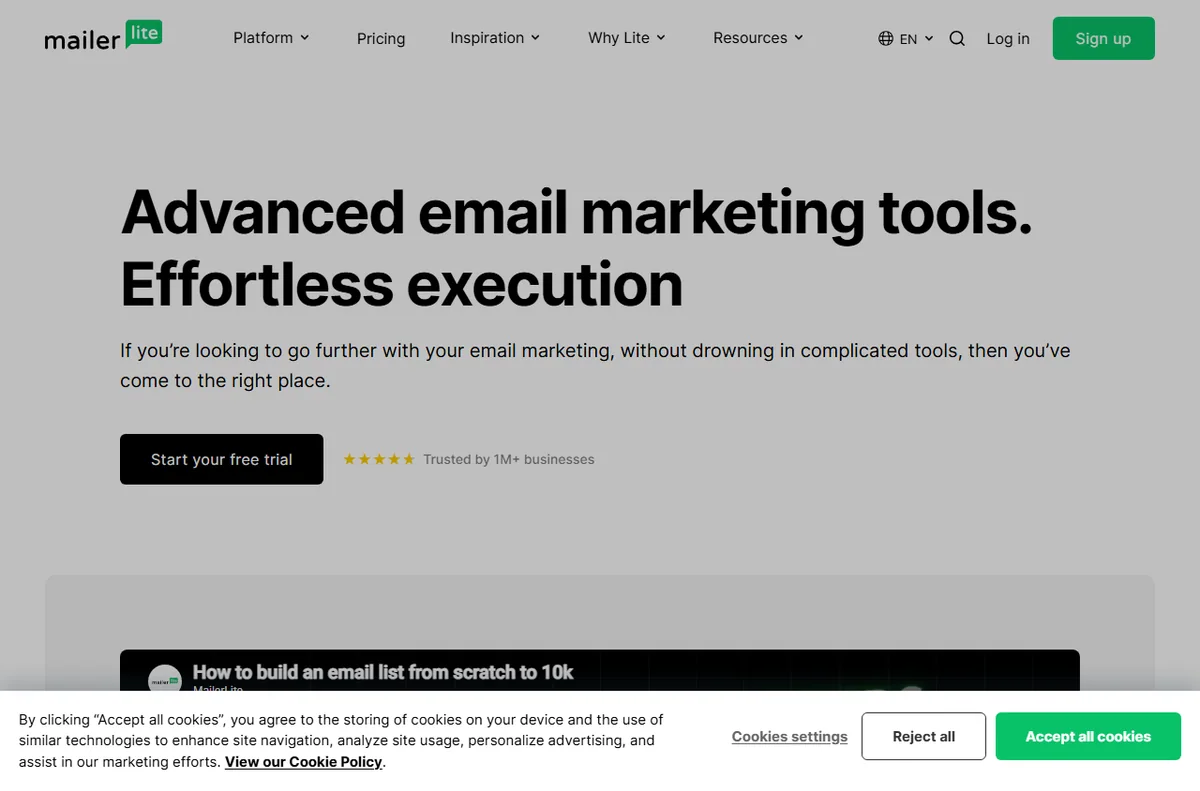
  • Common MailerLite problems and how to fix them

    Common MailerLite problems and how to fix them

    Home / Email Marketing / Guides / Common MailerLite problems

    Problem · email marketing · updated October 9, 2026

    Common MailerLite problems and how to fix them

    Most MailerLite problems fall into a few areas: emails that do not arrive, subscribers who do not get added, automations that do not fire, deliverability warnings, or billing and account questions. Here are the ones that come up most, and what to check first.

    Independent analysis. This page may contain affiliate links. If you sign up through a link on this page we may earn a reward at no extra cost to you, and it never changes what we recommend. We are an independent publisher and are not affiliated with, endorsed by, or an official partner of any tool mentioned. See our Affiliate Disclosure.

    MailerLite homepage for email marketing and automation
    MailerLite official homepage (image: mailerlite.com)

    TL;DR

    • An email that never arrives is usually about deliverability, not the editor.
    • Subscribers who do not appear are often failing a form or a confirmation step.
    • An automation that does not fire is usually a trigger or a condition mismatch.
    • Deliverability warnings are about list quality and sending habits.
    • Check the exact step that failed before you resend anything.

    On this page: Why things go wrong · Emails do not arrive · Subscribers are missing · Automations do not fire · Deliverability warnings · Account and billing · Symptom to fix · Where this fits

    Why things go wrong

    MailerLite depends on a few moving parts: your list, the forms that fill it, the campaigns you send and the servers that deliver them. Most problems sit at one of those, and the report usually names the step that failed.

    The useful habit is to check whether the problem is in your account or at the recipient’s end before you change anything.

    MailerLite features page for campaigns and deliverability
    MailerLite features (image: mailerlite.com)

    Emails do not arrive

    When a campaign shows as sent but nobody received it, the problem usually sits with delivery rather than the tool. Spam filters, a mistyped address and a sender without the right records are the common causes.

    • Check the campaign report for bounces and their reasons.
    • Confirm the authentication records on your sending domain.
    • Ask a few recipients to check their spam folder.
    • Send a test to an address you control before a full send.

    Subscribers are missing

    A signup that does not add anyone is usually about the form or the confirmation step. If double opt-in is on, the subscriber only joins after they click the confirmation link.

    Check the form is connected to the right group, that the confirmation email is being delivered, and that the address was not already unsubscribed.

    MailerLite automation builder with triggers and steps
    MailerLite automation builder (image: mailerlite.com)

    Automations do not fire

    An automation is triggered by an event and filtered by conditions. If nothing happens, either the trigger did not occur or a condition excluded the person.

    Open the automation’s activity log, confirm the trigger matches what you expected, and check whether a condition or a group filter is stopping the flow.

    Deliverability warnings

    Warnings about deliverability usually point at list quality, complaint rates or sending patterns. A list that was bought rather than earned will hurt every send.

    • Send only to people who opted in.
    • Keep complaint and bounce rates low by cleaning the list.
    • Warm a new domain gradually instead of blasting it on day one.
    MailerLite pricing page with plan tiers
    MailerLite pricing and plans (image: mailerlite.com)

    Account and billing questions

    Plan limits, subscriber counts and billing sit with the company rather than your campaigns. A plan can pause sending when you exceed a limit or a payment fails.

    Check the account and billing pages, confirm your subscriber count against the plan limit, and contact support with your account details.

    Symptom to fix

    SymptomLikely causeFix
    Email marked sent but not receivedDeliverability or address issueCheck bounces and authentication
    Subscriber does not appearForm, group or confirmation stepConnect the form and check double opt-in
    Automation does not runTrigger or condition mismatchReview the automation activity log
    Sending is limited or blockedList quality or account limitClean the list and check the plan
    Billing or access problemPayment or plan limitCheck billing and contact support
    General guidance, checked October 9, 2026. Confirm specifics inside your own MailerLite account.
    MailerLite integrations page with supported apps
    MailerLite integrations (image: mailerlite.com)

    Where this fits

    Start with the email marketing hub. For the basics read what MailerLite is, and for the setup steps see how to set up MailerLite.

    Frequently asked

    Why did my campaign never arrive?

    Start with the report: bounces, spam placement and authentication explain most cases. A test send to your own address is a quick check.

    Is my list lost if an automation breaks?

    No. The subscribers are still on your list; the automation is the part that needs fixing. Pausing it does not remove anyone.

    Should I resend to everyone?

    Not before you know why the first send failed. Resending to a disengaged list can hurt your sender reputation.

    Can support fix deliverability for me?

    They can advise on settings and records, but reputation depends on your list and habits, which is why the sender owns most of it.

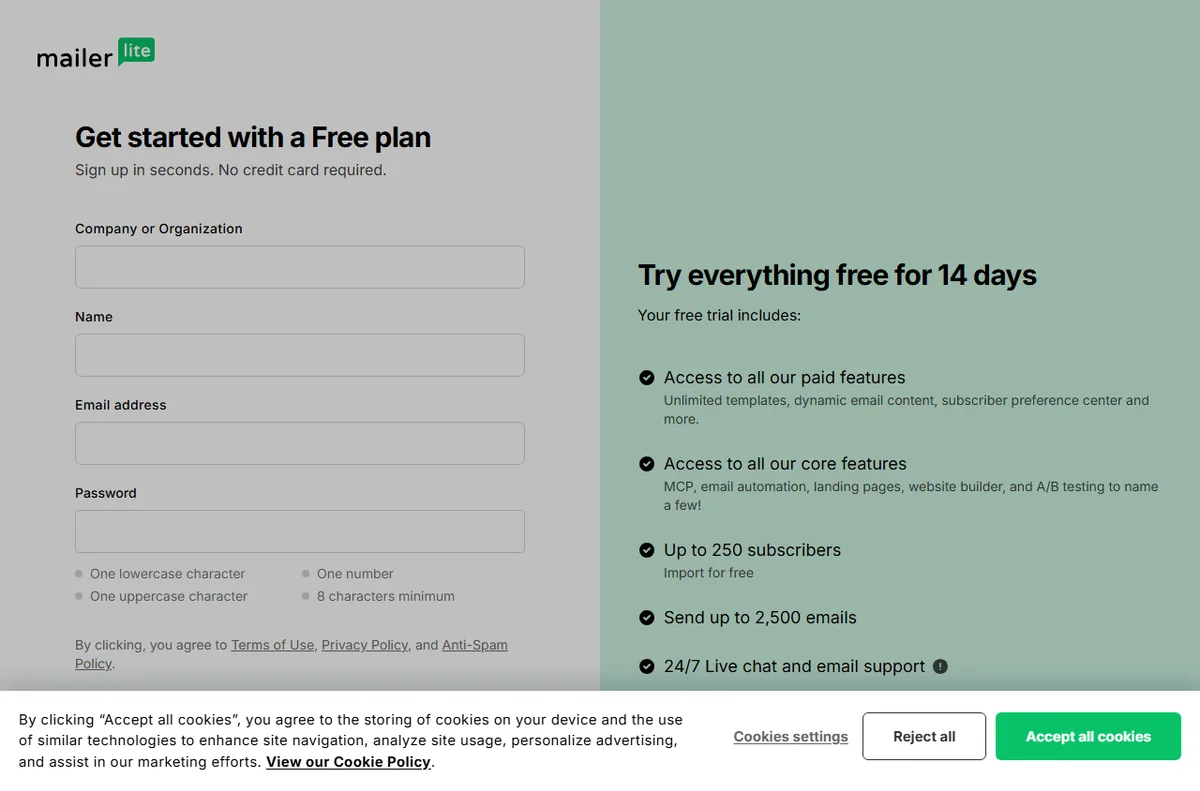
    MailerLite sign-up screen for a new account
    MailerLite sign-up (image: mailerlite.com)

    Fix the email, not the symptom

    Get campaigns and automations working again.

    Some links on this page may be referral links — we may earn a reward if you sign up, at no extra cost to you. We are an independent publisher. See our Affiliate Disclosure.

    Related reading

  • What is MailerLite?

    What is MailerLite?

    Home / Email Marketing / Guides / What is MailerLite

    Knowledge · email marketing · updated October 9, 2026

    What is MailerLite?

    MailerLite is an email marketing service for sending campaigns, building automations and collecting subscribers. This guide explains what it does, how it is organised, and what it is not.

    Independent analysis. This page may contain affiliate links. If you sign up through a link on this page we may earn a reward at no extra cost to you, and it never changes what we recommend. We are an independent publisher and are not affiliated with, endorsed by, or an official partner of any tool mentioned. See our Affiliate Disclosure.

    TL;DR

    • MailerLite is an email marketing tool for campaigns and automations.
    • It is organised around subscribers, groups, campaigns and automations.
    • Signup forms and landing pages collect new subscribers.
    • It is aimed at small businesses and creators who want simple email tools.
    • It is not a full CRM and it is not a website builder.

    On this page: What MailerLite is · How it is organised · What it is good at · What it is not · Concept cheat sheet · Where this fits

    Mailerlite home page
    Mailerlite home (image: mailerlite.com)

    What MailerLite is

    MailerLite is a service for sending email at scale. You keep a list of subscribers, send them campaigns, and set up automations that respond to what they do.

    The core job is the same as any email platform: get permission to contact someone, send them something worth reading, and watch how they respond. What differs is how the tool is organised and how much it asks of you.

    It is a hosted service, so you use it in a browser rather than installing software, and your subscriber list lives in your account.

    Mailerlite automation page
    Mailerlite automation (image: mailerlite.com)

    How MailerLite is organised

    Subscribers are the people on your list. You can place them into groups so that a message goes to one segment rather than everyone.

    A campaign is a single email sent to a group. An automation is a sequence triggered by an event, such as a new subscriber joining or a link being clicked.

    Forms and landing pages are the entry points that add people to the list, and they connect back to the groups and automations you set up.

    Mailerlite features page
    Mailerlite features (image: mailerlite.com)

    What MailerLite is good at

    • Sending campaigns and simple newsletters without a designer.
    • Grouping subscribers so a message reaches the right people.
    • Automating a welcome sequence or a follow-up.
    • Collecting subscribers with signup forms and landing pages.
    • Tracking opens, clicks and unsubscribes in one place.
    Mailerlite integrations page
    Mailerlite integrations (image: mailerlite.com)

    What MailerLite is not

    • Not a full CRM: it tracks email behaviour more than the whole sales relationship.
    • Not free of charge beyond its free tier limits, so check the current pricing.
    • Not a website builder, even though it can host simple landing pages.
    • Not a guarantee of deliverability; that also depends on your list and your sending habits.

    Concept cheat sheet

    ConceptMeaningWhy it matters
    SubscriberA person on your listThe audience you send to
    GroupA segment of subscribersDecides who receives a message
    CampaignOne email sent onceThe core sending unit
    AutomationA sequence triggered by an eventHandles follow-up automatically
    FormA signup that adds a subscriberGrows the list
    Based on publicly documented behaviour, checked October 9, 2026.
    Mailerlite landing pages page
    Mailerlite landing pages (image: mailerlite.com)

    Where this fits

    Start with the email marketing hub. For the practical steps see how to set up MailerLite, and for everyday usage read how to use MailerLite for a small business.

    Mailerlite login page
    Mailerlite login (image: mailerlite.com)

    Frequently asked

    Is MailerLite only for email?

    Email is the centre of it, but it also offers simple landing pages and forms that collect subscribers. It is not a general website builder.

    Do I need design skills?

    No. You start from a template, add your content and send. Good copy and a clear layout matter more than visual polish.

    Is there a free tier?

    There is a free tier with limits, and paid plans above it. Limits change, so check the current pricing on MailerLite’s own site.

    Can I move my list elsewhere later?

    Most services let you export your subscribers. Check the export options in your account before you rely on it.

    Does it handle automation?

    Yes. You can trigger sequences on events such as a new subscriber or a click, and branch the flow based on what happens.

    Send email that gets opened

    Campaigns, automations and signup forms.

    Some links on this page may be referral links — we may earn a reward if you sign up, at no extra cost to you. We are an independent publisher. See our Affiliate Disclosure.
    Related reading

  • Common ActiveCampaign problems and how to fix them

    Common ActiveCampaign problems and how to fix them

    Home / Email Marketing / Guides / Common ActiveCampaign problems

    Problem · email marketing · updated October 9, 2026

    Common ActiveCampaign problems and how to fix them

    Most ActiveCampaign problems are not mysteries — they are campaigns that did not send, automations that skipped a contact, or contacts sitting in the wrong segment. Here are the failures that come up again and again, and what to do about them.

    Independent analysis. This page may contain affiliate links. If you sign up through a link on this page we may earn a reward at no extra cost to you, and it never changes what we recommend. We are an independent publisher and are not affiliated with, endorsed by, or an official partner of any tool mentioned. See our Affiliate Disclosure.

    TL;DR

    • A campaign that did not send is usually a status or list issue.
    • Automations skipping contacts usually start with the trigger.
    • Contacts in the wrong segment are a tagging or field problem.
    • Deliverability problems are usually about sending practice.
    • Fix the contact data before re-sending anything.

    On this page: Why campaigns go wrong · Campaign did not send · Automation skipped contacts · Wrong segment · Not delivered · Sent twice · Symptom to fix · Where this fits

    Why ActiveCampaign campaigns go wrong

    An email programme depends on three things: your contact data, the automation logic, and how the messages are sent. Most problems happen at one of those.

    The fastest habit is to look at the contact record and the automation log first, because that is where the system tells you what it actually did.

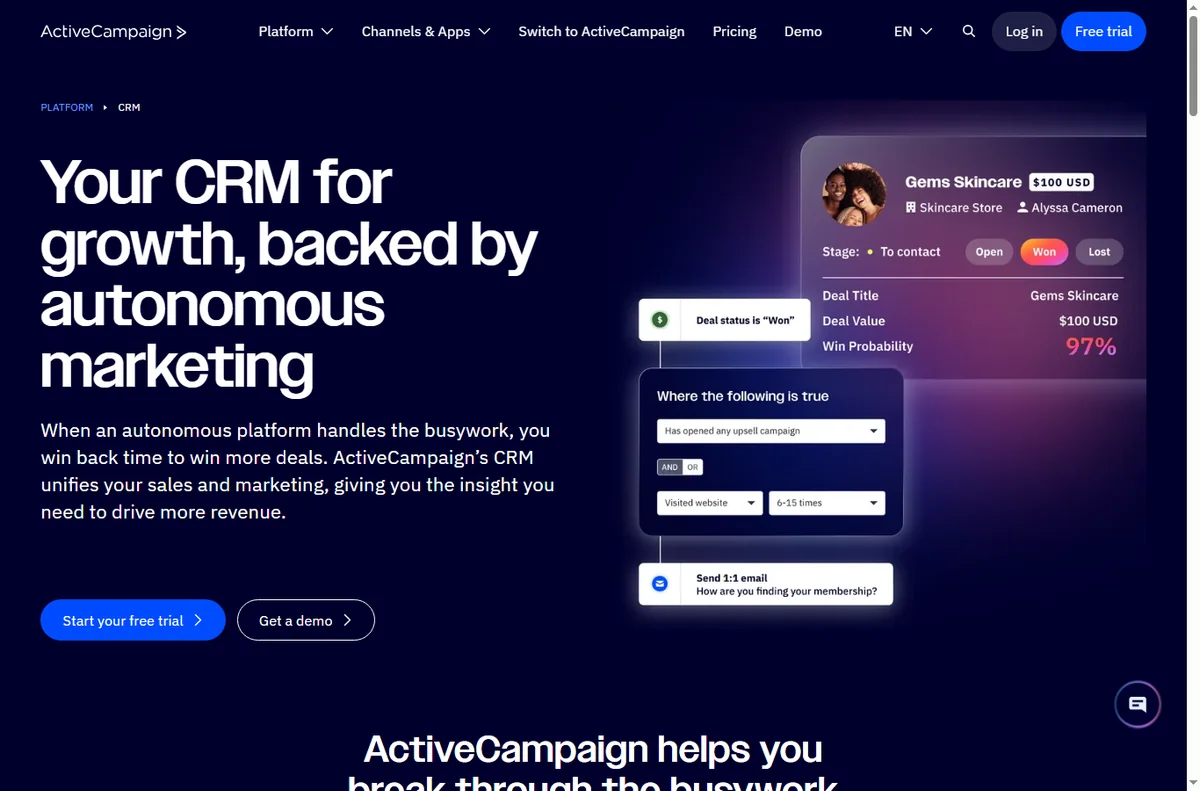
    Activecampaign home page
    Activecampaign home (image: activecampaign.com)

    A campaign did not send

    A campaign that did not go out is usually waiting on a status change or has the wrong recipients attached. Check whether it is still a draft, scheduled, or paused.

    Confirm the list and segment it is aimed at are the ones you expect, and that the send window has actually passed.

    Activecampaign automation page
    Activecampaign automation (image: activecampaign.com)

    An automation skipped a contact

    An automation usually skips a contact because the trigger condition was not met, or because the contact was already in the automation and could not re-enter.

    • Check the trigger and any start conditions.
    • Confirm the contact actually performed the trigger event.
    • Review whether the contact already completed this automation.
    • Look at the automation log for the exact reason.

    Contacts are in the wrong segment

    Segments are built from tags and fields, so a wrong segment is almost always a wrong or missing tag. That usually traces back to the form or import that created the contact.

    Review the field mapping on your forms and imports, and clean up tags that were applied inconsistently.

    Activecampaign crm page
    Activecampaign crm (image: activecampaign.com)

    Emails are not being delivered

    Deliverability is mostly about which people you email and how consistently, not about the tool itself. Sending to old or unengaged lists is a common cause of trouble.

    Keep your list clean, remove hard bounces, and make sure your sending domain is set up properly before a big send.

    Activecampaign forms page
    Activecampaign forms (image: activecampaign.com)

    An automation sent twice, or not at all

    Duplicates usually come from a contact being imported twice or from two automations handling the same event. Missing sends usually come from a condition that never matched.

    De-duplicate contacts, review which automations are active, and test the trigger with a contact you control.

    Symptom to fix

    SymptomLikely causeFix
    Campaign not sentWrong status or recipientsCheck status, list and segment
    Automation skippedTrigger did not matchReview trigger conditions
    Wrong segmentMissing tag or fieldTag the contact correctly
    Low deliverabilityList hygiene or setupClean the list and verify setup
    Duplicate sendsContact imported twiceDe-duplicate and review triggers
    General guidance, checked October 9, 2026. Confirm specifics in your ActiveCampaign account.
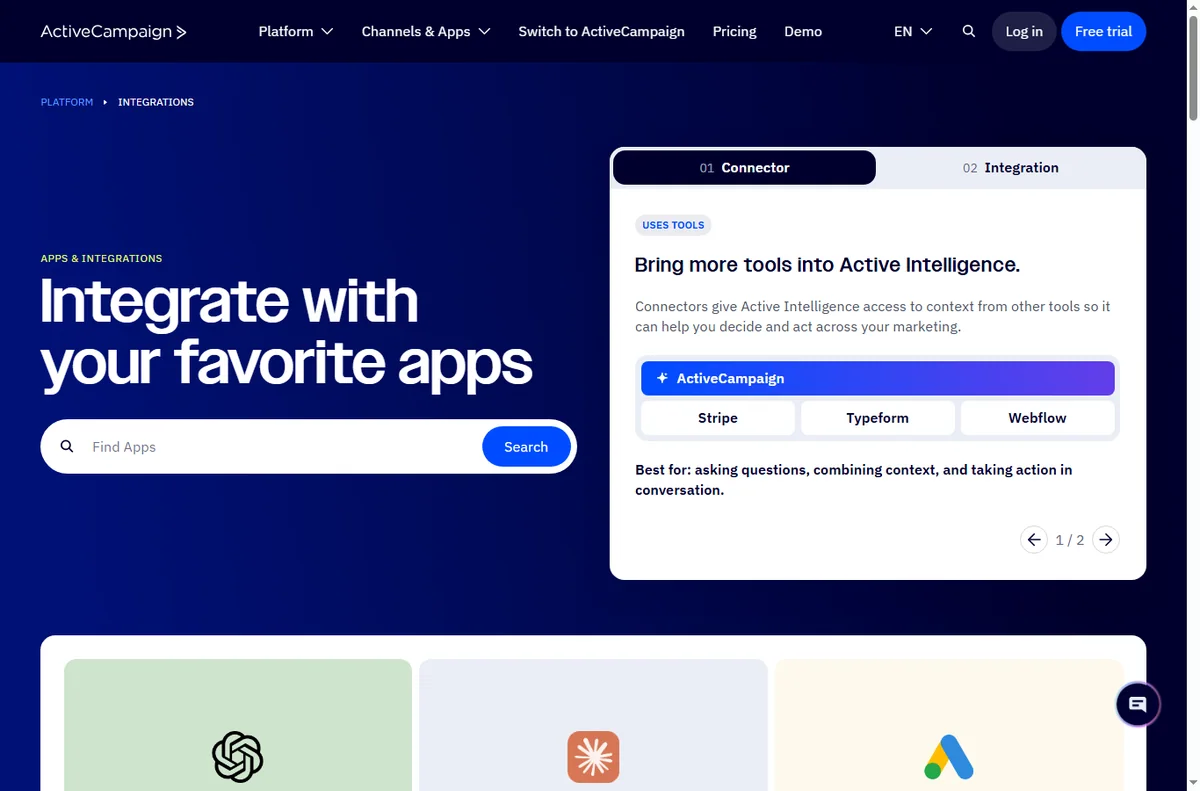
    Activecampaign integrations page
    Activecampaign integrations (image: activecampaign.com)

    Where this fits

    Start with the email marketing hub. For the basics read what ActiveCampaign is, and for the setup steps see how to set up ActiveCampaign.

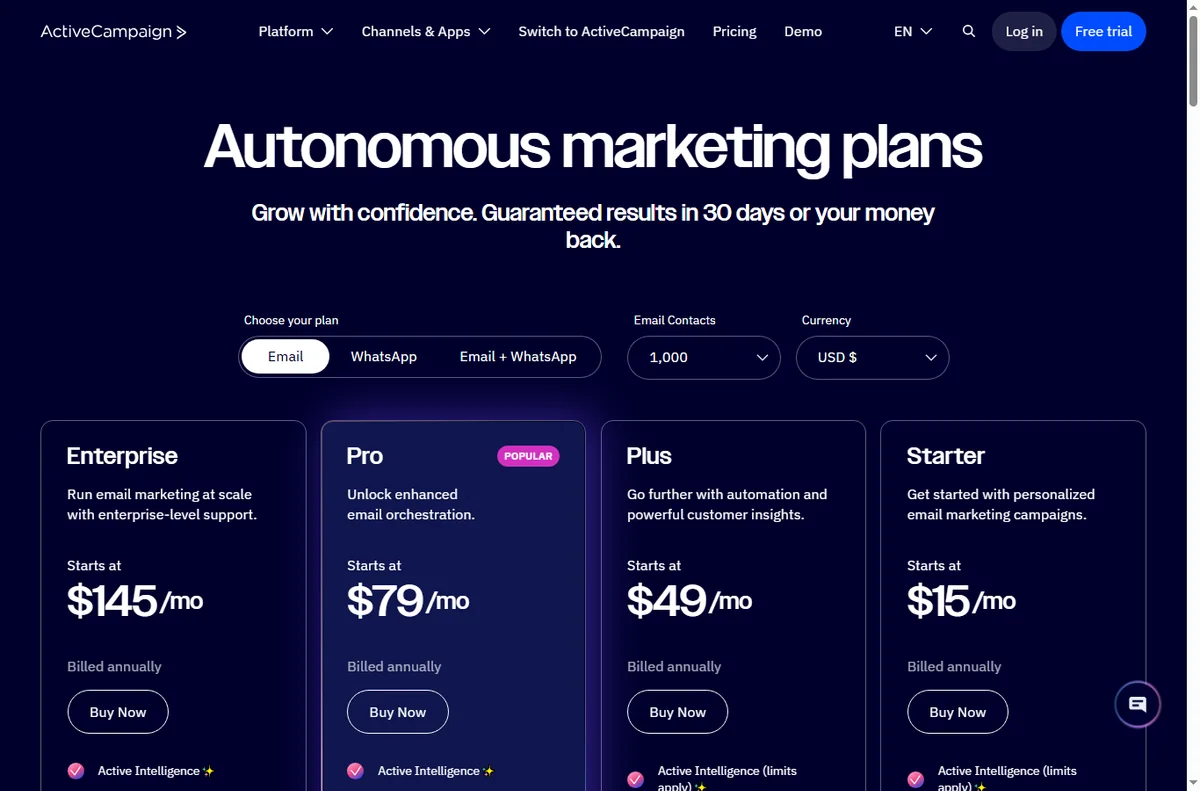
    Activecampaign pricing page
    Activecampaign pricing (image: activecampaign.com)

    Frequently asked

    Will I lose contacts if something goes wrong?

    No. Contacts and their history are stored in your account. Fix the cause and re-run rather than re-importing.

    Why did my automation stop sending?

    A contact can leave an automation when it reaches a goal or fails a condition. Check the automation log for the reason.

    Should I re-import a list?

    Usually not. Re-importing tends to create duplicates; update the existing contacts instead.

    Can I test an automation safely?

    Yes. Use a test contact you control and review the automation log before enabling it for everyone.

    Send better with ActiveCampaign

    Fix the cause in your contact data, then send once.

    Some links on this page may be referral links — we may earn a reward if you sign up, at no extra cost to you. We are an independent publisher. See our Affiliate Disclosure.
    Related reading

  • What is ActiveCampaign?

    What is ActiveCampaign?

    Home / Email Marketing / Guides / What is ActiveCampaign

    Knowledge · email marketing · updated October 9, 2026

    What is ActiveCampaign?

    ActiveCampaign is an email marketing and marketing-automation platform built around contacts and behaviour-based automations. This guide explains what that means in practice and when it is worth using.

    Independent analysis. This page may contain affiliate links. If you sign up through a link on this page we may earn a reward at no extra cost to you, and it never changes what we recommend. We are an independent publisher and are not affiliated with, endorsed by, or an official partner of any tool mentioned. See our Affiliate Disclosure.

    TL;DR

    • ActiveCampaign combines email marketing with automation.
    • It is built around contacts and what they do.
    • Automations trigger on contact behaviour, not just a send.
    • It also includes some CRM and messaging features.
    • It is not simply a bulk email sender.

    On this page: What ActiveCampaign is · How an automation works · What it is good at · What it is not · Concept cheat sheet · Where this fits

    Activecampaign home page
    Activecampaign home (image: activecampaign.com)

    What ActiveCampaign is

    ActiveCampaign is a platform for sending email and automating what happens next. Contacts sit at the centre of the system, and actions are driven by how those contacts behave.

    The point is relevance: instead of sending the same message to everyone, you send the right message based on what a contact has already done.

    Because the platform stores a history for each contact, you can decide what to send based on past opens, clicks and purchases rather than guessing.

    Activecampaign automation page
    Activecampaign automation (image: activecampaign.com)

    How an automation works

    An automation starts with a trigger — joining a list, clicking a link or making a purchase — and then runs a sequence of steps such as sending an email or adding a tag.

    Because the steps can branch on contact behaviour, the same automation can treat a brand-new subscriber and a returning customer differently.

    You can also stop an automation for a contact who reaches a goal, so they do not keep receiving messages that no longer apply to them.

    Because every step is shown as a small box on a canvas, you can see at a glance what a contact will receive and in what order before you switch the automation on.

    Activecampaign crm page
    Activecampaign crm (image: activecampaign.com)

    What ActiveCampaign is good at

    • Behaviour-based email automations.
    • Managing contacts and segmenting them by activity.
    • Combining email with lightweight CRM and messaging.
    • Automating follow-up so it does not depend on manual sends.
    Activecampaign forms page
    Activecampaign forms (image: activecampaign.com)

    What ActiveCampaign is not

    • Not only an email blaster; automations are the core of it.
    • Not a free forever tool for large lists.
    • Not a full enterprise CRM replacement.
    • Not something you get the most from without planning your contact data.

    Concept cheat sheet

    ConceptMeaningWhy it matters
    ContactA person in your listThe unit automations act on
    AutomationA triggered sequence of stepsDoes the work automatically
    TagA label on a contactDrives targeting and segments
    SegmentA filtered group of contactsSends the right message
    CampaignA one-off email sendFor announcements
    Based on publicly documented behaviour, checked October 9, 2026.
    Activecampaign integrations page
    Activecampaign integrations (image: activecampaign.com)

    Where this fits

    Start with the email marketing hub. For the steps see how to set up ActiveCampaign, and for day-to-day use read how to use ActiveCampaign for a small business.

    Activecampaign pricing page
    Activecampaign pricing (image: activecampaign.com)

    Frequently asked

    Is ActiveCampaign just email?

    No. Email is central, but automation, segmentation and some sales features are part of the platform.

    Do I need automation from day one?

    No. You can start with simple sends and add automations as you learn how your contacts behave.

    How is it priced?

    Plans scale with features and contact count. Pricing changes, so check the current pricing on ActiveCampaign’s own page.

    What is a tag for?

    Tags label contacts so that automations and segments can target the right people.

    Can I combine email with other channels?

    ActiveCampaign can trigger more than email, including some messaging and site actions, depending on your plan and setup.

    Grow with ActiveCampaign

    Relevant email, driven by what contacts actually do.

    Some links on this page may be referral links — we may earn a reward if you sign up, at no extra cost to you. We are an independent publisher. See our Affiliate Disclosure.

    Related reading

  • How to use EmailOctopus for a small business

    How to use EmailOctopus for a small business

    Home / Email Marketing / Guides / How to use EmailOctopus for a small business

    Guide · email marketing · updated October 9, 2026

    How to use EmailOctopus for a small business

    Once EmailOctopus is set up, the value comes from a steady routine. This guide turns it into a small-business workflow: keep costs predictable as the list grows, email people who opted in, automate the follow-ups, and watch the handful of numbers that matter.

    Independent analysis. This page may contain affiliate links. If you sign up through a link on this page we may earn a reward at no extra cost to you, and it never changes what we recommend. We are an independent publisher and are not affiliated with, endorsed by, or an official partner of any tool mentioned. See our Affiliate Disclosure.

    TL;DR

    • Keep sending costs predictable as your list grows.
    • Send a reliable, regular newsletter.
    • Automate welcome and follow-up messages.
    • Segment so every email is relevant.
    • Watch the deliverability basics.
    • Measure opens and clicks on a fixed schedule.

    On this page: Keep costs predictable · Regular newsletter · Automate · Segment · Deliverability · Measure

    Emailoctopus home page
    Emailoctopus home (image: emailoctopus.com)

    Keep costs predictable as you grow

    Because EmailOctopus prices largely on list size, the key habit is keeping the list clean. Remove people who never engage so you are not paying to email the unengaged.

    Check your plan’s current limits before a big campaign. Knowing the boundary in advance avoids a surprise halfway through a send.

    Prune the list on a schedule — once a quarter is enough — and let the small savings compound. A tidy list also improves your engagement metrics, which in turn helps every future send.

    Emailoctopus blog page
    Emailoctopus blog (image: emailoctopus.com)

    Send a reliable newsletter

    Pick a rhythm you can keep and hold it. A predictable newsletter keeps your name familiar and makes unsubscribes less likely.

    One main idea per issue with a clear next step beats an everything-email that readers skim and forget.

    Emailoctopus features page
    Emailoctopus features (image: emailoctopus.com)

    Automate welcome and follow-up

    Build a short welcome sequence and one follow-up for people who show interest but do not buy. Automation handles the repetition so you do not have to.

    Review automated emails quarterly. If a message no longer matches your offer or prices, fix it or switch it off.

    Segment for relevance

    Split the list by what people did, not just who they are: new subscribers, past buyers, or the recently inactive. Relevance is what keeps engagement up.

    You do not need elaborate rules. Two or three honest segments are enough to make your messages feel personal.

    Even a simple split by sign-up source tells you which pages attract the right people, so you can send those readers content that actually fits.

    Emailoctopus integrations page
    Emailoctopus integrations (image: emailoctopus.com)

    Watch the deliverability basics

    Verify your sending domain, email people who opted in, and avoid over-mailing. These three habits do more for inbox placement than any trick.

    Keep a consistent sender name and address so subscribers and mailbox providers recognise you over time.

    Measure what matters

    Track open rate and click rate for your main campaigns, and watch unsubscribes as a signal that something is off. Review on a fixed schedule.

    A small, stable scoreboard you actually read is worth more than a dashboard full of numbers nobody checks.

    Write down what you changed after each review, so improvement is a loop rather than a fresh guess every month.

    Emailoctopus pricing page
    Emailoctopus pricing (image: emailoctopus.com)

    Where this fits

    Start from the independent EmailOctopus review and the email marketing hub. For setup, see how to set up EmailOctopus. Compare options in best email marketing software and follow the method with the deliverability guide.

    Icode editorial illustration
    Icode editorial illustration (image: icode.io.vn)

    Frequently asked

    Is EmailOctopus good for a large list?

    Its SES-based model keeps sending costs low as a list grows, which suits list-heavy businesses. Check the current tiers before you commit.

    How do I keep costs down?

    Keep your list clean and remove people who never engage, since you generally pay by contact count. A smaller engaged list is cheaper and performs better.

    Do I need automation?

    Not on day one, but a welcome sequence is the single best automation to start with, because attention is highest right after sign-up.

    How often should I send?

    Monthly is enough for most small businesses. Consistency and relevance matter more than frequency.

    Put EmailOctopus to work

    Affordable sending, lists and automation.

    Some links on this page may be referral links — we may earn a reward if you sign up, at no extra cost to you. We are an independent publisher. See our Affiliate Disclosure.
  • How to set up EmailOctopus (step-by-step)

    How to set up EmailOctopus (step-by-step)

    Home / Email Marketing / Guides / How to set up EmailOctopus (step-by-step)

    Tutorial · email marketing · updated October 9, 2026

    How to set up EmailOctopus (step-by-step)

    EmailOctopus is an email marketing service built on Amazon SES, which is how it keeps costs low as your list grows. Setting it up means creating an account, verifying the domain you send from, importing a consent-based list, and sending a test campaign before you go wide.

    Independent analysis. This page may contain affiliate links. If you sign up through a link on this page we may earn a reward at no extra cost to you, and it never changes what we recommend. We are an independent publisher and are not affiliated with, endorsed by, or an official partner of any tool mentioned. See our Affiliate Disclosure.

    TL;DR

    • Create the account with an email you monitor.
    • Verify your sending domain before your first campaign.
    • Import or build a small, consent-based list.
    • Create one welcome automation.
    • Send a test campaign and check placement.

    On this page: Create account · Verify sending domain · Build your list · First campaign · Send a test · Sanity checks

    Emailoctopus home page
    Emailoctopus home (image: emailoctopus.com)

    Step 1 — Create your account

    Create an account with a business address you check, because this login covers lists, campaigns and billing. Confirm the verification email before you add contacts.

    An unverified account cannot send reliably, so clear this step first rather than discovering it when you are ready to launch.

    Emailoctopus blog page
    Emailoctopus blog (image: emailoctopus.com)

    Step 2 — Verify your sending domain

    Add the domain you will send from and follow the DNS steps shown in your account. Because EmailOctopus sends through Amazon SES, domain verification is central to getting into inboxes.

    A dedicated email subdomain is often worth using, so that email reputation stays separate from your website. Check the current record values in your dashboard, as they are specific to your account.

    Emailoctopus features page
    Emailoctopus features (image: emailoctopus.com)

    Step 3 — Import or build your list

    Create a list and import only contacts who have given permission. Consent protects your sender reputation more than list size ever will.

    Add at least one sign-up form so new subscribers arrive the right way. A clear form with an honest promise outperforms a pushy pop-up.

    Step 4 — Build your first campaign

    Choose a template, write one clear message and set a single next step. Give the email an obvious subject line rather than a clever one.

    Link your campaign to a specific page on your site so interested readers land somewhere useful instead of a generic homepage.

    Emailoctopus integrations page
    Emailoctopus integrations (image: emailoctopus.com)

    Step 5 — Send a test and review

    Send the campaign to yourself and a colleague first. Check links, images and how the email looks on a phone, where most people will read it.

    Once placement and layout look right, send to your list. Keep the first send modest so you can watch the results before scaling up.

    Final checks before you rely on it

    • Confirm your sending domain and sender address are verified.
    • Send a test to a few inboxes and check where it lands.
    • Verify every link opens the page you intended.
    • Note your plan’s contact and send limits before your next campaign.
    Emailoctopus pricing page
    Emailoctopus pricing (image: emailoctopus.com)

    Where this fits

    See the independent EmailOctopus review and the email marketing hub. For a shortlist, see best email marketing software, then follow how to build an email list and the deliverability guide.

    Icode editorial illustration
    Icode editorial illustration (image: icode.io.vn)

    Frequently asked

    Why is EmailOctopus often cheaper?

    It sends through Amazon SES and passes that lower infrastructure cost on. Check the current pricing and send limits, since these change over time.

    Do I need to verify a domain?

    For serious sending, yes. Unverified senders are far more likely to be filtered. Check the exact DNS records shown in your account.

    Is it good for a first email tool?

    It is simple enough for a small business and stays affordable as a list grows. Expect a short setup step for domain verification.

    Can I import an existing list?

    Yes, but only import contacts who opted in. Uploading addresses without consent risks your deliverability and can breach anti-spam rules.

    Start sending with EmailOctopus

    Low-cost sending, lists and automation.

    Some links on this page may be referral links — we may earn a reward if you sign up, at no extra cost to you. We are an independent publisher. See our Affiliate Disclosure.

  • How to use Moosend for a small business

    How to use Moosend for a small business

    Home / Email Marketing / Guides / How to use Moosend for a small business

    Guide · email marketing · updated October 9, 2026

    How to use Moosend for a small business

    Once Moosend is set up, the value comes from a routine rather than occasional blasts. This guide turns it into a small-business workflow: grow a list people want to join, welcome them properly, keep in touch, and measure the few numbers that matter.

    Independent analysis. This page may contain affiliate links. If you sign up through a link on this page we may earn a reward at no extra cost to you, and it never changes what we recommend. We are an independent publisher and are not affiliated with, endorsed by, or an official partner of any tool mentioned. See our Affiliate Disclosure.
    TL;DR

    • Grow a list people actually want to hear from.
    • Turn new sign-ups into a welcome sequence.
    • Send a regular newsletter your audience expects.
    • Segment instead of emailing everyone the same thing.
    • Automate repetitive follow-ups.
    • Measure opens, clicks and replies on a fixed schedule.

    On this page: Grow your list · Welcome sequence · Regular newsletter · Segment · Automate follow-ups · Measure

    Moosend home page
    Moosend home (image: moosend.com)

    Grow a list people actually want

    Offer something specific in exchange for an email — a guide, a discount, or early access. Vague promises collect addresses that never open.

    Put your sign-up form where intent is highest: a relevant page, a checkout step, or the end of a useful article. One good placement beats five ignored ones.

    Moosend blog page
    Moosend blog (image: moosend.com)

    Turn sign-ups into a welcome sequence

    Send a short, honest welcome that confirms what the subscriber signed up for and what to expect next. Set expectations on frequency, not just content.

    Follow with one or two genuinely useful emails. A welcome series is the highest-attention moment you will ever get, so spend that attention on value, not a sales pitch.

    Moosend emailmarketing page
    Moosend emailmarketing (image: moosend.com)

    Send a regular newsletter

    Pick a rhythm you can keep — monthly is plenty for most small businesses — and hold it. Consistency builds recognition and keeps your name in the inbox.

    Keep each issue to one main idea with a clear next step. Newsletters that try to say everything end up saying nothing.

    Use segments instead of blasting everyone

    Split your list by what people actually did: signed up on a product page, bought once, or went quiet. Even two or three segments make your messages more relevant.

    Relevance lifts engagement, and engagement is what keeps you out of the spam folder over the long run.

    Moosend features page
    Moosend features (image: moosend.com)

    Automate repetitive follow-ups

    Automate the messages you send over and over: order confirmations, a nudge after a purchase, or a reminder before a renewal. These run on their own once built.

    Keep automations simple and review them quarterly. An outdated automated email is worse than none, because it speaks for your business when you are not watching.

    Measure a few things consistently

    Track open rate, click rate and replies for your main campaigns, and review them on a fixed schedule. These tell you whether your list is healthy or drifting.

    Chasing every metric is a trap. A small, stable scoreboard you actually read beats a dashboard nobody opens.

    Moosend integrations page
    Moosend integrations (image: moosend.com)

    Where this fits

    Start from the independent Moosend review and the email marketing hub. For setup, see how to set up Moosend. Compare options in best email marketing software and follow the method with how to build an email list.

    Moosend pricing page
    Moosend pricing (image: moosend.com)

    Frequently asked

    How often should I email my list?

    Monthly is enough for most small businesses, provided you keep it useful. A predictable rhythm beats unpredictable bursts that train people to ignore you.

    What should my first automation do?

    A welcome sequence is the best use of automation. It greets every new subscriber promptly, which is exactly when attention is highest.

    How do I keep emails out of spam?

    Verify your sending domain, email people who opted in, and avoid spammy subject lines. Relevance and consent matter more than any single setting.

    Do I need to segment my list?

    Not on day one, but even two or three segments by behaviour make messages more relevant and lift engagement over time.

    Put Moosend to work

    Campaigns, automation and a growing list in one place.

    Some links on this page may be referral links — we may earn a reward if you sign up, at no extra cost to you. We are an independent publisher. See our Affiliate Disclosure.