Independent analysis. This page may contain affiliate links.
Zoho CRM and HubSpot are two of the most popular CRM choices, but they take very different approaches. This comparison looks at features, pricing philosophy, ease of use, and scalability so you can pick the one that fits how your team actually works.
Both have large user bases and active development. The decision usually comes down to a trade-off between speed of adoption and depth of customisation, plus how you feel about each vendor’s pricing curve.
The short version
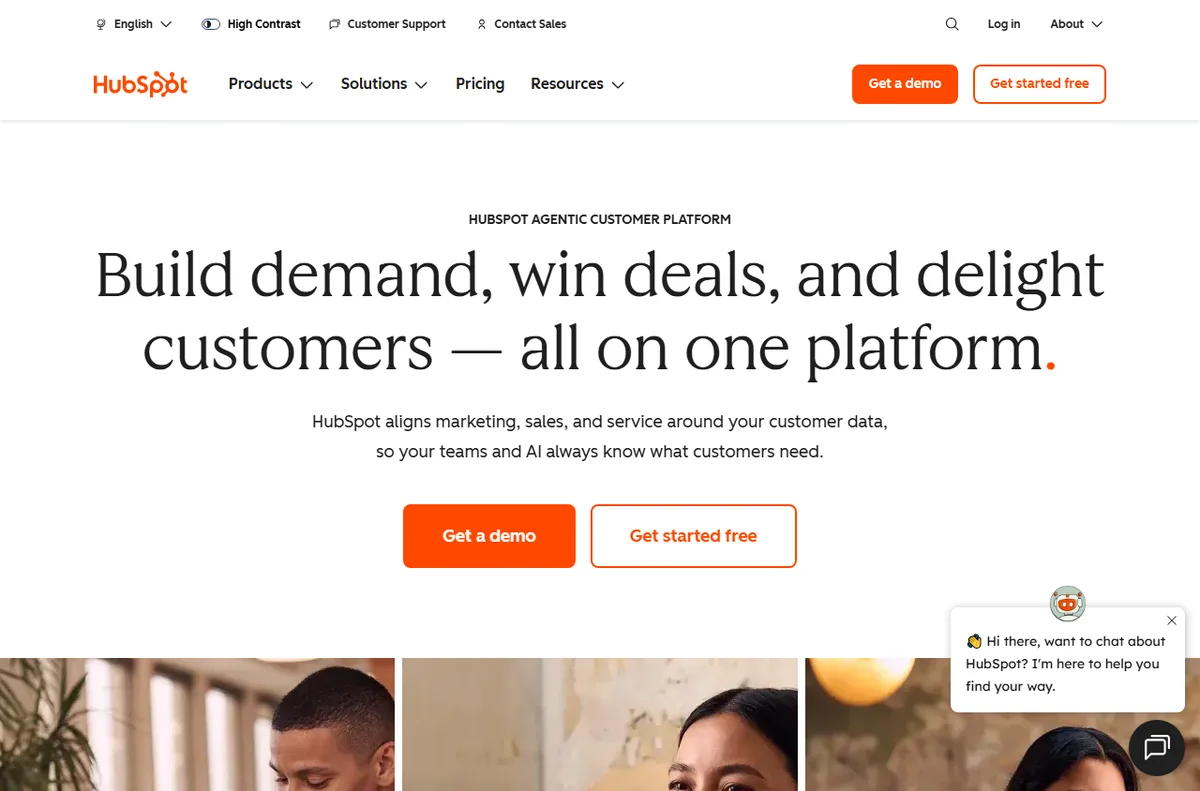
HubSpot leans on usability and a generous free CRM with strong inbound marketing tools. Zoho leans on flexibility and price, with deeper customisation and a broad ecosystem of apps. If you want something you can start using today with minimal setup, HubSpot is friendly. If you want to bend the CRM to your process at low cost, Zoho is appealing.
Features compared
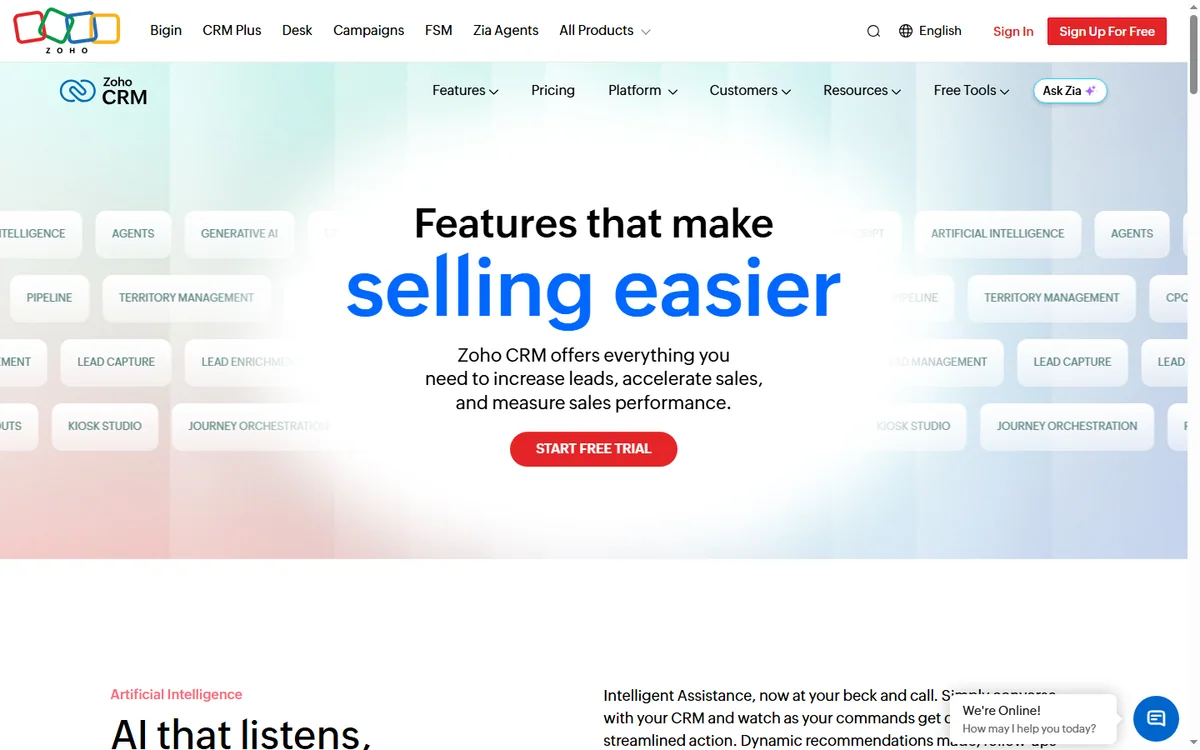
- Sales pipeline: both offer visual deal stages; HubSpot is simpler, Zoho more configurable.
- Marketing automation: HubSpot’s marketing tools are very strong; Zoho has capable equivalents inside its own suite.
- Service and support: both offer ticketing and help-desk style features.
- AI: Zoho’s Zia and HubSpot’s AI features both add predictions and assistance.
- Customisation: Zoho generally allows deeper structural changes to modules and fields.
- Ecosystem: Zoho spans accounting, email, and projects; HubSpot focuses on go-to-market hubs.
In practice, both cover the core CRM job well. The differences show up in the edges: how far you can customise objects, how many channels you can connect natively, and how much of your marketing you want handled in the same tool.
Data, reporting, and analytics
Both platforms offer dashboards and custom reports. HubSpot’s reporting is approachable and quick to read, which suits teams that want answers without building them. Zoho’s reporting is more granular, allowing deeper slices of data, but it takes more setup to reach that point. If analytics maturity matters, budget time to learn either system properly.
Pricing philosophies
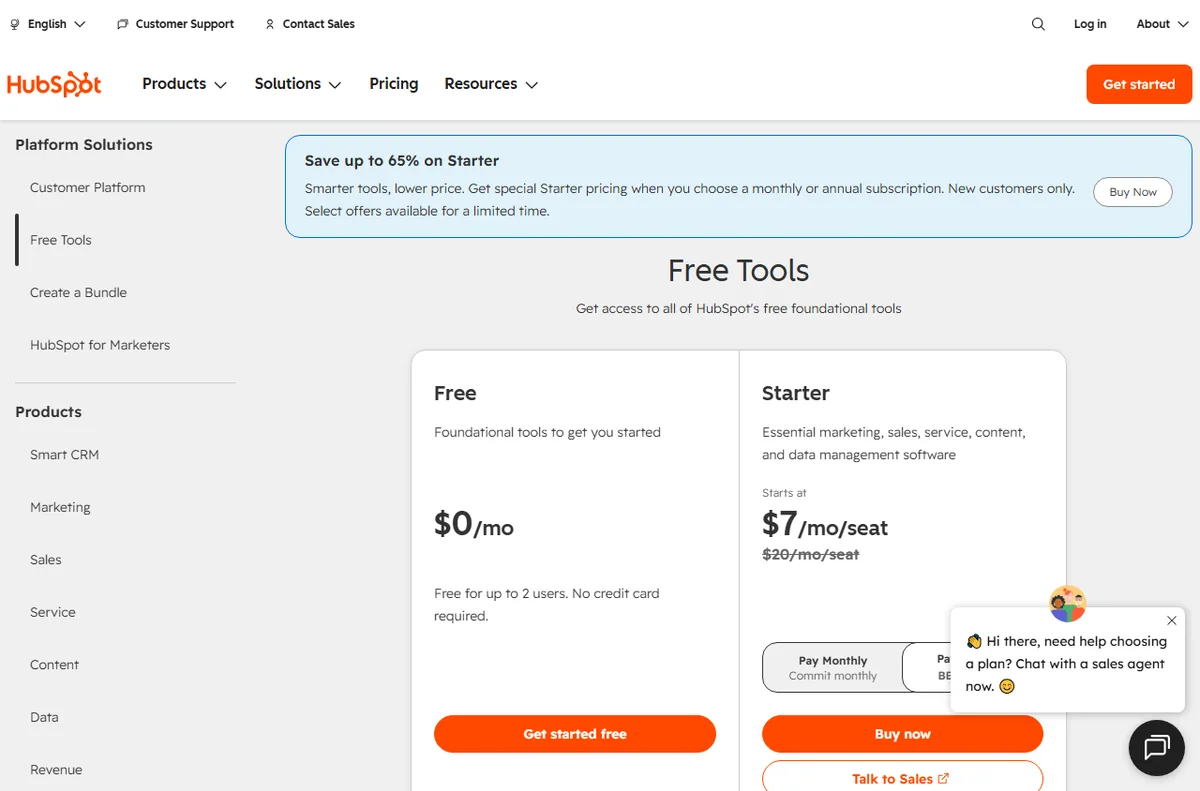
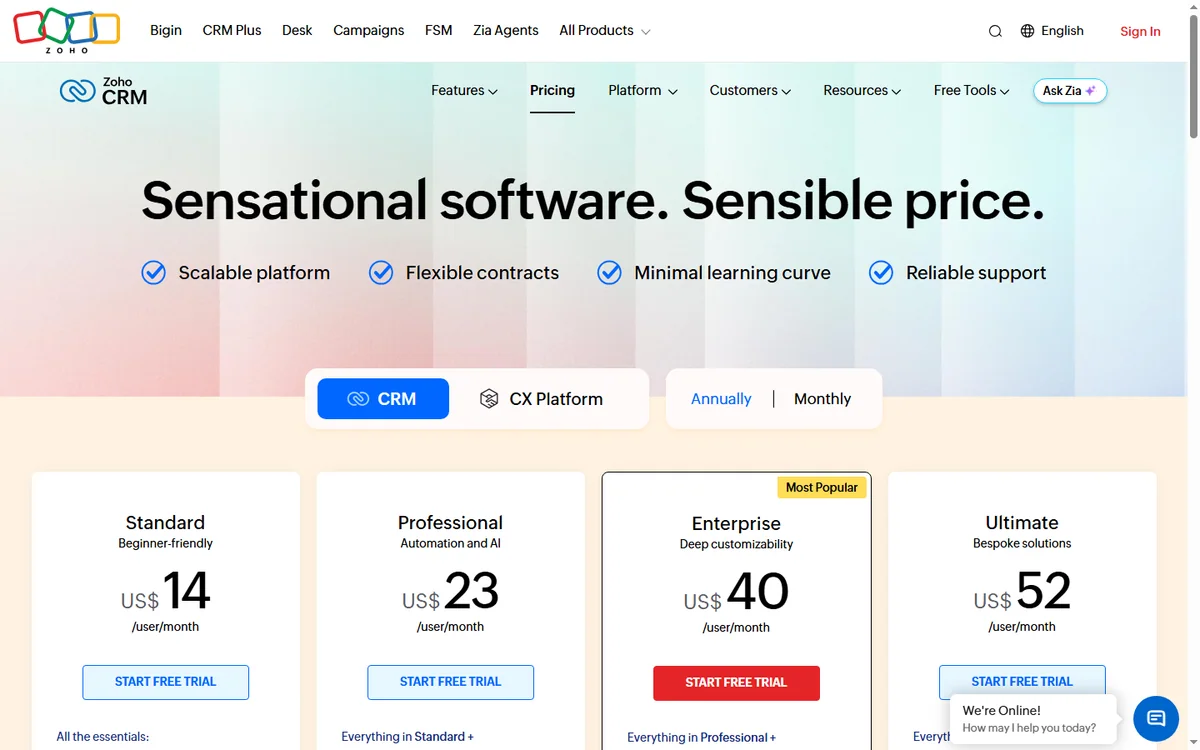
The models differ in a way that matters over time. HubSpot offers a free CRM and then charges for marketing, sales, and service hubs that scale with your contact tiers, which can climb quickly for content-heavy teams. Zoho starts cheaper per user, but you often pay across several apps as you add capabilities.
Neither is “cheaper” in the abstract; it depends on your contact volume and which features you need. Always check Zoho CRM’s official site and HubSpot’s official site for current numbers, because both change pricing regularly.
Ease of use
HubSpot wins on polish and onboarding for most beginners. Its interface is clean and its free tools are genuinely usable, which is why so many small teams start there. Zoho is powerful but busier, and admins often need to configure fields, layouts, and automation before the team feels at home.
Migration and switching costs
Moving from one CRM to another is never free. You face data exports, field mapping, rebuilding automation, and retraining the team. HubSpot makes the first steps easy, which lowers the cost of getting started; Zoho’s flexibility means more design decisions up front. Whichever you choose, plan the migration deliberately and keep a clean export of your contact data as insurance.
Scalability and ecosystem
HubSpot scales well within marketing, sales, and service. Zoho scales across a wider range of business functions because its suite covers finance, projects, and more. For a company that wants one vendor for many departments, Zoho’s breadth is a real advantage; for a team that lives in go-to-market motions, HubSpot’s focus can be cleaner.
Who should choose which?
- Choose HubSpot if you value ease of use, inbound marketing, and a free start.
- Choose Zoho if you want low per-user cost, deep customisation, and a broad suite.
FAQ
Is Zoho cheaper than HubSpot?
Often, per user, but not always overall once you add apps or contact tiers. Compare based on your real needs.
Does HubSpot have a free CRM?
Yes, HubSpot’s free CRM is a major draw for small teams.
Which is easier to learn?
Most users find HubSpot quicker to adopt; Zoho rewards time spent configuring.
Can both handle growing teams?
Yes. Both scale, though their cost curves differ significantly.
Do both integrate with other tools?
Yes, both have marketplaces and APIs, though their catalogues differ.
Which is better for marketing?
HubSpot is generally stronger for inbound marketing; Zoho competes with its own marketing apps.
Conclusion
Zoho and HubSpot are both strong, and the right choice comes down to priorities: speed and usability versus flexibility and price. Test both against your process, watch how costs move as your contact list and team grow, and pick the platform whose weaknesses you can live with.
Explore more Automation guides.
Explore more Email Marketing guides.
Explore more AI Tools guides.
Leave a Reply