
Home / Security & Privacy / Guides / How to use PureVPN for a small business
Use case · security & privacy · updated October 8, 2026
How to use PureVPN for a small business: a practical guide
For a small business, PureVPN is most useful as a consistent layer under everyday work: the same protection on every laptop and phone, wherever the team happens to be. This guide covers the practical ways it earns its place, from remote access to simple administration, and the habits that keep it effective.
Independent analysis. This page may contain affiliate links. Some links here are referral links; if you sign up through one we may earn a reward at no extra cost to you, and it never changes what we recommend. We are an independent publisher and are not affiliated with, endorsed by, or an official partner of any tool mentioned. See our Affiliate Disclosure.
TL;DR
- Keep the tunnel on whenever staff leave a trusted network, especially when travelling.
- Treat the account as shared infrastructure and track who is connected on which device.
- Use the dashboard for a quick periodic review rather than auditing every machine.
- Watch the renewal date and device limit so cost stays predictable.
- Write a short internal rule so everyone knows when the VPN should be on.
On this page: What this covers · What matters most for a small business · Remote access and untrusted networks · Shared access without sharing passwords · Simple admin and device management · Keeping cost predictable · A short internal VPN policy · Common mistakes to avoid · Where this fits in your wider stack
What this covers
Most small businesses do not need every feature a VPN advertises. They need a few reliable outcomes: staff protected on networks they do not control, a workable way to share access, and a routine that keeps working when the week gets busy.
This page maps those outcomes to how PureVPN is used day to day, and points out the decisions that cause trouble later.
What matters most for a small business
Before you turn on settings one by one, decide which of these priorities actually apply to your team. They are listed in the order they tend to cause real problems at small scale.
| Priority Why it matters How to handle it | ||
|---|---|---|
| Untrusted networks | Staff on public or shared Wi-Fi expose their traffic to snooping. | Enable auto-connect so the tunnel starts on unknown networks. |
| Device sprawl | Laptops, phones and tablets multiply the endpoints. | Track who installed the app and on what, and stay within your device limit. |
| Shared credentials | One login shared by many people is hard to audit or revoke. | Keep the owner list short, and change the password when someone leaves. |
| Cost drift | Subscriptions renew quietly and grow with headcount. | Note the renewal date and re-check the official pricing page before it renews. |
Remote access and untrusted networks
The clearest benefit is remote work. A laptop that moves between home, cafes, hotels and client sites keeps joining networks you do not control. With auto-connect enabled, the user does not have to remember to switch anything on.
Travelling staff benefit most of all. Public networks are convenient and hard to trust, and a tunnel turns an unknown network into a consistent one for the length of the session.

Shared access without sharing passwords
Sharing one login across a small company is common and generally workable, but it needs a little discipline. Keep the number of people who know the credentials as small as practical, and store them centrally rather than in a chat thread.
When someone leaves, treat it like any other access change: rotate the password, sign out the devices that should no longer connect, and reconnect the ones that should. A short checklist turns this into a five-minute job.
Simple admin and device management
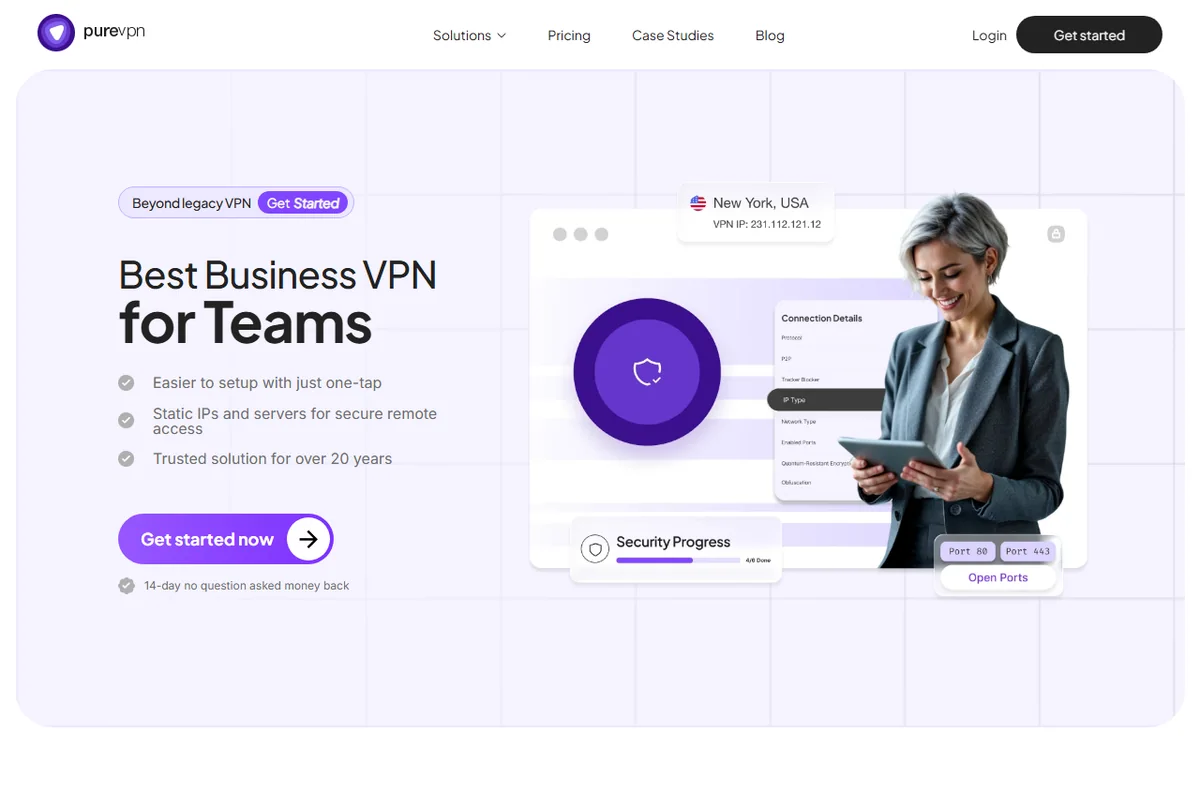
If your account includes a dashboard, make it your home base. A single view of connected devices is far easier than asking each person what they installed.
For a business without dedicated IT, that single view is often the difference between knowing your posture and guessing. A review every few weeks is usually enough.

Keeping cost predictable
VPN spending stays predictable when you treat it like any other subscription. Record the renewal date, the device allowance and the plan you are on in one place, and revisit it before renewal rather than after.
If headcount grows, check whether the current allowance still covers everyone at once. If it does not, compare the next tier against the cost of a second account before deciding.
A short internal VPN policy
You do not need a long document. A few clear lines are enough, and the team is more likely to read them.
- When the VPN should be on: always on untrusted networks, optional on trusted office networks.
- Who holds the account details, and who may add or remove devices.
- What to do if a device is lost: rotate the password and remove the device promptly.
- Where to check plan limits and renewal dates, so nobody is caught out.
Common mistakes to avoid
Most issues come from setup habits rather than the tool. Installing the app without verifying the connection, forgetting to check the device count, and leaving credentials with people who have left are the recurring three.
A short verification step after each device is set up, plus one regular account review, removes nearly all of it.
Where this fits in your wider stack
To decide whether PureVPN suits your team, read the independent PureVPN review and start from the security and privacy hub. Comparing options? See Surfshark vs PureVPN and review VPNs suited to remote work before you commit.
Frequently asked
Do we need a VPN if the whole team works from one office?
Not always for the office network itself, but it still helps for laptops that leave the building, home workers and anyone using public Wi-Fi. If devices never leave a trusted network, the value is much smaller.
Is sharing one account across the team acceptable?
It is common in small teams and generally workable, but it needs discipline. Keep the list of credential holders short, store the login centrally, and rotate the password when someone leaves.
How often should we review connected devices?
Every few weeks is usually enough for a small team. The goal is to catch devices that should have been removed, not to watch the dashboard every day.
Will this replace our other security tools?
No. A VPN protects traffic in transit. Antivirus, patching and password management remain separate and still matter.
Protect your team with PureVPN
Review the current plans and device limits on the official site before you choose.
Referral link — we may earn a reward if you sign up, at no extra cost to you. We are an independent publisher. See our Affiliate Disclosure.
Leave a Reply