
Home / Course Platforms / Guides / How to use Kajabi for a small business
Use case · course platforms · updated October 8, 2026
How to use Kajabi for a small business
Kajabi is often filed under online courses, but a small business can use it more broadly: to sell knowledge, run a membership, or bundle a product with the emails and pages around it. These five plays cover the common cases.

Independent analysis. This page may contain affiliate links. Some links here are referral links; if you sign up through one we may earn a reward at no extra cost to you, and it never changes what we recommend. We are an independent publisher and are not affiliated with, endorsed by, or an official partner of any tool mentioned. See our Affiliate Disclosure.
TL;DR
- Kajabi is strongest when you sell knowledge or access, not physical goods.
- All-in-one means fewer tools, at the cost of using one platform’s way of working.
- Start with one play, prove it converts, then add a second.
- Bundle products and email so the platform does more than host content.
- Confirm current plan limits and pricing on Kajabi’s own pricing page.
On this page: Why a small business uses Kajabi · Five plays to consider · Which play fits · What the plays share · Guardrails · Where this fits

Why a small business uses Kajabi
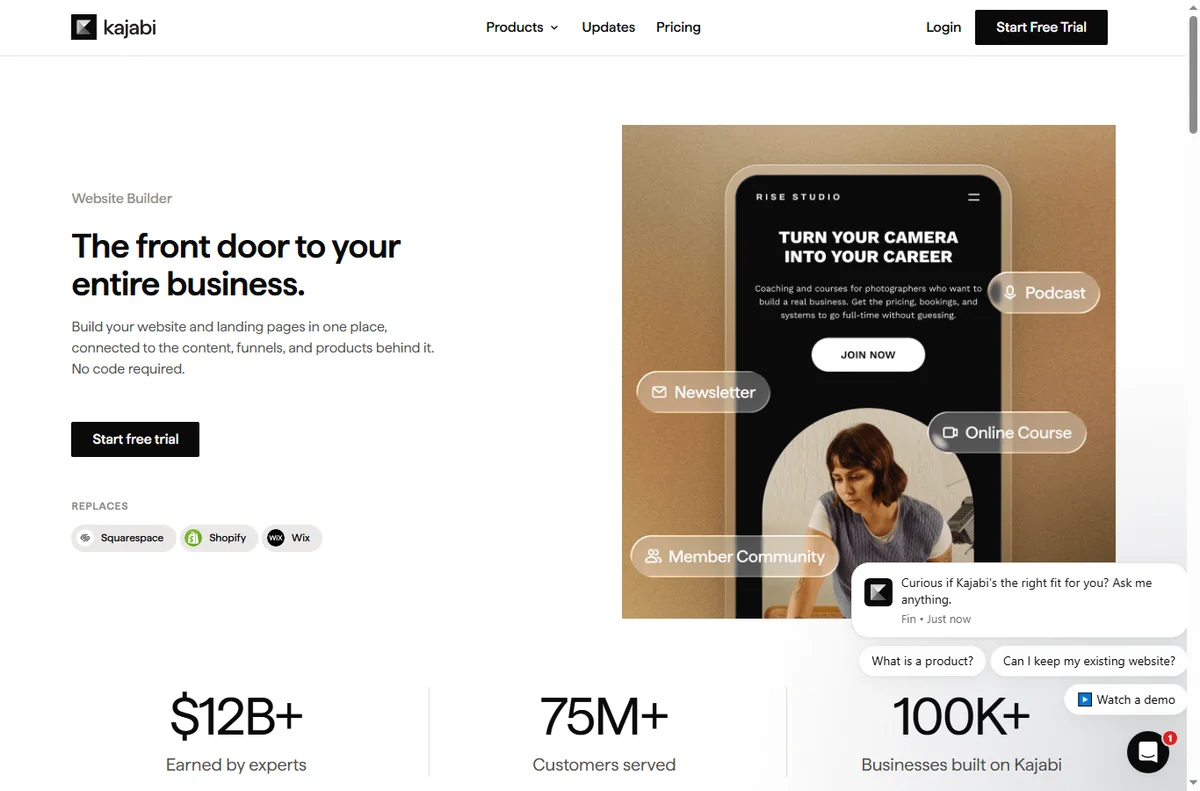
If your business sells expertise, access or recurring value, you face the same stack problem: a course tool, a page builder, an email tool and a checkout. Kajabi collapses those into one account, which is its main appeal for a small team.
The trade-off is real: all-in-one platforms want you to work their way. If that fits your business, the time saved is significant.

Five plays to consider
- Launch a course — package what you already know into a paid, structured outcome.
- Sell coaching or consulting — gate sessions, resources and follow-ups behind a product.
- Run a membership — recurring access to content, community or updates.
- Gate a resource library — templates and tools for a fee or an email.
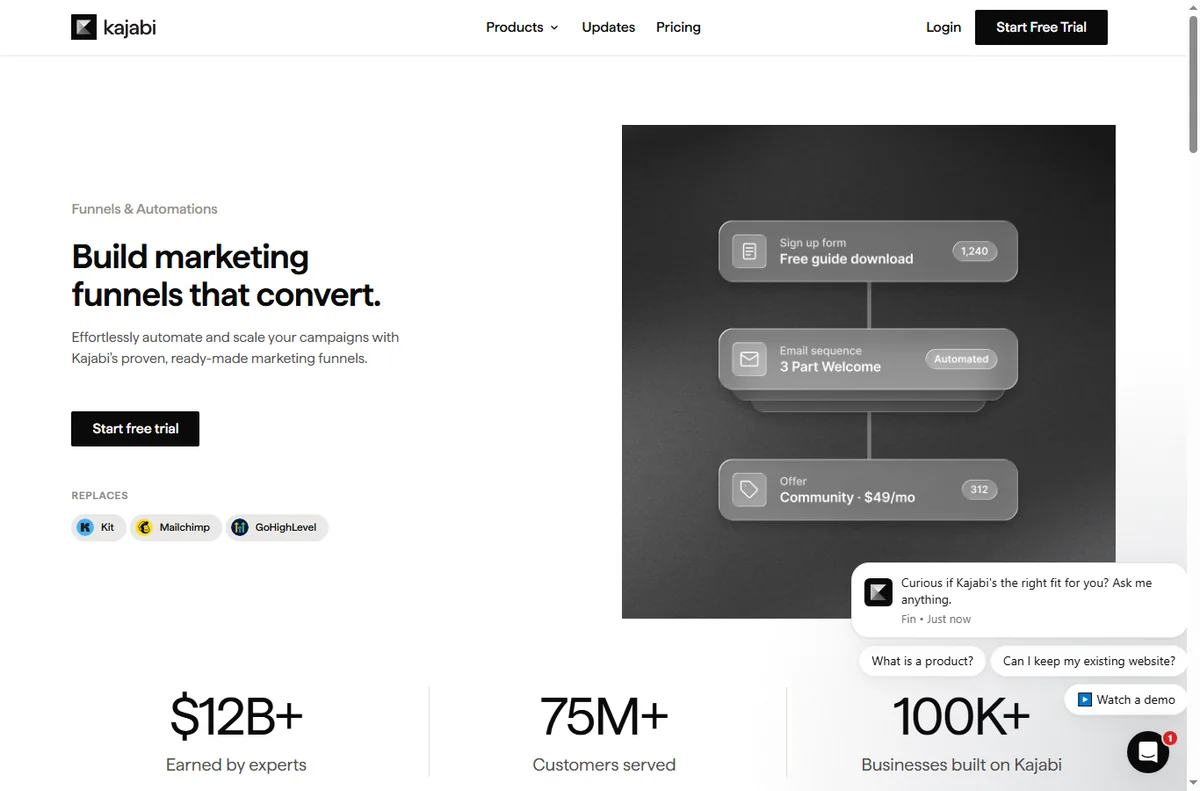
- Bundle product and email — sell an offer and nurture buyers in the same platform.
Which play fits your business
| Business Best play Why | ||
|---|---|---|
| Expert or consultant | Course or coaching | Sells knowledge directly |
| Creator with a following | Membership | Recurring access fits an audience |
| Agency or freelancer | Gated resource library | Templates add value to services |
| Product business | Bundle product and email | Nurture buyers without a second tool |
What the plays share
Every play needs the same three things: a clear promise, a product that delivers it, and a follow-up that keeps the buyer engaged. Kajabi gives you one place to run all three, which is the point of choosing an all-in-one.
Keep the promise specific. “Learn marketing” sells poorly; “run your first paid campaign in a week” sells well.

Guardrails for a small business
- Price before you build, so you know it is worth the effort.
- Ship one offer before starting a second.
- Set up the welcome and follow-up emails early.
- Review churn if you run a membership; access products lose value if unused.

Where this fits in your wider stack
Read the independent Kajabi review and start from the course platforms hub. Comparing options? See Kajabi vs Thinkific and the course platform pricing comparison. For pricing strategy, read course pricing strategy.
Frequently asked
Is Kajabi only for online courses?
No. It is used for coaching, memberships, gated resources and product-plus-email bundles as well.
Is an all-in-one worth it for a small team?
It is when you would otherwise pay for and maintain several tools. If you only need one feature, a specialist tool can be cheaper.
Which play should I start with?
The one that matches how you already make money. Package what you sell today before inventing a new offer.
How do I keep members engaged?
Regular, useful updates and a clear schedule. Access products lose value if members stop finding a reason to return.
Turn your expertise into a product
Pick one play, price it, and deliver it inside a single platform.
Referral link — we may earn a reward if you sign up, at no extra cost to you. We are an independent publisher. See our Affiliate Disclosure.
Leave a Reply