
Home / Course Platforms / Guides / How to use Thinkific for a small business
Use case · course platforms · updated October 8, 2026
How to use Thinkific for a small business
A small business often has knowledge worth packaging: how you onboard clients, train staff, or teach a skill. Thinkific turns that knowledge into a paid or internal course. These five plays show where it fits.

Independent analysis. This page may contain affiliate links. Some links here are referral links; if you sign up through one we may earn a reward at no extra cost to you, and it never changes what we recommend. We are an independent publisher and are not affiliated with, endorsed by, or an official partner of any tool mentioned. See our Affiliate Disclosure.
TL;DR
- Thinkific suits knowledge that is repeatable, not one-off advice.
- Client onboarding and staff training are often the fastest internal wins.
- A low-priced entry product can feed a higher-priced service.
- Course-first means less marketing built in; pair it with your own email tool if needed.
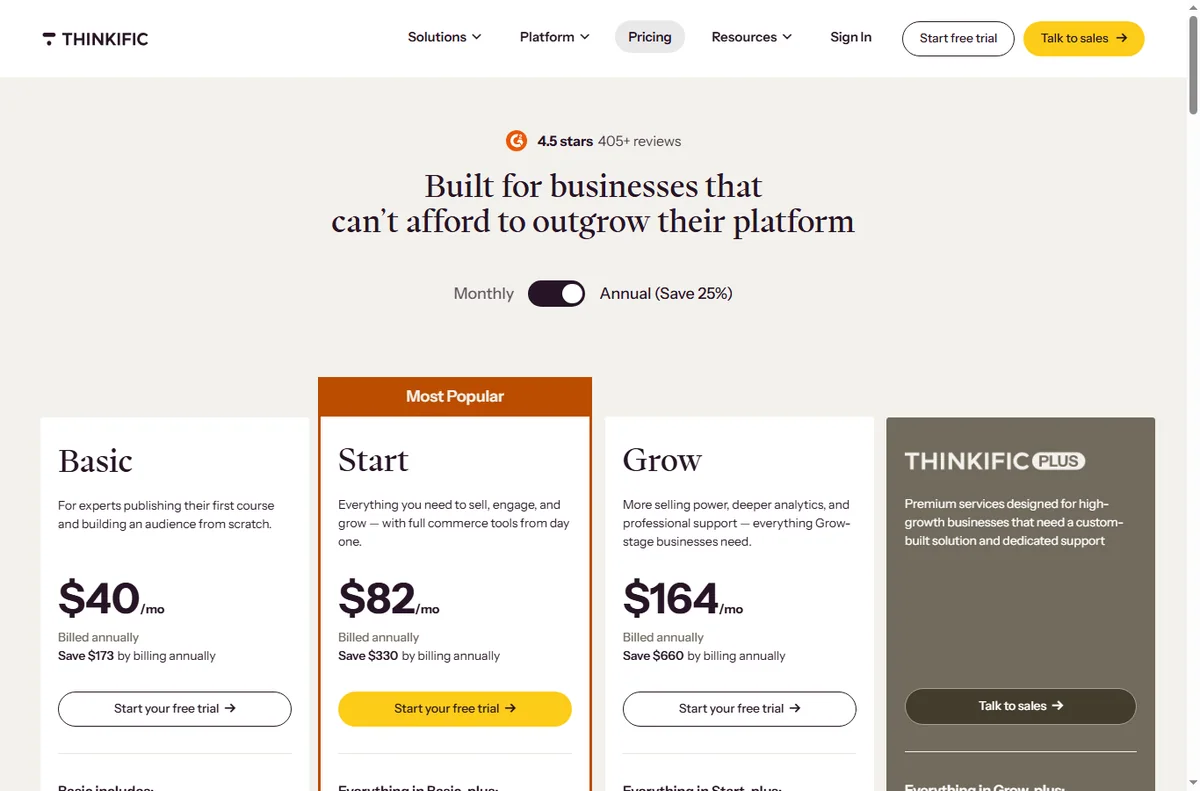
- Confirm current plan limits and fees on Thinkific’s own pricing page.
On this page: Why a small business uses Thinkific · Five plays to consider · Which play fits · What the plays share · Guardrails · Where this fits

Why a small business uses Thinkific
The trigger is repetition. When you explain the same onboarding, process or skill again and again, a course stops being a product and becomes a tool: it teaches once and runs forever.
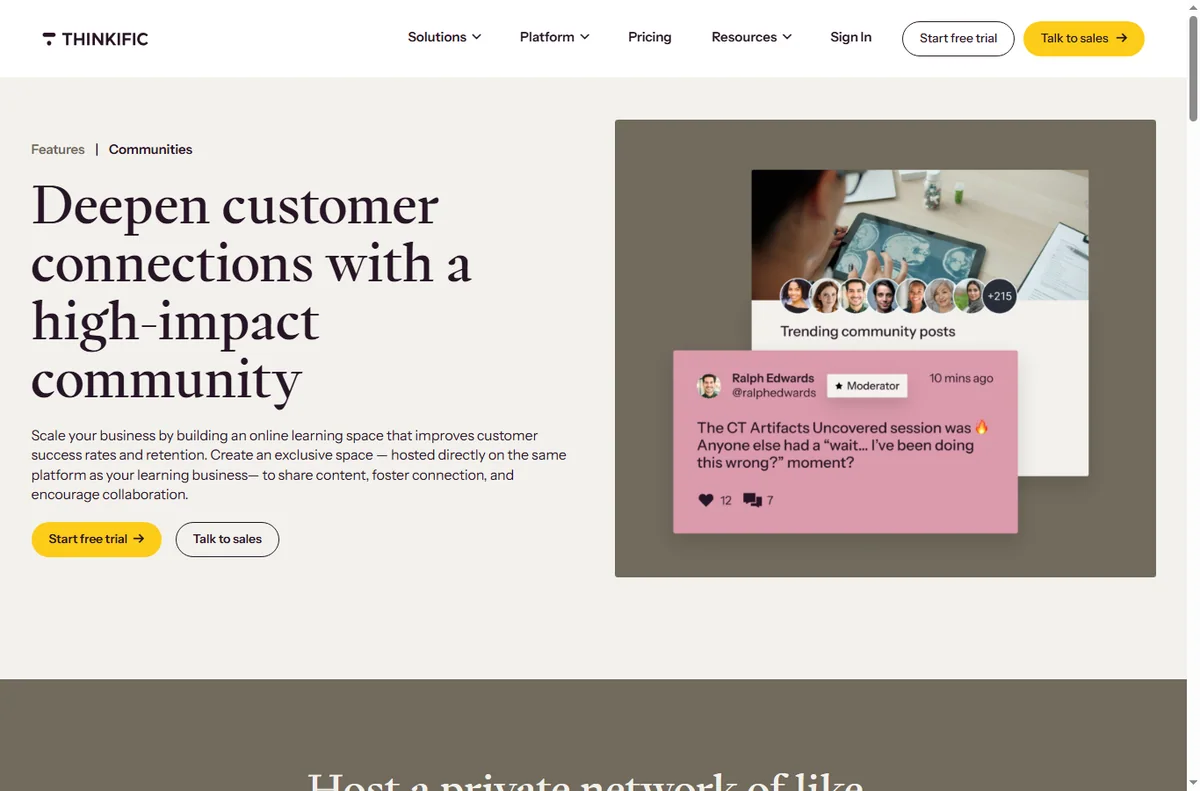
Thinkific is course-first, so the delivery experience is strong. If you need heavy marketing automation, pair it with a separate email tool.
Five plays to consider
- Sell a paid course — package a skill into structured lessons.
- Onboard clients — teach new clients how to work with you before the first call.
- Train staff — consistent internal training without repeating yourself.
- Package a workshop — turn a live session into an evergreen course.
- Low-priced entry product — a small paid course that leads to a bigger service.

Which play fits your business
| Business Best play Why | ||
|---|---|---|
| Coach or consultant | Paid course or entry product | Knowledge is the product |
| Service business | Client onboarding | Cuts repeated explanations |
| Team of any size | Staff training | Consistency and time saved |
| Trainer | Workshop to course | Multiply a live session |
What the plays share
Each play needs a defined outcome, a short path to it, and a reason to keep going to the end. Thinkific gives you the delivery; you supply the clarity of the promise.
Keep lessons short and outcome-focused. Students finish small, specific lessons; they abandon long, vague ones.

Guardrails for a small business
- Start with the play that saves or earns the most for the least build time.
- Ship one course before starting a second.
- Track completion, not just enrolment — it shows whether the course works.
- Keep a welcome email so students know what to do first.
Where this fits in your wider stack
Read the independent Thinkific review and start from the course platforms hub. Comparing options? See Teachable vs Thinkific and Kajabi vs Thinkific. For a shortlist, read best course platforms.
Frequently asked
Is Thinkific only for selling courses?
No. Many businesses use it internally for client onboarding and staff training, where the “student” is not a paying customer.
How is it different from an all-in-one?
Thinkific is course-first, so delivery is strong and marketing is lighter. An all-in-one bundles more but imposes its way of working.
Which play should I start with?
The one that recurs most often in your week. If you onboard clients repeatedly, start there.
How do I know a course is working?
Look at completion and, for paid courses, repeat or upsell. High enrolment with low completion means the course needs work.
Turn repeated knowledge into a course
Pick the play that saves the most time or earns the most, and ship one course.
Referral link — we may earn a reward if you sign up, at no extra cost to you. We are an independent publisher. See our Affiliate Disclosure.
Leave a Reply