
Home / SEO Tools / Guides / How to use Mangools for a small business
Guide · seo tools · updated October 9, 2026
How to use Mangools for a small business
Once Mangools is set up, the value comes from using it on a routine rather than in occasional bursts. This guide turns the suite into a small-business workflow: find winnable keywords, fix obvious technical issues, watch a short competitor list, and measure a few things consistently.
Independent analysis. This page may contain affiliate links. If you sign up through a link on this page we may earn a reward at no extra cost to you, and it never changes what we recommend. We are an independent publisher and are not affiliated with, endorsed by, or an official partner of any tool mentioned. See our Affiliate Disclosure.
TL;DR
- Target keywords a small site can actually win.
- Fix obvious technical issues before publishing more.
- Watch two or three competitors, not twenty.
- Build a modest, consistent content plan.
- Measure a few metrics on a fixed schedule.
On this page: Find keywords · Fix technical issues · Watch competitors · Content plan · Go local · Measure consistently

Find keywords you can actually win
A small business rarely wins the broadest, most competitive terms. Use KWFinder to find lower-difficulty keywords where the current results look beatable, then build pages around those.
Aim for one clear topic per page and one main keyword each. Pages that try to rank for everything usually rank for nothing.

Fix technical issues before publishing more
Run a quick review of your own domain with SiteProfiler. Fix broken links, missing titles and slow pages before you add more content — publishing onto a broken site multiplies the problem.
Speed and mobile layout matter more than most owners expect, and they are often quick wins once you actually look.
Watch a small set of competitors
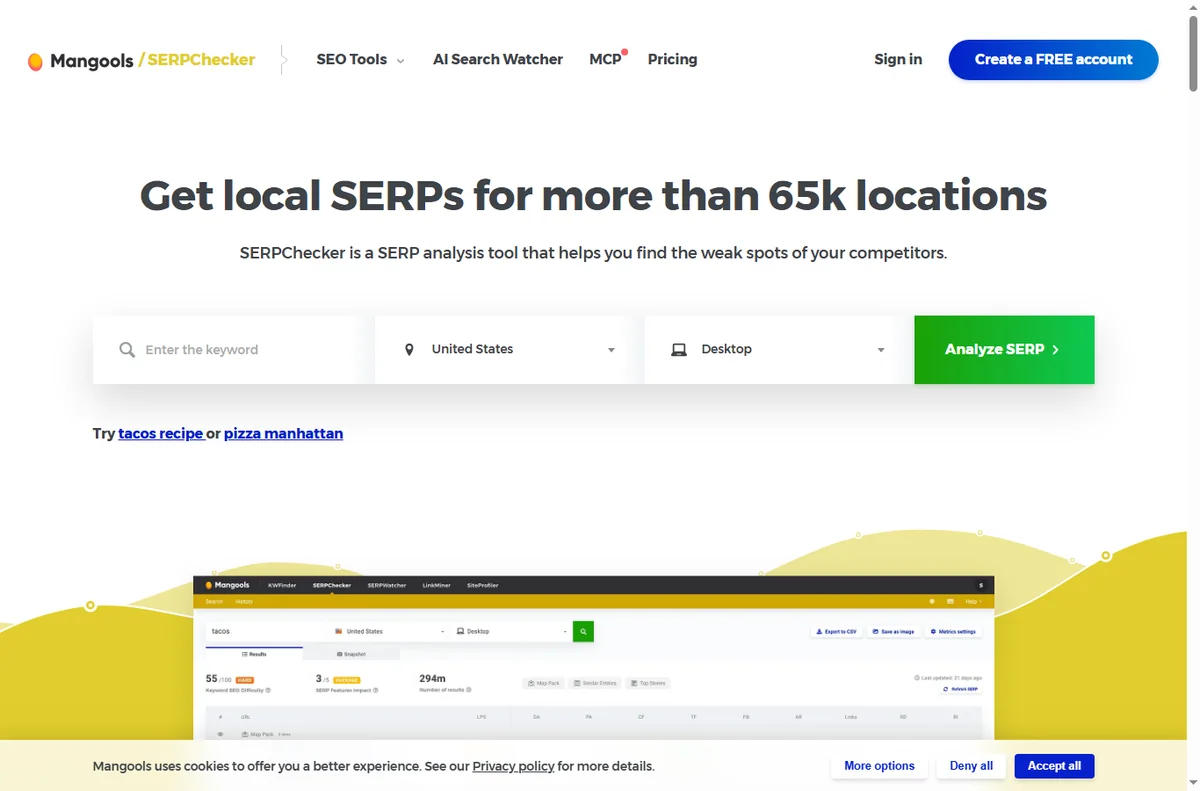
Track two or three direct competitors in SERPWatcher. Watching a short list over months tells you more than a one-off scan of twenty sites.
When a competitor overtakes you on a term that matters, study the exact page that did it instead of guessing.
Build a modest content plan
Turn your keyword shortlist into a calendar with one or two posts a month. Consistency beats bursts and keeps quality high.
Update older pages that already rank rather than only writing new ones; small improvements often beat a brand-new post.

If you serve a local area
Local searches behave differently. Research terms that include a town or region, and keep your business name, address and phone details consistent everywhere they appear.
A dedicated local landing page with real address and service details usually outperforms a generic services page.
Measure a few things consistently
Pick a handful of metrics — rankings for your main terms, organic sessions and enquiries — and review them on a fixed schedule.
Chasing every number is a trap. A small, stable scoreboard you actually check beats a dashboard nobody opens.

Where this fits
Start from the independent Mangools review and the SEO tools hub. For setup, see how to set up Mangools. Compare options in best SEO tools for small business and follow the method with how to do keyword research.

Frequently asked
Can a small site rank for competitive keywords?
Rarely for the broadest terms. Compete on lower-difficulty, specific keywords first and build authority before chasing the head terms.
How many competitors should I track?
Two or three direct competitors is enough to see patterns. A longer list mostly adds noise.
How often should I review rankings?
Weekly is plenty for a small site. Monthly focused reviews plus a weekly glance keeps you informed without obsessing.
Do I still need on-page SEO?
Yes. Tools tell you what to target; on-page work — clear titles, useful content and good structure — is what earns the rankings.
Put Mangools to work
Keyword research, rank tracking and competitor checks in one suite.
Some links on this page may be referral links — we may earn a reward if you sign up, at no extra cost to you. We are an independent publisher. See our Affiliate Disclosure.
Leave a Reply