We’re reader-supported — some links are affiliate links. Learn more →

Skip to content

Independent software research. Some links may earn us a commission at no extra cost to you. Learn more →

ICode

Category: SEO Tools

  • What is Wincher?

    What is Wincher?

    Home / SEO Tools / Guides / What is Wincher

    Knowledge · seo tools · updated October 9, 2026

    What is Wincher?

    Wincher is a web-based rank tracking tool that follows where your pages sit in search results over time. This guide explains what it does, how its projects and keyword views fit together, and what it is not.

    Independent analysis. This page may contain affiliate links. If you sign up through a link on this page we may earn a reward at no extra cost to you, and it never changes what we recommend. We are an independent publisher and are not affiliated with, endorsed by, or an official partner of any tool mentioned. See our Affiliate Disclosure.

    TL;DR

    • Wincher is a rank tracking tool that runs in the browser.
    • It follows the position of your keywords day by day.
    • It adds competitors and reports on top of plain position tracking.
    • Limits and pricing change, so check the current pricing before you commit.
    • It is not a keyword research tool or a full SEO suite on its own.

    On this page: What Wincher is · How it is organised · What it is good at · What it is not · Concept cheat sheet · Where this fits
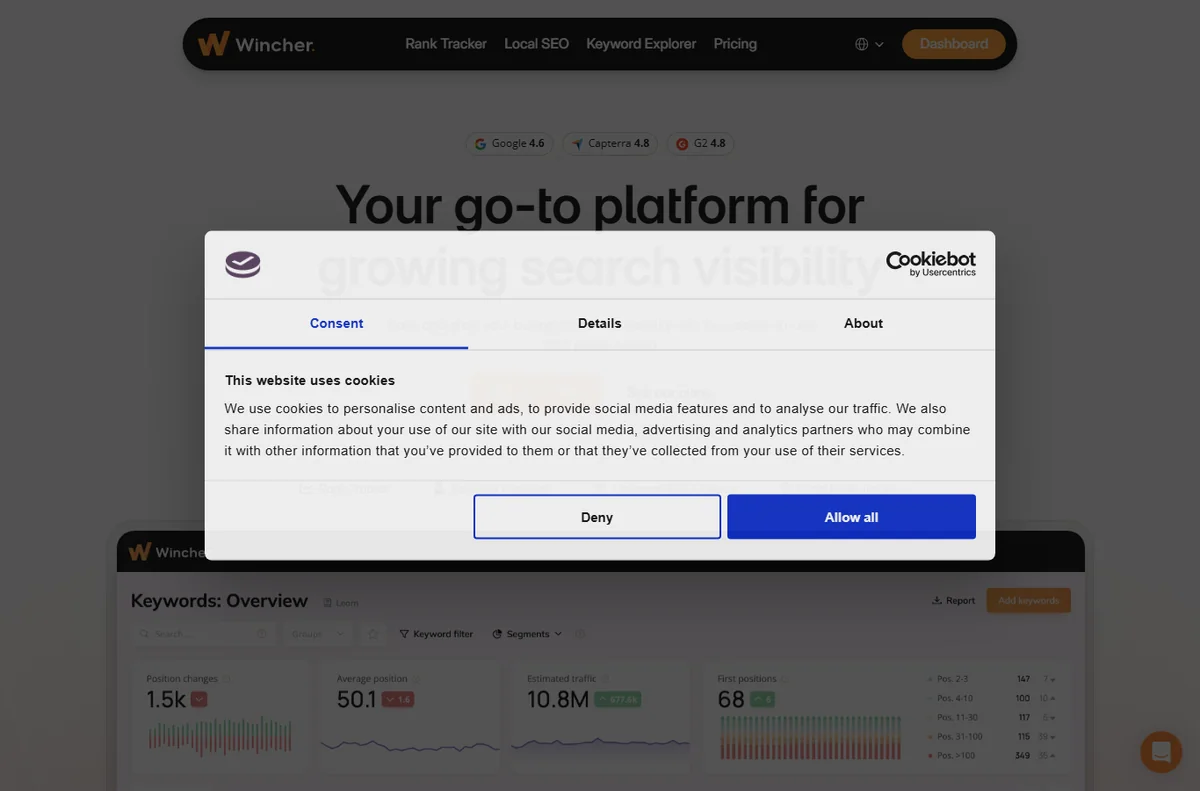
    Wincher home page
    Wincher home (image: wincher.com)

    What Wincher is

    Wincher is a subscription tool rather than a plugin. You connect it to a website, add the keywords you care about, and it checks search results on a schedule to record where you rank.

    Its focus is narrow on purpose. Instead of trying to be a research tool, a crawler and a rank tracker at once, it does tracking well and keeps the interface simple.

    The data answers a specific question: are we moving up or down for the terms that matter, and where do we stand next to the sites we compete with.

    Because it is cloud-based, there is nothing to install on your site, and you can read the results from any browser.

    Think of it as a scoreboard. It records the score; improving the score is still down to your content, your links and your pages.
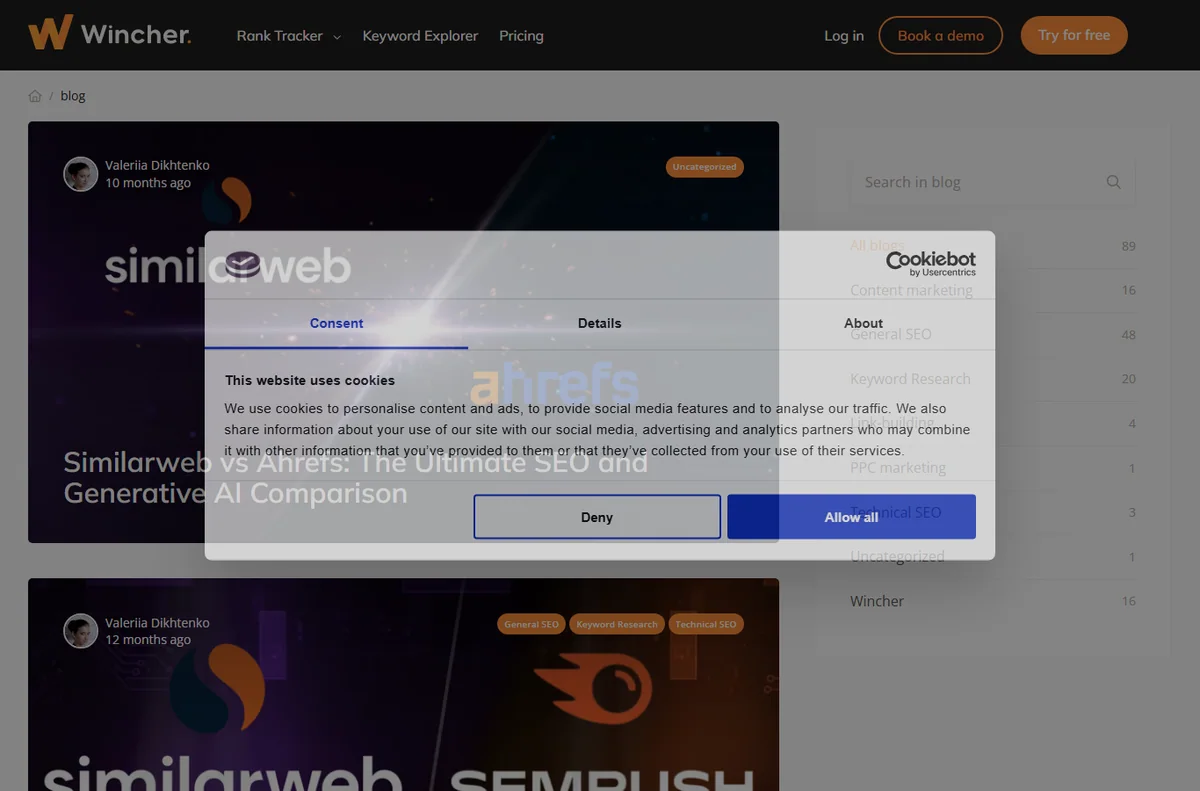
    Wincher blog page
    Wincher blog (image: wincher.com)

    How Wincher is organised

    Everything hangs off a project. You add a domain, a search engine and a location, then the keywords you want to follow.

    Each keyword becomes a row with its current position, its best position and a small chart of how it has moved. Grouping keywords keeps large lists manageable.

    Competitors are added as other domains, so the same keyword row can show where you sit relative to them rather than in isolation.

    Reports pull the movement into a summary you can read at a glance, which is useful when you do not want to scan every row.

    Wincher pricing page
    Wincher pricing (image: wincher.com)

    What Wincher is good at

    • Watching positions change day by day.
    • Comparing your ranking with named competitors.
    • Keeping keyword groups tidy as a list grows.
    • Reading a simple report instead of raw data.
    • Working from any browser with no plugin to maintain.
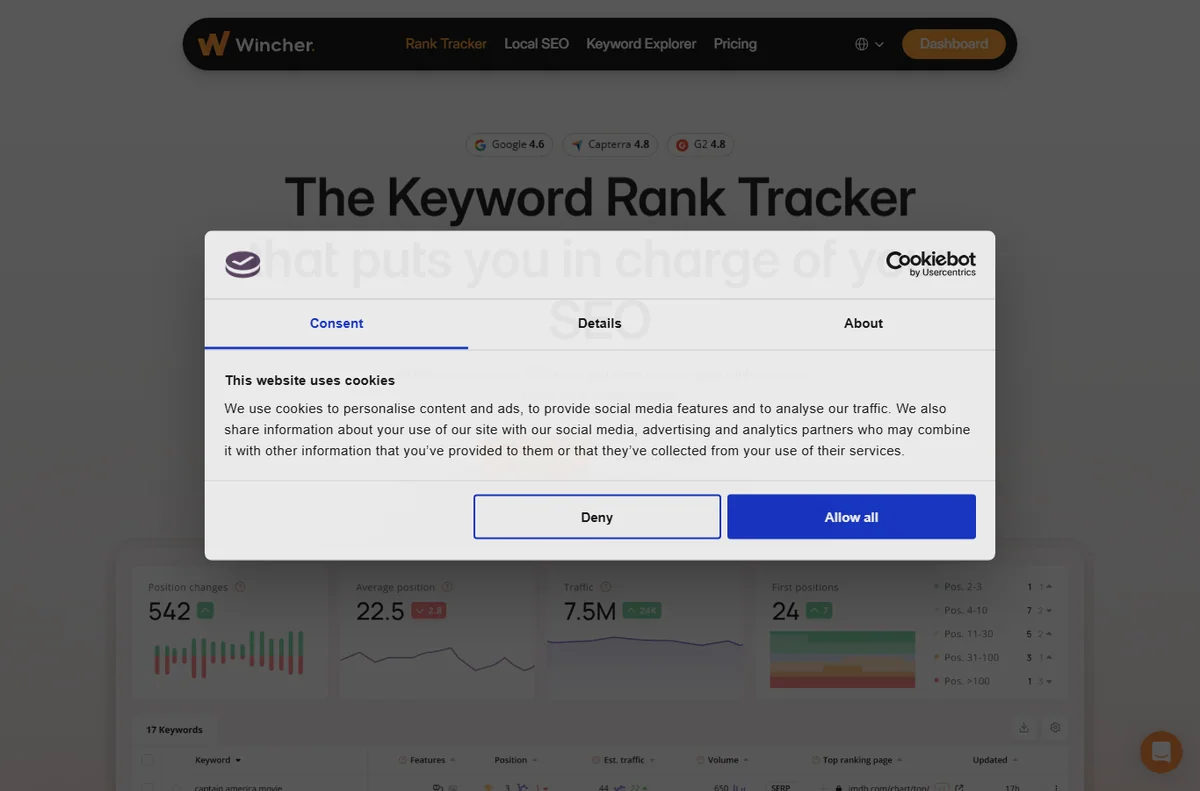
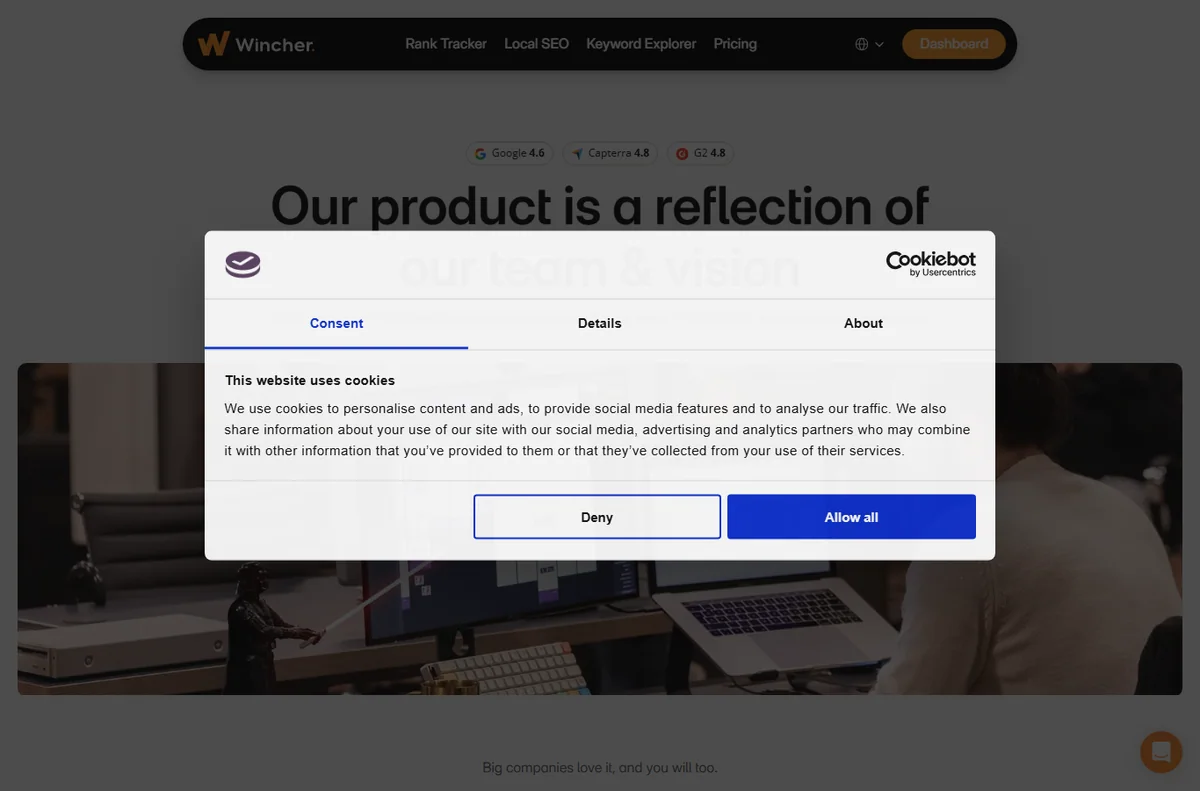
    Wincher rank tracker page
    Wincher rank tracker (image: wincher.com)

    What Wincher is not

    • Not a keyword research tool; it needs keywords to track.
    • Not an on-page or technical audit suite.
    • Not a content writer or a link builder.
    • Not free, so check the current pricing before you commit.

    Concept cheat sheet

    ConceptMeaningWhy it matters
    RankThe position a page holds for a keywordIt is the score you are trying to move
    Keyword groupA set of keywords treated togetherIt keeps large lists readable
    CompetitorAnother domain you compare againstIt turns a number into context
    Position historyThe record of past rankingsIt shows whether the work is paying off
    ReportA summary of movementIt saves reading every row yourself
    The short list of ideas you need to read a rank tracking dashboard.
    Wincher y about page
    Wincher y about (image: wincher.com)

    Where this fits

    Wincher belongs with the other SEO Tools guides. For the bigger picture, read what SEO tools are for and the roundup for a small business; the Wincher review weighs it against alternatives, and the setup guide and day-to-day guide cover the practical side.

    Icode editorial illustration
    Icode editorial illustration (image: icode.io.vn)

    Frequently asked

    Is Wincher a keyword research tool?

    No. It tracks keywords you already have, so you still need a research tool to find new ones.

    Does it work for any site?

    It reads public search results, so it can track any site you have the URL for, though you get the most value tracking your own.

    How often does it update?

    It checks on a schedule, and the frequency depends on your plan, so check the current pricing for current limits.

    Can I compare with competitors?

    Yes. You can add rival domains and see the same keywords side by side.

    Track your rankings with Wincher

    Add your keywords, watch the movement and see where you stand against competitors.

    Some links on this page may be referral links — we may earn a reward if you sign up, at no extra cost to you. We are an independent publisher. See our Affiliate Disclosure.
    Related reading

  • Common Rank Math problems and how to fix them

    Common Rank Math problems and how to fix them

    Home / SEO Tools / Guides / Common Rank Math problems

    Problem · seo tools · updated October 9, 2026

    Common Rank Math problems and how to fix them

    When Rank Math misbehaves, the cause is usually outside the plugin. This guide covers the issues that come up most, what usually sits behind them, and the first thing to check.

    Independent analysis. This page may contain affiliate links. If you sign up through a link on this page we may earn a reward at no extra cost to you, and it never changes what we recommend. We are an independent publisher and are not affiliated with, endorsed by, or an official partner of any tool mentioned. See our Affiliate Disclosure.

    TL;DR

    • Most Rank Math problems come from a stale cache, a conflicting plugin or a setting that was never switched on.
    • A sitemap, a title or a schema tag that will not appear is usually a caching or indexing issue, not a content bug.
    • Check the obvious causes first: cache, conflicting plugins and permalinks.
    • If a redirect or a module misbehaves, isolate it before changing everything at once.
    • When in doubt, re-save permalinks and clear every cache layer, including the host.

    On this page: Why things go wrong · Sitemap not updating · Titles or descriptions not showing · Schema and rich results missing · Redirects not working · Module or dashboard errors · Symptom to fix · Where this fits

    Why things go wrong

    When Rank Math behaves oddly, the cause is usually outside the plugin: a cached copy of the old page, a second SEO plugin, or a setting left at its default. Working through those first saves a lot of guesswork.

    It also helps to remember that search engines are not instant. A change you made this morning may not show in search results for days, which is different from it being broken.

    Rank math home page
    Rank math home (image: rank.com)

    Sitemap not updating

    A sitemap that still shows old URLs, or none at all, is nearly always a cache problem or a permalink problem rather than a content problem.

    • Re-save your permalinks under Settings, then Permalinks.
    • Clear the site cache, the host cache and any CDN cache.
    • Resubmit the sitemap in the search console.
    • Confirm the sitemap module is switched on.
    Rank math blog page
    Rank math blog (image: rank.com)

    Titles or descriptions not showing

    When the title in search results is wrong, the usual reasons are a cached page, a second plugin also writing titles, or a template override.

    • Disable any other SEO plugin that manages titles.
    • Clear all cache layers and re-crawl the page.
    • Confirm the title template for that content type.

    Schema and rich results missing

    Schema that is present in the page source but absent from a test tool is usually a caching or validation issue.

    Structured data has to match what is visibly on the page, so a mismatch between the tag and the content is a common cause of failure.

    • Validate a single URL with the rich results test.
    • Make sure only one plugin is injecting schema.
    • Check that the schema type matches the content.
    Rank math kb page
    Rank math kb (image: rank.com)

    Redirects not working

    Redirects that loop, or do nothing, are often caused by the old URL already redirecting somewhere else, or by a redirect added both in the plugin and on the server.

    • Look for a redirect that already exists for the same path.
    • Check whether the host or server also handles that URL.
    • Test in a fresh browser session to skip caches.
    Rank math pricing page
    Rank math pricing (image: rank.com)

    Module or dashboard errors

    A module that will not load, or a dashboard that hangs, points at a conflict rather than the plugin itself.

    Isolating the conflict is the fastest route back to a working site.

    • Deactivate other plugins briefly to find the conflict.
    • Switch to a default theme for one test.
    • Reinstall the current plugin version if files are damaged.

    Symptom to fix

    SymptomLikely causeFix
    Sitemap shows old URLsCache or permalinksClear cache, re-save permalinks
    Wrong title in searchSecond plugin or cacheDisable the other SEO plugin, recrawl
    Schema not detectedCache or duplicate schemaValidate one URL, keep one schema source
    Redirect loopsDuplicate redirect rulesKeep redirects in one place
    Dashboard will not loadPlugin conflictDeactivate plugins to isolate it
    Warnings on old pagesMissing fields or thin contentFill the SEO fields and improve the content
    A quick map from what you see to what is most likely behind it.
    Rank math y about page
    Rank math y about (image: rank.com)

    Where this fits

    These fixes belong with the rest of the SEO Tools guides. If you are still deciding whether the plugin is right for you, start with what Rank Math is and the Rank Math review, then use the setup guide and the day-to-day guide to put it to work.

    Rank math y support page
    Rank math y support (image: rank.com)

    Frequently asked

    Can I fix these myself?

    In most cases yes. Cache, permalinks, redirects and duplicate plugins are all things you can check and change from the WordPress dashboard.

    Why did my title change on its own?

    Usually because a second plugin or your theme is also writing titles, or because a cached copy is still being served.

    How long until search engines update?

    Changes can take days to appear. If the page source is correct, the delay is on the search engine side, not yours.

    Keep Rank Math running smoothly

    Install it, run the setup wizard and clear the common issues before they cost you traffic.

    Some links on this page may be referral links — we may earn a reward if you sign up, at no extra cost to you. We are an independent publisher. See our Affiliate Disclosure.

    Related reading

  • What is Rank Math?

    What is Rank Math?

    Home / SEO Tools / Guides / What is Rank Math

    Knowledge · seo tools · updated October 9, 2026

    What is Rank Math?

    Rank Math is an SEO plugin for WordPress that adds search controls, schema and analytics to the pages you already publish. This guide explains what it does, how its modules fit together, and what it is not.

    Independent analysis. This page may contain affiliate links. If you sign up through a link on this page we may earn a reward at no extra cost to you, and it never changes what we recommend. We are an independent publisher and are not affiliated with, endorsed by, or an official partner of any tool mentioned. See our Affiliate Disclosure.

    TL;DR

    • Rank Math is a WordPress SEO plugin, not a hosted platform.
    • It bundles on-page SEO, schema, redirects, sitemaps and analytics in one dashboard.
    • It runs inside WordPress, so it does not host or design your site for you.
    • Features and pricing change, so check the current pricing before you commit.
    • It is not a keyword research tool on its own, and not a guarantee of rankings.

    On this page: What Rank Math is · How it is organised · What it is good at · What it is not · Concept cheat sheet · Where this fits

    Rank math home page
    Rank math home (image: rank.com)

    What Rank Math is

    Rank Math is a plugin rather than a platform. You install it inside WordPress and it adds SEO controls to the pages, posts and products you already publish.

    The core job is the material search engines read first: titles, meta descriptions, headings, links, canonical tags and structured data. Instead of editing theme templates, you set these in a panel that sits next to each page while you write.

    Around that core it bundles tools that are often separate add-ons, such as redirections, XML sitemaps and a schema builder. Keeping them together means a single workflow instead of five plugins with five dashboards.

    Because it lives inside WordPress, its reach ends at the site it is installed on. It does not host the site, speed it up or choose the design; those remain the job of your host and your theme.

    Rank math blog page
    Rank math blog (image: rank.com)

    How Rank Math is organised

    Everything is grouped into named modules, and you switch on the ones you want. Turning off modules you do not use keeps the dashboard to the essentials and reduces the chance of two features fighting each other.

    Each page or post gets an editor panel where you set the SEO title, the meta description, a focus keyword and the social preview. The plugin scores the page and suggests fixes, but the decision about what to publish stays with you.

    Site-wide settings cover sitemaps, schema types, redirects and third-party integrations. A setup wizard walks through the first pass, so the defaults are sensible before you start tuning individual pages.

    Rank math kb page
    Rank math kb (image: rank.com)

    What Rank Math is good at

    • Getting the on-page basics right without touching theme code.
    • Adding schema and social tags to a page without a developer.
    • Managing redirects and an XML sitemap from the same dashboard.
    • Reviewing titles, descriptions and canonical tags in one place.
    • Scoring pages against a focus keyword as you write.
    Rank math pricing page
    Rank math pricing (image: rank.com)

    What Rank Math is not

    • Not a full keyword research suite, so you still need a research tool.
    • Not a substitute for genuinely useful, well-structured content.
    • Not a guarantee of rankings, and not a reason to ignore page speed.
    • Not free at every level, so check the current pricing before you commit.

    Concept cheat sheet

    ConceptMeaningWhy it matters
    SEO titleThe headline search results displayIt decides clicks before anyone reads the page
    Meta descriptionThe summary shown under the titleIt sets expectations and improves click-through
    Focus keywordThe term a page is scored againstIt keeps one page aimed at one clear topic
    SchemaStructured data that describes the pageIt helps search engines read the content correctly
    Canonical tagThe preferred URL for a piece of contentIt stops duplicate versions competing with each other
    The handful of terms that come up again and again when you work with Rank Math.
    Rank math y about page
    Rank math y about (image: rank.com)

    Where this fits

    Rank Math sits in the SEO Tools part of the site, alongside the wider guides to on-page SEO and the best SEO tools for a small business. If you are comparing it with alternatives, the Rank Math review walks through the trade-offs, and the setup guide and the day-to-day guide take you from installing it to using it on live pages.

    Rank math y support page
    Rank math y support (image: rank.com)

    Frequently asked

    Is Rank Math free?

    It offers a free version and paid tiers. Feature limits and plan names change over time, so check the current pricing before you commit.

    Does it replace my theme?

    No. It works alongside your theme and adds an SEO layer on top; it does not change how your site looks.

    Can I use it with another SEO plugin?

    You can install two, but running them together usually produces duplicate titles and schema, so it is safer to pick one.

    Do I need to know code?

    No. Almost everything is set through the WordPress editor and the plugin settings screens.

    Get Rank Math working for your site

    Install the plugin, run the setup wizard and let it handle the technical side while you focus on content.

    Some links on this page may be referral links — we may earn a reward if you sign up, at no extra cost to you. We are an independent publisher. See our Affiliate Disclosure.
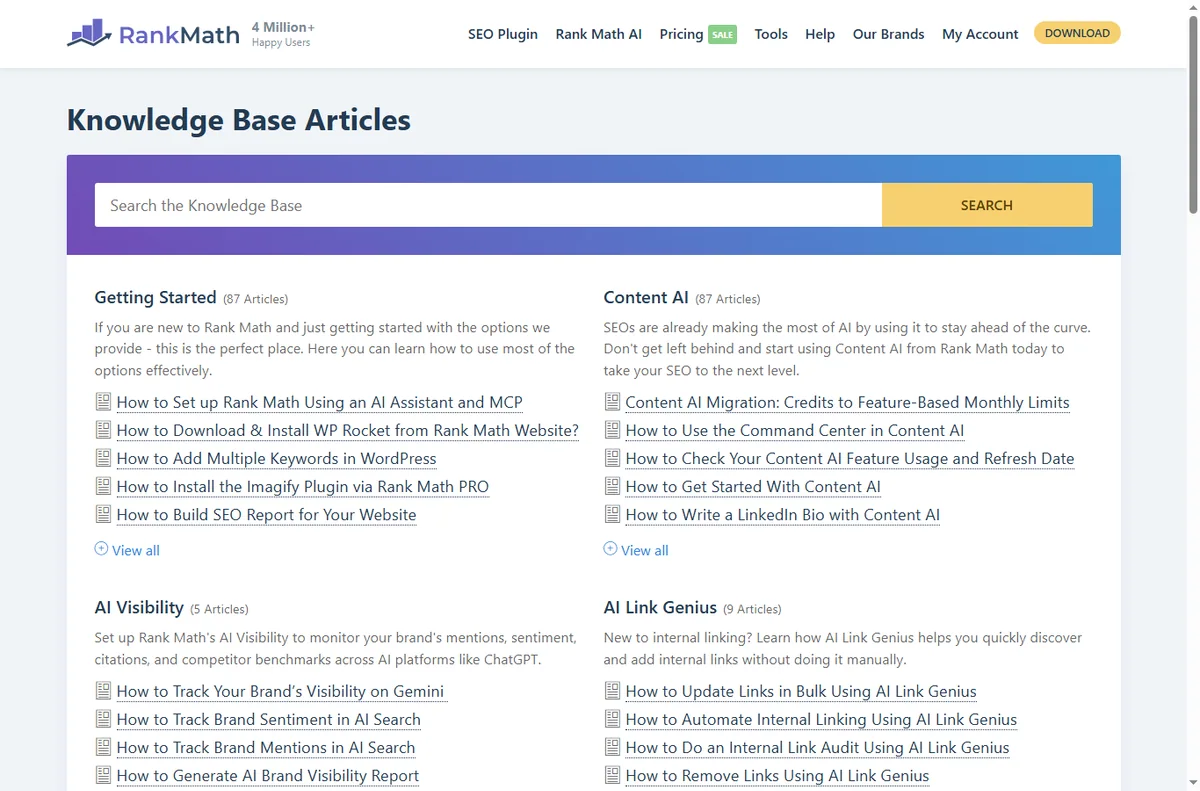
    Related reading

  • Common Mangools problems and how to fix them

    Common Mangools problems and how to fix them

    Home / SEO Tools / Guides / Common Mangools problems

    Problem · seo tools · updated October 9, 2026

    Common Mangools problems and how to fix them

    Most Mangools problems fall into a few areas: a tool that will not load, keyword data that looks wrong, rank tracking that stops updating, usage limits you have hit, or an export that will not come out. Here are the ones that come up most, and what to check first.

    Independent analysis. This page may contain affiliate links. If you sign up through a link on this page we may earn a reward at no extra cost to you, and it never changes what we recommend. We are an independent publisher and are not affiliated with, endorsed by, or an official partner of any tool mentioned. See our Affiliate Disclosure.

    TL;DR

    • A tool that will not load is usually your session, a browser extension or the service.
    • Keyword data that looks off is often the database or location you picked.
    • Rank tracking stalls when a project, domain or location is misconfigured.
    • Running out of lookups is the plan limit, not a fault.
    • Check which tool and which project is failing before you ask for help.

    On this page: Why things go wrong · Tool will not load · Keyword data looks off · Tracking stopped · Usage limits reached · Export will not come out · Symptom to fix · Where this fits

    Why things go wrong

    Mangools runs in the browser and pulls from its own keyword and ranking databases, so a fault can sit in your login, your project settings or the data itself.

    The useful first move is to note which tool is affected and whether a different project behaves normally. That tells you if the problem is account-wide or specific to one setup.

    Because the tools lean on shared data, a glitch can affect one report without touching the others, so testing a second keyword or project is a quick way to tell the two apart.

    Mangools home page
    Mangools home (image: mangools.com)

    Tool will not load

    A tool that spins forever is often a stale session, an ad or script blocker, or an outage on the service rather than anything you did.

    Sign out and back in, try a private window, and disable extensions for the site. If it still fails, check the service status before changing anything.

    Mangools kwfinder page
    Mangools kwfinder (image: mangools.com)

    Keyword data looks off

    Keyword numbers depend on the database and the location you choose, so a term can look very different between countries or devices.

    Re-run the same term with the same settings and compare, and check that you have not switched the language or country by accident.

    Tracking stopped

    Rank tracking pauses when a project’s domain, keywords or location are wrong, so the tracker has nothing valid to check.

    Open the project, confirm the domain and the location, and make sure the keywords are still inside your plan’s tracked limit.

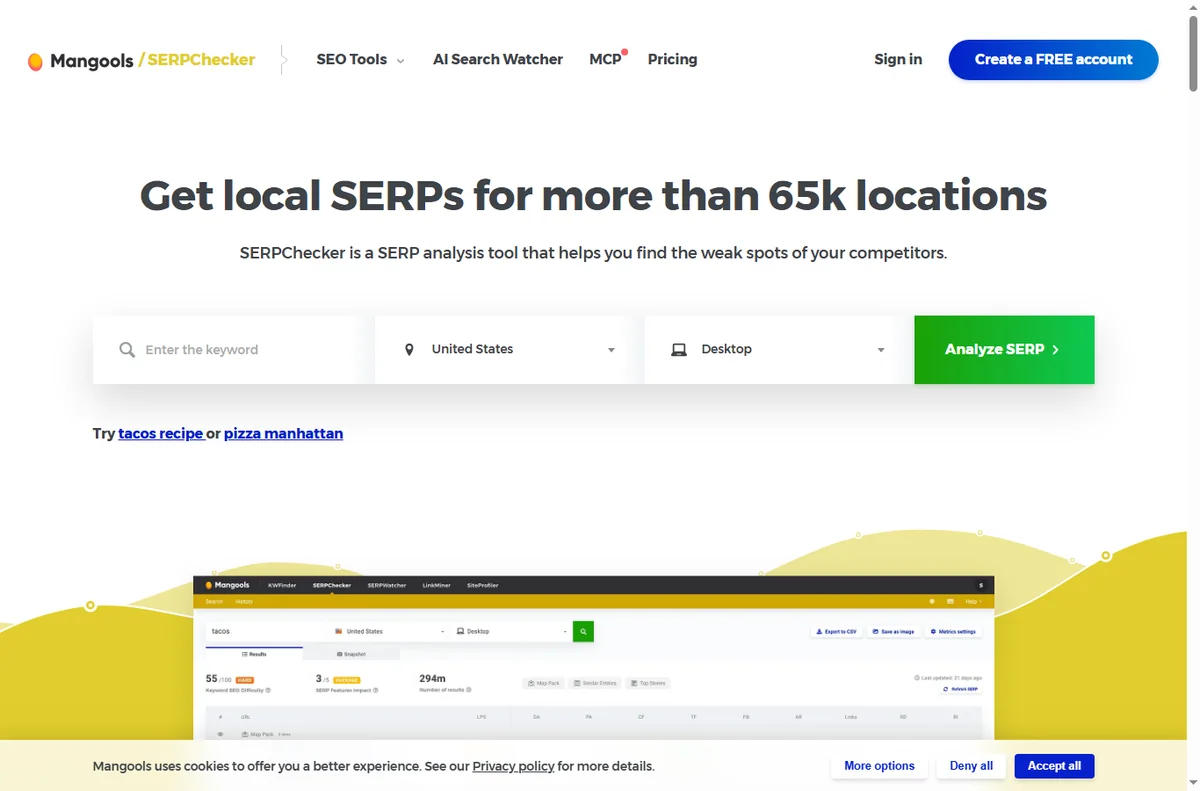
    Mangools serpchecker page
    Mangools serpchecker (image: mangools.com)

    Usage limits reached

    Running out of lookups is the plan doing its job rather than a bug, and the counter resets on a daily cycle.

    Check the usage screen to see which tool is exhausted, then either wait for the reset or spread the work across tools.

    Mangools serpwatcher page
    Mangools serpwatcher (image: mangools.com)

    Export will not come out

    A failed export is usually a very large report, a blocked download, or a format the tool does not support for that view.

    Try a smaller date range, allow downloads for the site, and export one tool at a time rather than everything at once.

    Symptom to fix

    SymptomLikely causeFix
    Tool will not loadSession, extension or outageRe-login, try a private window
    Keyword data looks offDatabase or location settingRe-run with the same settings
    Tracking stoppedWrong domain, keyword or locationFix the project settings
    Usage limits reachedPlan limitWait for the reset or split the work
    Export failsSize, blocked download or formatNarrow the range, allow downloads
    General guidance, checked October 9, 2026. Confirm specifics inside your own Mangools setup.
    Mangools siteprofiler page
    Mangools siteprofiler (image: mangools.com)

    Where this fits

    Start with the SEO tools hub. For the basics read what Mangools is, and for the setup steps see how to set up Mangools.

    Mangools x blog page
    Mangools x blog (image: mangools.com)

    Frequently asked

    Can I fix these myself?

    Most of them. Settings, sessions and project setup are in your hands. Database or outage issues are on the service side.

    Why does one project track and another not?

    Tracking depends on each project’s domain, keywords and location. A single wrong field stops only that project.

    Do my lookups reset?

    Yes. Usage counts reset on a daily cycle, so a limit you hit today is usually available again tomorrow.

    Is my keyword data wrong?

    It is usually the database or location. Re-run the term with identical settings to confirm before you doubt it.

    Keep your research moving

    Fix the common snags and get back to the data.

    Some links on this page may be referral links — we may earn a reward if you sign up, at no extra cost to you. We are an independent publisher. See our Affiliate Disclosure.

    Related reading

  • What is Mangools?

    What is Mangools?

    Home / SEO Tools / Guides / What is Mangools

    Knowledge · seo tools · updated October 9, 2026

    What is Mangools?

    Mangools is a suite of SEO tools that covers keyword research, SERP analysis, rank tracking, backlink checks and site metrics in one dashboard. This guide explains what each part does, how the account is organised, and what it is not.

    Independent analysis. This page may contain affiliate links. If you sign up through a link on this page we may earn a reward at no extra cost to you, and it never changes what we recommend. We are an independent publisher and are not affiliated with, endorsed by, or an official partner of any tool mentioned. See our Affiliate Disclosure.

    TL;DR

    • Mangools is a suite of SEO tools rather than a single app.
    • It bundles keyword research, SERP analysis, rank tracking, backlinks and site metrics.
    • One account covers every tool, with usage limits set by the plan.
    • Plans, credits and prices change, so check the current pricing before you commit.
    • It is not a full technical site-audit crawler on its own.

    On this page: What Mangools is · How it is organised · What it is good at · What it is not · Concept cheat sheet · Where this fits

    Mangools home page
    Mangools home (image: mangools.com)

    What Mangools is

    Mangools is a subscription service rather than software you install. You sign in on the web, run a search, and read the results in your browser.

    Each tool answers one question: what people search for, who ranks for a term, how your own rankings move, who links to a site, and how strong a site is.

    The tools share data and a login, so a keyword you find in one can be checked against the search results in another without re-entering it.

    You do not download or maintain anything locally, and updates arrive on the service side, so the tools behave the same on any machine you log in from.

    Mangools kwfinder page
    Mangools kwfinder (image: mangools.com)

    How Mangools is organised

    One account unlocks every tool. What changes between plans is how much you can use them, measured in daily lookups, tracked keywords and saved projects.

    The suite is built around five tools: KWFinder for keywords, SERPChecker for the results page, SERPWatcher for tracking, LinkMiner for backlinks and SiteProfiler for site metrics.

    Tracking runs on a schedule you leave switched on, while the other tools are used on demand, so most accounts settle into a research habit plus a background tracker.

    Mangools serpchecker page
    Mangools serpchecker (image: mangools.com)

    What Mangools is good at

    • Finding low-competition keywords without a steep learning curve.
    • Checking who already ranks for a term before you write.
    • Watching your own rankings move day by day.
    • Reviewing backlinks in a lightweight way.
    • Keeping one login and one bill across all the tools.
    Mangools serpwatcher page
    Mangools serpwatcher (image: mangools.com)

    What Mangools is not

    • Not a full technical crawler: it does not walk a whole site looking for broken links.
    • Not a link-building service: it shows backlinks rather than creating them.
    • Not free at scale, so check the current pricing for the lookups you need.
    • Not a replacement for a content or writing workflow.

    Concept cheat sheet

    ConceptMeaningWhy it matters
    KWFinderKeyword research and difficultyFind terms worth targeting
    SERPCheckerAnalysis of a results pageSee who ranks and why
    SERPWatcherDaily rank trackingWatch your positions move
    LinkMinerBacklink analysisInspect who links to a site
    SiteProfilerSite-level SEO metricsGauge a domain’s strength
    Keyword difficultyHow hard a term is to rank forPrioritise realistic terms
    Based on publicly documented behaviour, checked October 9, 2026.
    Mangools siteprofiler page
    Mangools siteprofiler (image: mangools.com)

    Where this fits

    Start with the SEO tools hub. For the practical steps see how to set up Mangools, and for everyday usage read how to use Mangools for a small business.

    Mangools x blog page
    Mangools x blog (image: mangools.com)

    Frequently asked

    Is Mangools just one tool?

    No. It is a suite, and the plans unlock all of them. The difference between plans is how much you can use them.

    Do I need it if I use another SEO tool?

    Not necessarily. It earns its place if you value fast keyword research and simple rank tracking in one login.

    Does it track my rankings automatically?

    Yes, the tracker runs on a schedule once you set your keywords and locations. You read the movement in your dashboard.

    Is there a free option?

    There is a limited free tier you can trial. For regular work you will want a paid plan, so check the current pricing.

    Can it audit my whole site?

    It is not a full crawler. Use it for keywords, search results and backlinks, and a dedicated crawler for technical audits.

    Research smarter

    Keywords, search results and rankings in one login.

    Some links on this page may be referral links — we may earn a reward if you sign up, at no extra cost to you. We are an independent publisher. See our Affiliate Disclosure.

    Related reading

  • Common Surfer SEO problems and how to fix them

    Common Surfer SEO problems and how to fix them

    Home / SEO Tools / Guides / Common Surfer SEO problems

    Problem · seo tools · updated October 9, 2026

    Common Surfer SEO problems and how to fix them

    Most Surfer SEO problems fall into a few areas: content that will not import, a score that will not move, audits that stall on large sites, login and integration issues, and credits that run out faster than expected. Here are the ones that come up most, and what to check first.

    Independent analysis. This page may contain affiliate links. If you sign up through a link on this page we may earn a reward at no extra cost to you, and it never changes what we recommend. We are an independent publisher and are not affiliated with, endorsed by, or an official partner of any tool mentioned. See our Affiliate Disclosure.

    Surfer SEO homepage for content optimization
    Surfer SEO official homepage (image: surferseo.com)

    TL;DR

    • An import that will not load is usually a document access or format issue.
    • A score that will not move is often about structure and terms, not length.
    • Audits on large sites can stall, so scope them down.
    • Login and integration problems are usually about access and connections.
    • Credits run out faster when you audit and re-optimise the same content twice.

    On this page: Why things go wrong · Content will not import · Score will not move · Audit stalls · Login and integrations · Credits run out · Symptom to fix · Where this fits

    Why things go wrong

    Surfer SEO sits between your draft and the search results, so a problem can come from the document, the connection, the target keyword or your plan limits. The useful first move is to work out which of those changed.

    Another habit that saves time: check whether the issue follows one document or every document. That tells you whether to look at the content or at the account.

    Surfer SEO content editor with optimization score
    Surfer SEO content editor (image: surferseo.com)

    Content will not import

    When a draft will not load into the Content Editor, it is usually about access or format. The connected document may not be shared with the right account, or the text may carry formatting the importer cannot read.

    Import a plain-text copy to isolate the cause, and confirm the document is shared with the Surfer account you are signed in as.

    Surfer SEO content audit report page
    Surfer SEO content audit (image: surferseo.com)

    The score will not move

    A score that stays flat as you write is usually about structure and terms rather than word count. Adding words without covering the topics the top pages use will not shift it.

    Check the suggested terms and headings, and make sure each section answers part of the query rather than padding the page.

    A content audit stalls

    Audits run over many pages at once, so a large site or a slow response from a page can make the job look stuck. Scope the audit to a subset first.

    Run it on a group of URLs, let it finish, then widen it. A page that blocks the crawler will hold up the set.

    Surfer SEO integrations page with supported apps
    Surfer SEO integrations (image: surferseo.com)

    Login and integration problems

    If you cannot sign in, or a Google Doc or WordPress connection drops, the usual cause is an expired session or a revoked permission on the connected account.

    Reconnect the integration from settings, and sign out and back in to refresh the session before assuming the tool is down.

    Credits run out faster than expected

    Credits are spent per action, and it is easy to spend them twice by auditing and then re-optimising the same content, or by generating several drafts for one keyword.

    Plan the workflow before you start, reuse a single editor document, and check what each action costs under your plan.

    Symptom to fix

    SymptomLikely causeFix
    Import failsDocument access or formatShare the doc and try plain text
    Score will not moveStructure and terms, not lengthCover the suggested topics and headings
    Audit stallsToo many pages or a blocking URLScope it to a subset and rerun
    Login or integration dropsExpired session or revoked accessReconnect and sign in again
    Credits run outRepeated actions on the same contentPlan the workflow and reuse one document
    General guidance, checked October 9, 2026. Confirm specifics inside your own Surfer SEO setup.
    Surfer SEO pricing page with plan tiers
    Surfer SEO pricing and plans (image: surferseo.com)

    Where this fits

    Start with the SEO tools hub. For the basics read what Surfer SEO is, and for the setup steps see how to set up Surfer SEO.

    Frequently asked

    Is my draft lost if the import fails?

    No. The text lives in your document until it is imported. Fix the sharing or format and import again.

    Why is my score low on a long article?

    Length alone does not raise the score. If the article misses the terms and structure the top pages share, it stays low no matter how long it is.

    Should I audit my whole site at once?

    Start with a subset. Auditing everything in one run is slow and spends credits, so widen it once you know the tool is behaving.

    Do I need the integration to use the editor?

    No. You can paste content in directly. The integrations save time but are not required.

    Surfer AI article generation page
    Surfer AI (image: surferseo.com)

    Get your content scoring again

    Fix the common snags and get back to optimising.

    Some links on this page may be referral links — we may earn a reward if you sign up, at no extra cost to you. We are an independent publisher. See our Affiliate Disclosure.
    Related reading

  • What is Surfer SEO?

    What is Surfer SEO?

    Home / SEO Tools / Guides / What is Surfer SEO

    Knowledge · seo tools · updated October 9, 2026

    What is Surfer SEO?

    Surfer SEO is a content optimisation platform that scores a draft against the pages already ranking for a keyword. This guide explains what it does, how its editor and audits are organised, and what it is not.

    Independent analysis. This page may contain affiliate links. If you sign up through a link on this page we may earn a reward at no extra cost to you, and it never changes what we recommend. We are an independent publisher and are not affiliated with, endorsed by, or an official partner of any tool mentioned. See our Affiliate Disclosure.

    TL;DR

    • Surfer SEO is a content optimisation and SEO research tool.
    • The Content Editor scores a draft against the top-ranking pages.
    • Content Audit and keyword research round out the workflow.
    • Plans are credit-based, so check the current pricing for the limits.
    • It is not a full replacement for technical SEO or a content management system.

    On this page: What Surfer SEO is · How it is organised · What it is good at · What it is not · Concept cheat sheet · Where this fits

    Icode editorial illustration
    Icode editorial illustration (image: icode.io.vn)

    What Surfer SEO is

    Surfer SEO is a web app that helps you write and improve content for a target keyword. Instead of guessing what a page needs, you give it a keyword and it looks at what already ranks.

    From that it builds a picture of the topics, terms and structure those pages share, and turns it into a score your draft can be measured against.

    It sits alongside your editor rather than replacing it. You write in Surfer, in a connected Google Doc, or elsewhere, then use the score and the suggestions to tighten the draft.

    Icode editorial illustration
    Icode editorial illustration (image: icode.io.vn)

    How Surfer SEO is organised

    The Content Editor is the core screen. It pairs your draft with a target keyword, shows a live score, and lists terms and structure the top pages tend to use.

    Content Audit takes pages you have already published and scores them the same way, so you can find posts that have slipped and refresh them.

    Around those sit keyword research, a set of AI writing tools and integrations with Google Docs and WordPress. Usage is measured in credits, so the workflow is organised around that budget.

    Icode editorial illustration
    Icode editorial illustration (image: icode.io.vn)

    What Surfer SEO is good at

    • Turning a vague content brief into a concrete set of terms and sections.
    • Scoring a draft before you publish rather than after.
    • Finding existing pages that need a refresh.
    • Comparing your draft against what actually ranks for a keyword.
    • Keeping a writer and an editor aligned on the same target.
    Icode editorial illustration
    Icode editorial illustration (image: icode.io.vn)

    What Surfer SEO is not

    • Not a technical SEO tool: it does not audit crawlability, speed or indexation.
    • Not a content management system: you still write and publish elsewhere.
    • Not a guarantee of rankings, only a way to match what ranks.
    • Not free: it runs on paid, credit-based plans, so check the current pricing.

    Concept cheat sheet

    ConceptMeaningWhy it matters
    Content EditorScores a draft against a keywordWhere you write and optimise
    Content AuditScores pages already publishedFinds posts to refresh
    Surfer ScoreA number for how well a draft matchesA rough guide, not a ranking factor
    Keyword researchFinds terms and topic ideasFeeds the brief
    CreditsUsage units spent on actionsThe budget behind each plan
    Based on publicly documented behaviour, checked October 9, 2026.
    Icode editorial illustration
    Icode editorial illustration (image: icode.io.vn)

    Where this fits

    Start with the SEO tools hub. For the practical steps see how to set up Surfer SEO, and for everyday usage read how to use Surfer SEO for a small business.

    Icode editorial illustration
    Icode editorial illustration (image: icode.io.vn)

    Frequently asked

    Do I need Surfer SEO if I already rank?

    Not necessarily, but it helps you keep pages matched to what ranks and spot ones that have slipped. If you are already at the top and stable, it is optional.

    Does the score decide my rankings?

    No. The score is a guide built from what ranks today. Search engines use their own signals, so treat the score as a target, not a promise.

    Can I use it for any language?

    It supports several languages, and quality varies by market. Check the current coverage for the language you write in.

    Is there a free plan?

    It is a paid tool. Plans and credit allowances change, so check the current pricing on the maker’s own site.

    Will it write the article for me?

    It has AI writing tools, but the value is in the optimisation and the brief. Most people still write and edit the draft themselves.

    Write content that ranks

    Score and improve drafts before you publish.

    Some links on this page may be referral links — we may earn a reward if you sign up, at no extra cost to you. We are an independent publisher. See our Affiliate Disclosure.

    Related reading

  • How to use Wincher for a small business

    How to use Wincher for a small business

    Home / SEO Tools / Guides / How to use Wincher for a small business

    Guide · seo · updated October 9, 2026

    How to use Wincher for a small business

    Once a website and keywords are in place, the value of a rank tracker comes from how you use it: reading the baseline honestly, focusing on winnable terms, keeping a short competitor list, and acting on changes instead of just watching them. This is the routine that pays off.

    Independent analysis. This page may contain affiliate links. If you sign up through a link on this page we may earn a reward at no extra cost to you, and it never changes what we recommend. We are an independent publisher and are not affiliated with, endorsed by, or an official partner of any tool mentioned. See our Affiliate Disclosure.

    TL;DR

    • Read the baseline before reacting.
    • Focus on winnable keywords, not the hardest ones.
    • Keep a short, deliberate competitor list.
    • Act on movement; do not just watch it.
    • Review on a fixed rhythm.

    On this page: Baseline · Focus · Competitors · Acting on data · Reporting · Review

    Wincher home page
    Wincher home (image: wincher.com)

    Read the baseline honestly

    The first results are a starting point, not a verdict. Note where you already rank well and where you are invisible, and resist the urge to panic about either.

    Give a new site time. Rankings move slowly, and a tracker is most useful as a trend line rather than a daily scoreboard. Set a reminder to look again in a month, when the movement is meaningful.

    Wincher blog page
    Wincher blog (image: wincher.com)

    Chase winnable keywords first

    Long, specific phrases are usually easier to win than broad ones. A page that ranks third for a specific query earns real traffic sooner than one buried for a competitive head term.

    Pick a handful of terms where you sit just off page one and improve those pages deliberately, one at a time. Upgrading a page that is already close is usually faster than writing a new one from scratch.

    Wincher pricing page
    Wincher pricing (image: wincher.com)

    Keep a short competitor list

    Track three to five competitors you actually lose business to. More than that and the report becomes a wall of numbers nobody reads.

    Use the comparison to spot gaps: pages they rank for that you simply do not have yet, which are often the fastest wins available.

    Act on movement, do not just watch it

    When a keyword climbs, find out why and repeat it. When one drops, check the page for a technical problem, a lost backlink or a stronger competitor.

    A tracker that never triggers an action is an expensive dashboard. Every report should end with one thing you will change.

    Wincher rank tracker page
    Wincher rank tracker (image: wincher.com)

    Share one report, not many

    Send the weekly report to the person who owns the website. One clear summary beats five dashboards nobody opens.

    Pick a few keywords to highlight and comment on what changed and what you will do next, so the numbers carry a decision with them.

    Review on a fixed rhythm

    Monthly is right for most small businesses. Check the trend, retire keywords you no longer target, and add any new services you have launched.

    Keep the list current, or the report slowly fills with terms that stopped mattering and quietly hides the ones that did.

    Wincher y about page
    Wincher y about (image: wincher.com)

    Where this fits

    Start from the independent Wincher review and the SEO tools hub. For setup mechanics, see how to set up Wincher. Compare trackers with our Mangools review.

    Icode editorial illustration
    Icode editorial illustration (image: icode.io.vn)

    Frequently asked

    Is a rank tracker enough on its own?

    No. It shows position, not why. Pair it with on-page work and a keyword tool for the full picture.

    How often should I check?

    Monthly for most businesses; weekly only during an active campaign you are optimising.

    Do rankings change by device?

    Yes. Mobile and desktop results differ, so track the device your customers actually use.

    When is it time to drop a keyword?

    When you stop targeting that service, or the term never moves despite sustained effort.

    Watch your rankings in Wincher

    Trends, not noise, in one weekly report.

    Some links on this page may be referral links — we may earn a reward if you sign up, at no extra cost to you. We are an independent publisher. See our Affiliate Disclosure.
    Related reading

  • How to set up Wincher (step-by-step)

    How to set up Wincher (step-by-step)

    Home / SEO Tools / Guides / How to set up Wincher

    Tutorial · seo · updated October 9, 2026

    How to set up Wincher: rank tracking from your first project

    Setting up Wincher is a short list: create the account, add the website you want to track, add the keywords that matter, choose the right location and device, then run the first check and set a report. Do it once, properly, and the weekly picture stays useful.

    Independent analysis. This page may contain affiliate links. If you sign up through a link on this page we may earn a reward at no extra cost to you, and it never changes what we recommend. We are an independent publisher and are not affiliated with, endorsed by, or an official partner of any tool mentioned. See our Affiliate Disclosure.

    TL;DR

    • Add one website to start; keep projects tidy.
    • Add a focused keyword list, not hundreds at once.
    • Set location and device to match real customers.
    • Run the first check and wait for the baseline.
    • Schedule a report so nobody has to remember.

    On this page: Account · Website · Keywords · Tracking · Reporting · Checks

    Wincher home page
    Wincher home (image: wincher.com)

    Step 1 — Create your account

    Sign up with a business email and confirm it. Wincher tracks rankings for keywords by location and device, so your account settings are the foundation for everything that follows.

    We do not quote prices — plans and keyword limits change, so check the current pricing on Wincher’s own site before you buy, and match the plan to the number of keywords you will actually watch.

    Wincher blog page
    Wincher blog (image: wincher.com)

    Step 2 — Add your first website

    Add the exact domain you want to track, including or excluding the www prefix as your site actually serves it. Get this right the first time; a mismatch means the tracker reports on an address that never ranks.

    Start with one site. More projects soon multiply both the noise and the cost, and are easy to add later.

    Wincher pricing page
    Wincher pricing (image: wincher.com)

    Step 3 — Build your keyword list

    1. Add the terms you believe customers type, not internal jargon.
    2. Include a few branded terms to track your own name.
    3. Add three to five competitor names only if you will act on them.
    4. Group keywords so the reports stay readable.

    A focused list of twenty to fifty keywords beats a thousand you never read. You can always add more once the weekly report proves useful.

    Step 4 — Configure location, device and frequency

    Set the country or city that matches your customers, and choose desktop or mobile per the traffic you actually get. Rankings differ by both, so a single global setting blurs the picture.

    Daily checks suit active campaigns; weekly suits most small businesses and keeps the history clean and readable.

    Wincher rank tracker page
    Wincher rank tracker (image: wincher.com)

    Step 5 — Set up reporting and alerts

    Schedule a weekly email report so the numbers arrive without effort, and turn on alerts for large jumps or drops. A sudden drop is often a technical problem worth catching early.

    Share the report with whoever owns the website, so the data reaches the person who can actually act on it.

    Final checks before you build

    • The tracked domain matches your live site.
    • Keywords return data on the first run.
    • Location and device match your audience.
    • The report email arrives where you expect.
    Wincher y about page
    Wincher y about (image: wincher.com)

    Where this fits

    See the independent Wincher review and the SEO tools hub for context. For a small-business shortlist, see best SEO tools for small business, and to compare trackers, our Mangools review.

    Icode editorial illustration
    Icode editorial illustration (image: icode.io.vn)

    Frequently asked

    How many keywords do I need?

    Twenty to fifty well-chosen terms are plenty for most small businesses. Add more only when you will act on them.

    Does Wincher track local rankings?

    Yes. You set the location, so you can track a city or region rather than a single national result.

    Can I track competitors?

    Yes, a small, deliberate competitor list is useful. A large one just adds noise and cost.

    How often does it update?

    It depends on the plan; daily or weekly is typical. Check the current options before you buy.

    Track your rankings with Wincher

    A simple rank tracker for small teams.

    Some links on this page may be referral links — we may earn a reward if you sign up, at no extra cost to you. We are an independent publisher. See our Affiliate Disclosure.

    Related reading

  • How to use Rank Math for a small business

    How to use Rank Math for a small business

    Home / SEO Tools / Guides / How to use Rank Math for a small business

    Guide · seo · updated October 9, 2026

    How to use Rank Math for a small business

    Once Rank Math is installed, the work shifts from configuration to using it well: writing titles people click, adding structured data the search engines understand, fixing technical issues, and keeping the technical side of SEO tidy. This is the practical playbook for an owner without an SEO team.

    Independent analysis. This page may contain affiliate links. If you sign up through a link on this page we may earn a reward at no extra cost to you, and it never changes what we recommend. We are an independent publisher and are not affiliated with, endorsed by, or an official partner of any tool mentioned. See our Affiliate Disclosure.

    TL;DR

    • Write titles and descriptions for people first.
    • Add schema that matches your content type.
    • Catch broken links and redirects early.
    • Keep local details consistent.
    • Review Search Console monthly.

    On this page: On-page · Schema · Redirects · Local · Monitoring · Measurement

    Rank math home page
    Rank math home (image: rank.com)

    Write titles for people, not crawlers

    Every page gets a title that reads like a headline and a description that answers the query in a sentence. Rank Math previews how both look in search before you publish.

    Aim to make each one unique. Two pages competing on the same title split your chances and confuse the reader before they ever click.

    Rank math blog page
    Rank math blog (image: rank.com)

    Add structured data that matches the page

    Schema tells search engines what a page is: an article, a product, a local business, a FAQ. Choose the type that fits rather than forcing everything into one box.

    Keep the details truthful. Schema that does not match the visible page is a liability, not a shortcut, and search engines increasingly notice the mismatch.

    Rank math kb page
    Rank math kb (image: rank.com)

    Fix broken links before visitors do

    When you rename or merge content, add a redirect so old links still work. Rank Math’s redirects module logs 404s you can fix in a click or two.

    Check the list monthly. A page that 404s is a page that no longer earns, and the fix usually takes less time than the report flagging it.

    Keep local details consistent

    For a local business, the name, address and phone should match across your site and your Google listing. Small mismatches cost trust and rankings.

    Use your location pages deliberately and keep one source of truth for hours and contact details, so an update in one place does not leave the others stale.

    Rank math pricing page
    Rank math pricing (image: rank.com)

    Monitor Search Console, not just the plugin

    Rank Math connects Search Console so you can see the queries a page actually earns. Use it to find pages sitting on page two and improve those first.

    Watch for coverage warnings. Fixing them early stops small problems from turning into pages that quietly disappear from search.

    Measure a few things well

    Impressions, clicks, average position and a handful of target pages are enough to steer decisions. Chasing every available metric leads to no decisions at all.

    Review monthly, act on what changed, and leave the rest alone. Consistency beats a frantic week followed by months of neglect.

    Rank math y about page
    Rank math y about (image: rank.com)

    Where this fits

    Start from the independent Rank Math review and the SEO tools hub. For setup mechanics, see how to set up Rank Math, and for local visibility, our local SEO checklist.

    Rank math y support page
    Rank math y support (image: rank.com)

    Frequently asked

    Do I need a separate keyword tool?

    Rank Math handles on-page and technical SEO; a keyword tool like Mangools or Wincher helps you choose terms to target. Many owners use both.

    How often should I check rankings?

    Monthly is enough for most small businesses; weekly only when you are actively optimising a specific campaign.

    Can schema boost rankings directly?

    Not directly, but it improves how results appear and helps search engines understand the page, which supports click-through.

    What is the biggest mistake with Rank Math?

    Leaving the default templates untouched, so pages ship with thin or duplicated titles that no one chose.

    Rank on Google with Rank Math

    Clean titles, schema and sitemaps on every page.

    Some links on this page may be referral links — we may earn a reward if you sign up, at no extra cost to you. We are an independent publisher. See our Affiliate Disclosure.

    Related reading