Independent analysis. This page may contain affiliate links.
Local Business Marketing Guide
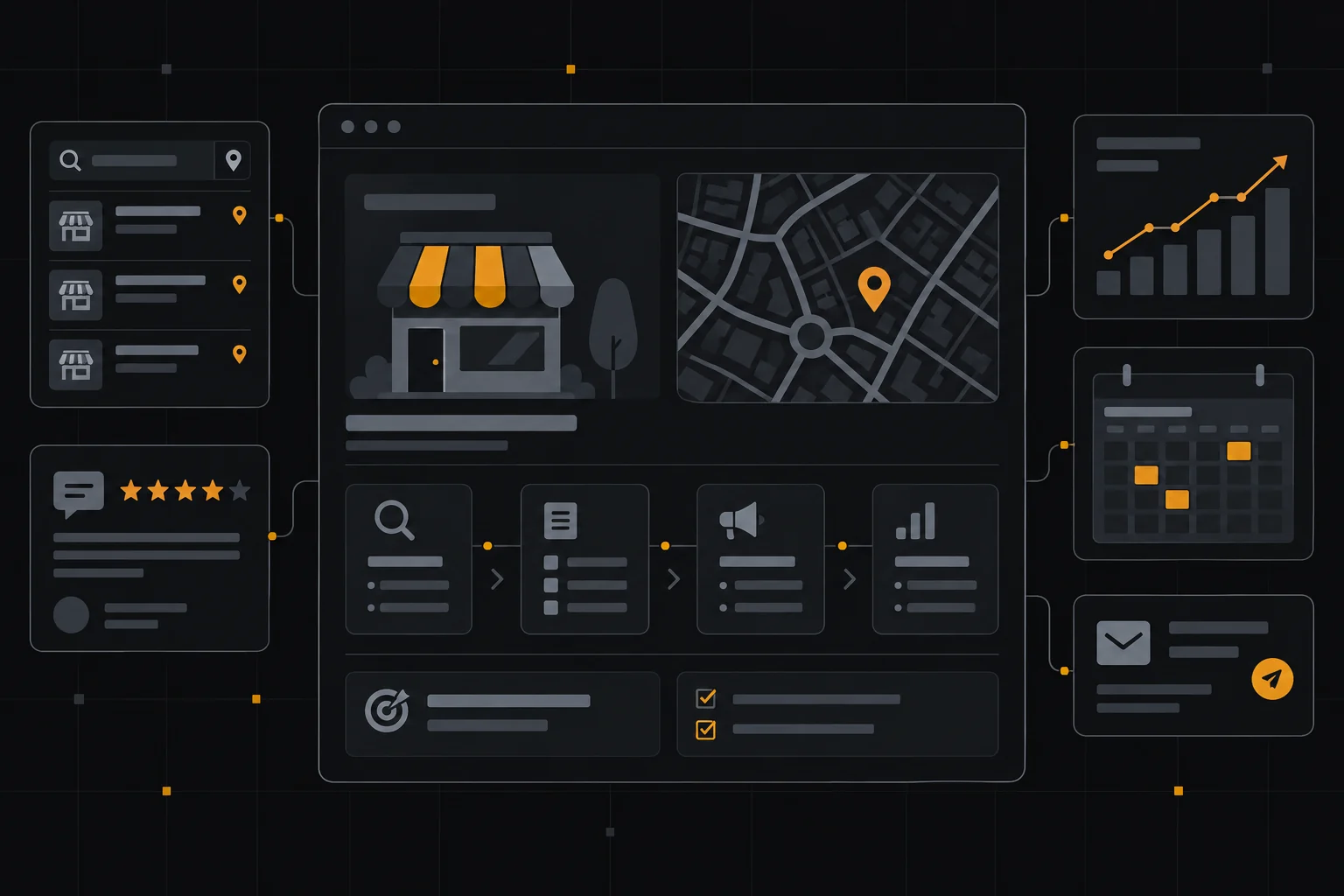
Local marketing succeeds when you show up where nearby customers search, decide, and return. Google Maps, reviews, and repeat business matter more than chasing national tactics that do not fit a neighborhood.
This guide walks through the channels that actually move the needle for local businesses, and how to prioritize them when time and budget are tight.
Quick comparison table
| Channel | Best for | Cost |
|---|---|---|
| Google Business Profile | Local search and Maps visibility | Free |
| Local SEO (site + citations) | Long-term organic reach | Free; time investment |
| Yelp and review sites | Service businesses with strong reviews | Free; paid ads optional |
| Meta and Google ads | Targeted nearby demand | Ad spend required |
| Email and SMS | Repeat visits and offers | Free plan; paid tiers |
| Nextdoor and community groups | Neighborhood word of mouth | Free; paid ads optional |

Own your Google Business Profile
Your Google Business Profile is often the first thing a nearby customer sees. Claim it, verify it, and fill every field: hours, services, photos, and a short description. Post updates regularly and answer questions promptly. An accurate, active profile ranks better and converts browsers into walk-ins or calls.
Get reviews the right way
Reviews drive both ranking and trust. Ask happy customers directly, make leaving a review easy with a short link or QR code, and respond to every review, positive or negative, with a professional tone. Never buy fake reviews; platforms penalize them and customers spot them fast.
Build local SEO foundations
Keep your name, address, and phone number consistent across your site and directories, and list your business in relevant local citations. Publish pages for the services and areas you serve, use location-relevant keywords naturally, and make your site fast and mobile-friendly, since most local searches happen on phones.
Run local ads that pay back
Geo-targeted ads on Google and Meta reach people near you who are already interested. Start with a small radius and a clear offer, then measure calls and visits, not just clicks. Local ads work best with a specific call to action and a landing page that matches the ad.
Keep customers coming back
Repeat business is the cheapest growth available. Collect emails or texts at checkout, send useful offers and reminders, and run a simple loyalty or referral incentive. A regular customer who returns often is worth far more than a one-time ad click.
Pros
- Free channels like Maps and reviews deliver real results
- Geo-targeted ads reach people ready to buy nearby
- Repeat-customer programs cost far less than new acquisition
Cons
- Local SEO takes months to build momentum
- Negative reviews can hurt if unmanaged
- Ads deliver nothing without a clear offer and landing page
Frequently asked questions
What is the most important local marketing channel?
For most businesses, Google Business Profile comes first because it powers local search and Maps. Reviews and a fast mobile site close behind.
How do I get more Google reviews?
Ask satisfied customers directly, provide a short review link, and make the process instant. A steady trickle of genuine reviews outperforms a one-time burst.
Are local ads worth it?
They can be, when tightly geo-targeted and paired with a specific offer and landing page. Measure calls and visits, not just clicks.
How long does local SEO take?
Expect several months of consistent effort before rankings and Maps visibility improve meaningfully.
Verdict
Claim and maintain your Google Business Profile, earn reviews honestly, build consistent local SEO, and use small geo-targeted ads with a clear offer. Then reinvest in repeat customers, who are your most profitable audience.
Read more: local SEO · collect feedback.