
Independent analysis. This page may contain affiliate links.
How to Create a Sales Page That Converts
A sales page has one job: to persuade a specific visitor to take one action. Good sales pages are not clever for the sake of it; they answer the reader’s questions in the order they arise.
This guide walks through the structure, copy, proof, and testing that separate a page that sells from a page that just looks polished.
Quick comparison table
| Option | Best for | Starting price |
|---|---|---|
| Unbounce | Landing pages with A/B testing | From about $99 per month |
| Leadpages | Fast, template-driven pages | From about $49 per month |
| Carrd | Simple one-page sites | Free; Pro from about $19 per year |
| WordPress plus a builder | Full ownership and control | Varies by host |
| Kit (formerly ConvertKit) | Creator sales pages with email | Free tier; paid plans |

Lead with the transformation, not the features
Buyers want the outcome, not the feature list. State what changes for them: the problem that disappears, the result they get, and how quickly.
Put that promise in the headline, where most of the page’s value is decided. Everything below either supports the promise or removes a reason to doubt it.
Follow a proven page structure
A reliable sequence is promise, problem, solution, proof, offer, and call to action. Begin with the headline and subheadline, then describe the problem in the reader’s own words.
Introduce your solution, show how it works, add social proof, present the offer and price clearly, and close with a strong call to action. Repeat the call to action at several scroll depths.
Use proof to remove doubt
Testimonials work best when they are specific and believable: a name, a role, a concrete result. Vague praise does nothing.
If you are just starting, use other forms of proof: data, demonstrations, a guarantee, or founder credibility. Show the product in action rather than only describing it.
Make the offer and price clear
Do not hide the price or make people click to discover it. State what is included, what it costs, and what happens after purchase.
Address the obvious objections right there: refund policy, time commitment, and what the buyer needs to get started. Clarity builds confidence far more than urgency gimmicks.
Design for one action
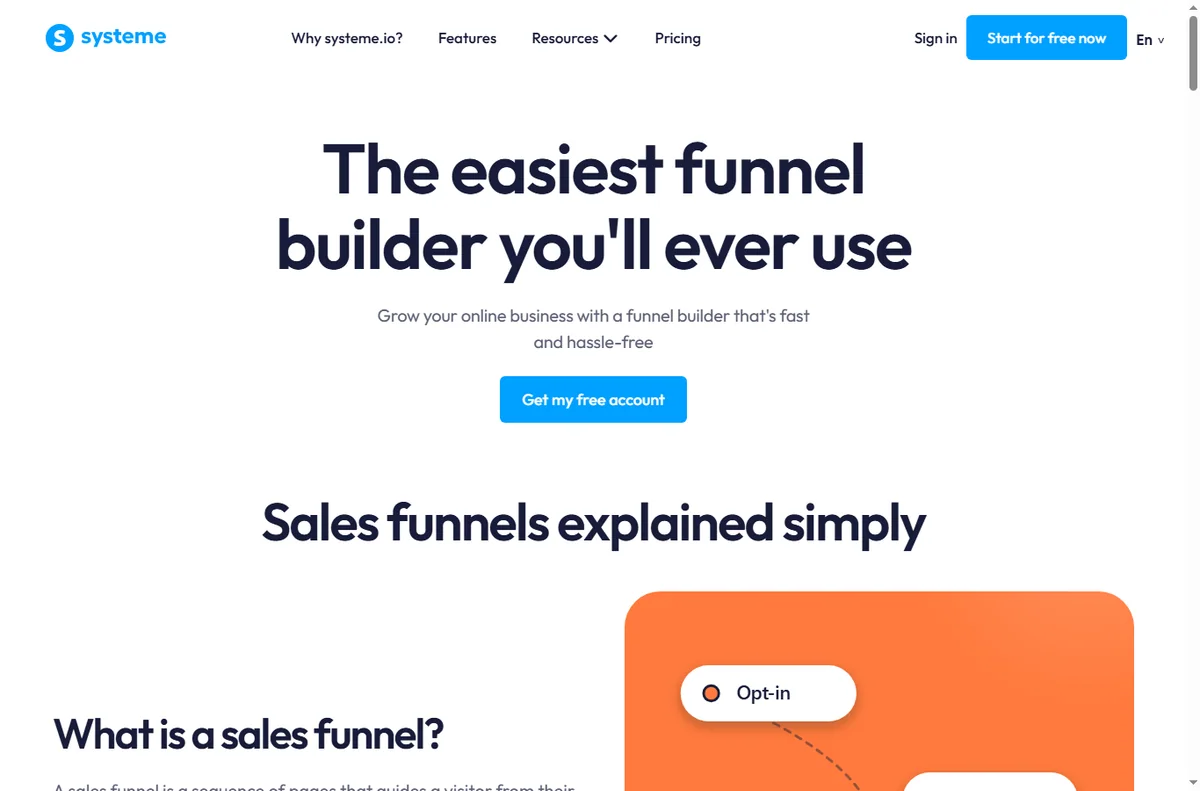
Keep the page focused on a single action, repeated in consistent buttons. Remove navigation and competing links that pull attention away.
Make buttons large, contrast against the background, and describe the action, not just ‘Submit.’ Ensure the layout works on mobile, where many buyers will read it.
Test and improve
Track your conversion rate against a baseline and change one element at a time, starting with the headline and offer. A weak offer cannot be saved by design.
Run tests long enough to gather meaningful data before declaring a winner, and keep a record of what you tried so you stop repeating the same experiments.
Pros
- A dedicated page focuses attention on a single offer
- Testing compounds improvements over time
- A clear structure reduces buyer confusion
- Works with both organic traffic and paid ads
Cons
- A page cannot rescue a weak offer
- Poor mobile design kills conversions
- Overloading the page with proof can overwhelm readers
Frequently asked questions
How long should a sales page be?
Long enough to answer every objection and no longer. Simple, low-cost offers may need a few hundred words; higher-priced or complex offers often need long-form copy. Let objections, not word counts, set the length.
What should come first on a sales page?
The headline and subheadline, which carry most of the weight. State the outcome and who it is for, then support it with a visual or bullets. Everything else answers the reader’s questions in order.
Do I need testimonials?
They help significantly when they are specific and believable. If you are just starting, use data, demonstrations, guarantees, or founder credibility until you collect real customer quotes.
How do I know if my page works?
Track the conversion rate against a baseline, then test one variable at a time, such as the headline, offer, or call to action. Meaningful tests need enough traffic to separate real gains from noise.
Verdict
A converting sales page is built on a clear promise and a logical flow, not on design flourishes. Lead with the transformation, answer objections in order, make the offer and price obvious, and test one change at a time. If the underlying offer is weak, fix that before you touch the page.
Read more: write a landing page · write a case study · CRO tools.
Read our full Systeme.io review
Try Systeme.io for free – build funnels and courses without limits. Start free