
Independent analysis. This page may contain affiliate links.
Best Currency Exchange Tools
Sending money abroad used to mean slow bank transfers and hidden fees baked into a poor exchange rate. Today a handful of specialist services make international transfers cheaper and faster, and the difference on a large transfer can run into hundreds of dollars.
This guide compares the leading currency exchange tools by use case — everyday transfers, large or business payments, travel spending, and rate checking — and explains the costs to watch for beyond the headline fee.
Quick comparison table
| Option | Best for | Starting price |
|---|---|---|
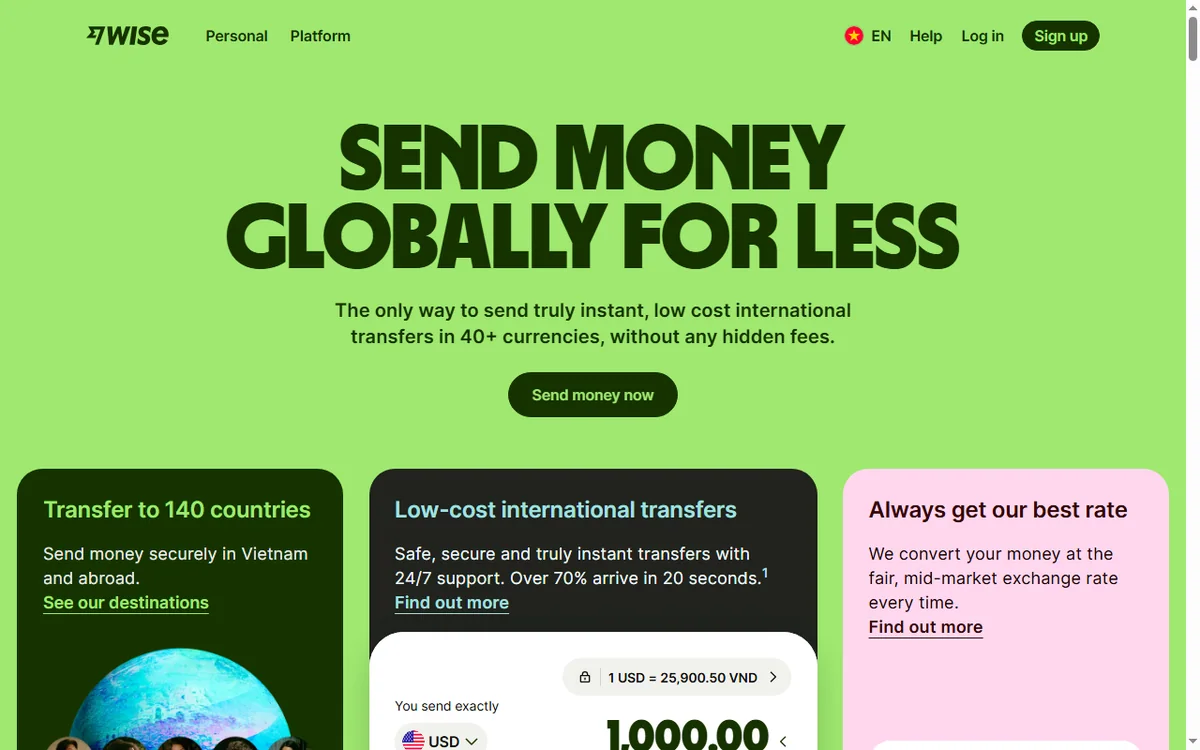
| Wise | Low-cost international transfers | No monthly fee |
| Revolut | Multi-currency spending and transfers | Free plan |
| OFX | Large transfers and business payments | No transfer fee |
| CurrencyFair | Peer-to-peer currency exchange | Low fixed fee |
| XE | Checking live rates and sending money | Free to check rates |
| PayPal | Convenience for small, fast payments | Free to open |
How Exchange Costs Really Work
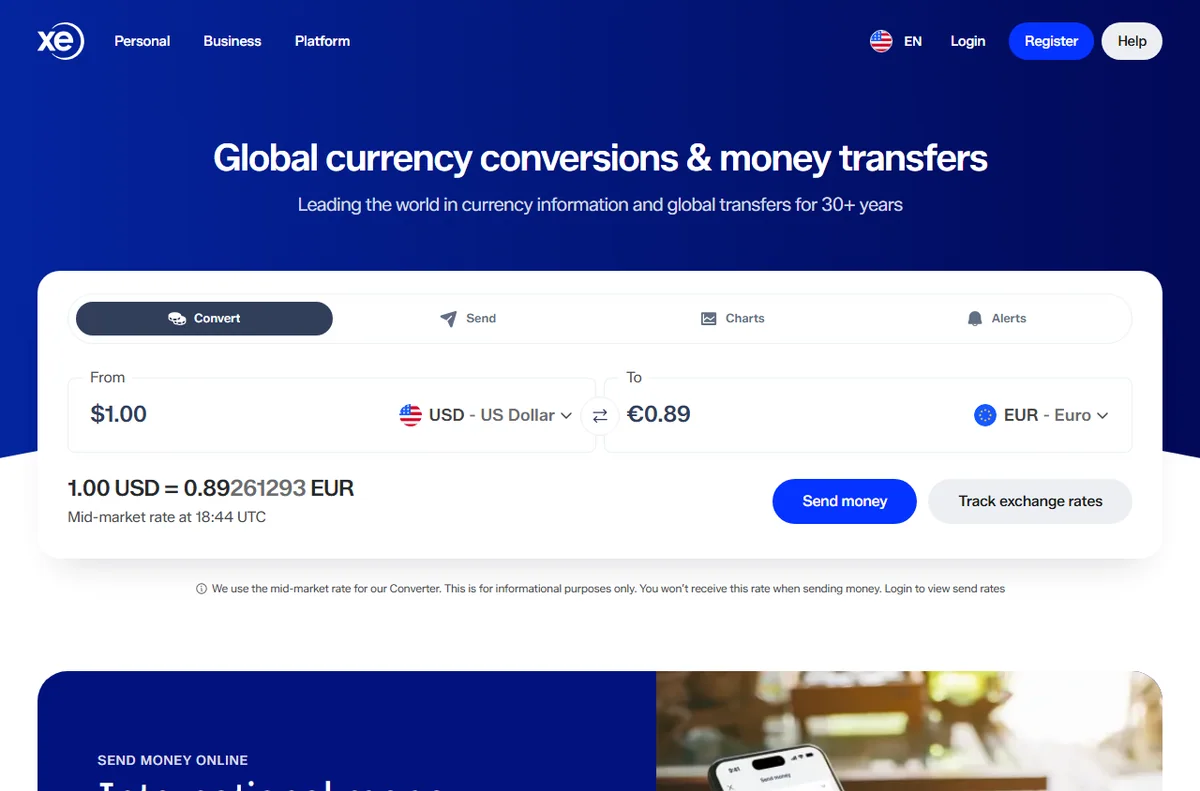
Two costs hide in every transfer: an explicit fee and a margin baked into the exchange rate. A provider can advertise “no fees” while giving you a worse rate than the mid-market rate, which is the rate banks use between themselves.
The honest comparison is the total cost: the fee plus the difference between the rate you receive and the mid-market rate. Always check the received amount in the target currency, not just the fee. That single number tells you which service is genuinely cheaper for your transfer size.
For Everyday Transfers
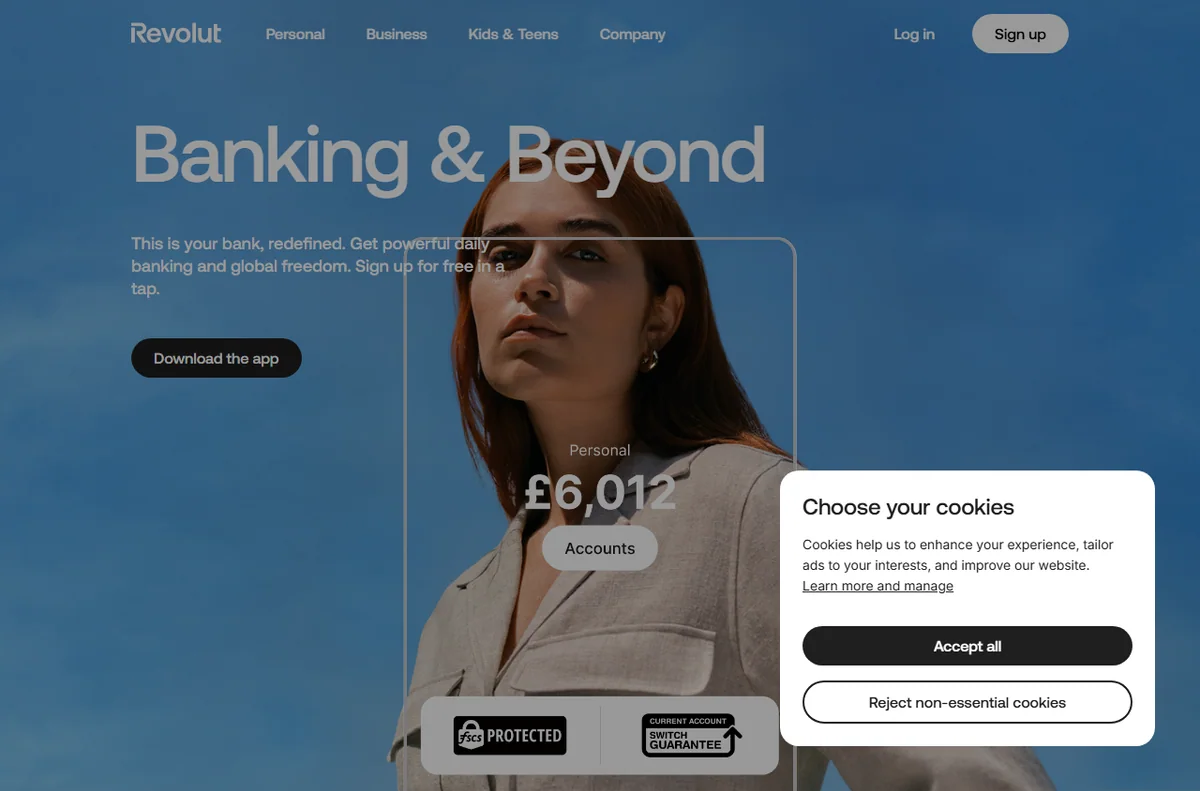
For regular, modest transfers, Wise is the best-known option, using the mid-market rate with a small, clearly stated fee and offering multi-currency accounts. Revolut is popular for spending and transfers with a free plan that includes some free exchange allowance, plus paid tiers with higher limits.
Both work well when you send or spend across currencies often. Compare the final received amount for your typical transfer, since fees and allowances differ by currency pair and by plan tier.

For Large or Business Transfers
On large transfers, the exchange-rate margin dwarfs the fixed fee, so providers that quote a tight margin win. OFX specializes in larger transfers and business payments with no transfer fee and competitive rates, plus a dedicated dealer for high-value transfers.
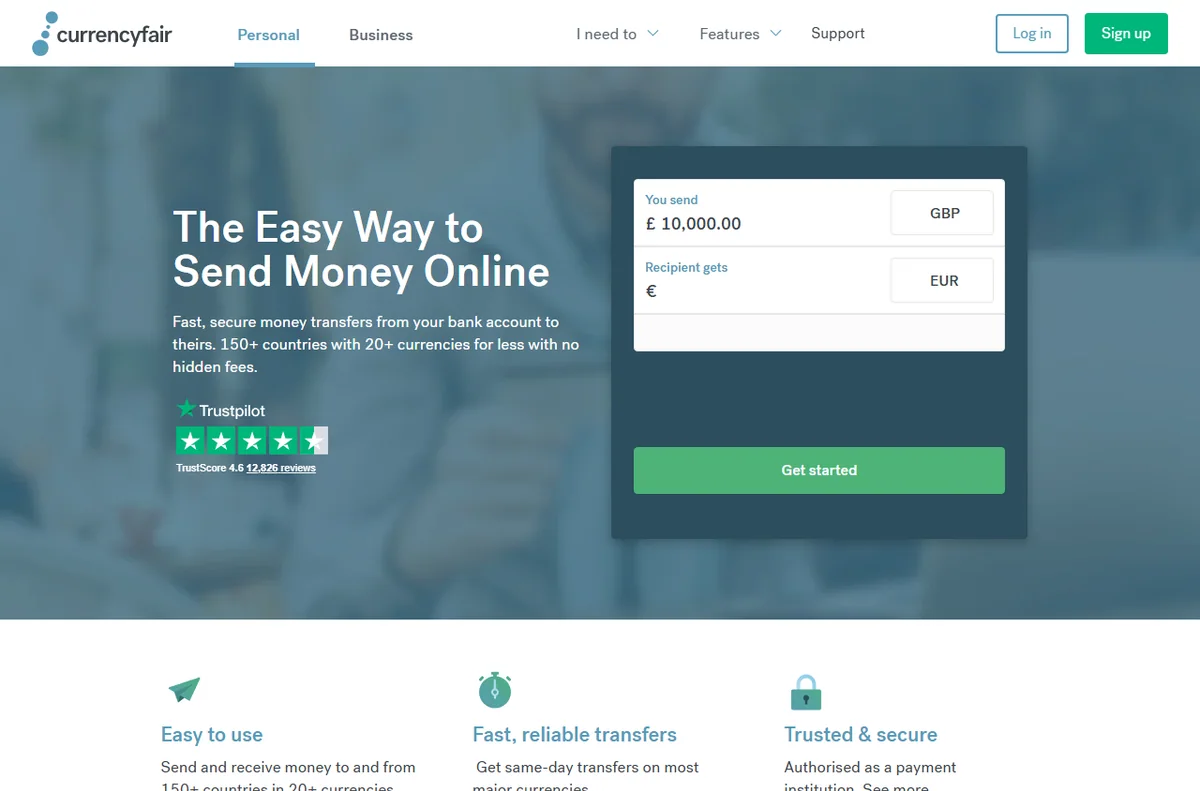
CurrencyFair uses a peer-to-peer model where customers exchange with each other, which can produce tight rates and low fixed fees. For businesses paying suppliers abroad regularly, both offer better economics than a high-street bank, provided you are comfortable with their process and settlement times.
For Travel and Multi-Currency Spending
If your priority is spending abroad without punitive card fees, a multi-currency account is more useful than a one-off transfer service. Revolut and Wise both offer cards that let you hold and spend in multiple currencies, with transparent conversion when you run out of a given balance.
These accounts also help you lock in rates in advance by holding balances. Watch out for weekend markups, ATM limits, and fair-usage caps on free plans, since those can erase the savings on heavy use.
Rates, Speed, and Safety
Speed varies: some transfers arrive within minutes, others take one to three business days depending on the currency and corridor. Before choosing, check the provider’s speed for your specific country pair rather than assuming.
On safety, look for regulated providers with segregated client funds and clear licensing in your jurisdiction. Larger, established names such as Wise, OFX, and Revolut are regulated in major markets. Avoid any service that cannot explain its fees, licensing, or how your money is held.
Pros
- Substantially cheaper than traditional bank transfers
- Transparent fees compared with hidden bank margins
- Multi-currency accounts simplify spending abroad
- Faster settlement, often same-day or next-day
- Dedicated support for large transfers at some providers

Cons
- Rates and fees vary by currency pair and transfer size
- Some free plans have usage caps and weekend markups
- Not every provider supports every country or currency
- Small transfers can still carry disproportionate fixed fees
Frequently asked questions
Why are specialist services cheaper than banks?
Banks often add a margin to the exchange rate on top of a fee. Specialists such as Wise use the mid-market rate with a small, explicit fee, so the total cost is usually lower, especially on larger amounts.
What is the mid-market rate?
It is the midpoint between buy and sell prices for a currency pair on global markets — the rate you see on news sites. It is the fairest benchmark for judging a provider’s margin.
How long do international transfers take?
It depends on the currency and corridor. Some arrive within minutes; others take one to three business days. Check the provider’s quoted speed for your specific pair.
Are these services safe for large amounts?
Reputable providers are regulated, hold client funds separately, and offer support for large transfers. Confirm licensing in your jurisdiction and, for very large sums, speak with their dealing desk.
Verdict
Compare on the received amount, not the advertised fee. For everyday and travel needs, a multi-currency account like Wise or Revolut is hard to beat. For large or business transfers, look at OFX and CurrencyFair for tighter margins. Confirm licensing and speed for your corridor before you send.
Read more: Wise review · accept international payments · Wise vs PayPal.