Independent analysis. This page may contain affiliate links.
Best Ecommerce Marketing Tools
Growing an online store takes more than a good product page. You need to bring in visitors, convert them, recover abandoned carts, and turn first-time buyers into repeat customers. A focused stack of ecommerce marketing tools handles those jobs better than a single general-purpose platform.
This guide groups the leading tools by function — email and SMS, reviews, ads, personalization, and support — and explains what to start with when you are selling on a limited budget.
Quick comparison table
| Option | Best for | Starting price |
|---|---|---|
| Klaviyo | Email and SMS automation for online stores | Free plan |
| Omnisend | Email and SMS with ecommerce templates | Free plan |
| Mailchimp | Email marketing plus basic automation | Free plan |
| Yotpo | Reviews, loyalty, and user content | Free plan |
| Shopify Email | Simple email for Shopify merchants | Free |
| Gorgias | Ecommerce support tied to orders | Free trial |
The Ecommerce Marketing Stack
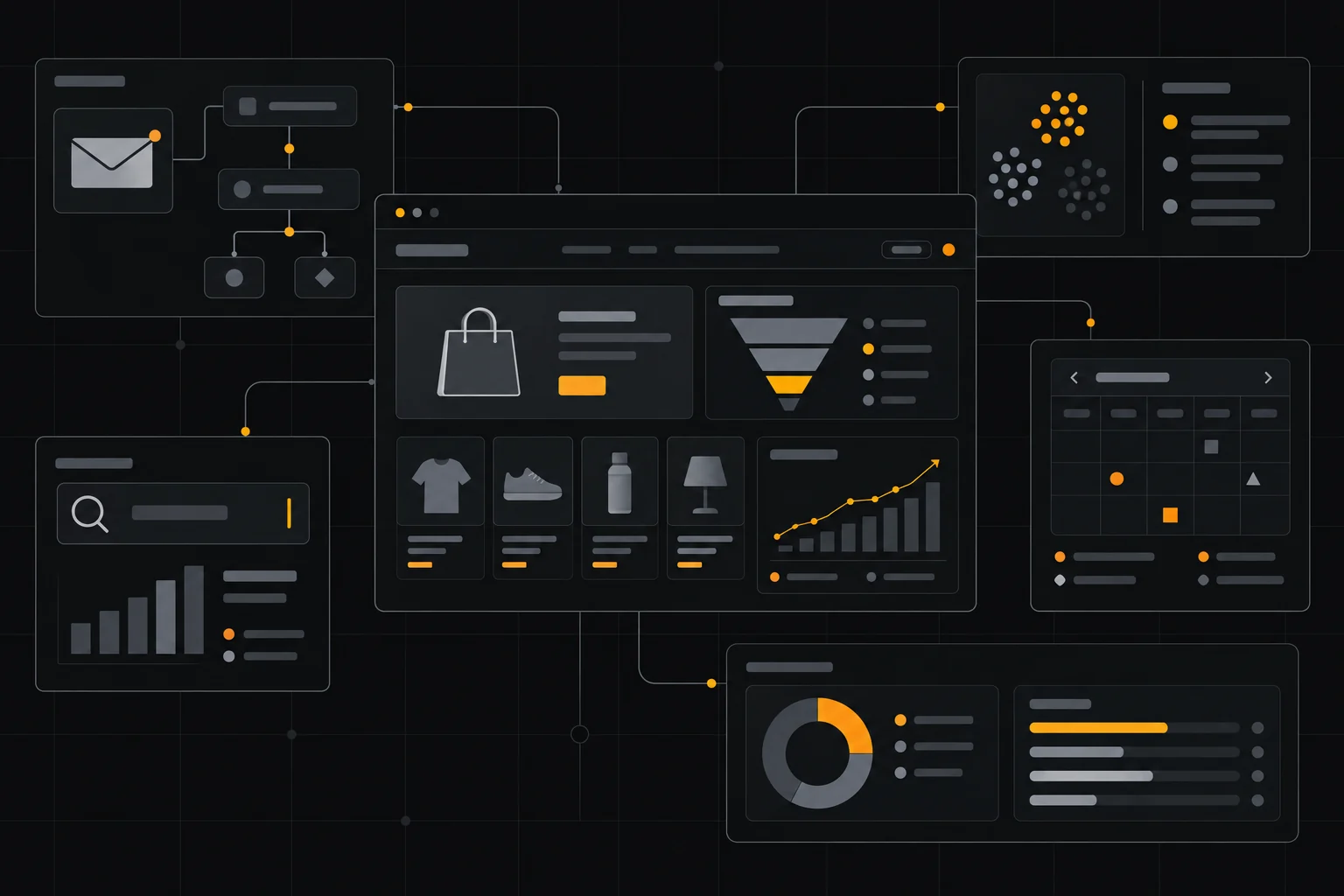
Think in layers. Acquisition brings people to your store through ads, search, and content. Conversion helps visitors buy with good pages, fast checkout, and trust signals. Retention brings them back through email, SMS, and loyalty. Reviews support conversion and trust throughout.
You do not need every layer at once. Most stores get the best return by mastering retention first — recovering carts and emailing buyers — because those audiences are already interested and cost far less to reach than cold traffic.

Email and SMS
Email and SMS are the highest-return retention channels for stores. Klaviyo is the reference point for ecommerce, with deep integrations, segmentation, predictive analytics, and automations for welcome, browse abandonment, and cart recovery. Omnisend offers a similar mix with ecommerce-ready templates and a generous free plan.
Mailchimp remains a solid general choice with a free tier, and Shopify Email is a simple, low-cost option for Shopify merchants. Whichever you choose, set up the core automations first: welcome, abandoned cart, and post-purchase.
Reviews and User-Generated Content
Social proof drives purchases. Yotpo covers reviews, ratings, loyalty, and user-generated content, helping you collect and display customer photos and feedback that reassure new buyers. Displaying reviews on product pages reliably lifts conversion.
Build a habit of requesting reviews after delivery, and make leaving one easy. Photos and detailed reviews are worth far more than a star rating alone. Reply to negative reviews promptly and publicly — how you handle criticism often matters more than the criticism itself.
Ads, Feeds, and Retargeting
Paid advertising brings new traffic. Google Merchant Center and shopping ads capture people already searching to buy, while Meta and TikTok ads create demand and retarget visitors who did not convert. Feed tools keep product data accurate across channels.
Retargeting is usually the most efficient spend. Keep product feeds clean — correct titles, images, prices, and availability — and test creative regularly. Rising ad costs make conversion and retention improvements just as important as new spend.
Personalization and Conversion
On-site tools personalize the shopping experience: product recommendations, recently viewed items, and targeted offers based on browsing. These can lift average order value by surfacing relevant products.
Conversion work matters as much as traffic. Fast pages, clear product photos, transparent shipping, and a short checkout reduce drop-off. A modest conversion-rate gain multiplies the value of every ad dollar you spend, so treat CRO as marketing, not just design.
Choosing What to Start With
Start where the return is clearest: email and SMS automations, then reviews to build trust. Add paid ads once your conversion rate and product-market fit are solid, and layer personalization as you scale.
Most of these tools offer free plans or trials, so test one function at a time. A tight stack you actually operate beats a broad one you ignore.
Pros
- Retention channels like email and SMS deliver high returns
- Reviews and UGC build trust that lifts conversion
- Feed and ad tools scale new customer acquisition
- Personalization increases average order value
- Free plans and trials make starting affordable
Cons
- Subscriptions stack up quickly across many tools
- Ad costs rise and require ongoing optimization
- Integrations can be fiddly to set up correctly
- Too many tools can split focus away from basics
Frequently asked questions
What should an ecommerce store use first?
Start with email and SMS automations — welcome, abandoned cart, and post-purchase — plus a reviews tool. Those retention and trust levers deliver the fastest return.
Is Klaviyo worth it for small stores?
Klaviyo’s free plan covers a modest contact list and its ecommerce integrations are strong. Smaller stores may find Omnisend or Mailchimp more affordable at scale.
How important are reviews?
Very. Reviews and customer photos are among the most effective conversion tools, providing the social proof new buyers need before purchasing.
When should I start paid ads?
Once your conversion rate is healthy and product-market fit is clear. Spending on ads before your store converts well wastes budget on traffic that bounces.
Verdict
Build retention first with email and SMS automations, add reviews for trust, then scale acquisition with ads and clean product feeds. Personalize once you have traffic to work with, and keep a tight stack you actually run rather than a broad one you abandon.
Read more: email cho ecommerce · hosting ecommerce.