Independent analysis. This page may contain affiliate links.
SEO Checklist for a New Website: What to Do First
A new website has no authority, no crawl history, and no certainty about what it wants to rank for. The first weeks are the cheapest time to fix technical problems, because corrections made before a site is indexed are far less disruptive than migrations afterward.
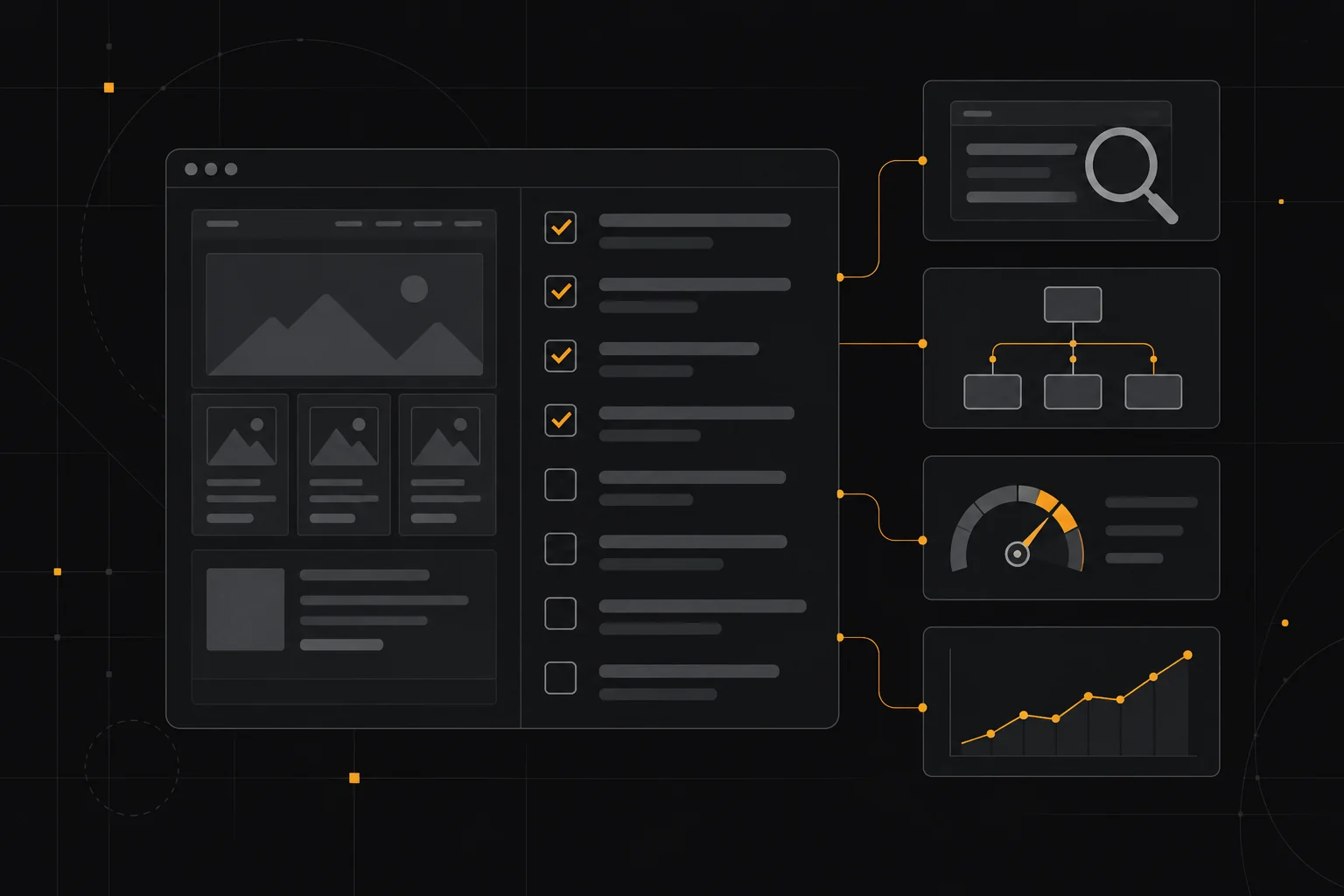
This checklist walks through the foundation in the order that matters: technical setup, keyword research, on-page work, content, and measurement.
Quick comparison table
| Stage | What to do | Why it matters |
|---|---|---|
| Technical setup | Verify crawling, indexing, HTTPS, and sitemaps | Search engines must reach and trust the site |
| Keyword research | Map topics to real search demand | Stops you writing pages nobody searches for |
| On-page | Titles, headings, and internal links | Tells engines what each page is about |
| Content | Publish useful pages on a schedule | Depth and freshness build authority |
| Measurement | Connect analytics and Search Console | You cannot improve what you cannot see |

Technical Foundations
Verify that search engines can reach your site. Set up HTTPS, choose one canonical version of the domain (with or without www), and make sure robots.txt is not accidentally blocking crawlers. Submit an XML sitemap so new pages are discovered quickly.
A fast, mobile-friendly site is also a baseline requirement, since mobile-first indexing means the phone version is what Google evaluates. Check speed in PageSpeed Insights and fix the worst offenders before you write much content.
Keyword and Topic Research
Build a list of topics, then map each to real search demand. Start with your own expertise and the questions customers ask, then validate with a keyword tool to see volume and competition. Group related keywords into topic clusters so one strong page can target several close variants.
Long-tail, specific phrases are usually easier to rank for than broad head terms. Avoid chasing high-volume keywords that are unrelated to your audience; intent matters more than raw traffic.
On-Page Optimization
Every page needs one clear primary topic. Write a unique title tag and meta description, use a single main heading (H1), and structure the body with H2 and H3 subheadings. Include your target phrase naturally in the title, the first paragraph, and at least one subheading, but never stuff it.
Descriptive URLs, alt text on images, and readable formatting all help. Internal links from related pages pass context and help visitors find more of your site.
Content and Internal Linking
Publish pages that answer a real question better than the current top results. Depth and accuracy matter more than volume, so a handful of genuinely useful pages beats dozens of thin ones. Update older posts as facts change.
Link related pages to each other to build topical clusters, and keep your most important pages only a few clicks from the homepage. A steady publishing rhythm signals an active, maintained site.
Measuring and Iterating
Connect Google Analytics and Search Console from day one. Search Console shows which queries bring impressions, which pages get clicks, and any crawl errors, while analytics shows what visitors do once they arrive.
Review monthly: pages with impressions but no clicks usually need better titles, and pages with traffic but no engagement need better content. SEO compounds slowly, so judge trends over months rather than days.
Pros
- Ordered by priority, so you fix the highest-impact items first.
- Covers both technical groundwork and content strategy.
- Keeps measurement tied to concrete actions.
Cons
- Results build slowly, so early feedback is limited.
- Requires ongoing work, not a one-time setup.
Frequently asked questions
How long until a new site ranks?
New sites often take several months to gain traction because they start without authority or history. Consistent, quality publishing usually speeds that up.
Do I need to submit my sitemap?
It is not mandatory, but submitting a sitemap helps search engines discover new pages faster, especially when internal linking is still thin.
Should I worry about backlinks early?
Focus on technical and content foundations first. Earned links follow useful content and genuine outreach, not shortcuts.
Verdict
Get the technical foundation right before writing at scale, then publish genuinely useful pages on a topic you understand. Measure with Search Console and analytics, and improve weak pages instead of only adding new ones.